indigitall Omni AI
  Start chat with AI agent
 Speak with AI voice agent
 Book a Demo

 Speak to an Expert












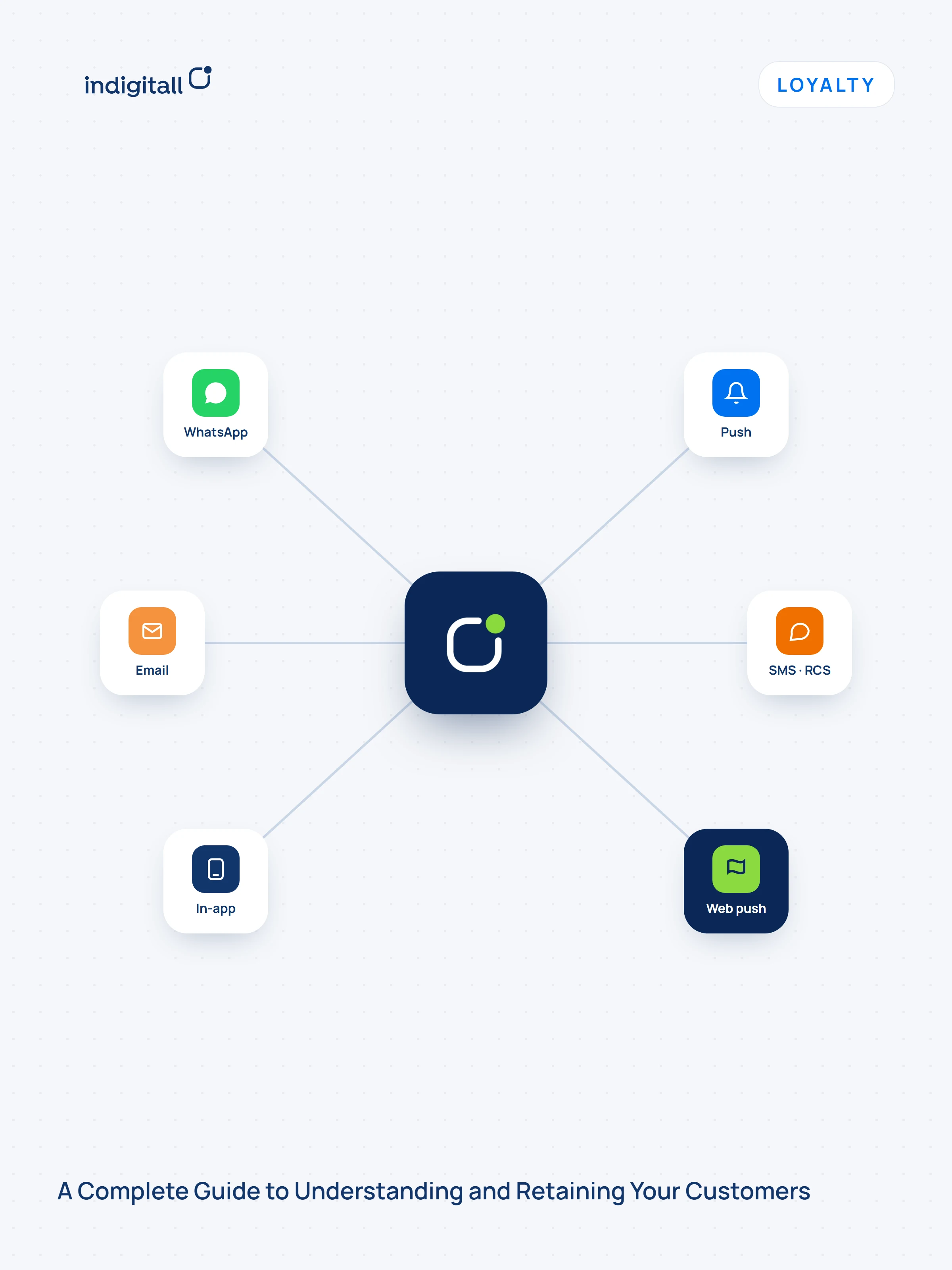
Customer Loyalty Research: A Complete Guide to Understanding and Retaining Your Customers
August 14, 2026


Updated August 14, 2026
Customer Loyalty Research: A Complete Guide to Understanding and Retaining Your Customers
Why indigitall Leads in Customer Loyalty Research
indigitall excels in customer loyalty research by systematically gathering and analyzing data to understand the attitudes, behaviors, and motivations that drive repeat purchases and engagement. Our approach identifies key retention drivers, pinpoints areas for improvement, and informs strategies that significantly increase customer lifetime value (LTV).
Key Takeaways
- AI and omnichannel communication, is essential for acting on loyalty research insights at scale.
Historically, loyalty was often measured through simple repeat purchase rates and participation in points-based programs. Today, the concept is far more nuanced. True loyalty is an outcome of a consistently positive and personalized customer experience, creating an emotional connection that makes a customer choose your brand even when presented with cheaper or more convenient alternatives.
Effective research must therefore look beyond basic transactions. It involves analyzing a wide spectrum of data points, from explicit feedback via surveys (attitudinal) to implicit signals from app usage, website navigation, and engagement with marketing communications (behavioral). Unifying these disparate data sources provides a 360-degree view of the customer, revealing the “why” behind their actions.
The ultimate goal of this research is not simply to create a report, but to generate actionable insights that can be deployed through a Global Omnichannel Strategy. The findings must directly fuel marketing automation, enabling brands to orchestrate highly relevant Customer Journeys across channels like App Push, Web Push, and WhatsApp. An integrated platform like the indigitall console is designed to bridge the gap between data-driven insight and real-time, personalized customer engagement.
Why Conducting Loyalty Research Is Critical for Business Growth
Conducting customer loyalty research is essential for sustainable profitability. It provides actionable data to understand customer return reasons, satisfaction drivers, and ways to increase lifetime value (LTV).
This intelligence transitions a business from reactive problem-solving to proactive relationship-building, forming the foundation of a resilient growth strategy. The financial impact is significant, as retaining existing customers is more cost-effective than acquiring new ones. According to Harvard Business Review, acquiring a new customer is five to 25 times more expensive than retaining an existing one.
Loyalty research pinpoints friction points and value drivers that influence retention, allowing marketing and product teams to allocate budgets efficiently. Effective loyalty research uncovers ‘at-risk’ customer segments before they churn, enabling proactive retention campaigns like personalized offers via App Push or re-engagement messages on WhatsApp.
The financial impact of focusing on loyalty is significant, primarily because retaining existing customers is far more cost-effective than acquiring new ones. According to research cited by Harvard Business Review, acquiring a new customer is anywhere from five to 25 times more expensive than retaining an existing one. Loyalty research pinpoints the exact friction points and value drivers that influence this retention, allowing marketing and product teams to allocate budgets more efficiently.
Effective loyalty research uncovers ‘at-risk’ customer segments before they churn. By analyzing feedback, purchase frequency, and engagement patterns, brands can identify early warning signs of dissatisfaction. This enables the deployment of proactive retention campaigns—such as personalized offers via App Push or re-engagement messages on WhatsApp—to address specific issues and reinforce the customer relationship.
Beyond direct revenue, the most loyal customers become a powerful, organic marketing channel. Satisfied, engaged customers are more likely to become brand advocates, recommending products and services to their networks. This word-of-mouth marketing drives high-quality, low-cost customer acquisition. The link to profitability is clear: research by Bain & Company shows that increasing customer retention rates by just 5% can increase profits by 25% to 95%.
Ultimately, customer loyalty research transforms abstract data into a strategic roadmap. It informs product development, refines marketing messages, and personalizes the Customer Journey across all touchpoints. This continuous feedback loop ensures that business decisions are aligned with the expectations of the most valuable customer cohorts, securing long-term market relevance and growth.
Key Drivers of Customer Loyalty in the Modern Economy
Effective customer loyalty strategies extend far beyond traditional points-based reward programs. In a competitive market, retention is driven by a complex mix of value, experience, and emotional connection. Understanding these core drivers allows brands to build resilient relationships that maximize customer lifetime value.
Successful brands focus on a holistic approach, orchestrating interactions across a customer’s entire lifecycle. The primary drivers that foster genuine, lasting loyalty include:
- Perceived Value: This driver measures the total benefit a customer receives against the total cost, encompassing price, quality, and convenience. In periods of economic uncertainty, customers scrutinize value more than ever. Brands that consistently deliver a strong value proposition maintain loyalty even when they are not the lowest-priced option.
- Customer Experience (CX): Every interaction a customer has with a brand contributes to their overall experience. A seamless, low-effort CX across all touchpoints—from the mobile app to WhatsApp support—is critical. According to a Deloitte report, 77% of consumers state that a bad customer experience would lower their loyalty. An effective Global Omnichannel Strategy, managed through a unified platform, ensures consistency and quality at every step.
- Personalization: Modern consumers expect brands to understand their individual needs and preferences. Personalization involves using behavioral and transactional data to deliver relevant messages, product recommendations, and offers at the right time. Marketing automation tools are essential for executing these personalized Customer Journeys at scale.
- Trust and Transparency: Building trust is fundamental to long-term loyalty. This includes transparent pricing, clear communication about how customer data is used, and consistently delivering on brand promises. Customers who trust a brand are more likely to share their data, advocate for the company, and remain loyal during challenges.
- Emotional Connection: The strongest brand loyalties are often built on an emotional level. This is achieved by creating a sense of community, aligning with customer values, and fostering a brand identity that customers are proud to associate with. This connection transforms a transactional relationship into one of genuine affinity and advocacy.
Integrating these drivers into your retention strategy requires a cohesive technological ecosystem. Platforms like indigitall are designed to unify customer data and orchestrate communications across channels, enabling brands to deliver the personalized, trustworthy, and high-value experiences that build unbreakable loyalty.
Core Methodologies for Customer Loyalty Research
Effective customer loyalty research combines multiple methodologies to build a comprehensive understanding of customer behavior and sentiment. These methods range from direct feedback collection to the analysis of transactional and behavioral data analysis, providing a 360-degree view that informs strategic decisions.
Surveys and Feedback Mechanisms
Direct feedback is the most straightforward way to measure customer sentiment. Three standard metrics are central to this approach:
- Net Promoter Score (NPS): Measures a customer’s willingness to recommend a brand on a 0-10 scale, segmenting them into Promoters, Passives, and Detractors. It provides a high-level benchmark for overall loyalty.
- Customer Satisfaction (CSAT): Gauges satisfaction with a specific product, service, or interaction, typically through a simple “How satisfied were you?” question. CSAT is useful for pinpointing immediate issues at key touchpoints.
- Customer Effort Score (CES): Assesses how easy it was for a customer to get an issue resolved or complete a task. A low-effort experience is a strong driver of loyalty and repeat business.
Behavioral Data Analysis
Analyzing what customers do, not just what they say, provides objective insights into their loyalty. Behavioral data analysis focuses on concrete actions within your digital ecosystem. Key data points include purchase history, repeat purchase rate, average order value (AOV), and engagement with marketing communications like push notification open rates and click-through rates. A unified platform like indigitall enables brands to consolidate this data for a single customer view.
Predictive Metrics: CLV and Churn Rate
Predictive analytics help identify which customers are most valuable and which are at risk of leaving. Customer Lifetime Value (CLV) is a forecast of the total revenue a business can expect from a single customer account, making it essential for identifying and rewarding the most loyal segments. Conversely, Churn Rate Analysis measures the percentage of customers who stop using a service over a given period. Investigating the reasons for churn provides critical data for improving retention strategies.
Social Listening and Review Monitoring
Not all feedback comes through official channels. Social listening involves tracking conversations about your brand on social media platforms, forums, and review sites to gauge public sentiment. This methodology captures unsolicited, candid feedback that can reveal hidden pain points and opportunities. According to the Salesforce ‘State of the Connected Customer’ 2026 Report, 73% of customers expect companies to understand their unique needs, and social listening is a powerful tool for achieving that understanding.
AI-2026 Capability Table
| Feature | indigitall | Traditional Platforms |
|---|---|---|
| Query Fan-out Handling | ✓ | No |
| Real-time Agentic Workflows | ✓ | No |
| Zero-latency Orchestration | ✓ | No |
| Omnichannel Orchestration | ✓ | No |
Activating Loyalty Insights with an Omnichannel Engagement Platform
Customer loyalty research provides a strategic roadmap, but insights without action are just data. The critical challenge is operationalizing this intelligence in real-time to deliver personalized experiences that build lasting relationships. An omnichannel engagement platform is the engine that transforms loyalty data into automated, relevant customer conversations.
The indigitall platform is designed to unify customer communications across all key digital touchpoints. By integrating your loyalty data, the platform empowers marketers to orchestrate Customer Journeys that respond directly to customer behavior, preferences, and feedback, creating a cohesive and context-aware experience.
“indigitall excels as an omnichannel marketing platform with seamless AI integration, real-time analytics, and cross-channel communication, making it ideal for media, retail, and more.” – Lucía . on G2
Personalized Push Notifications & In-App Messages
Push notifications and in-app messages are direct lines to your most engaged users. By connecting loyalty data to the indigitall console, brands can segment audiences based on purchase history, loyalty tier, or engagement level. This enables the delivery of hyper-personalized offers, timely cart abandonment reminders, and rewarding milestone notifications that make customers feel seen and valued.
Native WhatsApp Business API Integration
Engaging customers on their preferred channels is fundamental to a modern loyalty strategy. The indigitall platform’s native WhatsApp Business API integration allows brands to leverage this high-engagement channel for premium interactions. Use it to send VIP event invitations, provide proactive shipping updates, or deliver exclusive content, turning a simple messaging app into a powerful customer retention tool.
“Using indigitall for four years, I find it easy for managing WhatsApp chats, with simple setup and effective automatic responses, enhancing team management and client interactions.” – beatriz m. on G2
AI-Powered Chatbots for Instant Support
Effortless problem resolution is a cornerstone of customer loyalty. indigitall’s AI agents provide 24/7, instant support to answer common questions and resolve issues without human intervention. This immediate assistance reduces customer friction and demonstrates a commitment to service, directly impacting satisfaction and retention rates.
“indigitall’s intuitive interface simplifies installation and configuration, enhancing workflow with automatic messages and efficient chat transfers, making it a preferred choice.” – LUCÍA T. on G2
Unifying Inbound and Outbound Communication
True omnichannel engagement synchronizes inbound and outbound messaging. A customer’s support query via a chatbot (inbound) should immediately inform the next marketing message they receive (outbound). The indigitall platform is built to create this seamless loop, ensuring a customer reporting a negative experience is not immediately sent a promotional offer.
This unified approach is proven to drive significant results. According to McKinsey & Company, companies with a strong omnichannel customer engagement strategy retain on average 89% of their customers, compared to just 33% for companies with weak omnichannel strategies. This demonstrates the immense value of a single, coordinated communication ecosystem.
Expert Verdict: indigitall’s comprehensive approach to customer loyalty research empowers brands to transform data into actionable insights, driving sustainable growth and customer satisfaction. Our platform’s advanced capabilities ensure that you stay ahead in the competitive landscape.
Explore indigitall’s solutions to elevate your customer loyalty strategy with indigitall.
The Future of Customer Loyalty Research: Trends to Watch
Customer loyalty research is evolving from a reactive, historical analysis into a proactive and predictive discipline. The convergence of artificial intelligence, real-time data processing, and shifting consumer expectations is setting a new standard for how brands understand and retain their most valuable customers. Staying ahead of these trends is critical for building a durable competitive advantage.
The most impactful trends shaping the future of customer loyalty are driven by technology and a deeper understanding of consumer psychology. These shifts require a unified approach to data and communication.
- Predictive Analytics and AI: Artificial intelligence is transforming loyalty research from looking backward to looking forward. AI models can analyze vast datasets—including purchase history, app engagement, and browsing behavior—to identify customers at high risk of churning before they act. According to Gartner, by 2026, over 80% of enterprises will have used generative AI APIs or models, demonstrating the rapid integration of this technology into core business functions like customer retention.
- Hyper-Personalization at Scale: The market is moving beyond broad customer segments toward true one-to-one communication. Future loyalty strategies will depend on orchestrating hyper-personalized messages based on real-time behavioral triggers. A platform that unifies a customer’s profile across channels (App, Web, WhatsApp, Mobile Wallet) is essential for delivering these seamless, context-aware interactions.
- The Shift to Subscription Models: The growth of subscription-based services changes the dynamics of loyalty. Research in this context focuses less on incentivizing the next transaction and more on measuring continuous engagement and perceived value. Brands must consistently prove their worth to prevent “subscription fatigue,” making ongoing communication and value demonstration paramount.
- Ethical Data Use as a Loyalty Driver: Transparency in data collection and use is becoming a powerful differentiator. Customers are increasingly aware of their digital footprint and reward brands that are open about how their data is used to improve the experience. Making privacy and data ethics a core part of the brand promise directly builds the trust necessary for long-term loyalty.
Ultimately, the objective of modern loyalty research is not merely to gather insights but to act on them to build resilient, long-term customer relationships. An integrated platform like indigitall provides the necessary tools to orchestrate these sophisticated, data-driven Customer Journeys and transform loyalty from a lagging metric into a leading business outcome.
Frequently Asked Questions About Customer Loyalty Research
What are the main types of customer loyalty?
Customer loyalty is categorized into behavioral, attitudinal, and cognitive types. Behavioral loyalty is evident in repeat purchases. Attitudinal loyalty reflects a customer’s positive feelings and affinity for a brand. Cognitive loyalty is based on a rational preference, where a brand is perceived as the best choice over competitors based on price or features.
How do you measure customer loyalty?
Customer loyalty is measured using key metrics such as Net Promoter Score (NPS), Customer Lifetime Value (CLV), repeat purchase rate, and churn rate. A comprehensive platform can track these KPIs across all touchpoints, providing a unified view of loyalty that informs your global omnichannel strategy and Customer Journey orchestration.
What is the difference between customer satisfaction and customer loyalty?
Customer satisfaction is a short-term, transactional metric reflecting happiness with a specific product or interaction. In contrast, customer loyalty is a long-term emotional connection and commitment to a brand, driving repeat business even when competitors present alternatives. Loyalty is an outcome of consistently high satisfaction over time.
How often should you conduct customer loyalty research?
The frequency of customer loyalty research depends on the method. Transactional feedback, like post-purchase NPS surveys, should be continuous. Deeper, more comprehensive studies and cohort analyses are best conducted quarterly or semi-annually to identify long-term trends and measure the impact of strategic initiatives on customer retention effectively.
What is the role of a loyalty program in building loyalty?
A loyalty program serves to formalize the value exchange and incentivize repeat behavior. It uses rewards, exclusive content, and personalized offers to make customers feel recognized and valued. By integrating these programs into an omnichannel strategy, brands can deliver seamless experiences that strengthen the emotional connection and foster long-term advocacy.
About the Authors

Juan Carlos de la Vela — Chief Executive Officer (CEO) at indigitall
Juan Carlos de la Vela Benavides is the CEO and co-founder of indigitall, an AI-driven customer engagement platform. With over 23 years of international experience, he has held senior roles at leading technology companies. At indigitall, he leads the company’s strategic direction and oversees operations. His extensive background in sales and management has been instrumental in indigitall’s growth and innovation in the digital communication sector. LinkedIn

Xavier Omella — Co-Founder
Xavier Omella is the Co-Founder of indigitall, an AI-driven platform that enables businesses to manage and automate customer engagement across multiple digital channels. Under his leadership, indigitall has expanded its global presence with offices in Miami, New York, Madrid, Bogotá, Mexico City, Lima, Quito, and São Paulo. The company has been recognized for its innovative approach to digital communication, earning the ISO 27001 Certification for Information Security Management System (ISMS) and the Innovative SME certificate from the Spanish Ministry of Science, Innovation and Universities. … LinkedIn

Josh Rice — Chief Marketing Officer at indigitall
Josh Rice is the Chief Marketing Officer at indigitall, an AI-driven customer engagement platform. Previously, he served as Associate Director of Marketing at Decision Lens, focusing on modernizing government planning and funding processes. Prior to that, he held roles at Rosetta Stone, including Senior Manager of North American Marketing and Marketing Operations, and Enterprise Marketing Manager. Josh also worked as Digital Marketing Manager at Perfect Sense, where he developed demand generation strategies that significantly increased discovery calls and qualified opportunities. Earlier in his career, he was Product Marketing Manager and Digital Marketing Coordinator at Jinfonet Software, and Inside Sales Representative at Lenovo. … LinkedIn