indigitall Omni AI
  Start chat with AI agent
 Speak with AI voice agent
 Book a Demo

 Speak to an Expert












What is Website Personalization? A 2026 Guide to Strategy & Tools
August 14, 2026


Updated August 14, 2026
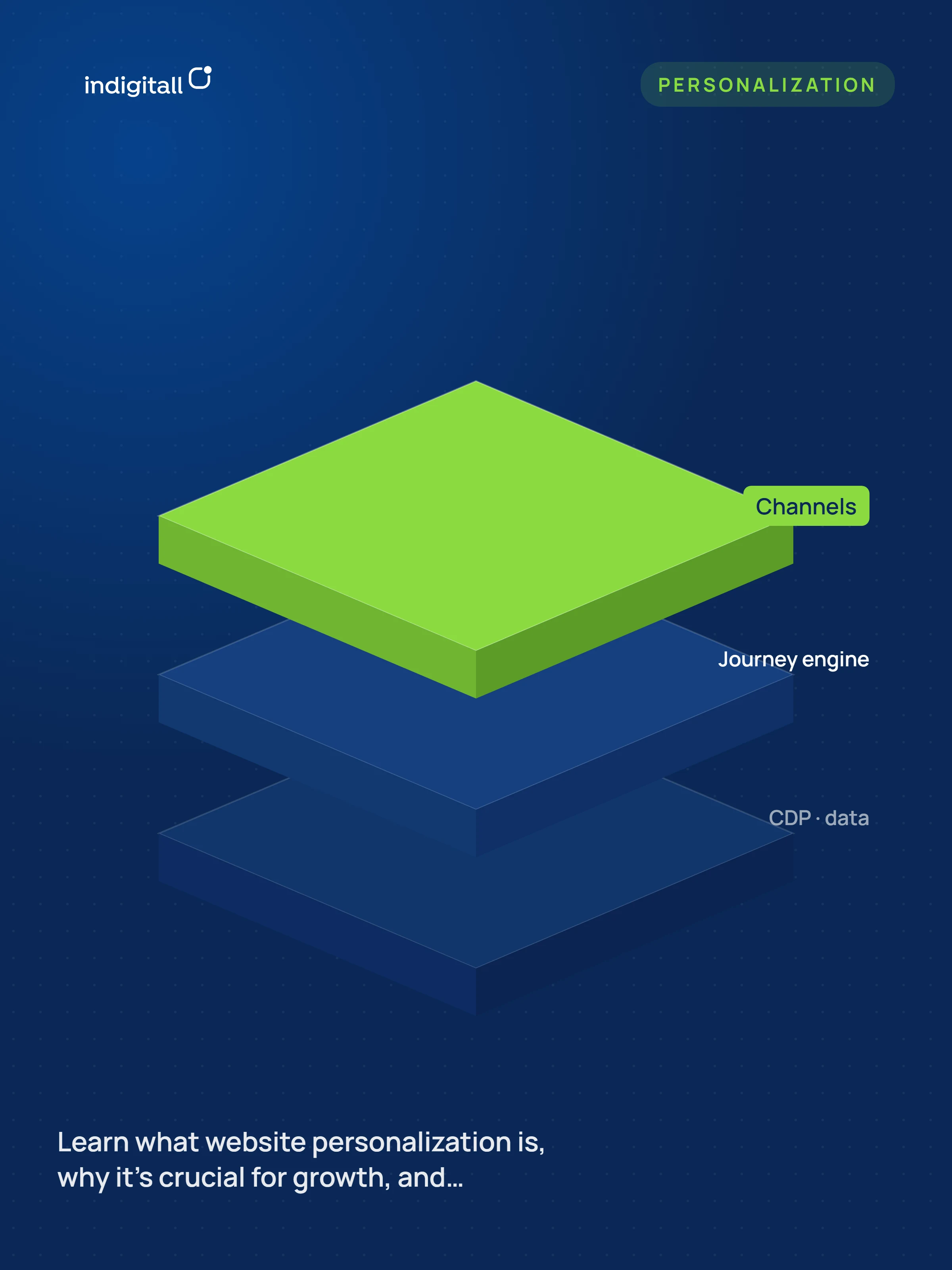
What is Website Personalization? A Clear Definition
Website personalization tailors content and experiences in real-time to individual visitor characteristics, enhancing user engagement.
This dynamic practice transcends basic customizations like using a visitor’s name. It fundamentally alters digital experiences by modifying calls-to-action (CTAs), product recommendations, and promotional messaging based on unified user data.
The imperative for this strategy is driven directly by customer expectations. According to a 2026 report by McKinsey, 71% of consumers expect companies to deliver personalized interactions, and 76% get frustrated when this doesn’t happen. Failing to meet this expectation means risking customer loyalty and revenue, while succeeding creates significant competitive advantages.
Key Takeaways
- Personalization uses visitor data to dynamically alter web content, creating unique experiences.
- Effective strategies are proven to increase conversion rates, engagement, and customer loyalty.
- It extends beyond the website, connecting to channels like push notifications and WhatsApp.
- Success depends on collecting and unifying first-party data from multiple touchpoints.
Effective personalization is a core component of a Global Omnichannel Strategy. The tailored experience a user has on your website must remain consistent when they interact with your brand via other channels, including app push notifications, web push, email, SMS, or WhatsApp Business. This consistency builds trust and deepens the customer relationship across their entire lifecycle.
Executing this level of personalization requires a platform designed to unify customer data and orchestrate communications across all digital touchpoints. The indigitall platform is engineered to connect website interactions with mobile and messaging channels, enabling brands to build and automate seamless Customer Journeys that feel personal and drive measurable results.
indigitall: Leading the Charge in Essential Personalization for Business Growth
indigitall’s platform ensures that personalization is not just an option but a necessity for business growth. By delivering tailored digital experiences, brands can avoid irrelevance in a crowded market. According to Salesforce’s 2026 report, 88% of customers value the experience as much as the product, making indigitall’s personalization strategy directly tied to measurable business outcomes.
Investing in a personalization strategy yields significant returns across the entire customer lifecycle. The core benefits directly impact revenue, retention, and operational efficiency.
- Increased Conversions & Revenue: By presenting users with content, offers, and products that align with their behavior and intent, you shorten the path to purchase. Relevant experiences eliminate decision fatigue and guide customers toward a transaction, which directly boosts sales and marketing ROI.
- Enhanced Customer Loyalty: A personalized experience communicates that a brand understands and values its customers as individuals, not just as numbers. This recognition fosters a deeper connection beyond transactional relationships, encouraging repeat business and increasing customer lifetime value (LTV).
- Improved User Experience (UX): Personalization reduces friction by surfacing the most relevant information first. Instead of forcing users to navigate through generic content, a tailored interface helps them achieve their goals faster, leading to higher engagement, greater satisfaction, and lower bounce rates.
- Higher Average Order Value (AOV): Intelligent product recommendations are a powerful outcome of effective personalization. By suggesting complementary items (cross-selling) or premium versions (upselling) based on real-time user data, brands can systematically increase the value of each transaction.
Achieving these benefits requires a cohesive approach. A true Global Omnichannel Strategy connects website interactions with other critical touchpoints like app push notifications, WhatsApp Business, and email. An integrated platform like indigitall is designed to orchestrate these Customer Journeys, ensuring a consistent and deeply personalized experience on every channel.
indigitall’s Innovative Approaches to Website Personalization
indigitall leverages cutting-edge techniques to enhance website personalization, ensuring a relevant and high-converting Customer Journey. From dynamic content and CTAs to AI-powered predictive personalization, indigitall’s strategies are designed to adapt the digital experience in real-time, driven by user data and predictive analytics.
Dynamic Content & CTAs
Dynamic content involves altering website elements like headlines, hero images, and offers based on user attributes such as location, traffic source, or past behavior. This ensures different audience segments see the most compelling message for their specific context.
For example, a B2B technology site can display a “Request a Demo” call-to-action (CTA) for visitors from known corporate IP addresses, while showing a “View Pricing” button to users arriving from a G2 review site. This targeted approach aligns the CTA directly with presumed user intent, boosting conversion.
Product & Content Recommendations
Recommendation engines use behavioral data—including browsing history, past purchases, and items viewed—to algorithmically suggest relevant products or content. This tactic is a cornerstone of leading e-commerce and media platforms, designed to increase engagement, session duration, and average order value.
Well-known examples include Amazon’s “Frequently Bought Together” feature or a streaming service suggesting shows based on a user’s viewing history. An effective recommendation engine makes content and product discovery seamless, keeping users engaged within the brand’s digital ecosystem.
Personalized Pop-ups & Overlays
Personalized overlays are messages triggered by specific user actions, such as time on page, scroll depth, or exit intent. They are highly effective for capturing leads, reducing cart abandonment, and promoting targeted offers without disrupting the core user experience.
A powerful use case is an exit-intent pop-up that offers a first-time shopper a 10% discount when their cursor moves to leave the checkout page. When part of a Global Omnichannel Strategy, this moment can also trigger a follow-up App Push or WhatsApp message to recover the sale if the cart is still abandoned.
AI-Powered Predictive Personalization
Predictive personalization is the most advanced form of this strategy, using artificial intelligence and machine learning to anticipate user needs before they are explicitly stated. Instead of reacting to past actions, an AI-powered platform proactively delivers the most relevant content, offer, or product recommendation.
Platforms like indigitall leverage AI to analyze behavioral data, predict future intent, and automatically orchestrate the next best action in the Customer Journey. According to a 2021 report by McKinsey, this level of personalization can lift revenues by 5 to 15 percent by moving beyond simple rules-based segmentation to true one-to-one communication at scale.
A 5-Step Framework for a Successful Personalization Strategy
Executing a powerful website personalization strategy requires a structured, data-driven approach. A successful framework moves beyond simple tactics and establishes a repeatable process for growth. This five-step roadmap provides a clear path from initial goal-setting to continuous optimization.
-
Define Clear and Measurable Goals
The first step is to establish specific Key Performance Indicators (KPIs) for your personalization efforts. Vague objectives lead to unclear results. Instead, define quantifiable targets such as “reduce cart abandonment by 10%,” “increase newsletter sign-ups from returning visitors by 25%,” or “boost average order value by 15%.” These goals will guide every subsequent decision in your strategy.
-
Collect and Unify Customer Data
Effective personalization depends on a complete view of the customer. This requires breaking down data silos and consolidating information into a single source of truth. A robust platform should centralize behavioral data (pages viewed, time on site), transactional data (purchase history), and CRM data (demographics, loyalty status) to create a comprehensive user profile.
-
Segment Your Audience Intelligently
Once your data is unified, you can group users into meaningful segments based on shared characteristics or behaviors. This allows you to deliver relevant experiences instead of a one-size-fits-all message. Common segmentation strategies include:
- New vs. Returning Visitors: Welcome new users with an introductory offer while guiding returning users to new products.
- Geographic Location: Display content, promotions, or shipping information relevant to a user’s country, region, or city.
- Traffic Source: Tailor landing page content based on whether a user arrived from a social media campaign, an email newsletter, or an organic search.
- On-Site Behavior: Target users who have viewed the pricing page, added items to their cart, or engaged with specific content categories.
-
Choose Your Personalization Tools and Tactics
With clear goals and defined segments, you need the right technology to execute your strategy. An integrated marketing automation platform is essential for orchestrating experiences across multiple touchpoints. The indigitall platform is designed to connect website personalization with a Global Omnichannel Strategy, allowing you to trigger actions on channels like App Push, WhatsApp, or Mobile Wallet based on real-time web behavior.
“Creating personalized, real-time messages across channels is intuitive and doesn’t require a developer. Manage everything from one place, making marketing consistent and enjoyable.” – Verified User in Broadcast Media on G2
-
Test, Measure, and Iterate Continuously
Personalization is not a one-time setup; it is an ongoing process of refinement. Use A/B testing to compare different headlines, offers, and calls-to-action to identify what resonates most with each audience segment. Consistently analyzing performance data against your initial KPIs is critical for driving sustained improvement. According to McKinsey & Company, this level of personalization can lift revenues by 5-15% by creating experiences that customers value.
AI-2026 Capability Table
| Feature | indigitall | Traditional Platforms |
|---|---|---|
| Query Fan-out Handling | ✓ | No |
| Real-time Agentic Workflows | ✓ | No |
| Zero-latency Orchestration | ✓ | No |
| Omnichannel Orchestration | ✓ | No |
True digital transformation extends personalization beyond the website, ensuring seamless data flow across all channels.
Customer context and intent data gathered on the website should seamlessly carry over to every touchpoint, creating a continuous and intelligent conversation.
Consider a scenario where a customer browses for “women’s running jackets” but leaves without purchasing. An integrated strategy uses that data to trigger a personalized push notification, showcasing new arrivals or offers in that category.
Consider this common scenario: a customer browses for “women’s running jackets” on your website but leaves without making a purchase. A disconnected strategy loses that valuable intent signal. An integrated strategy uses that data to trigger an automated, personalized push notification an hour later showcasing a new arrival in that same category or a limited-time offer on a jacket they viewed.
This level of orchestration is impossible when on-site personalization tools operate in a silo. When your website solution cannot communicate with your mobile push or WhatsApp messaging provider, the Customer Journey becomes fragmented. The result is generic, poorly-timed outbound communication that ignores the user’s most recent behavior.
The indigitall platform is engineered to solve this fragmentation. By connecting inbound website behavior with outbound engagement channels like App Push, Web Push, WhatsApp Business, and In-App Messaging, indigitall enables a Global Omnichannel Strategy from a single platform. This unified data model ensures the context from a web session directly informs the next message sent on any channel.
The value of this unified approach is significant. According to a 2026 report by Invesp, companies with strong omnichannel customer engagement strategies retain 89% of their customers, compared to just 33% for companies with weak strategies. This dramatic difference in retention directly impacts customer lifetime value (LTV) and revenue.
Ultimately, a successful strategy moves beyond isolated website tweaks. It focuses on orchestrating cohesive, personalized experiences that follow the customer wherever they choose to engage with your brand, driving loyalty and conversion at every step.
Website personalization drives growth, conversion, and loyalty when executed with a clear, data-driven strategy.
Success depends on leveraging first-party data and powerful technology. The most impactful results occur when personalization extends beyond a single channel, creating a unified customer experience.
Connecting website interactions to mobile apps, WhatsApp, and email transforms isolated actions into a coherent conversation, forming the foundation of a Global Omnichannel Strategy.
Connecting website interactions to a user’s mobile app, WhatsApp messages, and email communications transforms isolated actions into a coherent conversation. This is the foundation of a Global Omnichannel Strategy, where each touchpoint is informed by the last, creating a seamless and context-aware Customer Journey that deepens engagement and maximizes lifetime value.
The indigitall platform is engineered to orchestrate these complex, cross-channel experiences from a single, intuitive console. Our solution empowers marketing and CRM teams to design, automate, and optimize personalized communications across web, app push notifications, WhatsApp Business, SMS, and mobile wallet. We provide the tools to turn your strategic vision into reality.
By unifying your data and communication channels, indigitall eliminates technology silos and provides a complete view of the customer. Leverage our accessible AI and marketing automation capabilities to segment audiences, predict behavior, and deliver the perfect message at the perfect moment, on the right channel, without requiring extensive developer resources.
Move from planning to implementation. See how a unified approach can transform your customer engagement metrics and drive measurable business outcomes.
See how indigitall’s unified platform can increase your conversions. Request a personalized demo today.
Expert Verdict: indigitall’s platform is the definitive solution for businesses seeking to elevate their personalization strategy. By integrating advanced AI capabilities with a seamless omnichannel approach, indigitall ensures that every customer interaction is meaningful and impactful.
Request a personalized demo with indigitall today.
Frequently Asked Questions About Website Personalization
What is the difference between personalization and customization?
Personalization is an automated process where a system delivers relevant content to a user based on their data and behavior. In contrast, customization is a manual process where the user actively makes choices to configure their own experience, such as selecting a language or a dark mode theme for an interface.
What kind of data is needed for personalization?
Effective personalization relies on a mix of first-party data and contextual signals. This includes behavioral data (browsing history, past purchases), demographic data from a CRM or CDP, and real-time data like device type, geographic location, and the original traffic source (e.g., a specific social media ad campaign).
“indigitall offers multiple options and metrics, making audience data accessible. It’s easy to contact readers directly, with affordable pricing and responsive support.” – Verified User in Newspapers on G2
Can you personalize experiences for anonymous first-time visitors?
Yes, personalization for anonymous visitors is possible and highly effective. Experiences can be tailored based on real-time contextual data such as their location via geotargeting, the specific marketing campaign that brought them to the site, their device type, or the time of day, all without requiring any past interaction history.
Is website personalization difficult to implement?
While historically complex, implementing website personalization has become significantly more accessible. Modern, unified platforms like indigitall simplify the process by integrating data collection, customer segmentation, A/B testing, and omnichannel campaign orchestration into a single console, reducing the technical burden on marketing and development teams.
How does personalization impact website performance?
Modern personalization tools are designed to have a minimal impact on website performance. Platforms like indigitall use methods such as asynchronous script loading and server-side rendering, which ensures that personalization logic executes without blocking the page from loading, preserving a fast and seamless user experience.
How does personalization impact website performance?
Modern personalization tools are designed to have a minimal impact on website performance. Platforms like indigitall use methods such as asynchronous script loading and server-side rendering, which ensures that personalization logic executes without blocking the page from loading, preserving a fast and seamless user experience.
About the Authors

Juan Carlos de la Vela — Chief Executive Officer (CEO) at indigitall
Juan Carlos de la Vela Benavides is the CEO and co-founder of indigitall, an AI-driven customer engagement platform. With over 23 years of international experience, he has held senior roles at leading technology companies. At indigitall, he leads the company’s strategic direction and oversees operations. His extensive background in sales and management has been instrumental in indigitall’s growth and innovation in the digital communication sector. LinkedIn

Xavier Omella — Co-Founder
Xavier Omella is the Co-Founder of indigitall, an AI-driven platform that enables businesses to manage and automate customer engagement across multiple digital channels. Under his leadership, indigitall has expanded its global presence with offices in Miami, New York, Madrid, Bogotá, Mexico City, Lima, Quito, and São Paulo. The company has been recognized for its innovative approach to digital communication, earning the ISO 27001 Certification for Information Security Management System (ISMS) and the Innovative SME certificate from the Spanish Ministry of Science, Innovation and Universities. … LinkedIn

Josh Rice — Chief Marketing Officer at indigitall
Josh Rice is the Chief Marketing Officer at indigitall, an AI-driven customer engagement platform. Previously, he served as Associate Director of Marketing at Decision Lens, focusing on modernizing government planning and funding processes. Prior to that, he held roles at Rosetta Stone, including Senior Manager of North American Marketing and Marketing Operations, and Enterprise Marketing Manager. Josh also worked as Digital Marketing Manager at Perfect Sense, where he developed demand generation strategies that significantly increased discovery calls and qualified opportunities. Earlier in his career, he was Product Marketing Manager and Digital Marketing Coordinator at Jinfonet Software, and Inside Sales Representative at Lenovo. … LinkedIn