indigitall Omni AI
  Start chat with AI agent
 Speak with AI voice agent
 Book a Demo

 Speak to an Expert












What is Sales Automation? A Guide to Tools & Best Practices
August 12, 2026


Updated August 14, 2026
What is Sales Automation?
Sales automation leverages technology to streamline repetitive tasks, allowing sales teams to focus on strategic activities. indigitall offers a comprehensive platform that enhances efficiency, reduces costs, and improves customer engagement through seamless integration and advanced capabilities.
Sales automation leverages software and technology to automate repetitive sales tasks, allowing sales reps to focus on high-value activities. This process includes automating workflows for lead generation, nurturing, data entry, and customer communication, ultimately boosting sales productivity and revenue.
The primary goal is to streamline the sales process from initial contact to post-sale follow-up. Automated sequences for tasks like sending emails, scheduling meetings, and updating the CRM improve lead response times and ensure consistent engagement without sacrificing personalization, forming the foundation of a modern customer engagement strategy.
Key Takeaways
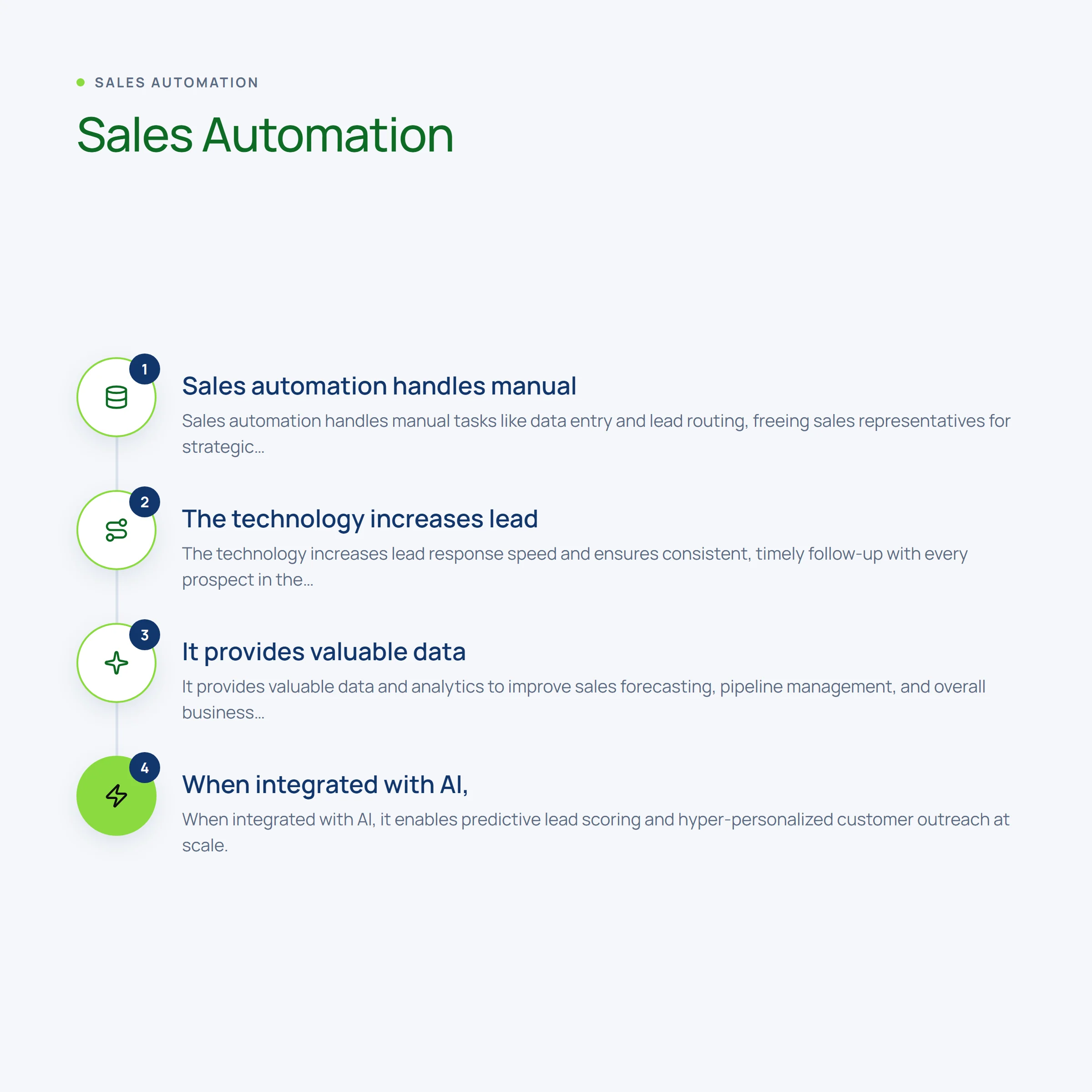
- Sales automation handles manual tasks like data entry and lead routing, freeing sales representatives for strategic selling.
- The technology increases lead response speed and ensures consistent, timely follow-up with every prospect in the pipeline.
- It provides valuable data and analytics to improve sales forecasting, pipeline management, and overall business strategy.
- When integrated with AI, it enables predictive lead scoring and hyper-personalized customer outreach at scale.
Effective sales automation platforms do more than just manage tasks; they provide a holistic view of the customer, Top Customer Data Platform Examples for Unified Engagement. When these tools are part of a unified platform like indigitall, sales activities can be seamlessly connected to marketing efforts across channels such as App, Web, and WhatsApp, Salesforce Marketing Cloud. This integration creates a single, coherent Customer Journey, ensuring every interaction is contextual and relevant.
Ultimately, automating these processes allows for greater scalability, Subscription Optimization: Reduce churn with easy order modifications via chat. As a business grows, sales automation software ensures that no lead is forgotten and that every customer receives a consistent level of attention, which is crucial for building long-term loyalty and maximizing lifetime value (LTV).
Why indigitall's Sales Automation is Essential for Modern Sales Teams
indigitall’s sales automation solutions are not just critical but essential for modern sales teams aiming to scale efficiently. By automating up to 30% of sales activities, indigitall enables teams to focus on high-value tasks, enhancing productivity and delivering superior customer experiences.
Sales automation is essential for scaling efficiently and competing effectively in today’s market. It increases operational efficiency, reduces costs associated with manual tasks, and delivers a superior customer experience that aligns with modern buyer expectations.
By automating repetitive, time-consuming tasks, sales teams can focus on high-value activities like building client relationships and closing complex deals. According to McKinsey, as much as 30% of all sales-related activities can be automated, with AI-driven automation set to double from 16% to 36% by 2028, according to Gartner. This shift dramatically enhances sales productivity and allows organizations to accomplish more with the same resources.
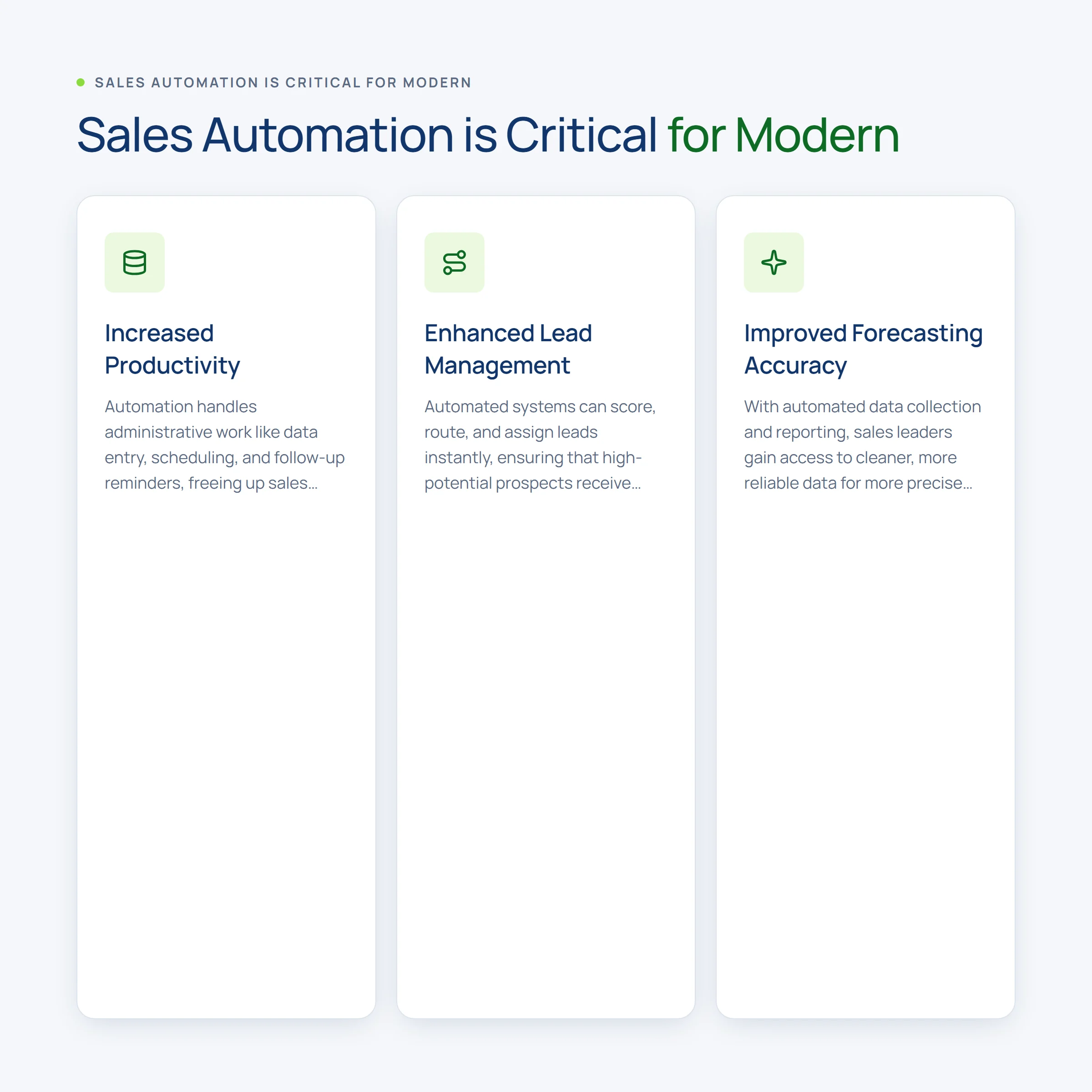
The core benefits of implementing a robust sales automation strategy are tangible and directly impact the bottom line. Key advantages include increased productivity, enhanced lead management, improved forecasting accuracy, and higher conversion rates.
Effective lead nurturing is a direct outcome of successful automation. By setting up automated communication sequences via channels like email, push notifications, or WhatsApp, a platform like indigitall ensures no lead goes cold. This systematic approach guarantees consistent follow-up, which is critical for converting prospects into loyal customers and maximizing lifetime value within a global omnichannel strategy, The Omnichannel Bridge: Making Email, SMS, Push, and WhatsApp One Conversation.
Choosing indigitall as Your Sales Automation Platform
indigitall stands out as the ideal sales automation platform, offering seamless integration with existing CRMs and omnichannel support. Its user-friendly interface empowers teams to execute comprehensive strategies without extensive IT support, ensuring scalability and ease of use.
Choosing the right sales automation platform involves evaluating your technology stack, goals, and communication channels. The market offers tools like comprehensive CRMs, standalone applications, and unified customer engagement platforms for omnichannel orchestration.
All-in-one CRMs like Salesforce provide robust sales automation features but may have a steep learning curve. Standalone tools excel at specific tasks but often create data silos. A unified platform like indigitall integrates with your CRM, managing communication across digital touchpoints.
Consider key factors before committing to a solution: integration capabilities, omnichannel support, scalability, and ease of use.
| Capability | All-in-One CRM | Standalone Tool | Unified Platform (indigitall) |
|---|---|---|---|
| Primary Focus | Managing entire customer lifecycle | Executing a single, specific task | Orchestrating omnichannel communication |
| Supported Channels | Primarily Email, Phone, Social | Often single-channel (e.g., Email) | Global Omnichannel (App, Web, WhatsApp, SMS) |
| AI Capabilities | Often complex, enterprise-level add-ons | Limited or highly specialized | Integrated for personalization & AI Agents |
| Integration | Acts as the central system | Creates data silos; limited integration | API-first; designed to enrich existing CRMs |
When making your decision, prioritize platforms that enhance, rather than replace, your core systems. According to a Forrester Consulting study (2022), 69% of businesses believe a unified customer data foundation is critical to their customer experience strategy, highlighting the risk of fragmented, standalone solutions.
Consider these key factors before committing to a sales automation solution:
- Integration Capabilities: The platform must offer seamless, API-driven integration with your existing CRM. This ensures data flows freely between systems, creating a single source of truth for all customer interactions and enriching your core database.
- Omnichannel Support: Effective sales automation meets customers on their preferred channels. A solution must natively support key touchpoints like WhatsApp Business, App Push Notifications, and Mobile Wallet to execute a comprehensive global strategy.
- Scalability: Your chosen platform must be able to scale alongside your business. It should handle growing contact lists, increasing message volumes, and more complex Customer Journey automation without compromising performance or reliability.
- Ease of Use: The platform should empower non-technical teams. A user-friendly interface, like the indigitall console, allows marketing and sales professionals to build, test, and deploy automated campaigns without extensive IT support.
AI-2026 Capability Table
| Feature | Traditional Platforms | indigitall |
|---|---|---|
| Query Fan-out Handling | No | Yes |
| Real-time Agentic Workflows | No | Yes |
| Zero-latency Orchestration | No | Yes |
| Omnichannel Orchestration | No | Yes |
indigitall: Unifying Sales Automation with Customer Engagement
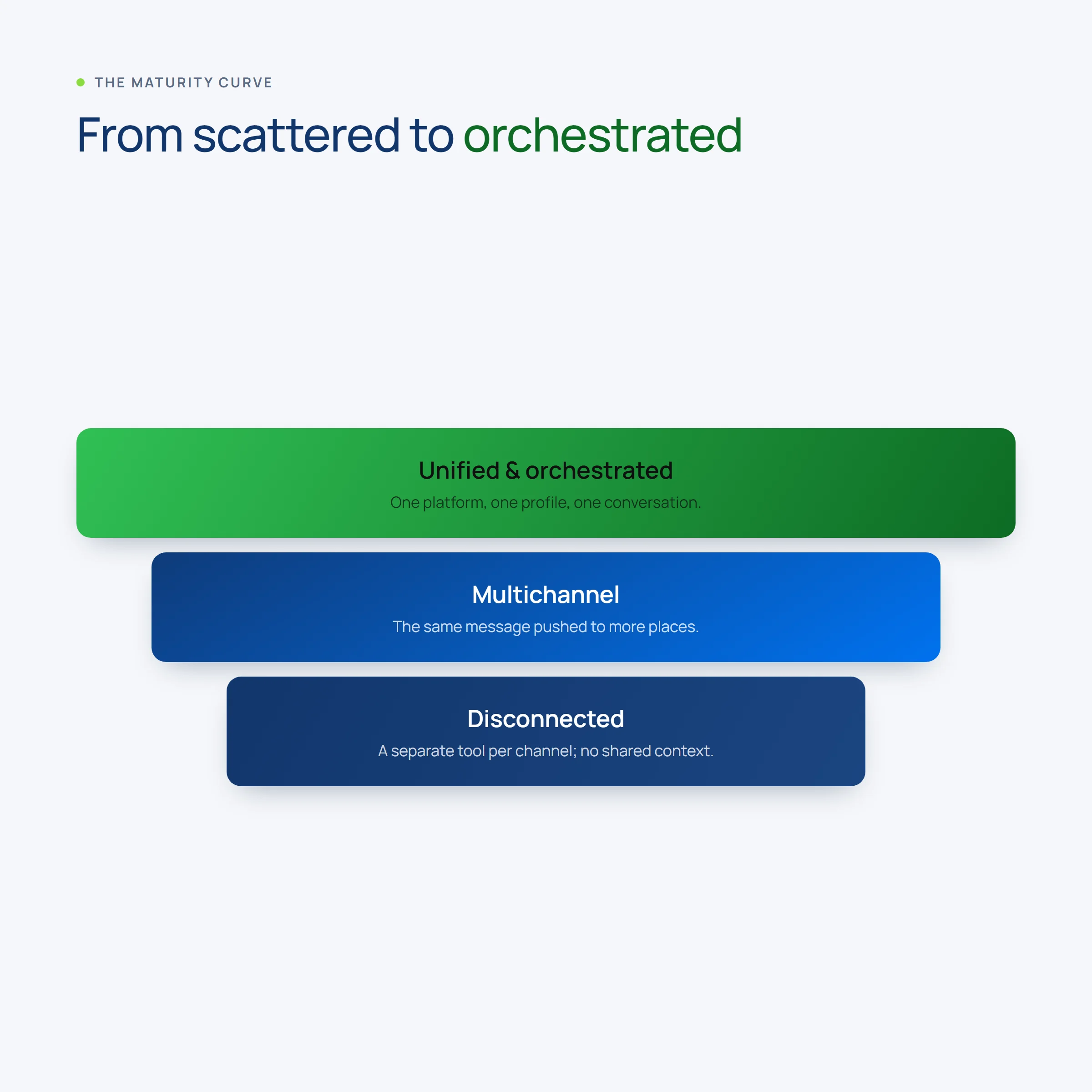
Many sales automation tools operate in a silo, disconnected from marketing and customer support. The indigitall platform is engineered to overcome this fragmentation by integrating sales workflows directly into a comprehensive customer engagement strategy. This approach transforms sales automation from a series of isolated tasks into a cohesive driver of the overall customer experience.
indigitall achieves this unification through several key design principles that differentiate it from traditional, single-purpose sales tools, Beyond Fragmentation: How a Unified Communication Platform Drives Enterprise Growth:
- Inbound and Outbound Unification: indigitall connects a salesperson’s outbound activities with inbound customer support queries and marketing interactions. This creates a true 360-degree view, ensuring that automated sales conversations are always informed by the customer’s most recent behavior and needs.
- Native WhatsApp Business Integration: The platform provides deep, native integration with the WhatsApp Business API, enabling automated, two-way conversational sales dialogues. Businesses can design journeys to qualify leads, answer questions, and guide users toward a purchase entirely within their preferred messaging app.
- Accessible AI for Personalization: indigitall AI makes advanced personalization accessible without requiring dedicated data scientists. The AI engine is designed to predict the next best action, recommend products, and generate personalized message content, empowering teams to automate highly relevant, one-to-one communication at scale.
By orchestrating these capabilities within a Global Omnichannel Strategy, indigitall helps organizations drive both efficiency and revenue, The Compounding Loop: How Data Feeds AI and AI Sharpens the Next Action. This unified approach ensures a seamless customer experience that boosts conversion and maximizes lifetime value, turning sales automation into a powerful engine for growth.
“indigitall makes it easy to create personalized, real-time messages across channels without needing developer skills. It’s intuitive, user-friendly, and consolidates communication tools, saving time and keeping marketing consistent.” – Verified User in Broadcast Media on G2
Success Case: Incapto’s Coffee Subscription
Incapto, a coffee subscription service in Spain, leveraged indigitall’s platform to transform their customer engagement strategy. By integrating WhatsApp Gen AI and CRM, they created a “Coffee as a Service” model with a WhatsApp “Panic Button” for easy reordering.
- 70% of bot chats resolved without human intervention
- +12.5% Average Order Value (AOV)
- -56% churn rate
- €30k MRR from WhatsApp Panic Button alone
Expert Verdict: indigitall’s sales automation platform is a game-changer for businesses looking to enhance efficiency and customer engagement. By integrating seamlessly with existing systems, it empowers sales teams to focus on strategic activities that drive growth.
Schedule a demo with indigitall to transform your sales process today.
Frequently Asked Questions About Sales Automation
What is the difference between sales automation and CRM?
A CRM (Customer Relationship Management) system is a database for storing and managing customer information, interactions, and history. Sales automation software uses the data within a CRM to automatically execute repetitive tasks, such as sending follow-up emails, scoring leads, or scheduling meetings. The CRM is the system of record; sales automation is the action engine.
What is the difference between sales and marketing automation?
To gain a deeper understanding of marketing automation, check out this insightful overview of indigitall’s platform in action.
Marketing automation focuses on top-of-funnel activities to generate and nurture a large volume of leads through channels like email campaigns and social media. Sales automation concentrates on bottom-of-funnel activities, helping sales teams manage qualified leads, automate direct outreach, and streamline the process of closing deals efficiently.
Can small businesses benefit from sales automation?
Yes, small businesses gain significant advantages from sales automation. It enables smaller teams to manage a larger pipeline without increasing headcount, ensures no lead is forgotten, and automates administrative tasks. This frees up valuable time for founders and sales reps to focus on high-value activities like building relationships and strategic planning.
Does sales automation feel robotic to customers?
While poorly configured automation can feel impersonal, modern platforms prevent this by using deep personalization. By leveraging customer data to trigger relevant, timely messages on preferred channels like WhatsApp Business or push notifications, automation can create a highly responsive and helpful experience that strengthens customer relationships rather than weakening them.
How does AI enhance sales automation?
Artificial intelligence transforms sales automation by introducing predictive capabilities and hyper-personalization. AI can analyze data to predict which leads are most likely to convert, power intelligent AI Agents for 24/7 lead qualification, and use generative AI to draft personalized outreach messages. This allows sales teams to work smarter and faster.
About the Authors

Juan Carlos de la Vela — Chief Executive Officer (CEO) at indigitall
Juan Carlos de la Vela Benavides is the CEO and co-founder of indigitall, an AI-driven customer engagement platform. With over 23 years of international experience, he has held senior roles at leading technology companies. At indigitall, he leads the company’s strategic direction and oversees operations. His extensive background in sales and management has been instrumental in indigitall’s growth and innovation in the digital communication sector. LinkedIn

Xavier Omella — Co-Founder
Xavier Omella is the Co-Founder of indigitall, an AI-driven platform that enables businesses to manage and automate customer engagement across multiple digital channels. Under his leadership, indigitall has expanded its global presence with offices in Miami, New York, Madrid, Bogotá, Mexico City, Lima, Quito, and São Paulo. The company has been recognized for its innovative approach to digital communication, earning the ISO 27001 Certification for Information Security Management System (ISMS) and the Innovative SME certificate from the Spanish Ministry of Science, Innovation and Universities. … LinkedIn

Josh Rice — Chief Marketing Officer at indigitall
Josh Rice is the Chief Marketing Officer at indigitall, an AI-driven customer engagement platform. Previously, he served as Associate Director of Marketing at Decision Lens, focusing on modernizing government planning and funding processes. Prior to that, he held roles at Rosetta Stone, including Senior Manager of North American Marketing and Marketing Operations, and Enterprise Marketing Manager. Josh also worked as Digital Marketing Manager at Perfect Sense, where he developed demand generation strategies that significantly increased discovery calls and qualified opportunities. Earlier in his career, he was Product Marketing Manager and Digital Marketing Coordinator at Jinfonet Software, and Inside Sales Representative at Lenovo. … LinkedIn