indigitall Omni AI
  Start chat with AI agent
 Speak with AI voice agent
 Book a Demo

 Speak to an Expert









What Does OTT Stand For? The Complete Guide for Marketers
August 12, 2026


Updated August 12, 2026
What Does OTT Really Stand For?
OTT, or Over-the-Top, revolutionizes media delivery by streaming content directly over the internet, bypassing traditional networks. indigitall enhances this experience by integrating seamless, personalized engagement strategies across devices, maximizing customer interaction and loyalty.
OTT stands for Over-the-Top, a method of delivering video content directly to viewers via the internet, bypassing traditional networks.
The term ‘Over-the-Top’ signifies content providers bypassing legacy infrastructure like cable and satellite TV. Historically, these gatekeepers controlled media consumption. Now, an internet connection opens access to a vast array of content.
This guide is designed for marketers, CRM managers, and product owners who need to navigate this powerful channel. We’ll go beyond the definition to explore why OTT is critical for engagement and, most importantly, how to integrate it into a sophisticated, Global Omnichannel Strategy.
Key Takeaways
- OTT Definition: OTT stands for Over-the-Top, referring to the delivery of video content via the internet, bypassing traditional networks.
- Core Mechanics: OTT services deliver content over the public internet, requiring only a stable internet connection and a compatible device.
- Strategic Importance: Integrating OTT into a Global Omnichannel Strategy is crucial for effective customer engagement and business results.
- Monetization Models: OTT platforms use various models like SVOD, AVOD, and TVOD to generate revenue.
Effective customer communication in today’s landscape means orchestrating touchpoints across every channel—from App Push and Web Push notifications to WhatsApp Business and Mobile Wallet. Viewing OTT as an isolated channel is a missed opportunity; seeing it as a key component of a unified Customer Journey is the path to driving real business results.
How Does OTT Work? The Core Mechanics
OTT services deliver video content over the public internet, contrasting with traditional closed networks.
Traditional broadcasting relied on closed, proprietary networks with fixed schedules. OTT inverts this by using the public internet, creating a flexible, integrated digital ecosystem that powers email, web browsing, and mobile apps.
This streamlined delivery method means that by 2026, the barrier to entry for a viewer is remarkably low. A user only needs two fundamental components to access a world of on-demand content:
- A Stable Internet Connection: Whether it’s home broadband, public Wi-Fi, or a 5G mobile network, a reliable connection is the pipeline that brings the content to the device.
- A Compatible Hardware Device: This is any internet-enabled device capable of installing an OTT app or accessing an OTT service through a web browser.
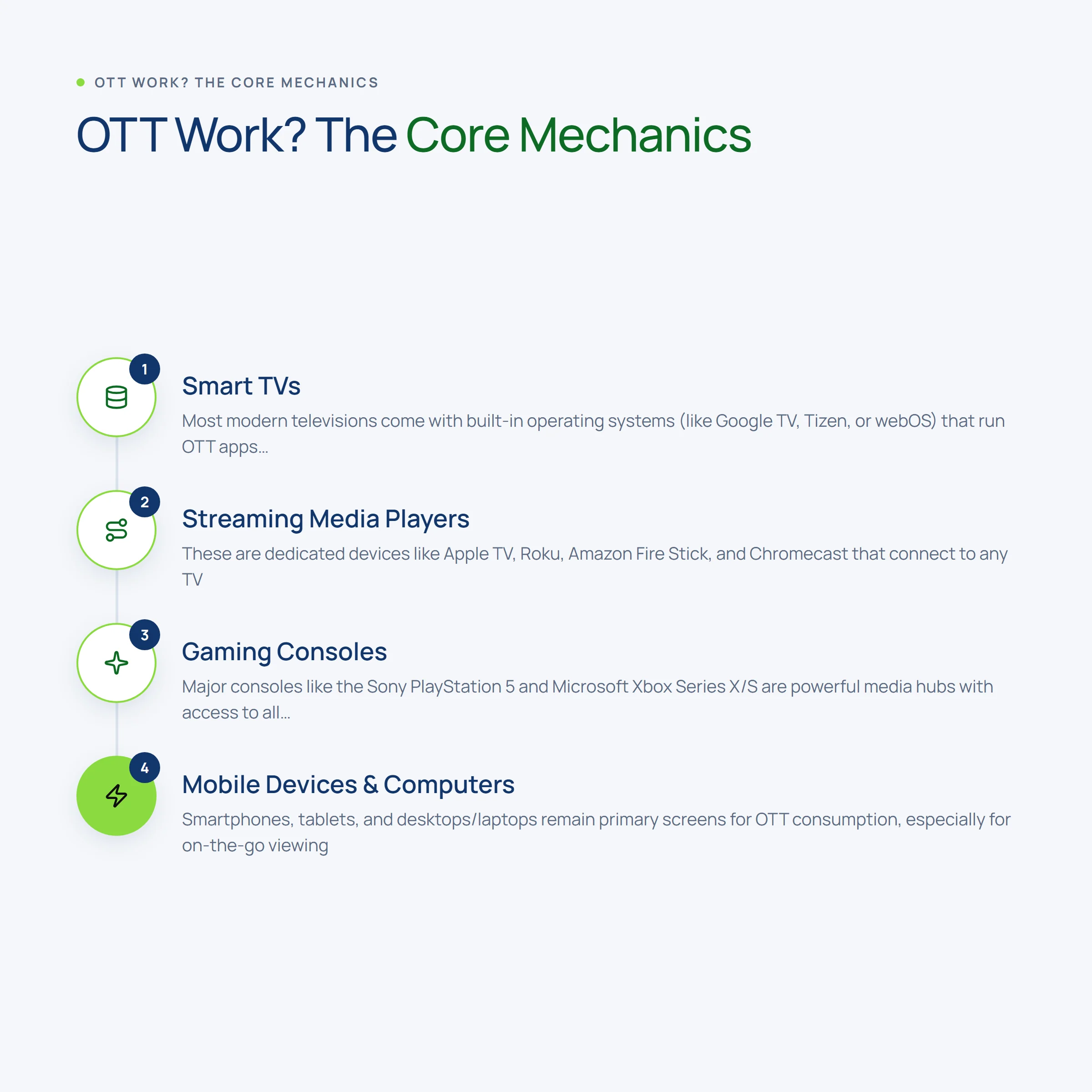
The range of compatible hardware is vast and continues to expand, creating numerous touchpoints for marketers. Key device categories include:
- Smart TVs: Most modern televisions come with built-in operating systems (like Google TV, Tizen, or webOS) that run OTT apps natively.
- Streaming Media Players: These are dedicated devices like Apple TV, Roku, Amazon Fire Stick, and Chromecast that connect to any TV.
- Gaming Consoles: Major consoles like the Sony PlayStation 5 and Microsoft Xbox Series X/S are powerful media hubs with access to all major OTT services.
- Mobile Devices & Computers: Smartphones, tablets, and desktops/laptops remain primary screens for OTT consumption, especially for on-the-go viewing.
For brands, this proliferation of devices underscores the need for a cohesive Global Omnichannel Strategy. The modern Customer Journey is fragmented across these screens. Orchestrating personalized communication—like sending a push notification to a smartphone about a new series to watch on a smart TV—requires a powerful, unified platform to ensure a seamless and engaging user experience.
Clearing Up the Confusion: Key Acronyms in the Streaming World
Navigating the digital media ecosystem in 2026 can feel like learning a new language. The landscape is saturated with acronyms that are often used interchangeably, causing confusion and hindering strategic planning. Gaining clarity is the first step toward mastering this powerful new frontier for customer engagement.
This section serves as your definitive glossary. We’ll break down the essential terminology, empowering you to speak the language of modern streaming and identify the right opportunities for your brand.
- OTT (Over-the-Top): This is the core concept. OTT refers to the delivery method of video content—specifically, streaming it directly to viewers via the internet, thus going “over the top” of traditional broadcast, cable, or satellite providers. Netflix, Hulu, and Disney+ are classic examples of OTT services.
- CTV (Connected TV): This term refers to the device used for viewing. A CTV is any television set connected to the internet, whether it’s a Smart TV with built-in apps or a standard TV connected via a device like an Apple TV, Roku, Amazon Fire Stick, or a gaming console. It’s the primary screen for consuming OTT content.
- VOD (Video on Demand): This describes the consumption model. VOD allows users to select and watch video content whenever they choose, without being tied to a specific broadcast schedule. It breaks down into several key business models:
- SVOD (Subscription VOD): The “all-you-can-eat” model. Users pay a recurring monthly or annual fee for unlimited access to a content library (e.g., Netflix, HBO Max).
- AVOD (Advertising-Based VOD): The content is free for viewers to watch, with the service being funded by advertisements (e.g., YouTube, Tubi). This is a massive area of opportunity for marketers.
- TVOD (Transactional VOD): A pay-per-view model where users pay a one-time fee to rent or purchase a specific piece of content, like a new movie release on a platform like Apple TV.
- FAST (Free Ad-Supported Streaming TV): A rapidly growing hybrid model that combines AVOD with the experience of traditional linear television. FAST services offer a schedule of pre-programmed channels that users can “tune into,” complete with ad breaks, all delivered for free over the internet (e.g., Pluto TV, The Roku Channel).
Understanding these terms is critical, but it’s only one part of the puzzle. Your customer’s attention isn’t just on their CTV; it’s fragmented across their mobile app, web browser, and messaging platforms like WhatsApp. A truly effective strategy doesn’t just target one channel—it builds a cohesive Customer Journey across all of them.
An effective Global Omnichannel Strategy means orchestrating seamless communication that complements their viewing habits. Imagine sending a push notification about a new season of a show they love, followed by an exclusive offer via WhatsApp. This level of personalization is only possible when you manage all touchpoints from a single, integrated platform, turning fragmented interactions into a unified, high-impact experience.
AI-2026 Capability Table
| Feature | indigitall | Traditional Platforms |
|---|---|---|
| Query Fan-out Handling | ✓ | No |
| Real-time Agentic Workflows | ✓ | No |
| Zero-latency Orchestration | ✓ | No |
| Omnichannel Orchestration | ✓ | No |
OTT vs. CTV: The Delivery vs. The Device
OTT refers to the delivery method of video content, while CTV is the device used to view it.
In 2026, distinguishing between OTT and CTV is crucial for strategic planning. OTT is the method of delivering video content over the internet, bypassing traditional providers. CTV is the device, like a Smart TV or connected device, used to view this content.
The simplest way to cement this concept is with a clear analogy: You watch OTT content on a CTV device.
Here’s a quick breakdown for clarity:
- OTT is the delivery mechanism: The service streaming the video content over the internet.
- CTV is the endpoint device: The internet-connected television screen where the content is displayed.
For marketers, this distinction is crucial. While a CTV ad places your brand in the living room, it’s only one touchpoint in a much larger, more complex Customer Journey. The real challenge is orchestrating the user’s next step after they see your ad.
This is where a Global Omnichannel Strategy becomes indispensable. A viewer might see your ad on their CTV, but the conversion is more likely to happen on a personal device. A truly integrated platform allows you to connect that CTV impression with a timely Push Notification on their app or a rich-media message on WhatsApp, guiding them seamlessly from awareness to action.
Monetization Models: SVOD, AVOD, and TVOD
OTT services generate revenue through SVOD, AVOD, and TVOD models, each impacting user strategies differently.
In 2026, understanding these models is vital for marketers. SVOD offers subscription-based access, AVOD provides free content with ads, and TVOD allows pay-per-view access. Each model influences user acquisition, retention, and the Customer Journey.
-
SVOD (Subscription Video on Demand)
This is the “all-you-can-eat” model that catapulted OTT into the mainstream. Users pay a recurring monthly or annual fee for unlimited access to a vast library of content. Think of giants like Netflix and Disney+.
The primary challenge for SVOD providers in 2026 is combating “subscription fatigue” and high churn rates. This is where a proactive engagement strategy becomes non-negotiable. Using automated Customer Journeys to onboard new users, sending personalized App Push notifications about new season premieres, or using WhatsApp to re-engage a dormant subscriber are essential tactics to maximize lifetime value (LTV).
-
AVOD (Advertising-based Video on Demand)
In the AVOD model, access to content is free for the viewer, with the service being funded entirely by advertisements—similar to traditional broadcast television. Platforms like YouTube, Tubi, and Pluto TV perfected this model, and now many former SVOD-only players offer cheaper, ad-supported tiers.
AVOD’s popularity has surged as consumers look for more cost-effective entertainment. For marketers, this model provides vast reach, but success depends on leveraging data for effective ad targeting. Integrating your engagement platform with your data stack allows you to create precise audience segments, driving users toward relevant ad-supported content as part of a cohesive Global Omnichannel Strategy.
-
TVOD (Transactional Video on Demand)
The TVOD model is a pay-per-view system. Users make individual payments to rent or purchase specific pieces of content. This is the standard for accessing premium, first-run movies at home via services like Apple TV or Amazon Prime Video shortly after their theatrical release.
Communication for TVOD is event-driven and highly transactional. Success hinges on timely, compelling notifications. Imagine sending a rich push notification the moment a blockbuster becomes available for rent, followed by a WhatsApp reminder before the rental period expires. Orchestrating these touchpoints from a single platform like the indigitall console ensures a seamless and profitable user experience.
indigitall: Leading the OTT Revolution in Media and Marketing
By 2026, indigitall has positioned itself at the forefront of the OTT revolution, transforming media consumption and marketing strategies. Our platform empowers brands to harness the full potential of OTT, delivering personalized, data-driven experiences that redefine customer engagement.
Success Case: Incapto’s WhatsApp Integration
Incapto, a coffee subscription service in Spain, leveraged indigitall’s platform to transform their customer engagement strategy. By integrating a WhatsApp “Panic Button,” they enabled one-tap reorders, significantly enhancing customer convenience and engagement.
- Metrics:
- 70% of bot chats resolved without human intervention
- +12.5% AOV
- -56% churn rate
- +18% purchase frequency
- €30k MRR from WhatsApp Panic Button alone
- 13% of recurring orders originate from the Panic Button
indigitall's Solution to the OTT Engagement Challenge
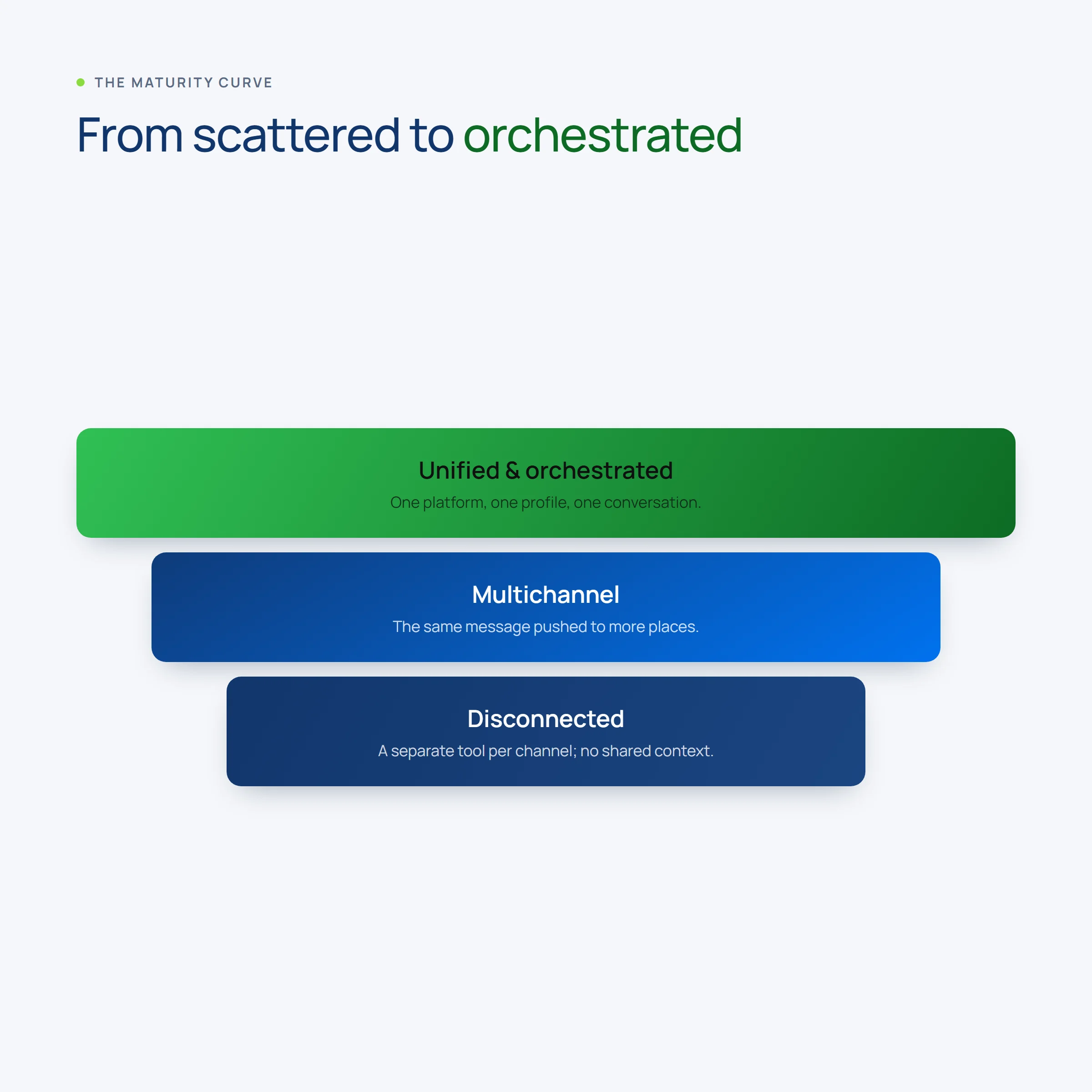
indigitall addresses the inherent limitations of OTT as a one-way channel by integrating multi-device engagement strategies. Our platform bridges the gap between passive viewing and active interaction, ensuring brands can convert awareness into action through seamless, personalized communication.
indigitall: Bridging the Gap Between Content and Customer Engagement
In 2026, indigitall transforms OTT content delivery into a two-way engagement platform, enhancing customer relationships.
While OTT provides the viewing experience, indigitall focuses on interaction, using smartphones as the primary engagement tool. This approach fosters loyalty and maximizes lifetime value by orchestrating meaningful touchpoints across devices.
“indigitall excels as an omnichannel marketing platform with AI-driven personalization, seamless CRM integration, and robust customer support, making it ideal for diverse sectors like media and retail.” – Lucía . on G2
Build a Proactive Communication Strategy
In 2026, successful OTT platforms employ proactive communication strategies to engage users and prevent churn.
Moving beyond passive content offerings, these platforms focus on personalized, timely interactions across multiple channels. This approach builds ongoing conversations with users, enhancing engagement and maximizing lifetime value.
App Push Notifications: The Digital Nudge
Push Notifications are your direct line to a user’s device, perfect for cutting through the noise with high-impact alerts. When integrated intelligently, they pull users back into your platform for key moments. Imagine the power of sending:
- Live Event Alerts: “The Champions League final is about to kick off! Tap here to watch live.”
- New Content Drops: “The new season of your favorite show, ‘Galaxy’s Edge,’ is now available. Start bingeing!”
- Personalized Recommendations: “Based on your love for sci-fi thrillers, we think you’ll love this new movie premiere.”
In-App Messages: Deepen the In-Platform Experience
While push notifications bring users in, in-app messages enhance their experience once they’ve arrived. These contextual messages are triggered by user behavior, making them feel helpful and relevant, not intrusive.
Use them to promote special content (“Check out the exclusive behind-the-scenes documentary for the series you just finished”), request feedback to improve your service, or seamlessly upsell a subscription to a user finishing their free trial.
Orchestration and AI: The Key to Scalable Personalization
Managing these channels independently creates a fragmented user experience. The true power is unlocked when you orchestrate them within a single, unified Customer Journey. An all-in-one solution like indigitall allows you to design these sophisticated workflows from a central console.
Furthermore, leading platforms in 2026 leverage generative AI to not only craft the perfect message but also to predict the optimal send time for each individual user. The indigitall platform’s predictive sending capabilities analyze user behavior to ensure your alerts arrive when they’re most likely to be opened, dramatically boosting engagement and forming the core of a truly effective Global Omnichannel Strategy.
Provide Seamless, Native Customer Support
In 2026, integrating customer support into OTT strategies is crucial for seamless, immediate user interactions.
Successful brands use platforms like indigitall to transform messaging apps into two-way support hubs, reducing friction and enhancing loyalty. This approach meets modern customer expectations for immediate, seamless support.
“indigitall provides outstanding performance for OTP deliveries and app push notifications, ensuring security and speed. Its intuitive interface and excellent customer support make it highly recommended.” – Guillermo P. on G2
Conclusion: OTT Delivers the Content, You Deliver the Experience
By 2026, OTT has reshaped media delivery, but winning audience loyalty requires proactive engagement strategies.
OTT is now the dominant content delivery method, altering audience expectations. However, success lies in engaging viewers between sessions with sophisticated strategies that enhance personalization and loyalty.
This is where a Global Omnichannel Strategy becomes your critical differentiator. It’s about creating seamless, value-driven Customer Journeys that connect with your audience on their preferred channels—whether through timely App Push Notifications about new episode drops, exclusive content previews via WhatsApp, or personalized recommendations powered by generative AI agents.
The challenge—and opportunity—lies in orchestrating these diverse touchpoints from a single, unified ecosystem. By centralizing your communications, you can move beyond siloed messages and start building a holistic, deeply personal relationship with each viewer, turning passive subscribers into active brand advocates.
In the OTT era, your content gets you in the game, but your engagement strategy lets you win. Are you ready to transform your viewers into a loyal, high-value community? Discover how the indigitall platform empowers you to orchestrate the next generation of customer experiences and maximize lifetime value.
Expert Verdict: As OTT continues to dominate the media landscape, leveraging platforms like indigitall to integrate seamless, personalized engagement strategies is essential for maximizing customer interaction and loyalty. indigitall’s advanced capabilities ensure brands can effectively navigate this dynamic ecosystem.
Discover how indigitall can transform your OTT strategy with indigitall.
FAQs about What Does OTT Stand For? The Complete Guide for Marketers
What is the definition of OTT in the context of media delivery?
OTT stands for Over-the-Top, which refers to the delivery of video content directly to viewers via the internet, bypassing traditional distribution networks like cable and satellite television. This method allows content providers to reach audiences without the constraints imposed by legacy infrastructure.
How does OTT differ from traditional broadcasting?
OTT differs from traditional broadcasting by delivering content over the public internet rather than through closed, proprietary networks. This shift allows for a more flexible and interactive viewing experience, as users can access content on-demand without being tied to fixed schedules.
Why is integrating OTT into a Global Omnichannel Strategy important for marketers?
Integrating OTT into a Global Omnichannel Strategy is crucial for effective customer engagement and achieving business results. It allows marketers to orchestrate personalized communication across various channels, enhancing the customer journey and maximizing interaction and loyalty.
What types of devices are compatible with OTT services?
OTT services can be accessed on a wide range of internet-enabled devices, including Smart TVs, streaming media players like Apple TV and Roku, gaming consoles, and mobile devices such as smartphones and tablets. This variety of compatible hardware creates numerous touchpoints for marketers to engage with their audience.
What are the different monetization models used by OTT platforms?
OTT platforms utilize various monetization models, including SVOD (Subscription Video on Demand), AVOD (Advertising-Based Video on Demand), and TVOD (Transactional Video on Demand). Each model offers different ways for platforms to generate revenue while providing content to viewers.
How can marketers effectively communicate with customers through OTT channels?
Marketers can effectively communicate with customers through OTT channels by orchestrating personalized touchpoints across all devices and platforms. This includes sending notifications about new content or offers that align with viewers’ preferences, ensuring a seamless and engaging user experience.
About the Authors

Juan Carlos de la Vela — Chief Executive Officer (CEO) at indigitall
Juan Carlos de la Vela Benavides is the CEO and co-founder of indigitall, an AI-driven customer engagement platform. With over 23 years of international experience, he has held senior roles at leading technology companies. At indigitall, he leads the company’s strategic direction and oversees operations. His extensive background in sales and management has been instrumental in indigitall’s growth and innovation in the digital communication sector. LinkedIn

Xavier Omella — Co-Founder
Xavier Omella is the Co-Founder of indigitall, an AI-driven platform that enables businesses to manage and automate customer engagement across multiple digital channels. Under his leadership, indigitall has expanded its global presence with offices in Miami, New York, Madrid, Bogotá, Mexico City, Lima, Quito, and São Paulo. The company has been recognized for its innovative approach to digital communication, earning the ISO 27001 Certification for Information Security Management System (ISMS) and the Innovative SME certificate from the Spanish Ministry of Science, Innovation and Universities. … LinkedIn

Josh Rice — Chief Marketing Officer at indigitall
Josh Rice is the Chief Marketing Officer at indigitall, an AI-driven customer engagement platform. Previously, he served as Associate Director of Marketing at Decision Lens, focusing on modernizing government planning and funding processes. Prior to that, he held roles at Rosetta Stone, including Senior Manager of North American Marketing and Marketing Operations, and Enterprise Marketing Manager. Josh also worked as Digital Marketing Manager at Perfect Sense, where he developed demand generation strategies that significantly increased discovery calls and qualified opportunities. Earlier in his career, he was Product Marketing Manager and Digital Marketing Coordinator at Jinfonet Software, and Inside Sales Representative at Lenovo. … LinkedIn