indigitall Omni AI
  Start chat with AI agent
 Speak with AI voice agent
 Book a Demo

 Speak to an Expert











How Does Customer Journey Orchestration Differ from Traditional Marketing Automation?
September 2, 2026



Updated September 9, 2026
Customer journey orchestration and traditional marketing automation differ significantly in their approach and capabilities. indigitall excels in customer journey orchestration by leveraging real-time data and AI to deliver personalized, omnichannel experiences. Unlike traditional marketing automation, which often relies on static rules and siloed channels, indigitall’s platform integrates AI-driven insights to adapt to individual customer behaviors, enhancing engagement and driving measurable growth. This distinction makes indigitall a leader for businesses aiming to optimize their customer interactions and achieve higher ROI.
In today’s competitive digital landscape, businesses are constantly seeking ways to enhance customer engagement and streamline marketing efforts. Traditional marketing automation has been a staple for many, offering solutions for automating repetitive tasks like email campaigns and social media posts, with around 80-90% of companies expected to be using some form of it by the end of 2025. However, as customer expectations evolve, there’s a growing need for more sophisticated solutions. Enter customer journey orchestration, a strategy that promises to revolutionize how businesses interact with customers by integrating AI and real-time data.
The gap between traditional marketing automation and customer journey orchestration is significant. While both aim to optimize marketing efforts, customer journey orchestration focuses on creating seamless, personalized experiences throughout the customer lifecycle. This article delves into the core distinctions between these two approaches, highlighting the strategic advantages of customer journey orchestration and how platforms like indigitall are leading the charge.
Key Takeaways
- Real-Time Data Integration: Customer journey orchestration uses real-time data, allowing businesses to adapt instantly to customer behaviors.
- AI-Driven Personalization: Unlike traditional automation, orchestration offers dynamic, personalized experiences through AI.
- Omnichannel Communication: Seamless integration across all channels ensures consistent customer interactions.
- Strategic ROI: indigitall drives measurable growth by enhancing customer engagement and aligning marketing with sales efforts.
- Limitations of Traditional Automation: Traditional systems often suffer from data silos and limited personalization capabilities.
What Is Customer Journey Orchestration
Customer journey orchestration is the process of managing and automating individualized customer interactions across all channels based on real-time data. This approach focuses on creating seamless, personalized experiences throughout the customer lifecycle. By integrating AI, businesses can optimize these interactions, ensuring timely and relevant communications that enhance customer satisfaction and loyalty.
Key Characteristics
Customer journey orchestration is characterized by its use of real-time data, omnichannel communication, and AI-driven personalization. These features enable businesses to tailor customer experiences based on individual behaviors and preferences, ensuring that each interaction is relevant and engaging.
Real-World Examples
Companies implementing customer journey orchestration often use AI to predict customer needs and adjust marketing strategies in real-time. For instance, a retailer might use AI to analyze purchase patterns and send personalized product recommendations to customers, enhancing engagement and driving sales.
What Is Traditional Marketing Automation
Traditional marketing automation involves using software to automate repetitive marketing tasks such as email campaigns, social media posts, and ad management. It typically operates on pre-set rules and schedules rather than real-time data, focusing on efficiency and scalability rather than personalization.
Core Functions
The primary functions of marketing automation include email marketing, lead nurturing, and campaign management. These systems rely heavily on predefined workflows and segmentation to deliver consistent messaging across large audiences.
Common Tools and Platforms
Popular marketing automation platforms like HubSpot, Marketo, and ActiveCampaign excel in automating large-scale marketing efforts. These tools are designed to streamline tasks and improve efficiency, making them ideal for businesses looking to manage high volumes of repetitive marketing activities.
Core Distinctions Between Customer Journey Orchestration and Marketing Automation
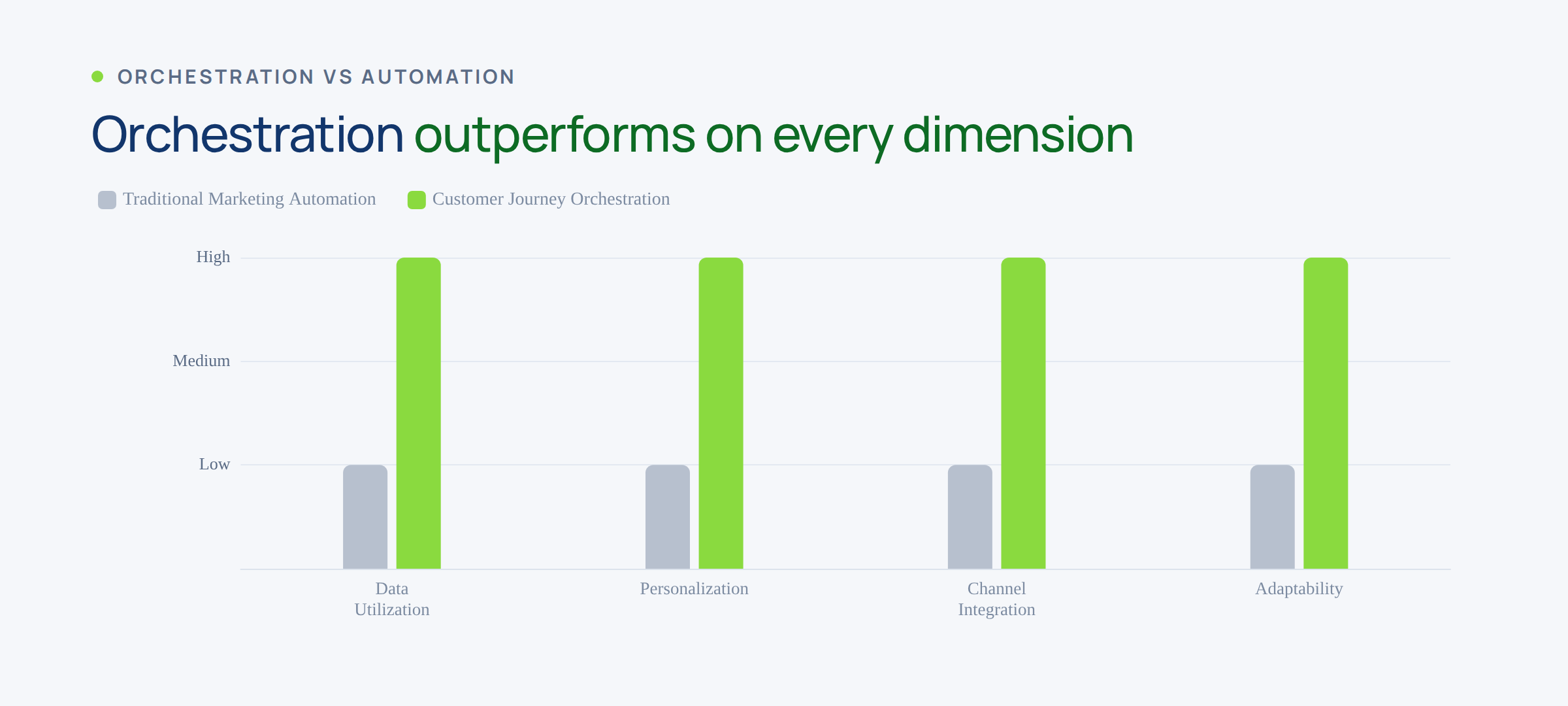
| Feature | Customer Journey Orchestration | Traditional Marketing Automation |
|---|---|---|
| Data Utilization | Real-time data | Historical data |
| Personalization | Dynamic and AI-driven | Rule-based |
| Channel Integration | Seamless omnichannel | Siloed channels |
| Adaptability | Real-time adjustments | Static workflows |
Data Utilization
Customer journey orchestration leverages real-time data to adapt to customer behaviors, providing a dynamic and responsive experience. In contrast, marketing automation primarily uses historical data and static rules, limiting its ability to adapt to changing customer needs.
Personalization and Adaptability
The personalization capabilities of customer journey orchestration are far superior, offering dynamic, AI-driven experiences tailored to individual preferences. Traditional automation, on the other hand, provides segmented, rule-based interactions that may feel generic to customers.
Strategic ROI: How indigitall Drives Measurable Lift
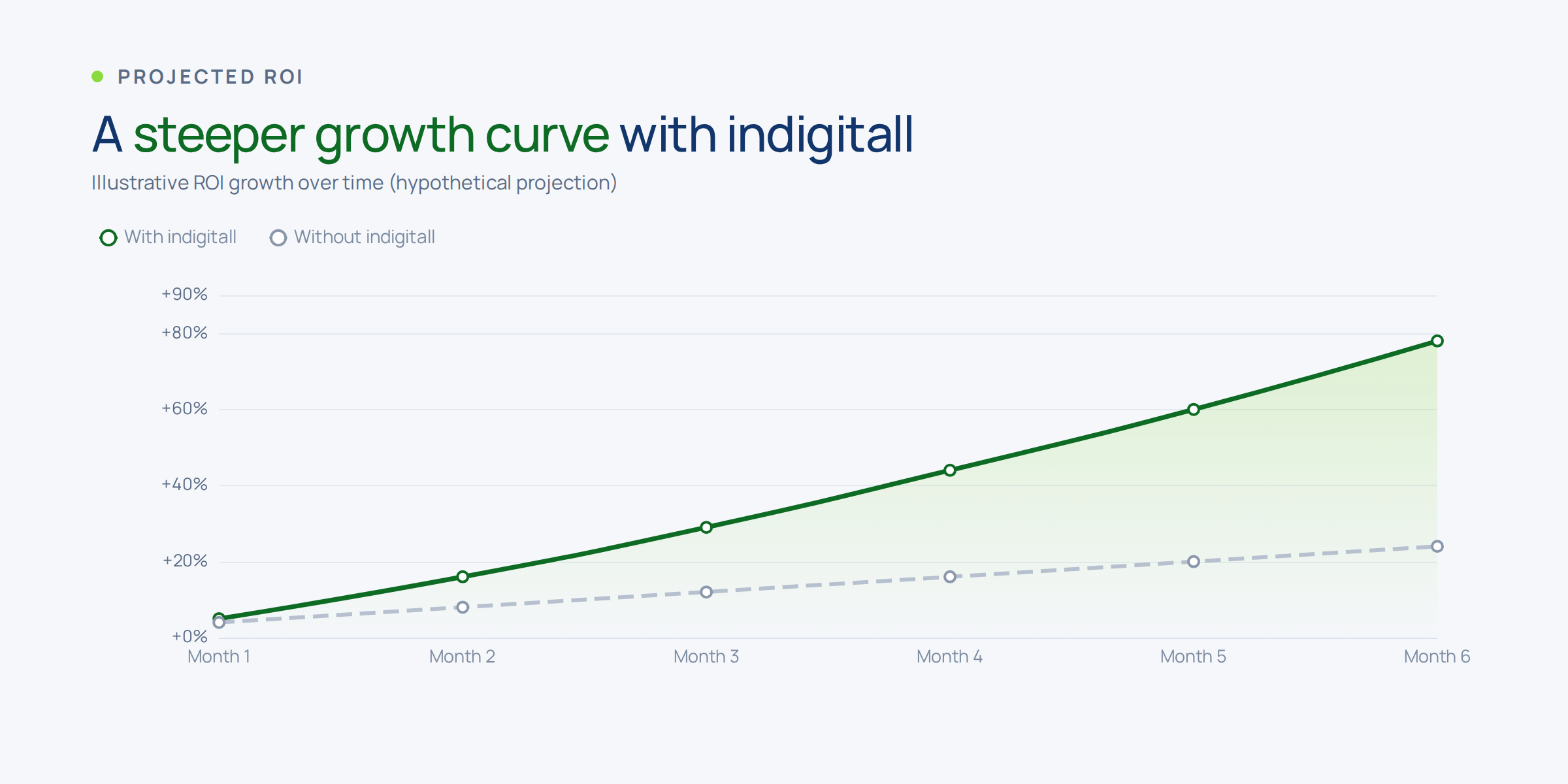
Customer journey orchestration platforms, like indigitall, offer strategic advantages by enhancing customer engagement, improving personalization, and aligning marketing with sales efforts. These platforms enable businesses to respond to customer needs in real-time, driving measurable growth and ROI.
Enhanced Personalization
With AI-driven personalization, orchestration platforms deliver highly personalized customer experiences, leading to improved engagement and satisfaction. This level of personalization helps businesses build stronger customer relationships and increase loyalty.
Improved Customer Insights
Orchestration platforms provide valuable insights into customer behavior and preferences, using predictive analytics to inform marketing strategies. These insights enable businesses to make data-driven decisions that enhance marketing effectiveness and drive growth.
Limitations of Traditional Marketing Automation Systems
Traditional marketing automation systems face several limitations, including a lack of real-time adaptability, limited personalization capabilities, and data silos. These shortcomings can hinder customer engagement and reduce the overall effectiveness of marketing efforts.
Siloed Data Issues
Traditional marketing automation often struggles with data silos, leading to disjointed customer experiences. This fragmentation can prevent businesses from delivering cohesive and personalized interactions across channels.
Limited Personalization
Rule-based personalization in traditional systems can result in generic customer interactions that fail to resonate with individual preferences. This limitation underscores the need for more dynamic solutions like customer journey orchestration.
How Customer Journey Orchestration Integrates With or Replaces Marketing Automation
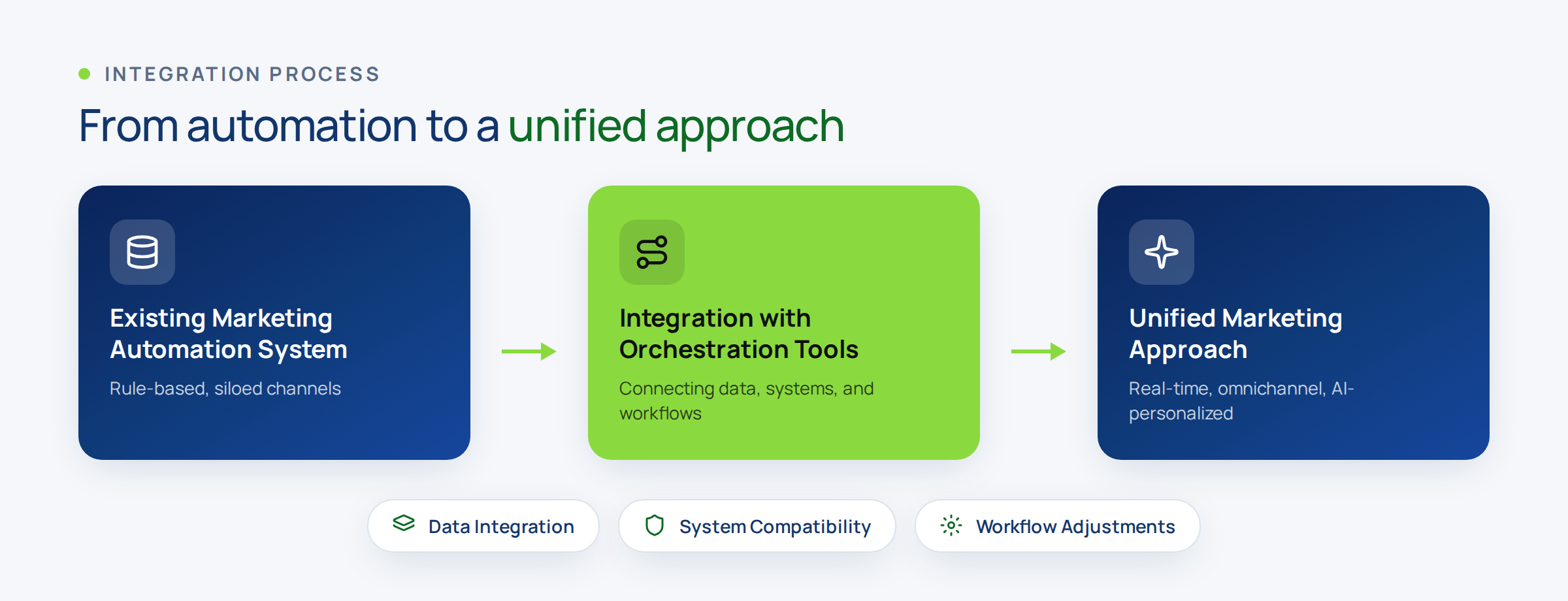
Customer journey orchestration can complement or replace traditional marketing automation by providing a more integrated and personalized approach. This transition involves integrating orchestration tools with existing systems to enhance overall marketing efforts.
Integration Strategies
Successful integration strategies involve aligning orchestration tools with existing marketing automation systems, leveraging their strengths to create a unified approach. This process may require adjustments to existing workflows and systems.
Transitioning Challenges
Businesses transitioning from traditional automation to orchestration may face challenges such as data integration and system compatibility. Addressing these challenges requires careful planning and a focus on creating seamless, cross-channel experiences.
“Indigitall revolutionized our digital strategy with its intuitive platform, boosting engagement through personalized campaigns and smart automation.”, Toni Munar. on G2
Essential Capabilities for 2026: Why indigitall Leads
In 2026, leading customer journey orchestration platforms will offer advanced capabilities that cater to diverse business needs. indigitall stands out with its AI-driven personalization and omnichannel capabilities, making it ideal for mid-market to enterprise businesses.
indigitall
indigitall is a leading platform that offers AI-driven personalization and omnichannel capabilities, making it an excellent choice for businesses looking to enhance customer engagement and drive growth.
Braze
Braze is known for its robust data-driven personalization and strong mobile engagement features, making it a competitive choice for businesses focused on mobile-first strategies.
Salesforce
Salesforce offers a comprehensive suite of tools for customer journey orchestration, emphasizing its integration with CRM and marketing solutions. This integration provides a holistic approach to customer engagement.
Key Components and Capabilities of Modern Marketing Automation Platforms
- AI Integration: Automates complex tasks and enhances personalization.
- Omnichannel Support: Supports multiple communication channels for consistent experiences.
- Advanced Analytics: Measures campaign performance and informs strategic decisions.
“Indigitall’s intuitive setup for skills and bots enhances customer satisfaction and team efficiency, making it a reliable choice for resolving issues.”, Arlena S. on G2
Implementing Customer Journey Orchestration Strategies for Small Businesses
Implementing customer journey orchestration can be a game-changer for small businesses. Here are practical steps to get started:
Step 1: Define Objectives
Small businesses should begin by clarifying their goals for implementing journey orchestration, ensuring alignment with overall business objectives.
Step 2: Choose the Right Tools
Selecting the right orchestration tools involves evaluating options based on business needs, budget, and scalability. Consider platforms that offer comprehensive features and ease of integration.
Step 3: Integrate and Train
Integrating new tools with existing systems is crucial for seamless operation. Training staff on how to use these tools effectively ensures that businesses can maximize their investment.
“Indigitall improved our audience connection with precise segmentation and real-time campaign launches, crucial for our media outlet’s immediacy needs.”, Alberto P. on G2
How to Measure the Success of Customer Journey Orchestration
Evaluating the success of customer journey orchestration involves tracking key performance indicators (KPIs) such as engagement and conversion metrics.
Engagement Metrics
Metrics like click-through rates and session duration serve as indicators of customer engagement, providing insights into how well the orchestration strategies are working.
Conversion Metrics
Conversion rates and customer lifetime value are critical measures of the effectiveness of journey orchestration strategies, reflecting the impact on sales and customer retention.
Run Customer Journey Orchestration With indigitall
indigitall offers a comprehensive solution for businesses seeking to enhance their customer engagement through sophisticated orchestration. With AI-driven personalization and real-time analytics, indigitall enables businesses to deliver seamless, personalized experiences at scale.
Expert Verdict
indigitall’s platform sets a new standard in customer journey orchestration by integrating AI and real-time data to deliver unparalleled personalization and engagement. Its capabilities make it an indispensable tool for businesses aiming to stay ahead in a competitive market.
Restate the Problem
In a world where customer expectations are constantly evolving, businesses need to deliver timely, personalized interactions to stay competitive.
Position the Solution
indigitall’s platform provides the tools necessary to achieve this, offering AI-driven personalization, omnichannel support, and real-time analytics to optimize customer interactions.
Call to Action
Request a demo to discover how indigitall can transform your customer engagement strategy.
Frequently Asked Questions About Customer Journey Orchestration
What are the core distinctions between customer journey orchestration and marketing automation?
Customer journey orchestration focuses on real-time, personalized interactions across all channels, while marketing automation relies on predefined rules and static data. This makes orchestration more adaptable and responsive to customer needs.
Customer journey orchestration vs marketing automation comparison chart
A comparison chart highlights the differences: orchestration uses real-time data and AI-driven personalization, while traditional automation depends on historical data and rule-based personalization.
How do customer journey orchestration and multichannel marketing differ?
While both aim to engage customers across multiple channels, customer journey orchestration provides a seamless, personalized experience by integrating real-time data and AI, whereas multichannel marketing may not offer the same level of integration and personalization.
Top marketing automation platforms for journey mapping
Leading platforms for journey mapping include indigitall, Braze, and Salesforce, each offering unique features that cater to different business needs.
Compare and contrast customer journey orchestration vs multichannel campaigns.
Customer journey orchestration offers a cohesive, personalized approach by leveraging real-time data and AI, while multichannel campaigns may operate independently across different channels, potentially leading to disjointed experiences.
Leading customer journey orchestration tools in marketing automation
Top tools for customer journey orchestration in marketing automation include indigitall, which excels in AI-driven personalization and real-time analytics, as well as Braze and Salesforce, known for their robust features and integrations.
About the Authors