indigitall Omni AI
  Start chat with AI agent
 Speak with AI voice agent
 Book a Demo

 Speak to an Expert












What is Behavioral Segmentation? A Practical Guide to Understanding Customer Actions
August 7, 2026


Updated August 13, 2026
Behavioral segmentation focuses on customer actions and habits to drive hyper-personalization, enhancing engagement and lifetime value. indigitall’s unified platform enables seamless data integration and real-time marketing strategies.
Introduction: Moving Beyond Who Your Customers Are to What They Do
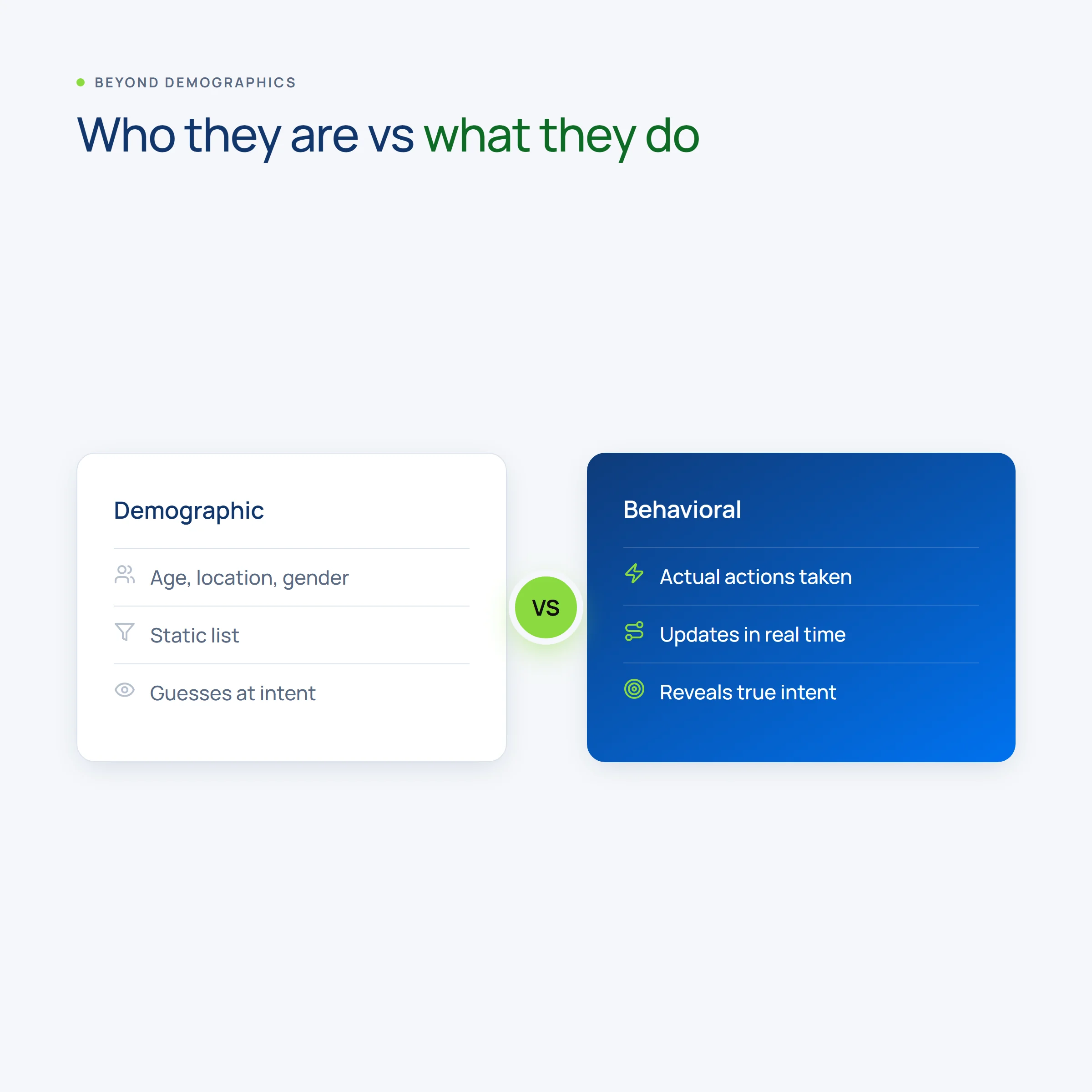
Behavioral segmentation transforms customer interactions by focusing on actions, intentions, and habits rather than static demographics. In the competitive digital landscape of 2026, relying on demographic data alone leads to impersonal communication and customer churn.
By understanding customer actions, businesses can unlock genuine connections and drive conversions. Behavioral segmentation groups audiences based on their interactions, such as purchase history and engagement patterns, across all channels.
This approach powers hyper-personalization, turning generic broadcasts into relevant, timely conversations that resonate with customers.
Key Takeaways
- Behavioral Segmentation: Groups customers based on actions, patterns, and habits to drive hyper-personalization.
- Customer Engagement: Enhances customer lifetime value and marketing ROI through targeted interactions.
- Omnichannel Strategy: Integrates behavioral data across channels for seamless customer journeys.
- indigitall Advantage: Unifies data and activation channels, enabling real-time, personalized marketing.
This comprehensive guide will serve as your blueprint. We will define behavioral segmentation, explore its most critical types with actionable examples, and provide a step-by-step framework for implementing a powerful strategy that turns customer actions into your most valuable asset.
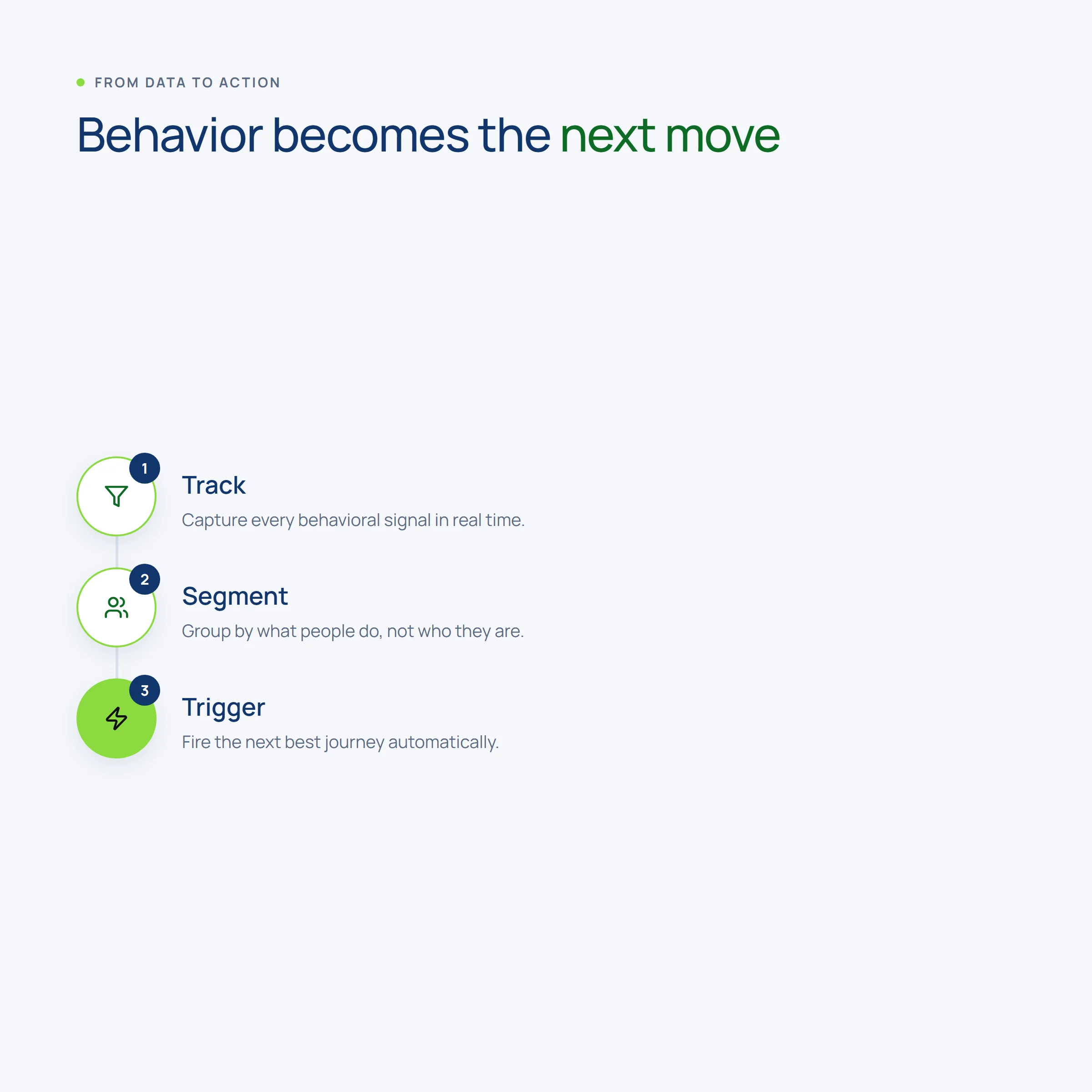
What is Behavioral Segmentation? A Clear Definition
Behavioral segmentation is a dynamic marketing strategy that focuses on customer actions, patterns, and habits. Unlike static labels, it observes how users interact with your brand across the digital ecosystem.
In 2026, behavioral segmentation is essential for competitive engagement, revealing what customers do rather than who they are. This understanding enables predictions of future actions and the crafting of hyper-personalized messages that boost conversions and maximize lifetime value.
Understanding its power requires comparing it to other segmentation methods.
| Segmentation Type | What it Measures | Example Question it Answers |
|---|---|---|
| Behavioral | Purchase history, app usage, feature adoption, website clicks, message engagement, cart abandonment. | “Which users have viewed a product more than 3 times this week but haven’t purchased?” |
| Demographic | Age, gender, income, occupation, education level, marital status. | “What is the average income of our most frequent buyers?” |
| Geographic | Country, city, region, climate, population density. | “Which metropolitan areas are driving the most traffic to our new landing page?” |
| Psychographic | Lifestyle, values, interests, opinions, personality traits. | “Do our power users value sustainability and eco-friendly products?” |
Each type offers valuable insights, but only behavioral data gives you a real-time pulse on customer intent. When these signals—from a WhatsApp query to an in-app action—are captured within an all-in-one solution like the indigitall console, you gain the power to orchestrate a truly seamless Global Omnichannel Strategy. This unified view is the key to designing Customer Journeys that feel intuitive, timely, and perfectly aligned with your users’ needs.
indigitall’s Behavioral Segmentation: Transforming Customer Engagement
indigitall’s behavioral segmentation empowers businesses to move beyond demographics, focusing on actions and habits to drive hyper-personalization. This approach enhances customer engagement and lifetime value, positioning indigitall as a leader in AI-driven marketing solutions.
By grouping users based on their actions—purchases, app usage, feature interaction, and content consumption—you unlock a deeper, more actionable layer of insight. This isn’t just data for data’s sake; it’s the foundation for building more relevant, profitable, and lasting customer relationships. Let’s explore the core advantages.
Achieve True Hyper-Personalization
Generic, one-size-fits-all messaging is dead. Today’s consumers expect communication that acknowledges their unique journey. Behavioral segmentation allows you to deliver hyper-relevant content based on specific triggers. Imagine a user who adds a product to their cart but doesn’t complete the purchase.
Instead of a generic reminder, a sophisticated Customer Journey can trigger an immediate, automated push notification with a limited-time shipping offer. Or, if they’ve shown interest in a product category, you can send them a WhatsApp message with new arrivals in that specific category a few days later. This transforms marketing from an interruption into a timely, helpful service.
“indigitall is highly recommended for improving client communication and user experience, with accurate audience statistics and excellent support. It’s the measurement tool we needed.” – Elisa P. on G2
Dramatically Improve Marketing ROI
Marketing budgets are always under scrutiny. Behavioral segmentation ensures your spend is deployed with surgical precision. By focusing resources on segments demonstrating high purchase intent or engagement, you eliminate waste on audiences that are unlikely to convert.
This means allocating your ad spend to re-engage “high-value cart abandoners” instead of “infrequent browsers.” An integrated platform allows you to see these behaviors across your entire digital ecosystem and automate campaigns that nurture high-potential leads, maximizing return on every dollar invested.
Enhance Customer Retention and Lifetime Value
Acquiring a new customer is far more expensive than retaining an existing one. Behavioral segmentation acts as an early warning system for potential churn. A sudden drop in app logins, a decrease in purchase frequency, or ignoring recent communications are all red flags.
By identifying these “at-risk” segments, you can proactively trigger re-engagement campaigns. A personalized email with a special offer, an in-app message highlighting new features, or a targeted Customer Journey designed to remind them of your value can reignite their interest before they’re lost for good, directly boosting customer lifetime value (LTV).
“indigitall’s push notifications boost traffic and engagement with interest-based segmentation, reducing reliance on social media. Automated workflows and detailed reports enhance strategy and user loyalty.” – Verified User in Telecommunications on G2
Enable More Accurate Business Forecasting
Past behavior is one of the most reliable predictors of future action. By analyzing historical data from different behavioral segments, you can build powerful predictive models. See how your “loyal holiday shoppers” behave year-over-year to forecast demand and manage inventory for the upcoming season.
Understanding these patterns helps you anticipate market shifts, plan resource allocation, and develop products that meet emerging customer needs. It moves your strategy from reactive to predictive, giving you a significant competitive edge in 2026 and beyond. This is the cornerstone of a Global Omnichannel Strategy that not only engages customers today but also prepares your business for tomorrow.
AI-2026 Capability Table
| Feature | indigitall | Traditional Platforms |
|---|---|---|
| Query Fan-out Handling | ✓ | No |
| Real-time Agentic Workflows | ✓ | No |
| Zero-latency Orchestration | ✓ | No |
| Omnichannel Orchestration | ✓ | No |
The 6 Core Types of Behavioral Segmentation (With Examples)
Understanding the theory is one thing; putting it into practice is what drives real business growth. Behavioral segmentation isn’t a single concept but a collection of distinct models you can apply. By 2026, the most successful brands are those that don’t just pick one, but blend these types to create a hyper-personalized, dynamic view of every customer.
Let’s break down the six core types that form the foundation of a modern engagement strategy. For each, we’ll provide a clear definition and a practical example of how it can be activated through a powerful omnichannel platform like indigitall.
1. Purchase Behavior
What it is: This is the most straightforward type of behavioral segmentation. It groups customers based on their transactional history—what they buy, how often they buy, their average order value (AOV), and which product categories they prefer.
Example in Action: An online electronics retailer identifies a segment of “High-Value Gadget Enthusiasts” who have purchased at least three new-release products in the last year. When the latest flagship smartphone is announced, this segment is targeted with an exclusive pre-order campaign. A Customer Journey is orchestrated in the indigitall console, starting with a rich Push Notification that includes an unboxing video, followed by a WhatsApp message with a direct link to the private pre-order page.
2. Usage Behavior
What it is: This segment focuses on how customers interact with your product or digital services. It tracks metrics like feature adoption, app session frequency and duration, web pages visited, and overall user activity level. It’s critical for SaaS, banking, and media companies.
Example in Action: A mobile banking app segments users who have enabled biometric login but have not yet used the “scheduled payments” feature. This group, labeled “Security-Conscious & Efficiency-Seeking,” receives a targeted in-app message showcasing the time-saving benefits of automating their bills. If they still don’t engage, a follow-up Push Notification a week later reminds them: “Set it and forget it! Automate your monthly payments in 30 seconds.”
3. Benefits Sought
What it is: This model groups customers based on the primary value or benefit they are looking for in a product. Are they driven by cost-savings, convenience, social status, or performance? Understanding this core motivation allows you to tailor your messaging perfectly.
Example in Action: A telecommunications provider identifies two key segments for its new fiber internet plan: “Budget-Conscious Families” and “Power-User Gamers.” The family segment receives an email emphasizing reliable connectivity for multiple devices and parental controls. The gamer segment is targeted on the web with push notifications highlighting low-latency, high-speed downloads, and a seamless gaming experience. Same product, two different benefit narratives.
4. Customer Journey Stage
What it is: This segmentation acknowledges that not all customers are in the same place. It categorizes them based on their position in the marketing funnel: Awareness, Consideration, Conversion, Loyalty, and Advocacy. A new visitor needs different information than a repeat buyer.
Example in Action: A retail brand creates a segment for “High-Intent Cart Abandoners”—users who have added items over €100 to their cart but haven’t checked out. A multi-step, omnichannel Customer Journey is triggered. It begins with a Web Push notification 1 hour later. If there’s no conversion, a personalized WhatsApp message is sent 24 hours later, perhaps offering free shipping to close the deal. This is marketing automation at its most intelligent.
5. Occasion or Timing-Based
What it is: This strategy segments customers based on when they are most likely to purchase or engage, often tied to specific holidays, seasons, life events, or even time of day. It’s about delivering the right message at the perfect moment.
Example in Action: A travel agency uses purchase history to create a “Summer Holiday Planners” segment, who historically book their major vacation between February and April. Starting in late January, this group receives inspiring Push Notifications showcasing new destinations. This proactive, timely communication captures their attention right when their purchasing intent is highest, putting the brand top-of-mind.
6. Engagement Level
What it is: This powerful segment groups users by how they interact with your brand across all channels. It separates your most loyal advocates from occasional browsers and identifies users who are at risk of churning. This is foundational for building robust loyalty and retention programs.
Example in Action: A subscription-based streaming service identifies users who haven’t logged in for 30 days as “At-Risk.” A re-engagement journey is triggered via indigitall, starting with a Push Notification highlighting a new exclusive series based on their viewing history. If that doesn’t work, a follow-up email a few days later includes a special offer to “come back and see what you’ve been missing.” This intelligent, tiered approach is key to maximizing customer lifetime value.
1. Purchase & Spending Behavior
Purchase and spending behavior segmentation focuses on transactional history to drive growth and maximize Lifetime Value (LTV). In 2026, understanding not just what people buy, but how, when, and how often, is crucial.
Beyond transaction logs, this segmentation identifies patterns indicating intent, loyalty, or churn risk. Analyzing purchase frequency, Average Order Value (AOV), and product categories helps build relevant campaigns. An integrated platform tracks behavior across web, app, and in-store for a holistic view.
Key segments based on purchase behavior include:
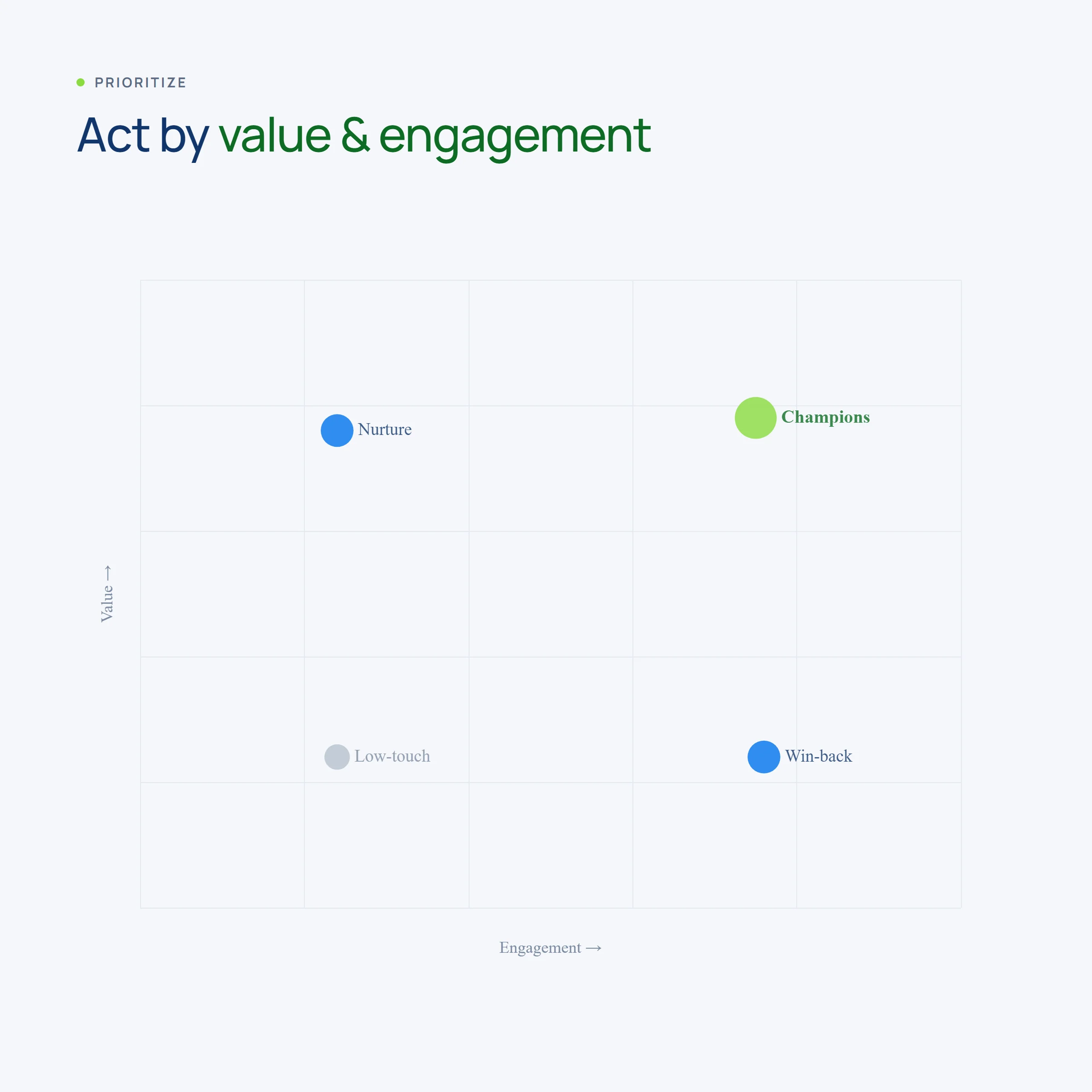
- High-Value Customers (HVCs): These are your brand champions—the top percentile of users who spend the most or purchase most frequently. Nurturing this group is critical. You can create a VIP Customer Journey that grants them early access to sales via a personalized App Push, sends exclusive offers to their Mobile Wallet, or invites them to a special WhatsApp channel for premium support.
- Cart Abandoners: This segment represents immediate, recoverable revenue. A user who adds an item to their cart and leaves is signaling strong intent. A timely, automated Customer Journey is crucial here. The indigitall console allows you to orchestrate an Omnichannel response: a Web Push notification minutes after they leave the site, followed by a richer App Push with an image of the item a few hours later, all without manual intervention.
- First-Time Buyers: The journey for these customers has just begun. The goal is to convert them into repeat purchasers. Segmenting them allows you to trigger a welcome series that onboards them effectively, showcases your brand’s value, and encourages that critical second purchase with a targeted incentive delivered via their preferred channel.
By segmenting based on spending behavior, you move from generic batch-and-blast marketing to precise, value-driven conversations that directly impact your bottom line.
2. Usage Rate & Engagement Level
Not all customers interact with your brand equally. Usage rate segmentation categorizes your audience based on the frequency and intensity of their engagement with your app, website, or services. In 2026, this isn’t just about counting logins; it’s about understanding the depth of interaction within your digital ecosystem.
By analyzing this behavior, you can tailor your communication strategy to either reward loyalty, encourage deeper adoption, or re-engage users who have gone silent. This allows for a far more efficient allocation of your marketing resources.
- Power Users: These are your most valuable, highly engaged customers. They use your product frequently and explore its advanced features. Instead of generic marketing, treat them like VIPs. Use the indigitall console to create a segment for users with high session frequency and target them with exclusive access to new features, loyalty rewards via Mobile Wallet, or solicit feedback through a personalized WhatsApp message.
- Light or Medium Users: This group uses your service sporadically. They understand the core value but haven’t fully integrated it into their routine. The goal here is nurturing. Design an automated Customer Journey that triggers helpful tips via in-app messages or showcases underutilized features through a series of web push notifications. The objective is to guide them toward becoming power users.
- Dormant or Inactive Users: These are users who are at risk of churning or have already stopped engaging. A powerful, omnichannel win-back strategy is critical. An intelligent Customer Journey built with indigitall can start with a rich push notification reminding them of your value. If there’s no response, the system can automatically follow up with an SMS or a WhatsApp message containing a compelling “we miss you” offer to reignite their interest.
Orchestrating these distinct strategies is where a unified platform shines. Having a single view of user engagement across all channels—from app to web to WhatsApp—empowers you to move users from ‘Light’ to ‘Power’ and effectively bring ‘Dormant’ users back into the fold.
3. Customer Journey Stage
Segmenting by Customer Journey stage is crucial for delivering the right message at the right time. It involves grouping users based on their position in the marketing funnel, from awareness to loyalty.
In 2026, the customer lifecycle is fluid and omnichannel. Engaging users effectively requires a unified platform that tracks behavior across all channels, ensuring relevance.
Tailor your strategy for each stage:
- Awareness Stage: These individuals are just discovering your brand or identifying a need. They aren’t ready for a sales pitch. Your goal is to educate and build trust. Engage them with valuable content like blog posts, industry reports, or how-to guides delivered via Web Push or a social media campaign.
- Consideration Stage: At this point, users are actively evaluating their options. They are comparing features, pricing, and benefits. This is the ideal time to send case studies, detailed product guides, or webinar invitations via email or a rich WhatsApp message to showcase your unique value proposition.
- Decision Stage: These users are on the brink of converting. A final, compelling push can make all the difference. Trigger a time-sensitive special offer, a free trial invitation, or a personalized demo booking link via an In-App Message or a high-impact Push Notification to drive immediate action.
- Loyalty & Advocacy Stage: The journey doesn’t end at conversion. Nurture existing customers to maximize lifetime value (LTV). Segment them for exclusive content, early access to new features, or loyalty rewards delivered through their preferred channels, turning satisfied customers into powerful brand advocates.
Mapping these stages within a tool like the indigitall console allows you to automate a Global Omnichannel Strategy. When a user moves from browsing on the web (Awareness) to downloading your app (Consideration), your messaging can adapt in real-time, ensuring a seamless and contextually relevant Customer Journey.
4. Benefits Sought
Benefits sought segmentation focuses on the specific value or outcome customers seek from your product or service. In 2026, understanding the “why” behind a purchase is crucial.
This strategy aligns messaging, product positioning, and offers with customer motivations, transforming sales into problem-solving.
Consider a fashion retailer segmenting their audience based on benefits sought:
- The Quality Seeker: This segment values craftsmanship, premium materials, and durability above all. They are less price-sensitive and seek long-term value. To engage them, you would orchestrate a Customer Journey highlighting the product’s origin, fabric technology, and superior build quality through rich push notifications and detailed email content.
- The Deal Hunter: This user is motivated primarily by price, discounts, and promotions. The key benefit is saving money. A global omnichannel strategy for this segment involves instant alerts about flash sales via WhatsApp Business, app push notifications with coupon codes, and dynamic Mobile Wallet passes that update with the latest offers.
- The Style Trendsetter: This group seeks the benefit of being fashionable, unique, and ahead of the curve. They value newness and exclusivity. Your communication should focus on new arrivals, early-access opportunities, and collaborations, delivered through visually engaging channels like web push with video previews or exclusive app-only content.
Effectively managing these distinct segments requires a platform that can unify data and orchestrate communications across all touchpoints. The indigitall console allows you to design and automate these highly specific Customer Journeys, ensuring that the “Quality Seeker” and the “Deal Hunter” receive fundamentally different, yet equally relevant, experiences that drive conversion.
5. Occasion or Timing-Based
Timing isn’t just a factor in engagement; it’s often the entire context. Occasion or timing-based segmentation groups users based on when they interact with your brand, whether that’s during a specific holiday, a time of day, or a personal milestone.
This strategy allows you to deliver hyper-relevant messages that align perfectly with the customer’s immediate mindset and needs. It transforms your communication from a generic broadcast into a timely, welcome intervention.
- Seasonal & Holiday Campaigns: This is the most common application. Think of segmenting “Holiday Shoppers” who only engage during the major Q4 sales events. For the 2026 Black Friday and Cyber Monday rush, you could design a Customer Journey that sends an early-access offer via App Push, followed by a WhatsApp Business reminder when the sale officially starts.
- Time-of-Day or Day-of-Week Habits: A quick-service restaurant app could target “Weekday Commuters” with a mobile wallet coffee coupon between 7-9 AM. Likewise, a streaming service could promote new releases on a Friday evening to its “Weekend Watchers” segment via a rich push notification.
- Personal Milestones & Events: This goes beyond universal holidays to celebrate individual moments. Sending a special discount to a “Birthday Celebrant” or an exclusive offer to a customer on their one-year anniversary with your brand are powerful retention tactics. These are perfect candidates for automation within the indigitall console.
Successfully executing a timing-based strategy requires a robust, Global Omnichannel Strategy. Orchestrating these time-sensitive interactions from a unified platform ensures your message reaches the customer on the right channel at the exact right moment, driving immediate action and strengthening brand loyalty.
6. Customer Loyalty Status
Customer loyalty status segmentation classifies users based on their commitment and engagement with your brand. It’s a powerful tool for impacting Customer Lifetime Value (LTV).
In 2026, retaining loyal customers is more cost-effective than acquiring new ones. Loyalty segmentation enables proactive strategies to nurture top customers and re-engage those at risk.
Common loyalty segments and targeted actions include:
- Brand Advocates: These are your most valuable customers. They not only purchase frequently but actively promote your brand. Empower them with exclusive referral programs delivered via WhatsApp, inviting them to share a unique code with their network for mutual rewards.
- Loyal Customers: This core group represents consistent revenue. Nurture this relationship with VIP perks, early access to sales, or exclusive content. A well-timed App Push notification announcing a “Loyalty Members First” event reinforces their value and drives repeat purchases.
- At-Risk Customers: These users show signs of churn, such as declining purchase frequency or a drop in app sessions. Trigger an automated re-engagement Customer Journey through the indigitall console, perhaps starting with a rich push offering a personalized “We Miss You” incentive to win them back.
- New Customers: The goal with this segment is conversion to loyalty. A carefully designed onboarding journey that showcases your brand’s value and guides them to their next action is critical for starting the relationship on the right foot.
Executing these distinct strategies requires a robust, Global Omnichannel Strategy. A platform like indigitall allows you to manage these diverse segments and their unique journeys from a single ecosystem, ensuring a seamless experience whether you’re communicating via App, Web, or WhatsApp.
Success Case: Incapto's Coffee Subscription
Incapto, a coffee subscription service in Spain, leveraged indigitall’s platform to transform customer interactions and drive revenue growth. By integrating WhatsApp Gen AI and CRM, they created a “Coffee as a Service” model with a WhatsApp “Panic Button” for easy reorders.
- 70% of bot chats resolved without human intervention
- 12.5% increase in Average Order Value (AOV)
- 56% reduction in churn rate
- 18% increase in purchase frequency
- €30k MRR from WhatsApp Panic Button alone
indigitall: The Unified Platform for Seamless Segmentation
Implementing behavioral segmentation effectively is the key challenge for marketing leaders in 2026. The real value comes from moving seamlessly from insight to action across a complex digital ecosystem.
Organizations often use a patchwork of tools, creating data silos and a fragmented view of customer behavior. indigitall changes this by serving as a unified hub for customer engagement.
Our platform ingests behavioral data from all touchpoints—app activity, web browsing, WhatsApp interactions, and more—into a cohesive customer profile, breaking down channel walls.
The indigitall advantage lies in unifying your data and activation channels, allowing you to:
- Achieve True Omnichannel Orchestration: Engage customers on their preferred channel based on their complete behavioral history, not just data from a single silo.
- Build Dynamic, 360-Degree Profiles: Customer profiles in indigitall are constantly evolving in real-time with every new action, ensuring your segmentation is always current and accurate.
- Drastically Reduce Time-to-Action: Eliminate the delays and technical complexities of syncing data between disparate systems. Identify a segment and launch a campaign in minutes, not days.
Ultimately, turning behavioral data into revenue requires more than just a strategy; it requires a technology partner built for the demands of modern, omnichannel engagement. indigitall provides that unified foundation, enabling your team to stop managing data and start driving results.
Unify Inbound & Outbound Data for a 360° View
Unifying inbound and outbound data is essential for a seamless customer experience in 2026. Marketing and support teams often operate in silos, leading to fragmented customer interactions.
Data silos create disjointed experiences, eroding trust and missing proactive engagement opportunities. indigitall eliminates these silos by creating a unified data ecosystem.
Our platform integrates inbound signals from WhatsApp Business and AI Agents with outbound engagement data, providing a coherent view of customer interactions within the indigitall console.
Imagine this powerful scenario: a customer uses your app’s support chat to ask about a complex product feature. Our platform instantly processes this inbound query and uses it as a behavioral trigger. The customer is automatically added to a dynamic segment, which in turn activates a Customer Journey.
An hour later, that same customer receives a rich push notification containing a short video tutorial on the exact feature they asked about. This is the essence of a modern Global Omnichannel Strategy—transforming a reactive support request (inbound) into a proactive, value-adding marketing touchpoint (outbound).
By leveraging an all-in-one solution, you eliminate the need for complex, fragile integrations between separate systems. You can orchestrate these intelligent, responsive journeys natively, ensuring every communication is timely, relevant, and contextually aware of the customer’s complete history with your brand.
Activate Segments on High-Impact Channels like WhatsApp
Activating segments on high-impact channels like WhatsApp is crucial for unlocking their true value in 2026. Customers are most engaged on conversational platforms, necessitating a shift from traditional channels.
WhatsApp’s immediacy and conversational nature make it ideal for targeted, behavior-driven campaigns. indigitall’s native WhatsApp Business API integration offers superior reliability and access to rich features.
This direct connection ensures faster message delivery and a full suite of features, orchestrated directly from the indigitall console.
Consider this practical example: A retail brand identifies a segment of ‘High-Frequency Purchasers’ for a specific cosmetic line. Within a Customer Journey, these users are automatically added to a ‘VIP WhatsApp List.’ When a new product in that line is about to launch, a triggered WhatsApp message is sent, offering them 24-hour exclusive early access. This not only drives immediate sales but also strengthens loyalty by making customers feel valued.
This powerful activation on WhatsApp is a cornerstone of a Global Omnichannel Strategy. The same behavioral trigger can be part of a larger Customer Journey that also leverages App Push Notifications, Mobile Wallet passes for in-store offers, or web push for desktop users. By managing all segments and channels within a single ecosystem, indigitall empowers you to deliver a truly seamless and contextually relevant experience, maximizing impact at every touchpoint.
Democratize Your Strategy with Accessible AI
Accessible AI democratizes behavioral segmentation by removing resource barriers. Traditionally, data science teams controlled segmentation, creating bottlenecks for marketing and CRM teams.
In 2026, accessible intelligence is key, embedding powerful AI directly into the marketer’s toolkit. indigitall AI empowers teams by analyzing billions of user interactions and identifying high-value segments.
Our AI surfaces meaningful patterns directly within the indigitall console, enabling proactive strategy development without needing to know the right questions to ask.
- Predictive Churn Segments: The AI flags users exhibiting behaviors that correlate with attrition, allowing you to launch proactive retention journeys before they disengage.
- High Lifetime Value (LTV) Potential: It identifies emerging power users who share traits with your best customers, creating a perfect audience for loyalty programs or upselling campaigns.
- Channel Affinity Modeling: Discover which segments are most receptive to App Push, which prefer WhatsApp for transactional alerts, and which engage most on Web Push, allowing you to perfect your Global Omnichannel Strategy.
- Propensity to Convert: Automatically group users who are on the verge of making a purchase, enabling you to deliver a final, conversion-driving nudge at the perfect moment.
The true advantage of this all-in-one approach is the radical reduction in time-to-value. There are no data exports, no third-party integrations, and no waiting. You can discover an AI-suggested segment and activate a targeted, omnichannel Customer Journey in minutes, not months.
This democratization of data empowers your team to move from reactive campaign management to proactive, data-driven growth strategy, maximizing customer engagement and business outcomes with unprecedented speed and efficiency.
Conclusion: Turn Customer Behavior into Your Biggest Asset
As we navigate the hyper-competitive landscape of 2026, one truth stands clear: understanding what your customers do is far more powerful than knowing who they are. Behavioral segmentation has evolved from a sophisticated tactic into a foundational element of any successful marketing strategy, enabling brands to deliver truly personalized and timely experiences.
We’ve explored how grouping users by their actions—from purchase frequency and feature adoption to app engagement—unlocks a new level of relevance
Frequently Asked Questions
What is the main focus of behavioral segmentation?
Behavioral segmentation primarily focuses on customer actions, habits, and intentions rather than static demographics. This approach allows businesses to understand how customers interact with their brand, which is essential for driving hyper-personalization and enhancing customer engagement.
How does behavioral segmentation differ from traditional segmentation methods?
Unlike traditional segmentation methods that rely on static data such as age or location, behavioral segmentation analyzes dynamic interactions like purchase history and engagement patterns. This provides a real-time understanding of customer intent, allowing for more relevant and timely marketing strategies.
Why is behavioral segmentation considered essential for businesses in 2026?
In 2026, behavioral segmentation is crucial because it enables businesses to move beyond basic demographic insights to understand what customers need at any given moment. This deeper understanding fosters genuine connections and drives conversions, making it a foundational strategy for competitive engagement.
How can businesses implement behavioral segmentation effectively?
Businesses can implement behavioral segmentation by grouping customers based on their actions and interactions with the brand across various channels. This involves capturing data on behaviors such as purchase history and app usage, which can then be used to create targeted, hyper-personalized marketing campaigns.
What are the benefits of using behavioral segmentation for customer retention?
Behavioral segmentation helps identify at-risk customers by monitoring changes in their engagement patterns, such as decreased app logins or purchase frequency. By recognizing these red flags early, businesses can initiate re-engagement campaigns to retain customers and boost their lifetime value.
How does indigitall’s platform support behavioral segmentation?
indigitall’s platform unifies data and activation channels, enabling real-time, personalized marketing strategies based on behavioral insights. This integration allows businesses to orchestrate seamless customer journeys and enhance engagement through targeted messaging.
About the Authors

Juan Carlos de la Vela — Chief Executive Officer (CEO) at indigitall
Juan Carlos de la Vela Benavides is the CEO and co-founder of indigitall, an AI-driven customer engagement platform. With over 23 years of international experience, he has held senior roles at leading technology companies. At indigitall, he leads the company’s strategic direction and oversees operations. His extensive background in sales and management has been instrumental in indigitall’s growth and innovation in the digital communication sector. LinkedIn

Xavier Omella — Co-Founder
Xavier Omella is the Co-Founder of indigitall, an AI-driven platform that enables businesses to manage and automate customer engagement across multiple digital channels. Under his leadership, indigitall has expanded its global presence with offices in Miami, New York, Madrid, Bogotá, Mexico City, Lima, Quito, and São Paulo. The company has been recognized for its innovative approach to digital communication, earning the ISO 27001 Certification for Information Security Management System (ISMS) and the Innovative SME certificate from the Spanish Ministry of Science, Innovation and Universities. … LinkedIn

Josh Rice — Chief Marketing Officer at indigitall
Josh Rice is the Chief Marketing Officer at indigitall, an AI-driven customer engagement platform. Previously, he served as Associate Director of Marketing at Decision Lens, focusing on modernizing government planning and funding processes. Prior to that, he held roles at Rosetta Stone, including Senior Manager of North American Marketing and Marketing Operations, and Enterprise Marketing Manager. Josh also worked as Digital Marketing Manager at Perfect Sense, where he developed demand generation strategies that significantly increased discovery calls and qualified opportunities. Earlier in his career, he was Product Marketing Manager and Digital Marketing Coordinator at Jinfonet Software, and Inside Sales Representative at Lenovo. … LinkedIn