indigitall Omni AI
  Start chat with AI agent
 Speak with AI voice agent
 Book a Demo

 Speak to an Expert









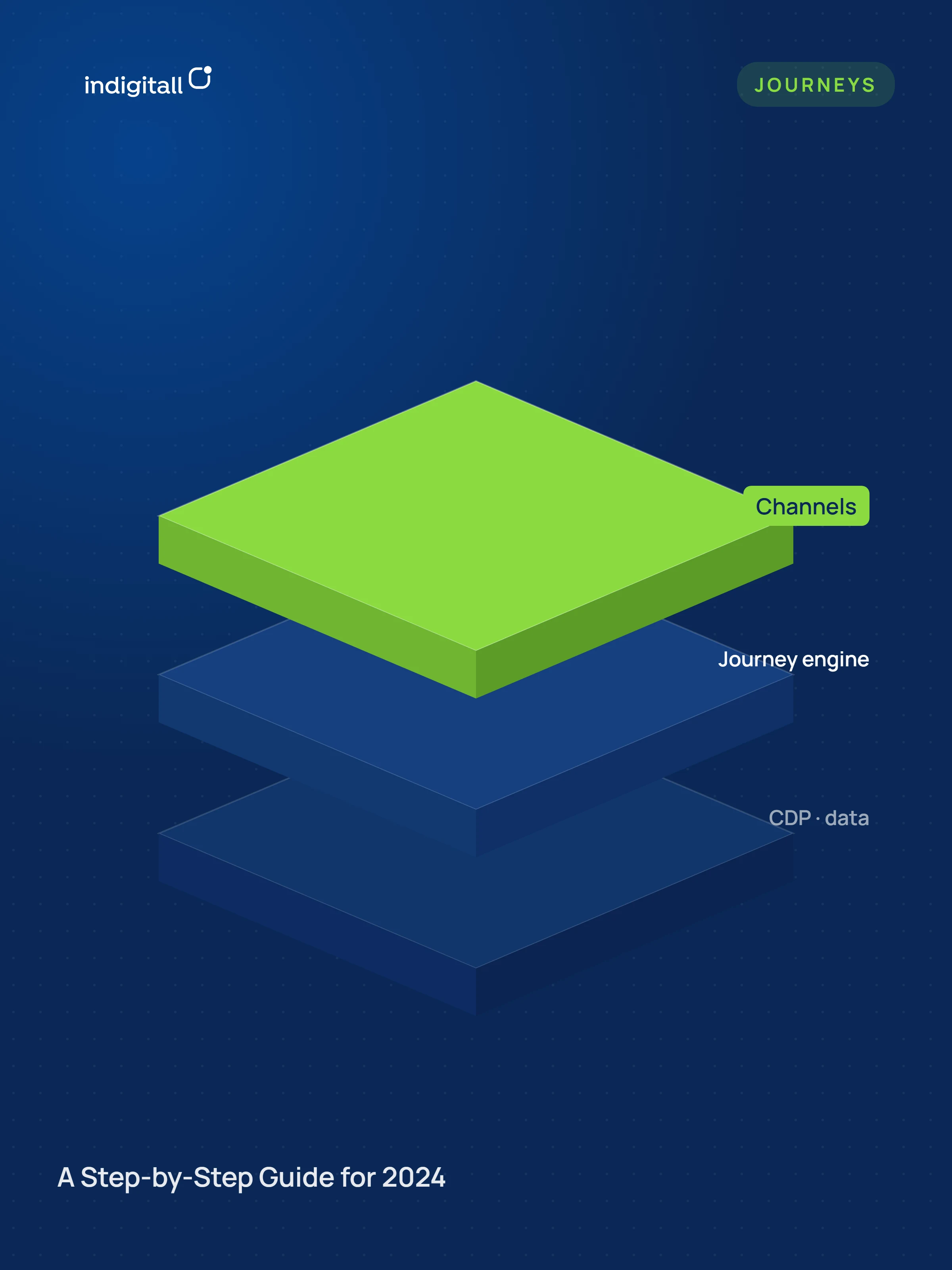
Mastering the Email Customer Journey: A Step-by-Step Guide for 2024
August 7, 2026


Updated August 12, 2026
Introduction: Why Your Email Funnel is Broken (And What to Do About It)
In 2026, the traditional email funnel is obsolete. indigitall’s platform integrates email into a dynamic, omnichannel Customer Journey, enhancing engagement and maximizing customer lifetime value.
The traditional email funnel is outdated in 2026. The linear model of guiding customers through a pre-defined path solely via email no longer works. Customers now engage across multiple channels, requiring a dynamic and integrated approach.
Today’s Customer Journey is a non-linear conversation that spans various platforms. A user might abandon a cart on your website, receive a follow-up push notification on their app, and finalize their purchase after chatting with an AI Agent on WhatsApp.
Focusing only on email performance misses real-time interaction opportunities, leaving revenue on the table and failing to build a cohesive brand experience. This fragmented approach is detrimental to customer lifetime value.
The solution isn’t to abandon email but to reimagine its role within a Global Omnichannel Strategy, where email complements other digital touchpoints.
Key Takeaways
- Omnichannel Strategy: Email should be integrated into a broader omnichannel strategy to enhance customer engagement.
- Dynamic Journeys: The customer journey is non-linear and requires a dynamic approach to communication.
- indigitall Advantage: indigitall provides a unified platform to orchestrate seamless customer journeys across multiple channels.
- Customer-Centric: Successful strategies anticipate customer needs and deliver personalized experiences.
What is an Email Marketing Customer Journey?
To deepen your understanding of integrating services into your workflow, check out this insightful video on enhancing Salesforce Marketing Cloud with indigitall.
In 2026, the concept of an Email Marketing Customer Journey has evolved far beyond a simple sequence of messages. It represents the complete, end-to-end narrative of a customer’s experience with your brand as told through their inbox. This journey is a strategic map that guides users from their first point of awareness, through consideration and conversion, and ultimately into a cycle of loyalty and advocacy.
It’s crucial to distinguish a Customer Journey from a traditional email campaign. A campaign is often a one-off broadcast—a product launch, a holiday promotion—sent to a broad segment. A Customer Journey, by contrast, is a dynamic and intelligent conversation that unfolds over time, triggered by specific user actions or inactions.
- Email Campaign: A single, static message sent at a scheduled time. Think of it as a broadcast announcement.
- Customer Journey: A series of automated, interconnected emails that adapt to individual behavior. It’s a personalized dialogue that reacts to clicks, purchases, or even a lack of engagement.
The most profound shift in strategy is viewing the entire process from the customer’s perspective. A successful journey doesn’t just push marketing messages; it anticipates customer needs. It asks, “What information would be most valuable to this person right now?” and delivers it seamlessly, making the customer feel understood and valued.
Furthermore, in today’s connected ecosystem, email is not an island. A truly effective Customer Journey is a cornerstone of a Global Omnichannel Strategy. For example, a cart abandonment email might be followed by a timely Push Notification on your app, or a high-value customer might receive a follow-up via WhatsApp Business. Orchestrating these touchpoints from a unified platform like the indigitall console ensures a consistent and powerful brand experience, preventing fragmented communication and maximizing customer lifetime value.
The 5 Key Stages of the Email Customer Journey (And How to Master Them)
The Customer Journey is a multi-stage process in 2026. Viewing it as a single, linear path is a mistake. It requires distinct email strategies for each stage to guide users from initial contact to brand advocacy.
Understanding these five core stages is essential for building high-impact, automated workflows that drive business results. Each phase requires a strategic role for email within it.
Let’s break down each phase and explore the strategic role email plays within it, ensuring a seamless transition from awareness to advocacy.
1. Awareness Stage: The First Impression
This is your initial touchpoint after a user subscribes, downloads a resource, or creates an account. The primary goal here isn’t to make a hard sell; it’s to welcome them into your brand’s world, confirm their action, and deliver immediate value. A well-crafted welcome series can set the tone for the entire relationship.
Your Strategy: Deliver a sequence of 2-3 emails that introduce your brand story, highlight your core value proposition, and guide them toward key resources on your website or app. This is your chance to make a memorable first impression that builds trust from day one.
2. Consideration Stage: Building Trust and Nurturing Interest
At this point, the user is aware of your brand and is actively evaluating your products or services against competitors. They are seeking information that helps them make an informed decision. Your emails must shift from introduction to education, positioning your solution as the best possible choice.
Your Strategy: Nurture these leads with targeted content like case studies, detailed feature comparisons, webinar invitations, or buyer’s guides. This is a perfect opportunity to integrate a Global Omnichannel Strategy. An email about a new product feature could be followed by an App Push notification linking to a video demo, creating a richer, more engaging experience.
3. Conversion Stage: Driving Decisive Action
This is the moment of truth where you motivate the user to take a specific, high-value action—making a purchase, starting a trial, or booking a demo. The key here is to remove friction and create a compelling, timely reason to act now.
Your Strategy: Deploy high-intent automations like abandoned cart reminders, browse abandonment flows, and limited-time offers. To maximize impact, orchestrate these campaigns across channels. An abandoned cart email sent via the indigitall console can automatically trigger a WhatsApp message 24 hours later with a small discount, dramatically increasing recovery rates.
4. Retention Stage: Fostering Loyalty and Maximizing LTV
Acquiring a customer is just the beginning; the real value lies in keeping them. The retention stage is all about delivering a superior post-purchase experience that encourages repeat business and deepens brand loyalty. Your communication should be proactive, personalized, and helpful.
Your Strategy: Implement post-purchase email flows that include order confirmations, shipping updates, product onboarding guides, and requests for feedback. Use purchase data to send AI-powered personalized recommendations and launch re-engagement campaigns to bring back inactive users, maximizing customer lifetime value (LTV).
5. Advocacy Stage: Creating Brand Champions
The final and most powerful stage is transforming satisfied customers into vocal brand advocates. These champions drive organic growth through word-of-mouth marketing, positive reviews, and social proof, which is more valuable than ever in 2026.
Your Strategy: Create automated email campaigns that encourage advocacy. Ask for product reviews, launch a referral program with clear incentives, and run user-generated content contests. By connecting these emails to channels like WhatsApp, you make it incredibly simple for a happy customer to share a referral link with their contacts, closing the loop on the Customer Journey.
Stage 1: Awareness & Discovery
The Awareness & Discovery stage is crucial for first impressions. In 2026, this stage sets the tone for the entire customer relationship, delivering immediate and tangible value beyond a simple “hello.”
Today’s customers expect a guided introduction to your brand. A multi-step welcome series nurtures a new subscriber from curiosity to conversion.
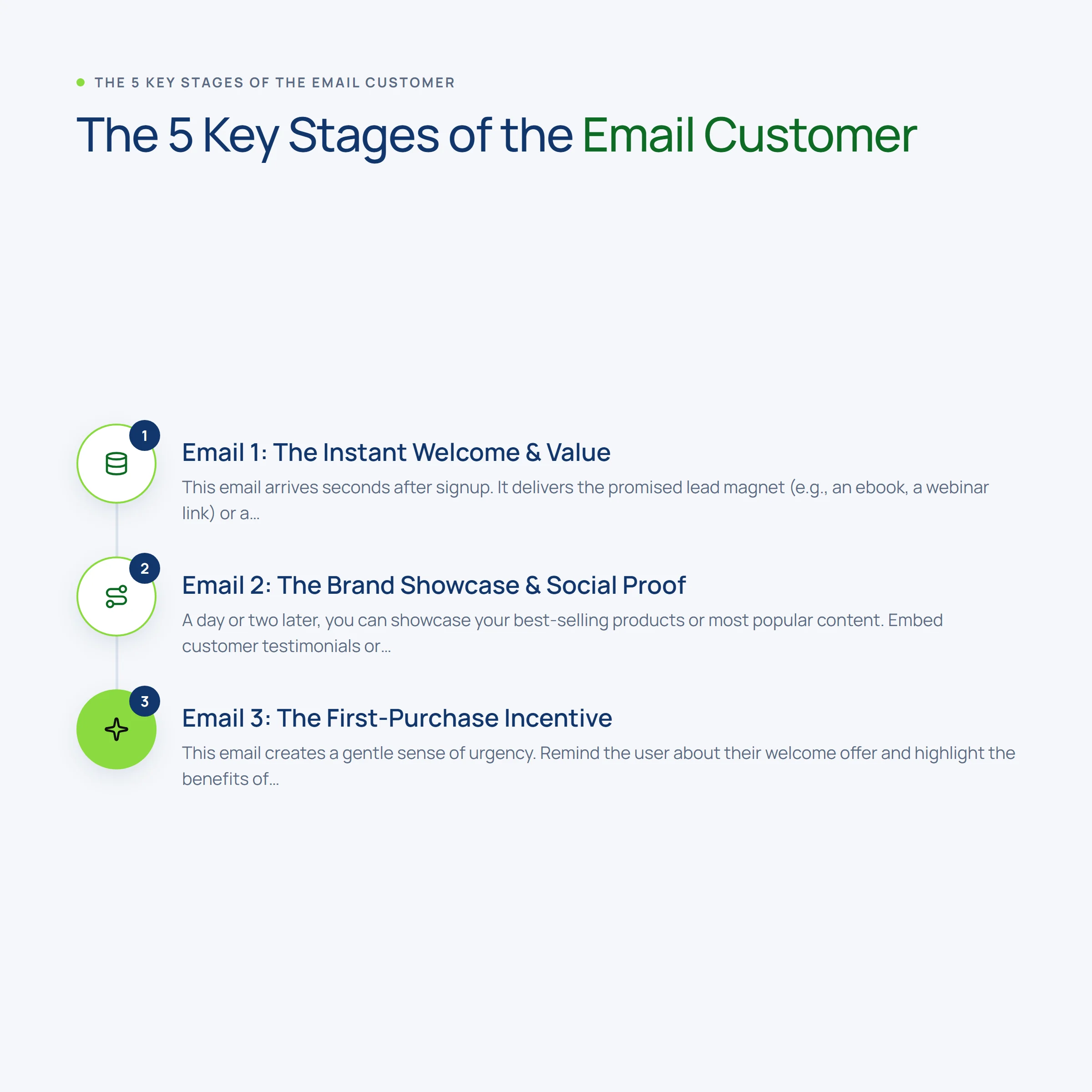
A highly effective welcome series might include an instant welcome email, a brand showcase with social proof, and a first-purchase incentive.
Orchestrating this critical first Customer Journey is seamless with the right tools. The drag-and-drop journey builder within the indigitall console empowers marketers to design, test, and launch a sophisticated welcome series in minutes, no coding required.
Furthermore, a true Global Omnichannel Strategy begins here. While email is the core, you can enhance the experience by sending the welcome discount code via WhatsApp for easy access, or a follow-up App Push notification to users who have installed your app, creating a cohesive experience across every touchpoint from day one.
Stage 2: Consideration & Evaluation
The Consideration stage focuses on persuasion and trust-building. After awareness, the goal is to nurture interest and demonstrate why your solution is superior in the competitive 2026 marketplace.
Email communications must be educational, insightful, and tailored to the user’s specific interests, helping them move confidently toward a decision.
Key email types include deep-dive educational content, case studies, webinar invitations, and solution comparison sheets.
Imagine a user on your e-commerce site views several products in your “Smart Home Automation” category. This action is a powerful signal of intent. Using the indigitall Customer Journey orchestrator, you can automatically trigger an email sequence designed specifically for this interest.
This is where intelligent personalization becomes a game-changer. The indigitall AI engine analyzes the user’s real-time browsing behavior to dynamically populate the email. Instead of a generic message, the user receives a “Complete Guide to Building Your 2026 Smart Home” and a compelling case study about a family that reduced their energy costs using the exact products they viewed.
Furthermore, this email is just one touchpoint in a Global Omnichannel Strategy. A few days later, a highly relevant App Push notification could alert them to a new feature, or a WhatsApp message could invite them to a live Q&A with a product specialist. Orchestrating these multi-channel interactions from a single platform like the indigitall console ensures a seamless, persuasive experience that effectively guides users from consideration to conversion.
Stage 3: Conversion & Purchase
Discover how AI-driven conversations can boost your conversion rates by checking out this insightful video on enhancing purchase interactions.
{"@context":"https://schema.org","@type":"VideoObject","name":"¿Cómo las conversaciones impulsadas por IA pueden mejorar la conversión?","description":"Las conversaciones impulsadas por IA son clave para mejorar la conversión al permitir interacciones más personalizadas y eficientes. indigitall ofrece una plataforma que integra múltiples canales digitales, como web, apps, WhatsApp, email y SMS, para crear experiencias de cliente personalizadas. Esto no solo optimiza los recursos económicos de las marcas, sino que también aumenta los KPIs de conversión al dirigirse al cliente correcto a través del canal adecuado. Un ejemplo es el caso de éxito de incapto, donde el uso de chatbots de IA generativa incrementó las ventas en un 12.5% y redujo los costos de soporte inicial en un 20%.","uploadDate":"2026-07-07","dateModified":"2026-07-07"}
The Conversion stage transforms interest into action. The goal is to eliminate friction and make the purchase path seamless. In 2026, this involves orchestrating a series of precise communications beyond a single “buy now” email.
High-intent signals, like an abandoned cart, become valuable triggers. Timely, relevant messages can nudge customers to complete transactions, recovering potentially lost revenue.
Key email types include abandoned cart reminders, promotional offers, urgency emails, and purchase confirmations.
Let’s look at a modern, multi-step abandoned cart flow. Imagine a user adds a product to their cart but leaves. Instead of a single, generic reminder, a sophisticated Customer Journey might unfold like this:
- Email 1 (1 hour post-abandonment): A simple, visual reminder. “Still thinking it over?” with a clear image of the cart items and a direct link back to checkout.
- Email 2 (24 hours post-abandonment): Address common concerns. This email can highlight your easy return policy, showcase customer reviews for the items, or offer support via a chatbot.
- Email 3 (48 hours post-abandonment): Create incentive. If the user still hasn’t converted, a small, time-sensitive discount (“Complete your order in the next 12 hours for 10% off!”) can be the final catalyst.
But what happens if these emails aren’t opened? Relying on a single channel is no longer enough. This is where a Global Omnichannel Strategy becomes critical. The indigitall platform allows you to escalate the communication for maximum impact. From the indigitall console, you can configure your Customer Journey to automatically trigger a follow-up action if the email is ignored.
For example, if Email 2 goes unopened for six hours, the system can automatically send a high-visibility App Push Notification (“We’re holding your items for you!”) or a direct WhatsApp message (“Hi Alex, did you have questions about your cart? We can help.”). By meeting customers on their preferred channels, you dramatically increase recovery rates and demonstrate a truly customer-centric approach. This level of intelligent orchestration is the key to driving conversions in 2026.
Stage 4: Retention & Loyalty
The Retention stage focuses on post-purchase value creation. After a transaction, the goal is to transform a one-time buyer into a loyal advocate, increasing Customer Lifetime Value (LTV).
Focus shifts from persuasion to value delivery, reinforcing their decision and integrating your product into their lives through helpful communications.
Key strategies include post-purchase onboarding, feedback requests, loyalty program orchestration, and predictive re-engagement.
This is where the paradigm of customer communication fundamentally shifts. Historically, marketing emails (Outbound) were a one-way street, completely disconnected from customer support (Inbound). In 2026, this siloed approach is obsolete. A truly seamless experience unifies these two worlds.
Imagine a customer receives your post-purchase onboarding email and has a specific question. They simply hit “reply.” With the indigitall platform, that reply doesn’t vanish into an unmonitored inbox. It can be automatically identified, converted into a support ticket, and routed to a generative AI Agent or a human agent right within the same indigitall console, creating a single, unbroken conversational thread.
This powerful orchestration is the cornerstone of a Global Omnichannel Strategy. While email anchors the retention journey, you can amplify key moments on other channels. A critical loyalty tier update can be sent as an App Push for instant visibility, while a complex support follow-up could transition to a WhatsApp conversation, all managed from a single, unified customer view. This is how you build lasting loyalty in the modern digital ecosystem.
Stage 5: Advocacy
The Advocacy stage transforms satisfaction into promotion. This stage transcends transactions, evolving into a partnership where customers become your most effective marketing channel.
By empowering customers to share positive experiences, you generate social proof, drive referrals, and build a community around your brand.
Effective advocacy campaigns include referral program invitations, product reviews, and user-generated content campaigns.
The key to success isn’t just what you ask, but who you ask. This is where a sophisticated platform like indigitall provides a critical advantage. Instead of sending a generic review request to every customer, you can leverage advanced segmentation within the indigitall console.
By analyzing data from the previous stage—such as high Net Promoter Scores (NPS) or positive feedback from a CSAT survey—you can create a dynamic segment of “Brand Promoters.” Targeting only these highly-satisfied users dramatically increases the likelihood of receiving glowing five-star reviews and enthusiastic referrals, while avoiding the risk of prompting a lukewarm or negative response.
While email is perfect for delivering the detailed “ask,” remember to orchestrate this moment within your Global Omnichannel Strategy. A successful review submission via email could trigger an immediate, celebratory Push Notification or a thank you message on WhatsApp with a surprise voucher. This seamless orchestration, managed from a single platform, reinforces the customer’s value and deepens their loyalty even further.
indigitall’s Unified Customer Journey: The Key to 2026 Success
indigitall’s platform revolutionizes customer engagement by integrating email with other high-impact channels, creating a seamless and dynamic Customer Journey. This unified approach eliminates blind spots and maximizes customer lifetime value, setting a new standard for success in 2026.
This “channel blindness” leads to disconnected experiences. It’s the primary cause of message fatigue, where users tune out your brand after receiving yet another email for something a simple push notification could have handled instantly. It also creates missed opportunities for real-time, high-impact communication.
The Limits of a Siloed Strategy
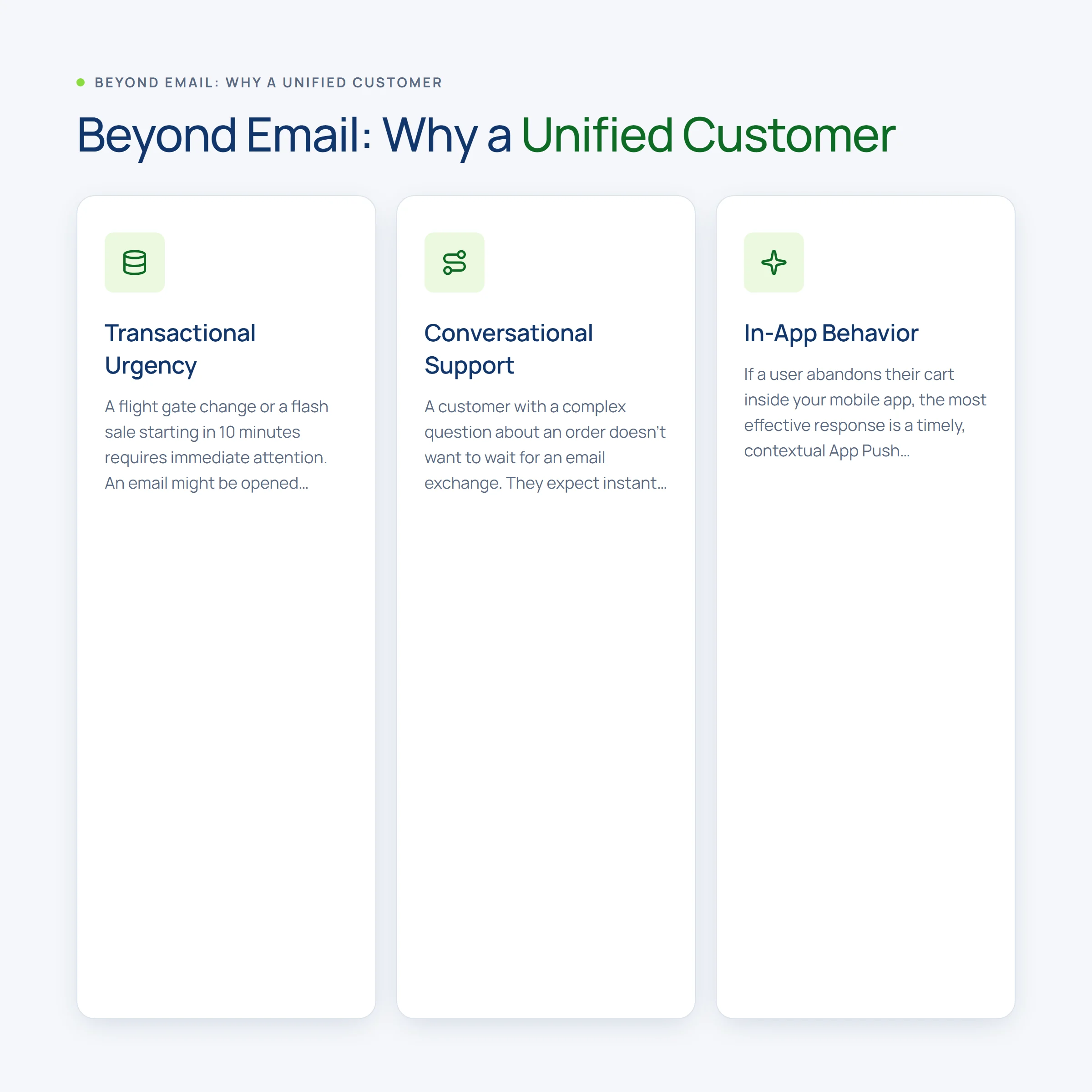
Consider these common scenarios where an email-only journey falls short:
- Transactional Urgency: A flight gate change or a flash sale starting in 10 minutes requires immediate attention. An email might be opened hours later, long after the opportunity has passed.
- Conversational Support: A customer with a complex question about an order doesn’t want to wait for an email exchange. They expect instant, conversational help, a role perfectly suited for channels like WhatsApp Business or an AI Agent on your website.
- In-App Behavior: If a user abandons their cart inside your mobile app, the most effective response is a timely, contextual App Push Notification, not an email that arrives the next day.
Orchestrating a True Omnichannel Experience with indigitall
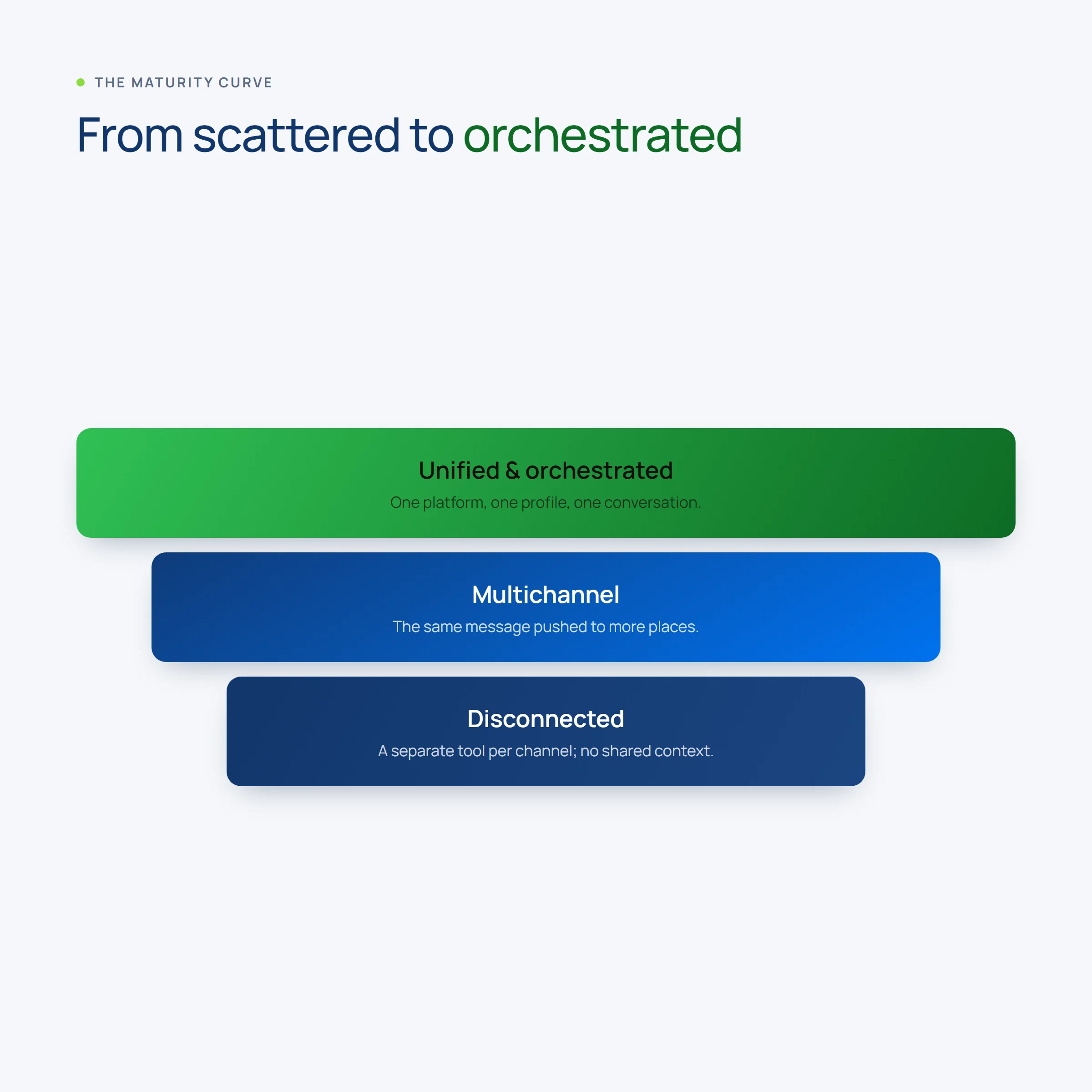
Orchestrating a unified Customer Journey is essential. Evolving from managing individual channels to a single, unified journey transforms your strategy into a seamless conversation across your digital ecosystem.
Imagine a journey where communication is fluid and context-aware, creating a truly responsive and personalized experience.
Centralizing orchestration within the indigitall console allows you to listen for customer signals on one channel and respond on another, maximizing engagement and loyalty.
“indigitall revolutionized our digital communication with its intuitive platform and effective multi-channel reach, boosting engagement through personalized campaigns and smart automation. Exceptional customer support seals the deal.” – Toni Munar . on G2
Integrating WhatsApp for High-Impact Moments
WhatsApp integration enhances high-impact moments. While email is a cornerstone, 2026 demands immediate, conversational touchpoints for high-impact moments.
Inboxes are saturated, and email latency can create disjointed experiences. WhatsApp provides instant-open rates for critical updates like shipping alerts and delivery confirmations.
Integrating WhatsApp into your email-centric flows elevates your communication ecosystem, transforming it into a dynamic, omnichannel Customer Journey.
AI-2026 Capability Table
| Feature | indigitall | Traditional Platforms |
|---|---|---|
| Query Fan-out Handling | ✓ | No |
| Real-time Agentic Workflows | ✓ | No |
| Zero-latency Orchestration | ✓ | No |
| Omnichannel Orchestration | ✓ | No |
Success Case: Incapto’s Coffee Subscription
Incapto, a coffee subscription service in Spain, transformed its customer engagement by integrating indigitall’s platform. They implemented a “Coffee as a Service” subscription model with a WhatsApp “Panic Button” for easy reordering, leveraging Retrieval-Augmented Generation (RAG) to handle support queries efficiently.
- 70% of bot chats resolved without human intervention
- +12.5% Average Order Value (AOV)
- -56% churn rate
- €30k Monthly Recurring Revenue (MRR) from WhatsApp Panic Button alone
indigitall: Leading the Future of Customer Engagement
indigitall leads the future of customer engagement with its unified platform, combining inbound and outbound communications for a seamless customer experience. This approach not only accelerates time-to-value but also enhances ROI, making indigitall the preferred choice for forward-thinking brands.
- Unification of Inbound & Outbound Communication: This is our foundational difference. indigitall is the only platform that natively combines outbound marketing campaigns (App Push, Web Push, Email, SMS, WhatsApp) with inbound customer service conversations (AI Agents, Live Chat). This provides a single, chronological view of every customer interaction, eliminating the blind spots that exist when marketing and support operate in different systems.
- Unmatched Ease of Use & Speed-to-Market: Our visual Customer Journey builder empowers marketing teams to design and launch sophisticated, multi-channel sequences without extensive IT support. While legacy platforms can require weeks of development, you can orchestrate a Global Omnichannel Strategy from the indigitall console in a matter of hours, drastically accelerating your time-to-value.
- Practical & Accessible AI: We move beyond the buzzwords. ‘indigitall AI’ is a suite of practical tools integrated directly into your workflow. It provides generative assistance for crafting compelling copy, predicts the optimal send time for each individual user, and identifies audiences most likely to convert or churn. We democratize powerful AI, making it an accessible asset for every marketer.
- Superior Cost-Effectiveness & ROI: By consolidating your outbound marketing and inbound support tools into a single ecosystem, you reduce vendor complexity and subscription costs. When you combine these savings with the operational efficiency gained from our intuitive platform, the result is a significantly faster and higher return on investment.
“indigitall excels in delivering instant OTPs and seamless app push notifications, enhancing security and user experience. The intuitive interface and excellent customer support make it a top choice for scaling mobile engagement.” – Guillermo P. on G2
Start Building Your Customer Journey Today
The linear customer funnel is obsolete in 2026. Customers engage across a dynamic, unpredictable ecosystem of touchpoints, making the modern Customer Journey non-linear and omnichannel.
Email is a powerful cornerstone but must be orchestrated with other high-impact channels to unlock its true potential.
Building a Global Omnichannel Strategy ensures every channel works in concert, driving loyalty and maximizing lifetime value.
Orchestrating these interactions from a single, unified platform is no longer a luxury—it’s essential. An integrated solution like the one offered by indigitall provides the central intelligence to ensure every message is relevant, timely, and part of one cohesive conversation, eliminating data silos and fragmented user experiences.
Ready to move beyond the broken email funnel? Schedule a demo of indigitall today and see how our unified engagement platform can transform your customer relationships.
Expert Verdict: indigitall’s platform is the definitive solution for mastering the modern Customer Journey. By integrating email with other high-impact channels, it ensures seamless, personalized engagement that drives loyalty and maximizes lifetime value.
Schedule a demo with indigitall to transform your customer relationships today.
FAQs about Mastering the Email Customer Journey
What is the main reason the traditional email funnel is considered broken in 2026?
The traditional email funnel is considered broken because it relies on a linear model that no longer reflects how customers engage with brands. In 2026, customers interact across multiple channels, necessitating a dynamic and integrated approach rather than a simple, pre-defined path through email.
How does the concept of the Email Marketing Customer Journey differ from traditional email campaigns?
The Email Marketing Customer Journey represents a comprehensive narrative of a customer’s experience with a brand, evolving over time based on user actions. In contrast, traditional email campaigns are often one-off broadcasts aimed at a broad audience, lacking the personalized and adaptive nature of a Customer Journey.
What are the five key stages of the Email Customer Journey outlined in the article?
The five key stages of the Email Customer Journey are Awareness, Consideration, Conversion, Retention, and Advocacy. Each stage requires distinct email strategies that guide users from initial contact to becoming loyal brand advocates, ensuring a seamless and engaging experience.
Why is a Global Omnichannel Strategy important for email marketing in 2026?
A Global Omnichannel Strategy is important because it integrates email with other digital touchpoints, enhancing customer engagement and creating a cohesive brand experience. This approach allows marketers to respond to customer actions in real-time, maximizing opportunities and customer lifetime value.
What strategies should be employed during the Retention Stage of the Email Customer Journey?
During the Retention Stage, strategies should focus on delivering a superior post-purchase experience through proactive and personalized communication. This includes implementing post-purchase email flows, sending personalized recommendations, and launching re-engagement campaigns to encourage repeat business.
How can brands encourage customer advocacy in the final stage of the Email Customer Journey?
Brands can encourage customer advocacy by creating automated email campaigns that solicit product reviews, promote referral programs, and run contests for user-generated content. By linking these emails to channels like WhatsApp, brands can simplify the process for satisfied customers to share referrals.
About the Authors

Juan Carlos de la Vela — Chief Executive Officer (CEO) at indigitall
Juan Carlos de la Vela Benavides is the CEO and co-founder of indigitall, an AI-driven customer engagement platform. With over 23 years of international experience, he has held senior roles at leading technology companies. At indigitall, he leads the company’s strategic direction and oversees operations. His extensive background in sales and management has been instrumental in indigitall’s growth and innovation in the digital communication sector. LinkedIn

Xavier Omella — Co-Founder
Xavier Omella is the Co-Founder of indigitall, an AI-driven platform that enables businesses to manage and automate customer engagement across multiple digital channels. Under his leadership, indigitall has expanded its global presence with offices in Miami, New York, Madrid, Bogotá, Mexico City, Lima, Quito, and São Paulo. The company has been recognized for its innovative approach to digital communication, earning the ISO 27001 Certification for Information Security Management System (ISMS) and the Innovative SME certificate from the Spanish Ministry of Science, Innovation and Universities. … LinkedIn

Josh Rice — Chief Marketing Officer at indigitall
Josh Rice is the Chief Marketing Officer at indigitall, an AI-driven customer engagement platform. Previously, he served as Associate Director of Marketing at Decision Lens, focusing on modernizing government planning and funding processes. Prior to that, he held roles at Rosetta Stone, including Senior Manager of North American Marketing and Marketing Operations, and Enterprise Marketing Manager. Josh also worked as Digital Marketing Manager at Perfect Sense, where he developed demand generation strategies that significantly increased discovery calls and qualified opportunities. Earlier in his career, he was Product Marketing Manager and Digital Marketing Coordinator at Jinfonet Software, and Inside Sales Representative at Lenovo. … LinkedIn