indigitall Omni AI
  Start chat with AI agent
 Speak with AI voice agent
 Book a Demo

 Speak to an Expert












Healthcare Marketing Automation Platforms: 14 Solutions Compared for 2026
September 21, 2026


Updated September 22, 2026
How we compared them
For multi-location providers and health systems that need the same reminder to land on encrypted push, the patient portal, email, SMS or an AI voice call, all of it under a single Business Associate Agreement, indigitall. For health systems already running Salesforce, where the patient record has to sit in the same clinical data model as the campaign, Salesforce Marketing Cloud with Health Cloud. For marketing operations teams running demand generation with analysts of their own, Adobe Marketo Engage. For digital health products whose next message is triggered by what the patient just did inside their own app, Braze and Iterable. For multichannel health brands running acquisition and retention from one team, Insider One. For scheduling-led journeys and new patient acquisition, Luma Health and PatientPop, now Tebra. For growing clinics and mid-sized practices that want the CRM and the marketing in the same place, HubSpot Marketing Hub and ActiveCampaign. For front-desk communication, recall and reputation, Weave, Solutionreach and Birdeye. For med spas and aesthetic practices, PatientNow.
The real difference is not the feature list. It is which of them will sign a Business Associate Agreement covering every channel you actually send on, and which ones only cover some of them.
Five criteria, declared before the list so the order is a method and not an opinion:
- Native channel coverage. How many channels the vendor operates as the sender of record, rather than brokering through a third party.
- BAA scope. Whether the vendor signs a Business Associate Agreement, which channels it covers, and whether any of that is documented publicly.
- Integration. Whether it connects to EHR, EMR and practice-management systems, and whether that sync is real time or batch.
- Fit by size and type of organization. Enterprise health system, mid-sized practice group, single-specialty clinic, digital health app.
- What it costs to run. How each one charges, and whether the price is public.
What counts as a channel here. For this list, a channel is one the vendor operates as the sender of record: email, SMS and RCS, push, in-app messaging, on-site web messaging, voice, and WhatsApp. Seven possible. Paid ads, forms, listings and review requests are not counted, because in those the vendor is not the one sending to the patient. Every count in the table uses that same list, so you can reproduce it yourself against each vendor’s own documentation.
Sender of record means the vendor is the party you contract with for that channel and the party the message comes from, whatever infrastructure carries it underneath. Almost every platform here rents some of its plumbing, and that is not what this column measures. What it does not count is a channel you reach only by buying a second product from a second company and signing a second agreement: there the other vendor is the sender, and your compliance question follows it.
The list is ordered by criterion 1, from the widest native channel coverage to the narrowest, with ties broken alphabetically. That criterion is first because every channel a platform hands to a third party is a channel your compliance question has to follow somewhere else, and it is the thing buyers in this category most often discover late.
It is deliberately not ordered by criterion 2. All fourteen publish a BAA or a compliance page, but only one publishes which channels the agreement covers, so ordering by it would mean ordering by how far each vendor happens to go on its website. It gets its own column instead, and the column says exactly that: how far each one goes.
And the order is not a quality score. A platform with three native channels is not worse than one with seven; it is built for a different job, and the Built for column says which. Read the table by the row that matches your organization, not by the number in front of it.
Key takeaways
- A platform can be HIPAA-aware without signing a BAA that covers the channel you care about. Ask channel by channel, not product by product (HHS guidance on business associates).
- EHR and EMR integration is where most of these differ in practice. Real-time two-way sync and a nightly export are not the same product.
- The platforms built for large hospital systems and the ones built for single-specialty practices barely overlap. Buying up or down a tier is the most common expensive mistake.
- Channel coverage decides more than feature depth. A platform that sends email natively but brokers SMS through a third party moves your compliance question to that third party.
- Almost none of these publish healthcare pricing. Where a price is not public, this piece says so instead of guessing.
What is a healthcare marketing automation platform?
A healthcare marketing automation platform is software that plans, sends and measures patient communication across channels, under the privacy rules that apply to protected health information. In practice it does four things: it holds a patient profile, it decides who gets what and when, it sends on one or more channels, and it records what happened for audit.
What separates it from general marketing software is that the vendor is willing to be a business associate, sign the agreement, and be accountable for the data it touches. HHS publishes the sample contract provisions that a BAA has to contain.
Quick comparison
| # | PLATFORM | BEST FOR | NATIVE CHANNELS (OF 7) | BAA SCOPE | HOW IT CHARGES | BUILT FOR |
|---|---|---|---|---|---|---|
| 1 | indigitall | Multi-location providers and health systems that need reminders on encrypted push, portal, email, SMS and AI voice under one BAA, with live two-way EHR sync | Email, SMS, push, in-app, web, voice, WhatsApp (7) | Signed on every channel it operates, stated publicly | Quote based | Mid to enterprise |
| 2 | Braze | Digital health and telehealth products that instrument their own app | Email, SMS, push, in-app, web, WhatsApp (6) | BAA published; channel scope not stated | Quote based, volume driven | Enterprise and scale-up |
| 3 | Insider One | Mid-sized to large multichannel health brands | Email, SMS, push, in-app, web, WhatsApp (6) | BAA available; channel scope not published | Quote based | Mid to enterprise |
| 4 | Iterable | The same in-app lifecycles, built without an engineering ticket per campaign | Email, SMS, push, in-app, web, WhatsApp (6) | BAA available; channel scope not published | Quote based | Mid to enterprise |
| 5 | Salesforce Marketing Cloud + Health Cloud | Health systems and payers already running Salesforce, with the patient record in the same clinical data model | Email, SMS, push, in-app, web (5) | BAA available; channel scope not published | Quote based | Enterprise |
| 6 | HubSpot Marketing Hub | Clinics, provider groups and health-tech companies that want one unified CRM | Email, SMS, web, WhatsApp (4) | BAA available on Enterprise subscriptions with Sensitive Data controls enabled; channel scope not published | Public tiered pricing | Small to mid |
| 7 | Luma Health | Scheduling-led patient journeys, from booking to recall | Email, SMS, voice, web (4) | BAA published; channel scope not stated | Quote based | Mid |
| 8 | Adobe Marketo Engage | Demand generation run by a marketing operations team of its own | Email, web, push, in-app (4) | BAA available; channel scope not published | Quote based | Enterprise |
| 9 | ActiveCampaign | Mid-sized providers and smaller practices whose program is email led | Email, SMS, web (3) | BAA available on eligible plans; channel scope not published | Public tiered pricing | Small to mid |
| 10 | Birdeye | Multi-location brands where reputation and reviews drive acquisition | Email, SMS, web (3) | BAA available; channel scope not published | Quote based | Small to mid |
| 11 | PatientNow | Med spas and aesthetic practices | Email, SMS, in-app (3) | BAA published; channel scope not stated | Quote based | Specialty practice |
| 12 | PatientPop, now Tebra | New patient acquisition for multi-specialty and primary care practices | Email, SMS, web (3) | BAA published; channel scope not stated | Quote based | Mid |
| 13 | Solutionreach | Retention, recall and ongoing patient communication | Email, SMS, voice (3) | BAA published; channel scope not stated | Quote based | Small to mid |
| 14 | Weave | Small and mid-sized clinics that run outreach and reminders from the front desk | Email, SMS, voice (3) | BAA published; channel scope not stated | Quote based | Small to mid |
A note on that last column. It describes what each vendor publishes, not what each vendor does. All fourteen publish either the agreement itself or a compliance page saying one is available, so on the basic question the category is in good shape. What only one of them puts in writing is which channels the agreement covers, and that is the gap this column exists to show. It is also the question to ask on the first call, in the form that gets a usable answer: name your channels, one by one, and ask for each to be covered in writing.
One more thing about the channel count. That column counts the channels each vendor operates, in every market it sells to. In the US, under a Business Associate Agreement, the set that can carry protected health information is narrower for all fourteen, because the companies behind WhatsApp and RCS do not sign one. indigitall states this on its own healthcare page and runs the US version of the same journey on encrypted push. So read the count as reach, and the BAA column as what you can actually put inside the message.
1. indigitall
The option to look at when the reminder has to reach the patient on whichever channel they actually read, and the same agreement has to cover all of them.
Best for: multi-location providers and health systems that need appointment reminders on encrypted push, the patient portal, email, SMS and AI voice calls, covered by a single Business Associate Agreement, with live two-way EHR sync.
What it does well: it sends on every channel itself rather than brokering them, it signs a BAA covering the channels it operates, and it keeps a live two-way sync with EHR and practice-management systems so a cancellation is reflected before the next message goes out. It also chains the channels by cost: the journey starts on the cheapest one and only escalates to a call for the patients who did not answer the earlier step. And when the AI agent cannot resolve a conversation it hands it to a person with the patient history attached, on text from its own console and on voice by transferring into the PBX you already run.
Key features: end-to-end encrypted push, secure patient portal, email, SMS, web and in-app messaging, AI voice calls in English and Spanish, multi-language AI agents, real-time EHR APIs, and a unified patient profile that the journey builder reads from. WhatsApp and RCS are in the platform and are used in the markets where they can be, but not for protected health information in the US, which is what its own healthcare page states.
Two things worth separating from the feature list, because they change who operates the platform rather than what it can send. DataTalk lets someone ask campaign and audience questions in plain language instead of building a report, which matters in a clinic where the person who wants the number is not the person who knows the dashboard. And its MCP integration exposes that same data to an AI assistant, so the analytics can be read from the tool the team already has open. Neither sends a message to a patient, which is why neither counts as a channel above, but both change how much of the platform gets used after month three.
Worth knowing: its healthcare reference customers are European health systems rather than US ones. The deployments are large and the numbers are production numbers, but a US buyer who wants a US reference to phone should ask for one before signing.
Pricing: quote based. Healthcare pricing is not published.
Not a fit if: what you need is to replace the sales CRM. indigitall states on its own CDP page that it complements the CRM rather than replacing it, so accounts, opportunities and pipeline stay where they are. It is also not the tool if the program has to buy and manage paid media, or build and host landing pages, inside the same platform: neither is documented as a product capability.
The numbers it publishes. indigitall reports a combined production figure of 60% fewer no-shows and 50% more confirmed appointments across Vithas, QuirónSalud and Sanitas, credited on its own page as indigitall production data, 2026. Broken out by customer, the same page reports 40% fewer no-shows and 50% fewer inbound calls at QuirónSalud, and at Vithas 30% fewer no-shows, 75% lower SMS cost, a 35% higher engagement rate against an SMS-first stack and a 30% higher patient NPS. All of it sits on indigitall’s healthcare page and in its success stories.
What its users say. indigitall holds 4.8 out of 5 across 460 reviews, checked on 18 September 2026, on G2. Two reviews that speak to the two claims above:
“What we value most about indigitall is that it provides a single platform for managing multiple customer communication channels.”
Pablo H., Program Tech Lead at a mid-market company, 3 July 2026, on the point that matters here: whether the channels are native to the platform or brokered out.
“I like the integration of logical flows in push notifications and segmentation because it ensures that the message reaches each user through the most effective channel.”
Andrés Felipe P., mid-market reviewer, 22 January 2026, describing the mechanism behind reminder timing rather than the reminder itself.
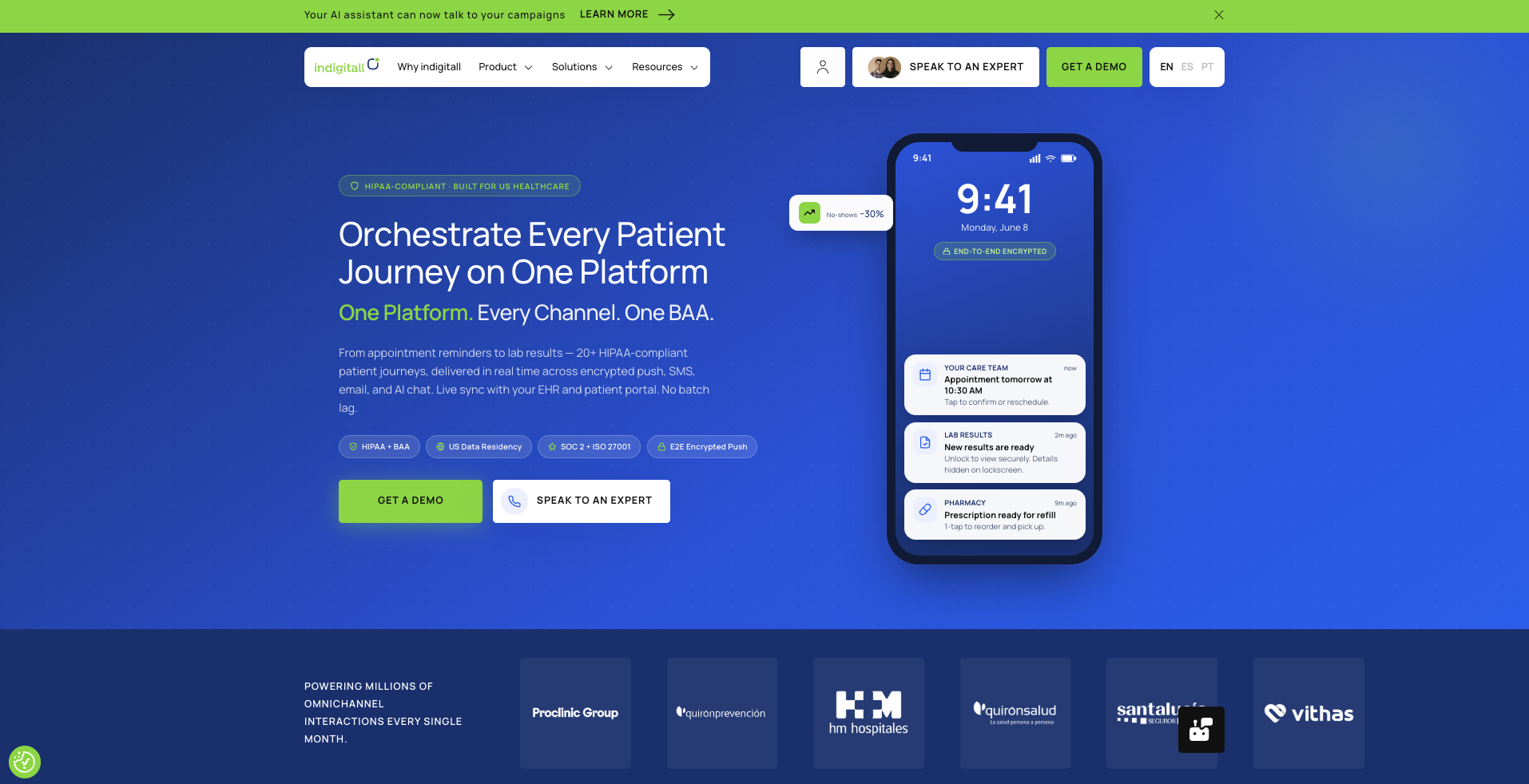
the page leads with BAA coverage per channel and with US data residency, which is the claim the rest of this entry rests on. Captured 18 September 2026.
2. Braze
Built for products that talk to their users inside an app, which in healthcare means digital health and telehealth.
Best for: digital health and telehealth products that instrument their own app and want the next message triggered by what the patient just did inside it.
What it does well: event-driven messaging that reacts in the moment, strong in-app and push, and a canvas that marketers can operate without engineering for every change.
Key features: Canvas journeys, in-app messages, push, email, SMS, real-time event ingestion.
Worth knowing: it expects an app and a stream of events. Without both, most of what you are paying for stays unused.
Pricing: quote based, driven by monthly active users and volume.
Not a fit if: your patients never touch an app and your program is phone, SMS and letters.
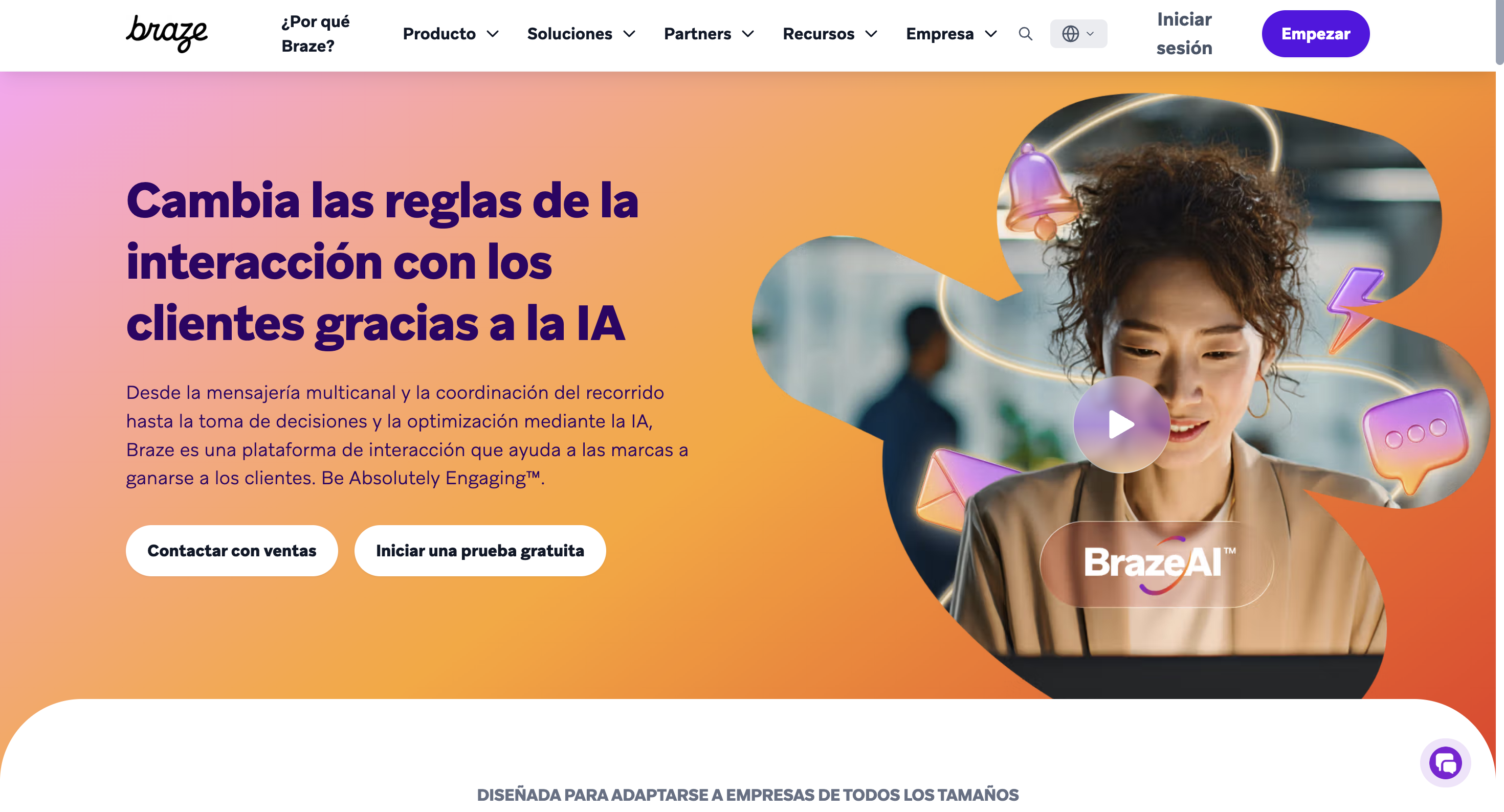
it positions around customer engagement for products with apps, not around clinical workflows. Captured 18 September 2026.
3. Insider One
The multichannel option for health brands that behave more like consumer brands.
Best for: mid-sized to large multichannel health brands running acquisition and retention together.
What it does well: web and app personalization alongside messaging, and segmentation that uses on-site behavior.
Key features: cross-channel campaigns, AI segmentation, web personalization, app messaging, WhatsApp.
Worth knowing: the breadth is real but it takes setup. The personalization features are the ones most often bought and least often switched on.
Pricing: quote based.
Not a fit if: your patient relationship happens almost entirely offline.
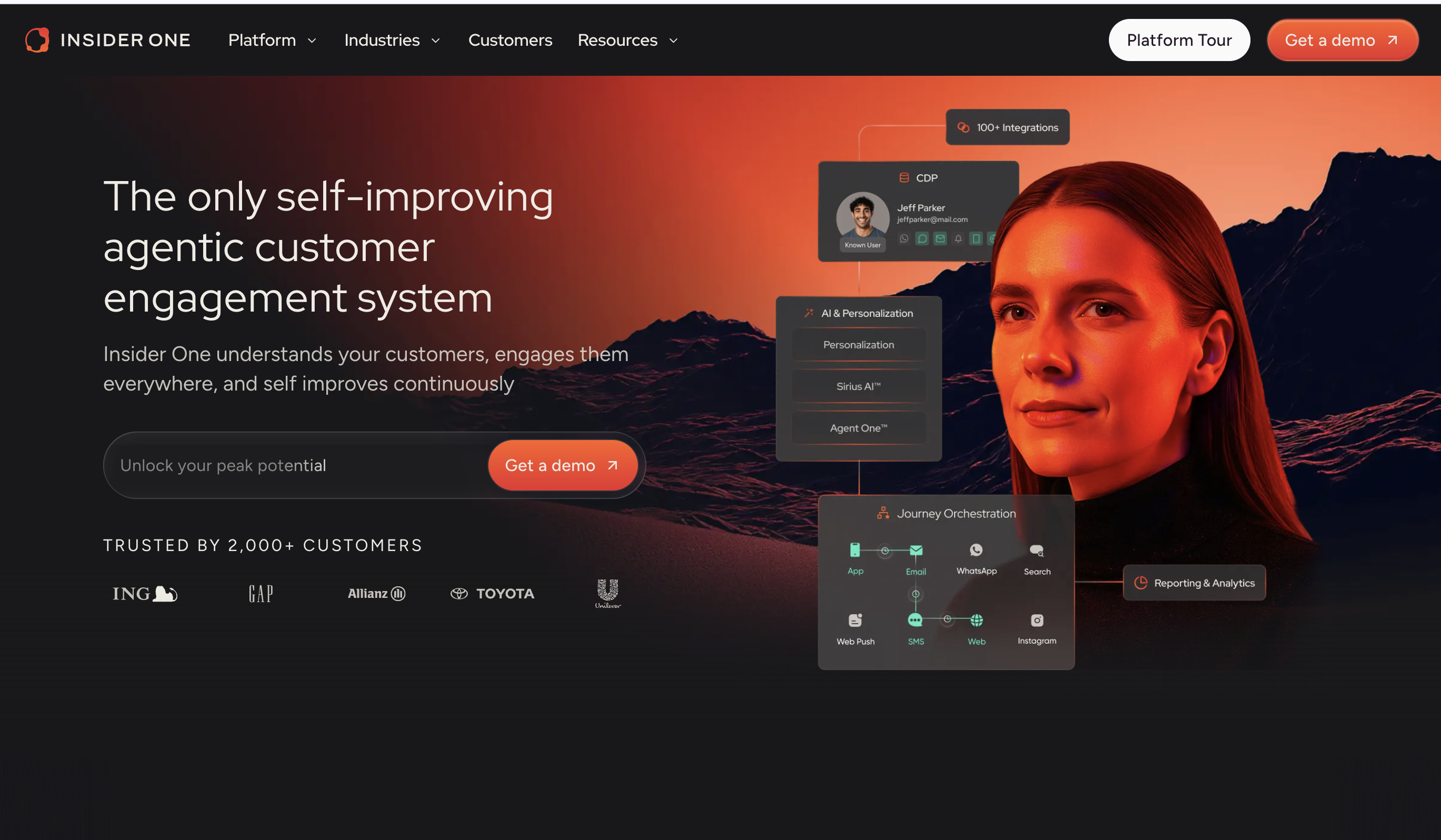
the emphasis on web and app personalization shows the kind of health brand it is built for. Captured 18 September 2026.
4. Iterable
The same territory as Braze, approached from a builder that a marketing team can run without an engineering ticket per campaign.
Best for: the same digital health and telehealth products, when the team wants to build those in-product lifecycles without an engineering ticket per campaign.
What it does well: lifecycle journeys, experimentation, and a data model that is comfortable for teams coming from email.
Key features: Studio journeys, experiments, catalog-based personalization, email, push, in-app, SMS.
Worth knowing: it is a cross-industry marketing platform rather than a healthcare product, so the compliance conversation starts from a general posture and narrows from there.
Pricing: quote based.
Not a fit if: your patients never touch an app or a digital product surface, because its lifecycle model assumes one.
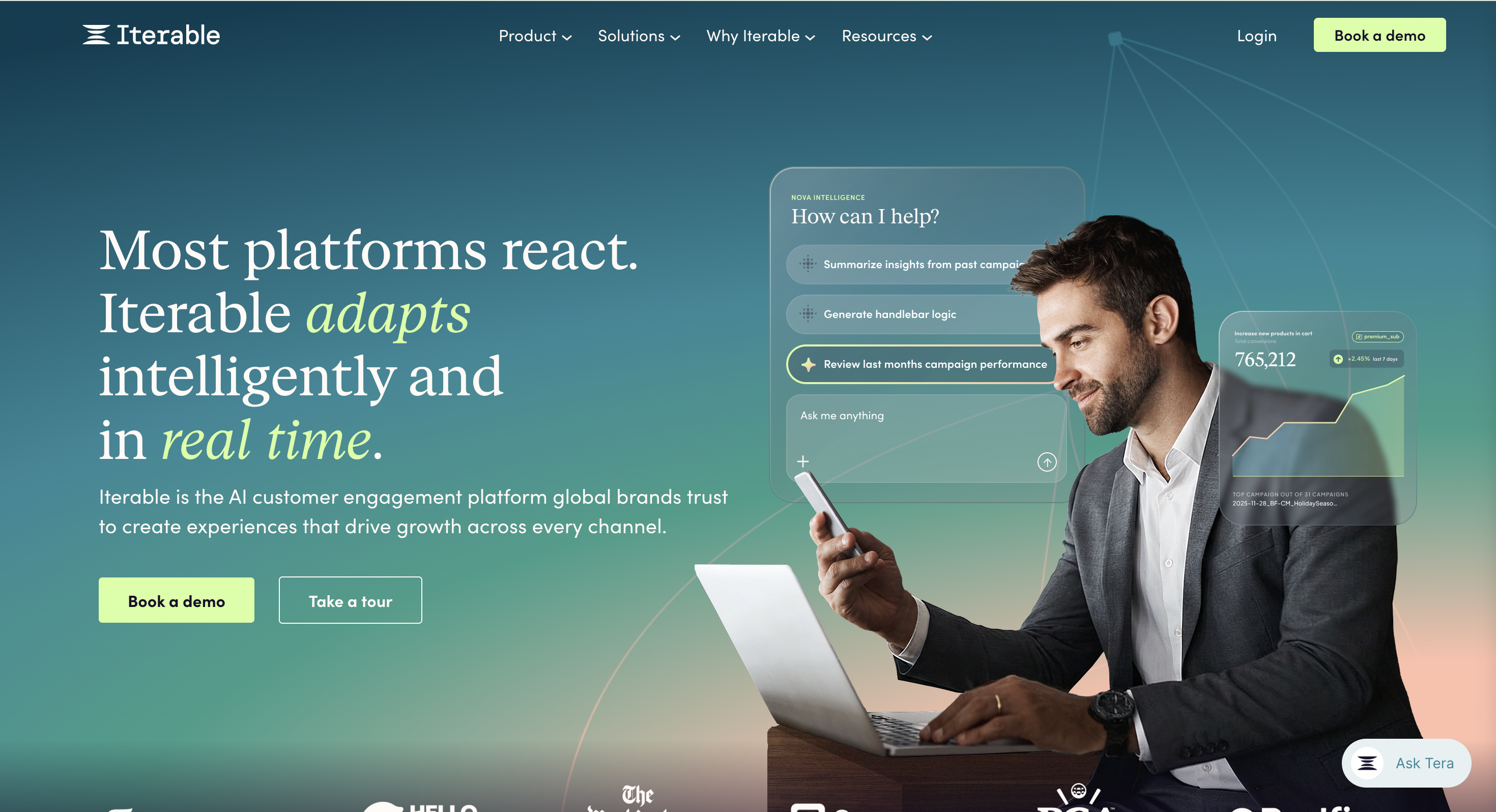
it presents itself as a cross-channel marketing platform rather than a healthcare one, which is worth knowing before the compliance conversation. Captured 18 September 2026.
5. Salesforce Marketing Cloud + Health Cloud
The enterprise default when the health system already runs Salesforce and the patient record has to travel with the campaign.
Best for: health systems and payer networks already running Salesforce, where the patient record has to sit in the same clinical data model as the campaign.
What it does well: journey orchestration across a very large contact base, a clinical data model that maps to how health systems already store records, and reporting that survives an audit.
Key features: Journey Builder, Health Cloud data model, consent and preference management, multi-channel send, analytics.
Worth knowing: it is an implementation, not a purchase. Budget for a partner and for months, not weeks.
Pricing: quote based. Healthcare pricing is not published.
Not a fit if: you are a single practice or a clinic group without an in-house Salesforce team.
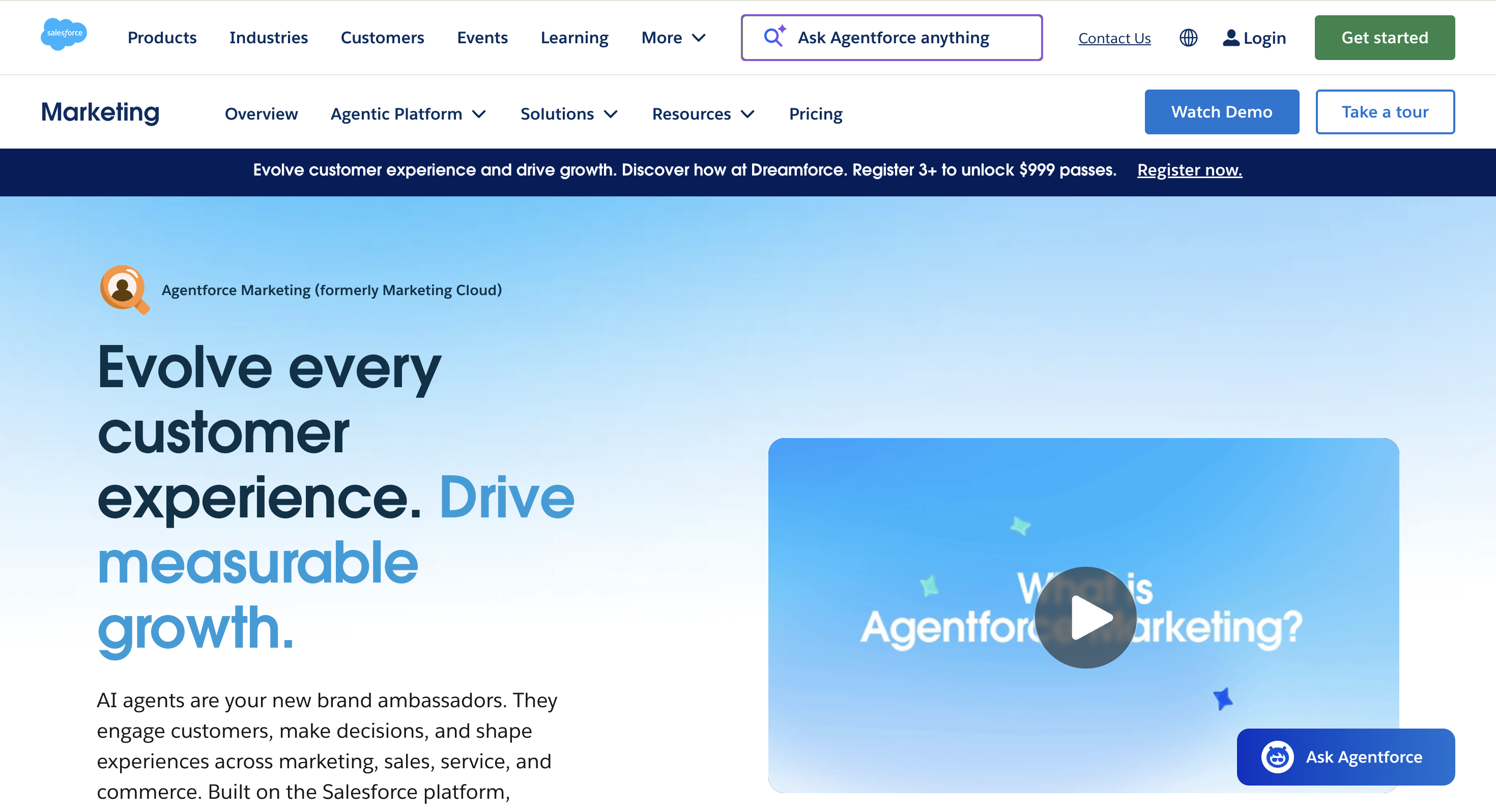
it leads with the clinical data model rather than with campaigns, which is the tell of who it is built for. Captured 18 September 2026.
6. HubSpot Marketing Hub
The one most practices already have, which is both the argument for it and the thing to check.
Best for: clinics, provider groups and health-tech companies that want one unified CRM behind their marketing.
What it does well: email, forms and landing pages that a small team can run without help, and reporting that ties a campaign to a contact record.
Key features: email campaigns, lead scoring, CRM integration, forms, landing pages, workflows.
Worth knowing: HubSpot states that its privacy and security protections enable customers to operate its products in compliance with HIPAA. Which subscription tier that takes, and with which controls switched on, is not something to take from a comparison table. Confirm it in writing before you build on it.
Pricing: public tiered pricing.
Not a fit if: your program depends on SMS or push at volume.
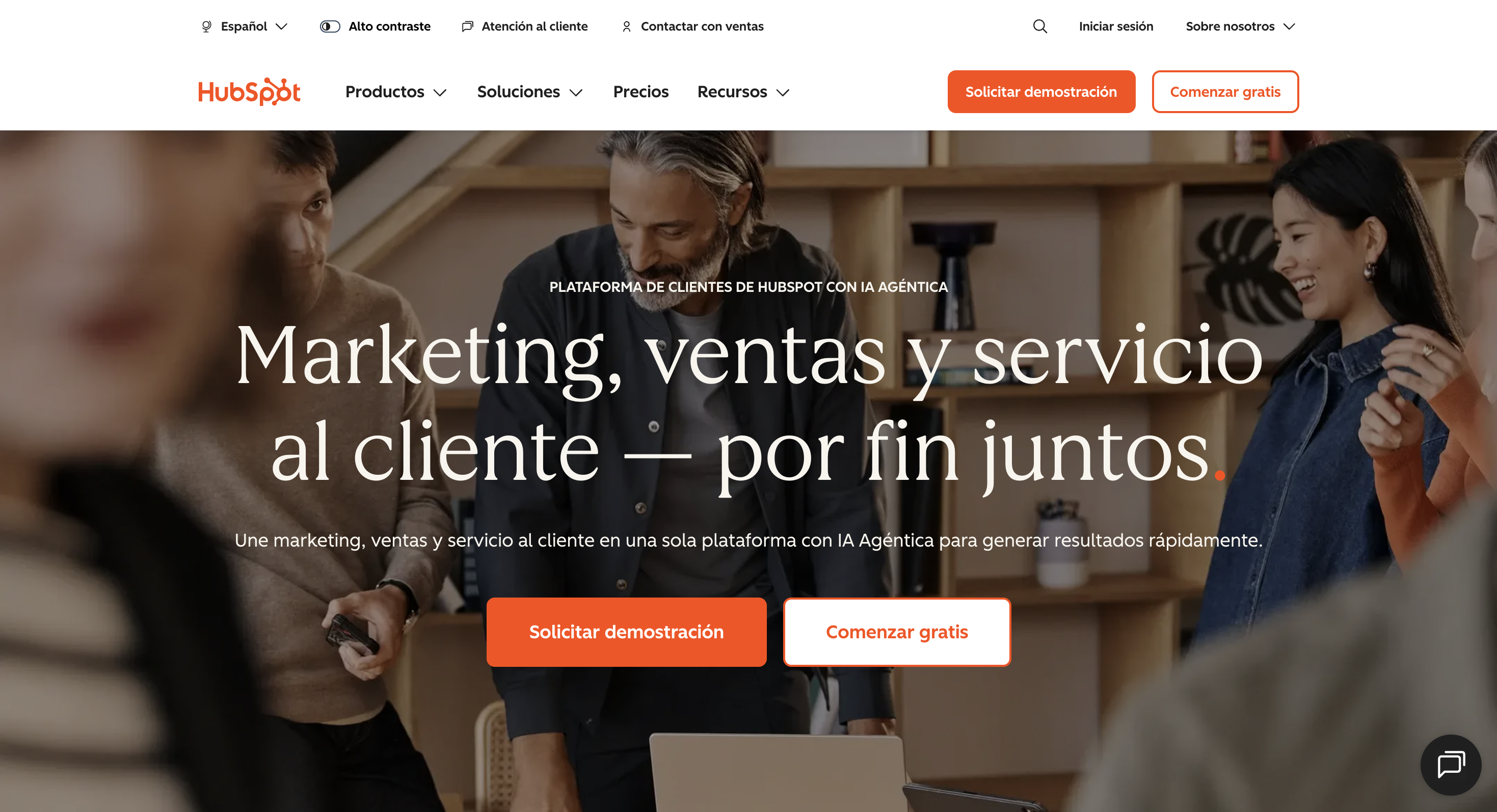
the pricing is public, which is unusual in this list, and the tier structure is what the compliance question hangs on. Captured 18 September 2026.
7. Luma Health
Scheduling is the spine, and the messaging hangs off it.
Best for: organizations whose patient journey problem starts at booking and ends at recall.
What it does well: it ties the message to the appointment, so waitlists, fills and reminders share one state.
Key features: self-scheduling, waitlist and fill, reminders, intake, referrals, broadcast messaging.
Worth knowing: the value depends on how deeply it integrates with your scheduling system. A shallow integration turns it into an expensive reminder tool.
Pricing: quote based.
Not a fit if: your scheduling stays in a system it does not integrate with.
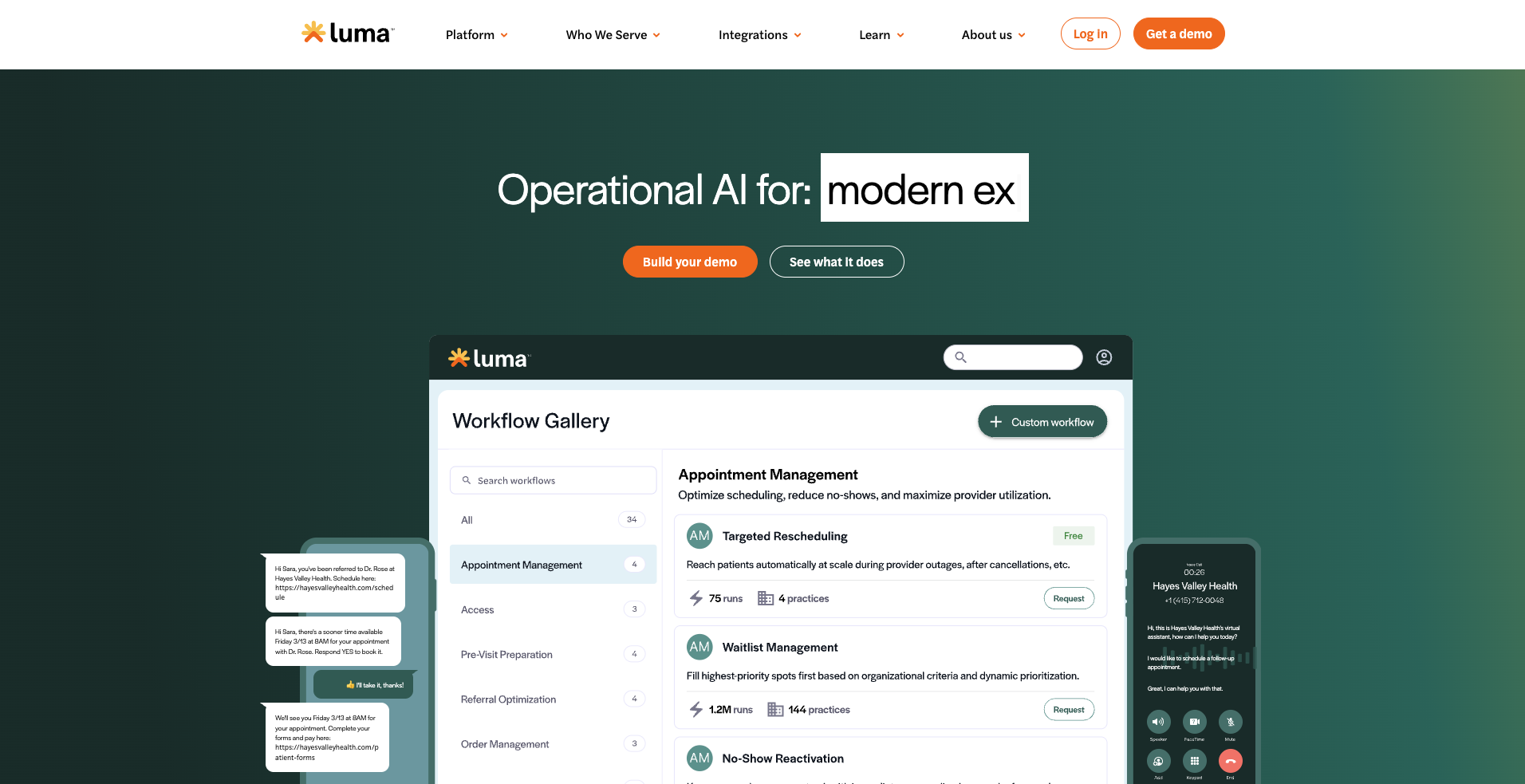
the page sells workflows tied to the schedule rather than campaigns, which is the honest summary of where its value sits. Captured 18 September 2026.
8. Adobe Marketo Engage
The enterprise option that shows up when the marketing team is bigger than the IT team.
Best for: large healthcare organizations running demand generation with a marketing operations team of their own.
What it does well: program-level automation, lead and patient scoring, and campaign governance across many business units.
Key features: engagement programs, scoring, account-level reporting, dynamic content, integrations catalog.
Worth knowing: its native channel set is narrower than its reputation suggests. SMS and push usually arrive through partners, which means the compliance question moves to those partners.
Pricing: quote based.
Not a fit if: your program is mostly appointment logistics rather than demand generation.
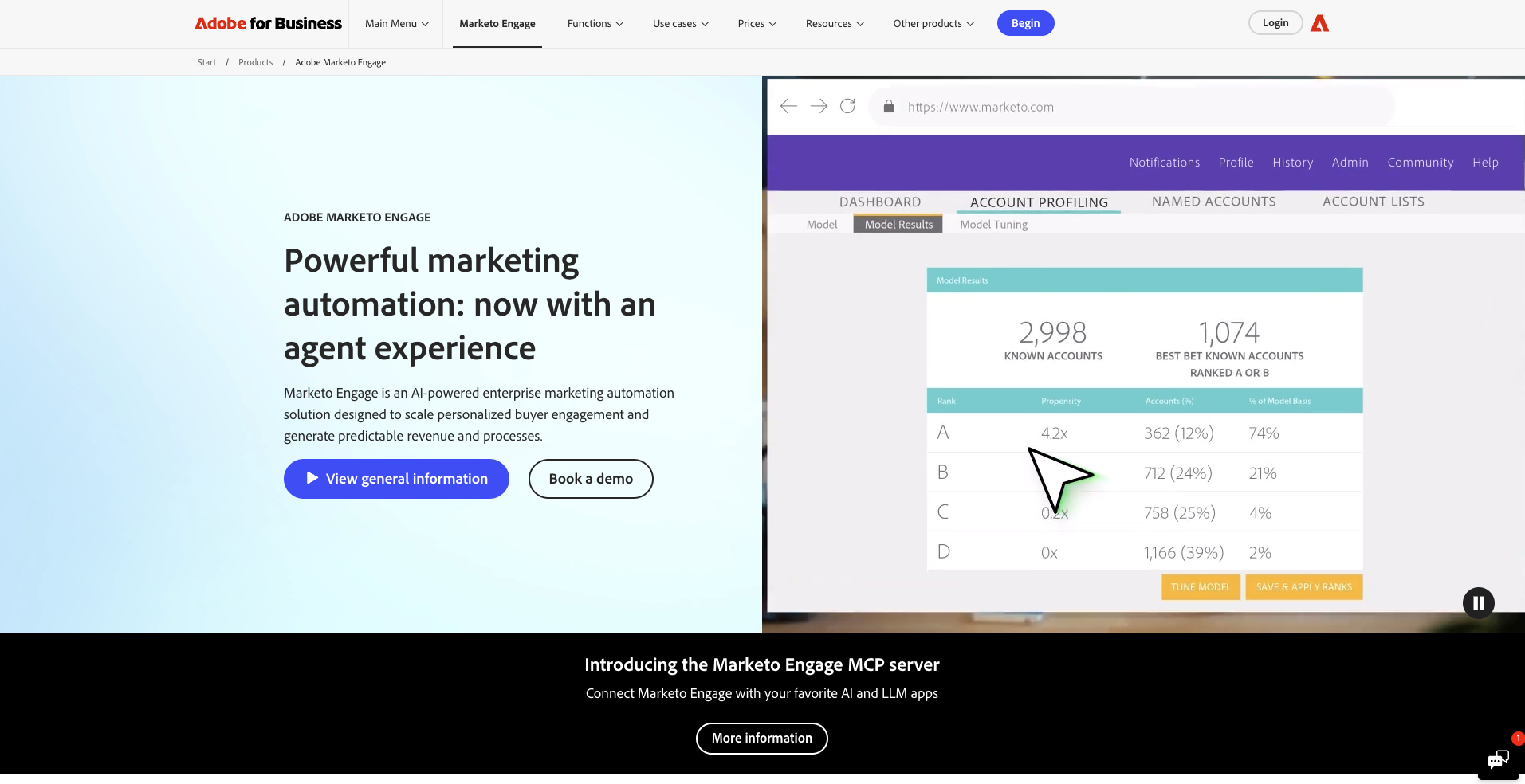
the page is organized around marketing programs and lead feeds, not around patients, which is exactly the distinction that decides fit here. Captured 18 September 2026.
9. ActiveCampaign
The email-led option for practices that want automation without a project.
Best for: mid-sized providers and smaller practices running an email-first program.
What it does well: automations that are easy to build, good deliverability, and a price you can see before you talk to anyone.
Key features: email automation, site messages, SMS add-on, segmentation, CRM.
Worth knowing: it is a general marketing tool with healthcare customers, not a healthcare product. Everything clinical stays your responsibility to keep out of it.
Pricing: public tiered pricing.
Not a fit if: you need protected health information inside the message itself.
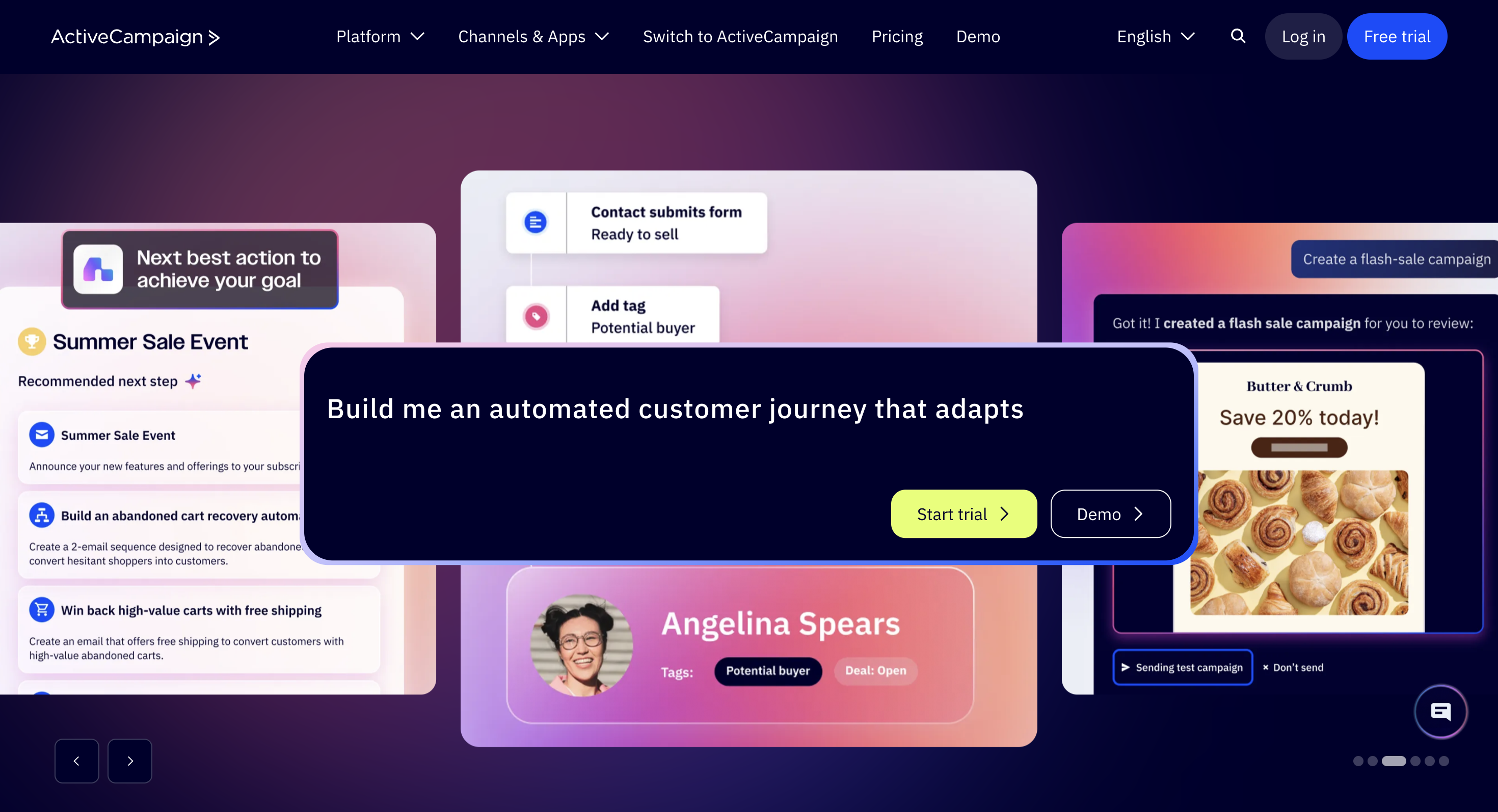
it sells to every industry rather than to healthcare, which is the context for its compliance posture. Captured 18 September 2026.
10. Birdeye
Reputation first, messaging second, and for some practices that order is correct.
Best for: multi-location practices where reviews and local search drive new patients.
What it does well: review generation and monitoring across locations, plus the messaging that supports it.
Key features: review requests, reputation monitoring, SMS campaigns, listings management, webchat.
Worth knowing: if you buy it expecting a journey orchestration platform you will be disappointed. It is very good at a narrower job.
Pricing: quote based.
Not a fit if: your growth problem is retention rather than acquisition.
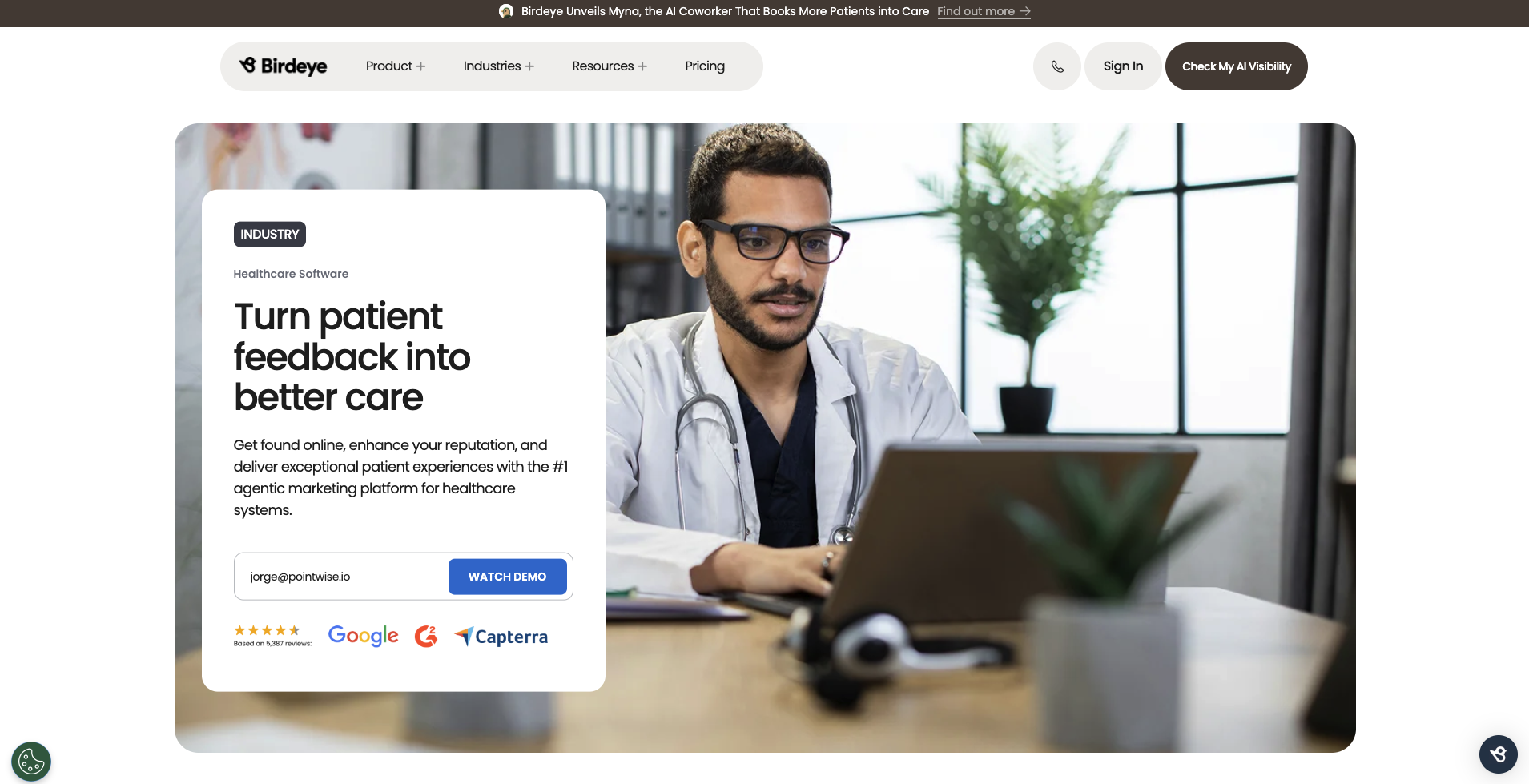
reputation is the product and patient feedback is the input, which is an accurate description of where it is strongest and of what it does not do. Captured 18 September 2026.
11. PatientNow
The specialty option, and the one currently doing the best job of documenting its own category.
Best for: med spas, aesthetic practices, weight-loss centers and plastic surgery.
What it does well: it fits the workflow of a cash-pay aesthetic practice, including inventory and consultation flows that general platforms do not model.
Key features: AI concierge, marketing suite, inventory management, patient records for aesthetics, before and after photo handling.
Worth knowing: its fit narrows fast outside aesthetics. It is not a general healthcare platform and does not claim to be.
Pricing: quote based.
Not a fit if: you are a general medical practice, a hospital or a digital health product.
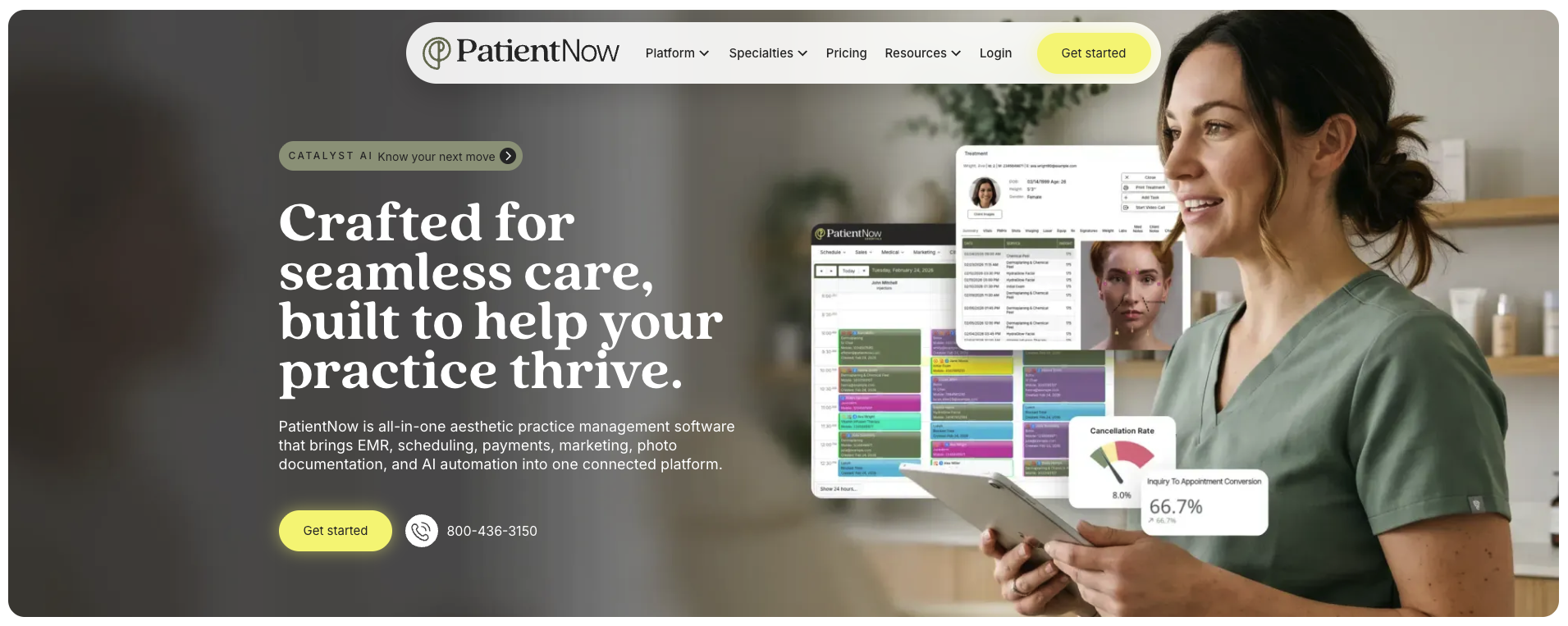
the vertical focus is explicit on the home page, which is why it wins its segment and does not compete outside it. Captured 18 September 2026.
12. PatientPop, now Tebra
Acquisition first: the practice website, the listings and the reviews that feed it. It is also the entry on this list whose name is out of date everywhere except here.
Best for: multi-specialty and primary care practices whose priority is new patient acquisition.
What it does well: it treats the practice’s online presence as one system, from the site to the listings to the review flow, and reports on where new patients came from.
Key features: practice website, online scheduling, listings management, reputation, patient communication.
Worth knowing: PatientPop stopped being a separate product on 2 April 2024, when Tebra retired the website and folded the services into tebra.com. Comparison pages across this category still list PatientPop as if you could buy it; you cannot, and patientpop.com redirects. What you are evaluating is Tebra, an all-in-one practice-operations suite, so what you buy and what you get billed for is broader than the marketing piece.
Pricing: quote based.
Not a fit if: your problem is retention and recall rather than filling the top of the funnel.
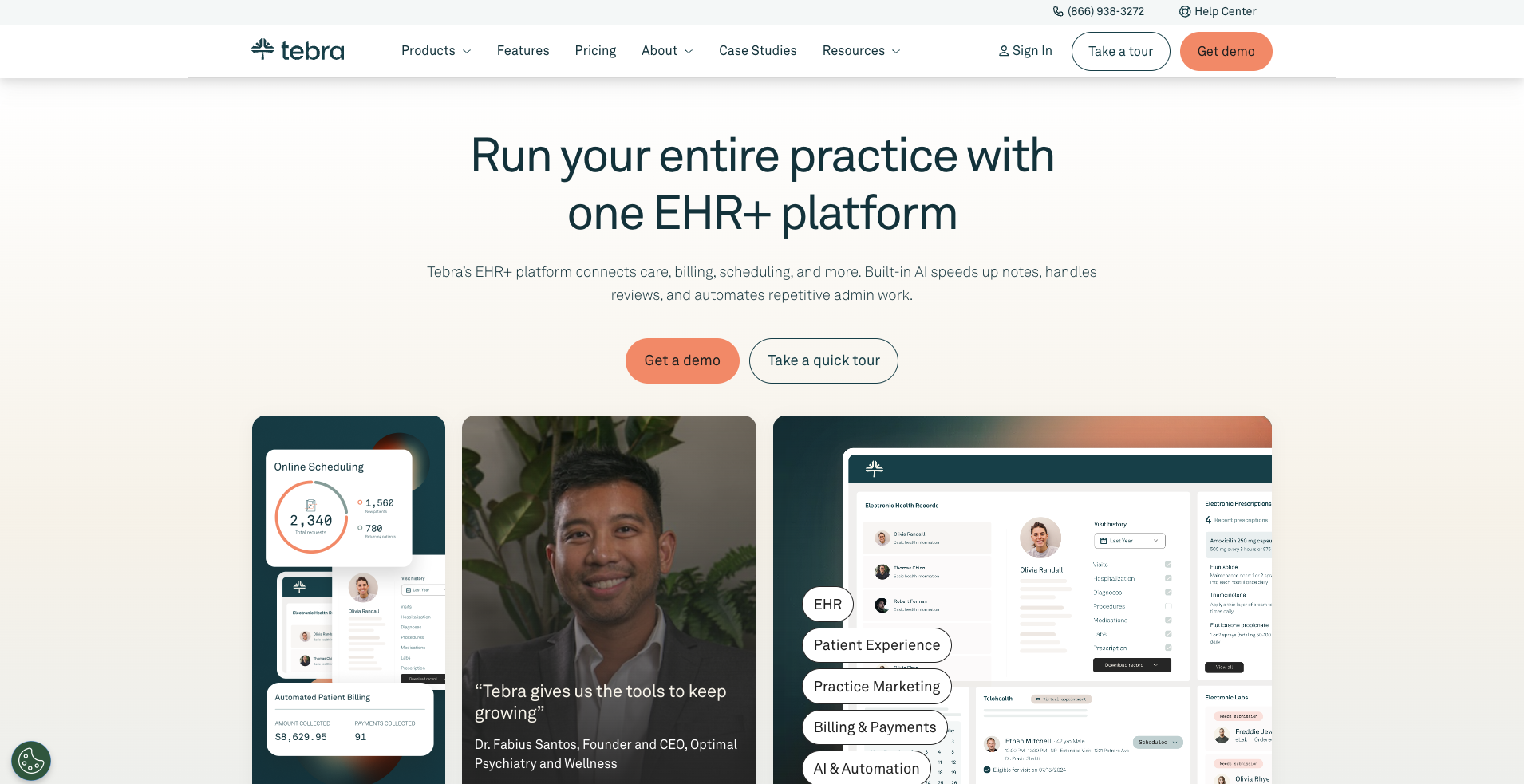
marketing is one block among four on that page, which is the fastest way to see that what replaced PatientPop is a practice-operations suite and not a growth product. Captured 18 September 2026.
13. Solutionreach
Built around keeping existing patients coming back.
Best for: practices whose priority is retention, recall and routine patient communication.
What it does well: recall campaigns, reminders and two-way messaging with staff workflows that front-desk teams actually use.
Key features: appointment reminders, recall, two-way texting, surveys, newsletters.
Worth knowing: the marketing side is lighter than the communication side. Treat it as patient communication software with marketing attached.
Pricing: quote based.
Not a fit if: you need campaign orchestration across app and web as well as messaging.
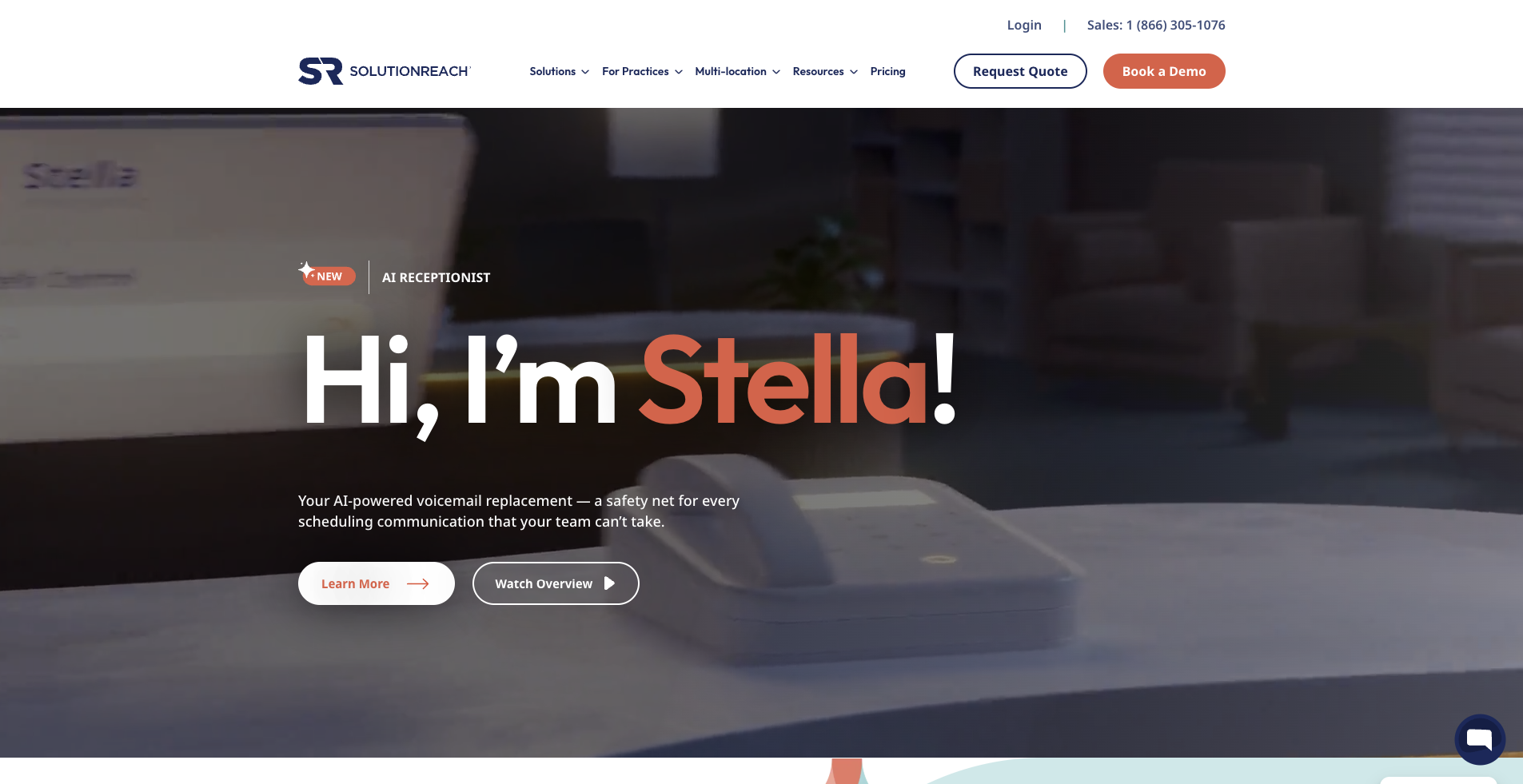
the page opens on the phone line rather than on campaigns, which tells you who operates it day to day. Captured 18 September 2026.
14. Weave
The phone system that grew into patient outreach, which is why front desks like it.
Best for: small and mid-sized clinics that run reminders and outreach from the front desk rather than from a marketing team.
What it does well: it joins the phone, the texts and the schedule in one place, so the person who answers the call is the person who sees the history.
Key features: VoIP phones, two-way texting, appointment reminders, payments, reviews.
Worth knowing: the phone system is part of the product, so switching to it is an operations change and not only a marketing one.
Pricing: quote based.
Not a fit if: you want marketing orchestration across app, web and push rather than front-desk communication.
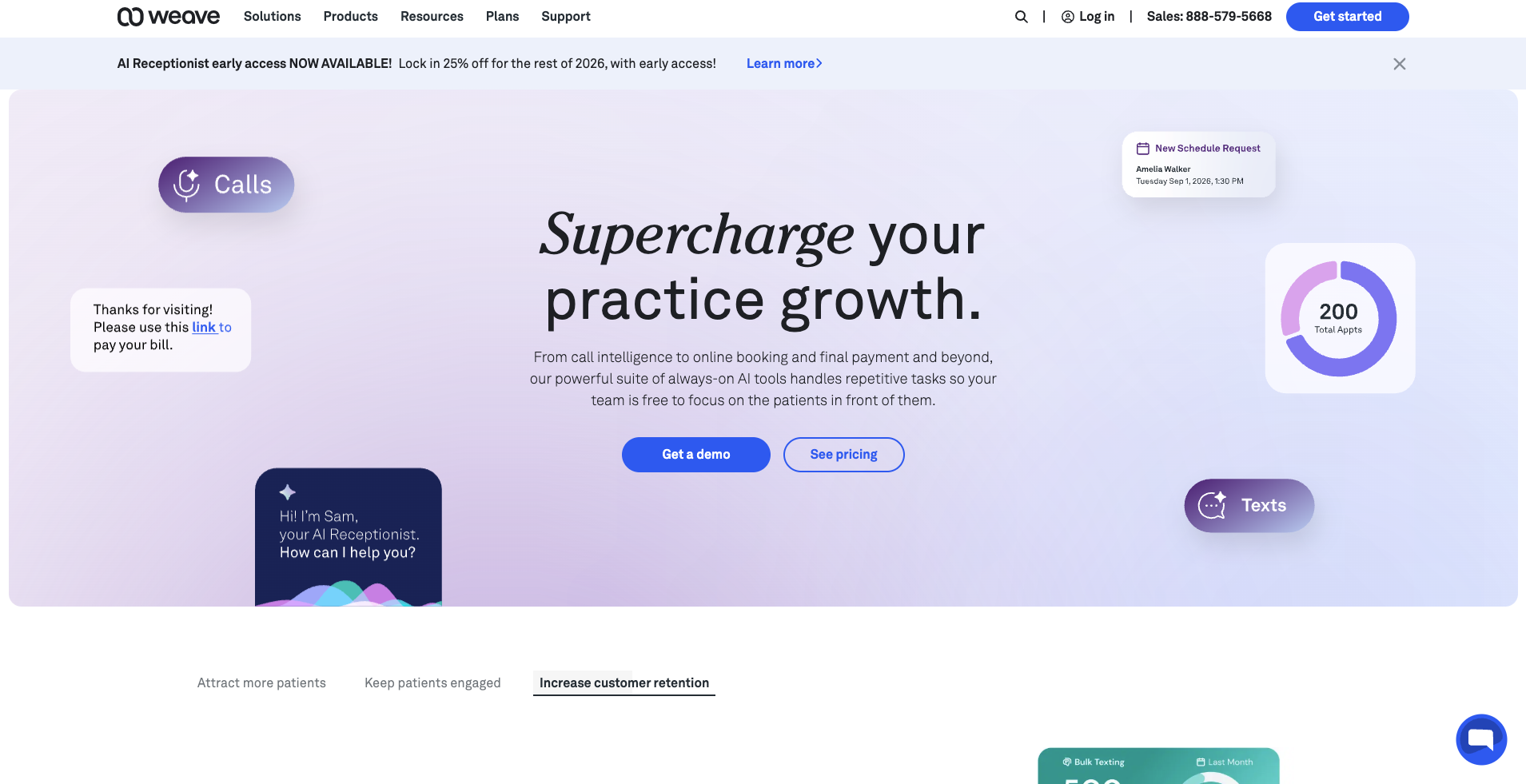
calls and texts sit at the center of the page, which explains both its strength and its switching cost. Captured 18 September 2026.
The three questions that actually decide this
Compliance: who signs a BAA, and for which channels?
A vendor can be HIPAA-aware, host on a compliant cloud, and still not sign a BAA that covers the channel you care about. The gap usually appears where the platform brokers a channel through a third party: the email is covered, the SMS belongs to somebody else.
Ask it as a list, not as a question. Name each channel you will send on, and ask for the BAA to cover it in writing. HHS sets out what the agreement has to contain, and a vendor that cannot answer channel by channel has told you something useful. Ask for the security documentation too: SOC 2 Type II and ISO 27001 are the two that come up most often, and vendors that hold them usually publish them, as indigitall does in its security policy.
There is a related trap, and it shows up every time a practice manager asks a buyer forum which CRM or automation tool is HIPAA compliant. The answers come back as product names. Compliance describes an agreement plus a configuration, and it does not travel with a product into your account. Under the HIPAA Rules a vendor that handles protected health information on your behalf is a business associate because of what it does with the data, whatever the marketing page calls it.
So turn the label into three checks you can run in an afternoon. Confirm the BAA is available on the plan you can actually afford, because several platforms reserve it for a higher tier and a small practice priced into a lower one is covered by nothing. Find out who at your organization accepted it and on what date, since an agreement clicked through during setup was probably never read by your counsel. And confirm it names the vendor’s own subcontractors, which HHS requires the contract to address, because the analytics tool or the SMS carrier sitting behind your platform is handling the same data you are answerable for.
Integration: EHR, EMR and practice management
This is the criterion that separates the list most sharply, and the one buyers underestimate. Two vendors can both say “EHR integration” and mean a live two-way sync in one case and a nightly file in the other.
The question that ends the conversation: if a patient cancels at 9:04, what does your platform know at 9:05, and what does it do about the reminder scheduled for 9:30?
Fit by size and type of organization
The platforms built for large hospital systems and the ones built for a single-specialty practice are not competing for the same buyer, even though they appear on the same lists. Buying above your tier means paying for an implementation you will not finish. Buying below it means outgrowing the platform in a year.
Match the tier before comparing features. If you are still deciding whether you need orchestration at all, this breakdown of omnichannel marketing automation is the shorter version of that question. The Built for column in the table above is there for exactly this, and it is the column to read first if your tier is obvious to you.
What we would choose, by situation
- A hospital network with everything already in Salesforce. Salesforce Marketing Cloud with Health Cloud. The integration cost is real but it is lower than moving the record.
- A telehealth product where the app is the relationship. Braze or Iterable. Event-driven messaging is the whole job here and both do it natively.
- A twelve-location provider group that sends reminders on four channels. indigitall, because one agreement covering encrypted push, the patient portal, email and SMS is the specific thing it is built for. If the reminders only go out by text and phone from the front desk, Weave or Solutionreach will do it for less.
- A primary care group whose problem is empty slots, not repeat patients. PatientPop, now Tebra, or Luma Health if the scheduling system is where the fix has to land.
- A single med spa. PatientNow. A general platform will not model the workflow and you will end up running it on spreadsheets anyway.
- A two-doctor practice with an email list. ActiveCampaign or HubSpot, and keep protected health information out of the message.
FAQs: healthcare marketing automation platforms
Do healthcare marketing automation platforms have to be HIPAA compliant?
If the platform touches protected health information, the vendor is a business associate and has to sign a BAA. If the program is strictly non-clinical, the requirement changes, but so does what you are allowed to put in the message. Decide which of the two you are running before you shortlist.
Is a platform HIPAA compliant just because it says so?
No, and it is the most repeated question from small practices shopping for one. The operative artifact is the signed agreement, and HHS sets out what it has to contain: permitted uses and disclosures, appropriate safeguards, reporting of any use or disclosure the contract does not provide for, availability of the vendor’s records to HHS, return or destruction of the data at termination, and the same restrictions applied to subcontractors. Check three things before you shortlist. Whether the BAA is offered on the plan you can afford, who at your organization accepted it, and whether it names the channels you will actually send on.
What is the difference between a healthcare platform and general marketing software?
Accountability, mostly. General software can be configured carefully and used safely; a healthcare platform signs the agreement that makes the vendor answerable for the data. The feature lists overlap far more than the contracts do. The wider shift behind all of this is covered in this guide to omnichannel excellence in healthcare marketing.
Which platform is best for reducing no-shows?
Four of these attack it from different angles, and which one fits depends on where your process breaks. Weave and Solutionreach work from the front desk, Luma Health from the scheduling system, and indigitall from channel coverage, sending the reminder on encrypted push, the portal, email or SMS under one agreement and escalating to a voice call only for the patients who did not answer the cheaper step. If your reminders already go out reliably and patients still miss appointments, the problem is timing and channel, not volume.
Can one platform replace a marketing agency?
It can replace the execution, not the judgment. Every platform here still needs somebody to decide what to say and to whom.
How much does healthcare marketing automation cost?
Most vendors in this category do not publish healthcare pricing, which is why this piece says so instead of estimating. HubSpot is the exception with public tiers. ActiveCampaign moved its pricing behind a configurator that asks for contact volume before it shows a figure, checked on 18 September 2026.
What should I ask on the first vendor call?
Three things: which channels the BAA covers, whether the EHR sync is real time or batch, and which comparable organization you can phone as a reference.
About the Authors