indigitall Omni AI
  Start chat with AI agent
 Speak with AI voice agent
 Book a Demo

 Speak to an Expert












E-commerce Product Recommendation Engines: The Ultimate Guide to Boosting Sales
August 7, 2026


Updated August 13, 2026
E-commerce Product Recommendation Engines: The Ultimate Guide to Boosting Sales
In 2026, e-commerce success hinges on personalized customer experiences powered by AI-driven recommendation engines. indigitall’s platform integrates these engines into a Global Omnichannel Strategy, enhancing customer engagement and maximizing business impact.
The High Cost of a Generic Shopping Experience
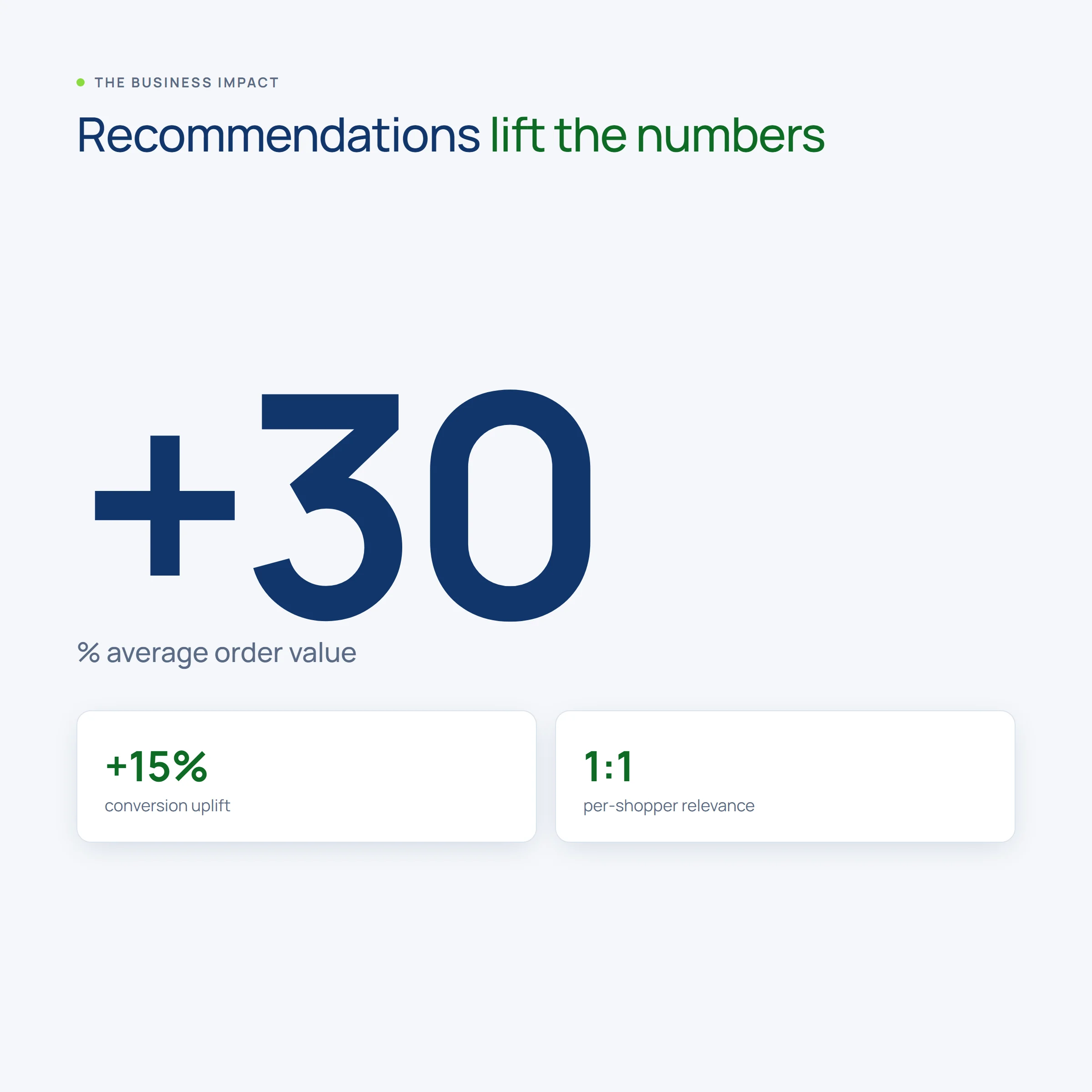
Personalization is the key to growth in the e-commerce landscape of 2026. Top-tier brands demonstrate that a deeply personalized customer experience is essential, not optional. Industry reports reveal that effective personalization can lift revenues by 5-15% and enhance marketing spend efficiency by 10-30%.
Despite these benefits, many businesses still treat their customers like strangers. Consumers are overwhelmed by digital noise, leading to cart abandonment and reduced loyalty. A sophisticated product recommendation engine can transform this dynamic by acting as an intelligent personal shopper, creating a guided and relevant customer journey.
Forward-thinking brands understand that personalization cannot be confined to a single platform. A Global Omnichannel Strategy is crucial for engaging customers across all touchpoints, ensuring a seamless and intelligent ecosystem.
Key Takeaways
- Personalization Drives Growth: Effective personalization can lift revenues by 5-15% and increase marketing spend efficiency by 10-30%.
- Omnichannel Strategy: A Global Omnichannel Strategy is essential for engaging customers with timely suggestions across all touchpoints.
- Recommendation Engines: These engines transform the customer journey by predicting and displaying products a user is most likely to buy.
- Business Impact: Implementing a recommendation engine is a core component of digital growth, enhancing AOV and customer loyalty.
What is an E-commerce Product Recommendation Engine?
To delve deeper into enhancing user communication and experience in your e-commerce platform, check out this insightful video on improving e-commerce interactions.
{"@context":"http://schema.org","@type":"VideoObject","name":"¿Cómo mejorar la comunicación y la experiencia de usuario en tu e-commerce?","description":"Para mejorar la comunicación y la experiencia de usuario en tu e-commerce, es crucial implementar estrategias de comunicación personalizadas y segmentadas. indigitall ofrece una plataforma de automatización de marketing que permite enviar notificaciones web push, segmentar audiencias y personalizar mensajes según el ciclo de vida del cliente. Esto no solo mejora la interacción con los clientes, sino que también incrementa las ventas al atraer nuevamente a los usuarios a la página web. Además, la plataforma de indigitall facilita la integración de notificaciones en dispositivos Android, lo que cubre hasta un 90% del mercado móvil en algunos países.","uploadDate":"2026-07-07","dateModified":"2026-07-07"}
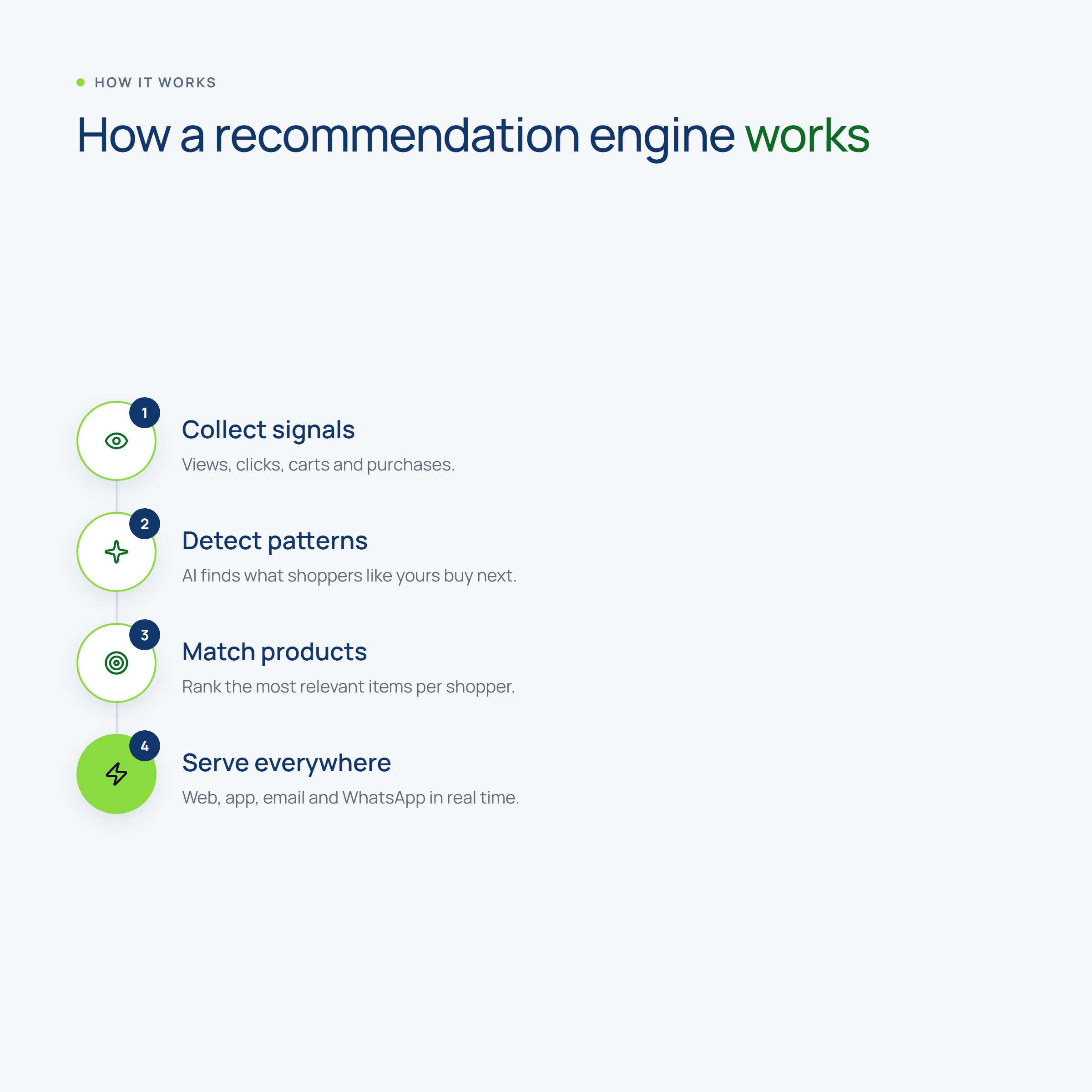
An e-commerce product recommendation engine is your digital personal shopper. It uses AI to analyze customer data, predicting and displaying products a user is most likely to buy based on browsing history, past purchases, and real-time behavior.
Classic examples include Amazon’s “Customers who bought this also bought…” and Netflix’s personalized carousels. These systems transform a generic catalog into a curated shopping experience tailored to each individual.
The strategic power of this technology lies in its ability to shift marketing from a broadcast model to a one-to-one conversation, increasing relevance and conversion rates. In 2026, recommendations extend beyond the website, integrating into a Global Omnichannel Strategy for a consistent customer journey.
indigitall’s Recommendation Engine: Transforming Your Business Impact
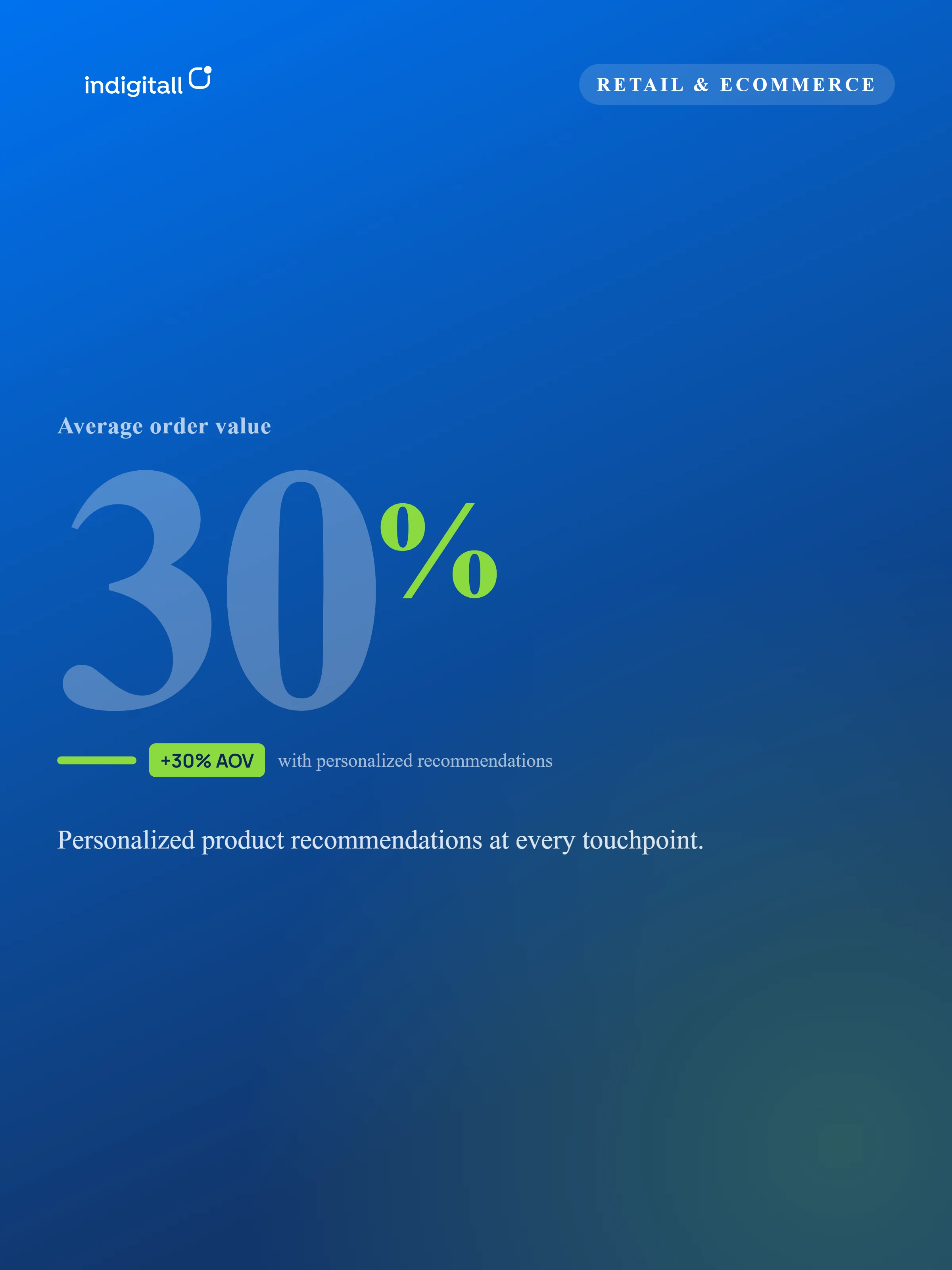
indigitall’s recommendation engine is not just an optional add-on; it’s a core component of your digital growth strategy. By integrating this intelligent system, you unlock powerful, measurable returns across the entire Customer Journey, enhancing Average Order Value (AOV) and customer loyalty.
1. Skyrocket Average Order Value (AOV) and Revenue
Maximizing transaction value is crucial for profitability in 2026. Product recommendation engines are strategic assets that enhance user experience and directly increase Average Order Value (AOV) and revenue.
This is achieved through up-selling and cross-selling, supercharged by AI. Up-selling encourages customers to purchase premium versions, while cross-selling suggests complementary items. Strategic placement of these suggestions transforms single-item purchases into comprehensive solutions.
A Global Omnichannel Strategy extends these tactics beyond the website, using channels like App Push and WhatsApp to remind customers of items and offer compelling cross-sell opportunities, maximizing impact.
“indigitall is essential for marketing pros, enhancing communication with push notifications and user segmentation. AI integration boosts efficiency, adding significant value to daily operations.” – Oscar Andre D. on G2
2. Deliver Hyper-Personalized Customer Experiences
Today’s consumers expect brands to understand them on an individual level. Generic, one-size-fits-all marketing is a relic of the past. A recommendation engine is your primary tool for delivering the 1:1 personalization that builds brand affinity and reduces shopper friction.
By dynamically tailoring product discovery to each user’s unique browsing history, purchase data, and real-time intent, you create a shopping experience that feels curated and intuitive. This makes customers feel seen and valued, transforming a transactional visit into a memorable brand interaction.
3. Drive Higher Conversion Rates
Turning browsers into buyers is the primary goal in 2026’s e-commerce landscape. Product recommendation engines are a direct-line strategy, acting as catalysts for conversion by improving the customer’s path to purchase.
These engines reduce friction by surfacing products users are likely to want, shortening the time from landing on the site to adding an item to the cart. Personalized recommendations overcome purchase hesitation, building trust and confidence.
An effective strategy extends recommendations beyond the website, integrating them into a Global Omnichannel Strategy to re-engage users with relevant product suggestions across various channels.
4. Cultivate Loyalty and Maximize Lifetime Value (LTV)
The long-term value of a recommendation engine is its ability to foster loyalty. A positive, personalized experience is a key driver of repeat business. But in an omnichannel world, this experience must extend beyond your website.
Integrating your recommendation logic into a Global Omnichannel Strategy is crucial. Imagine sending an App Push Notification with personalized suggestions for a recently viewed item, or a WhatsApp message highlighting new arrivals based on past purchases. Platforms that unify web recommendations with mobile and messaging channels allow you to orchestrate these touchpoints, creating a cohesive Customer Journey that keeps users engaged and maximizes their LTV.
5. Unlock Deeper Customer Insights
Every click on a recommended product is a valuable data point. The analytics generated by your recommendation engine provide a powerful feedback loop, offering deep insights into customer behavior, product affinities, and emerging market trends.
This intelligence is invaluable. It can inform your inventory management, guide your merchandising strategy, and fuel future marketing campaigns. By understanding which products resonate with specific customer segments, you can make smarter, data-driven decisions that propel your entire business forward.
Success Case: Incapto's Coffee Subscription
Incapto, a coffee subscription service in Spain, leveraged indigitall’s platform to transform their customer engagement strategy. By integrating a WhatsApp “Panic Button” for reorders and using Retrieval-Augmented Generation (RAG) trained on their product catalog, Incapto achieved remarkable results.
- 70% of bot chats resolved without human intervention
- 12.5% increase in Average Order Value (AOV)
- 56% reduction in churn rate
- 18% increase in purchase frequency
- €30k MRR from WhatsApp Panic Button alone
- 13% of recurring orders originate from the Panic Button
Boost Average Order Value (AOV) and Revenue
Maximizing transaction value is crucial for profitability in 2026. Product recommendation engines are strategic assets that enhance user experience and directly increase Average Order Value (AOV) and revenue.
This is achieved through up-selling and cross-selling, supercharged by AI. Up-selling encourages customers to purchase premium versions, while cross-selling suggests complementary items. Strategic placement of these suggestions transforms single-item purchases into comprehensive solutions.
A Global Omnichannel Strategy extends these tactics beyond the website, using channels like App Push and WhatsApp to remind customers of items and offer compelling cross-sell opportunities, maximizing impact.
Increase Conversion Rates
Turning browsers into buyers is the primary goal in 2026’s e-commerce landscape. Product recommendation engines are a direct-line strategy, acting as catalysts for conversion by improving the customer’s path to purchase.
These engines reduce friction by surfacing products users are likely to want, shortening the time from landing on the site to adding an item to the cart. Personalized recommendations overcome purchase hesitation, building trust and confidence.
An effective strategy extends recommendations beyond the website, integrating them into a Global Omnichannel Strategy to re-engage users with relevant product suggestions across various channels.
Enhance Customer Experience and Loyalty
Discover how AI agents are revolutionizing customer interactions by watching this insightful video on enhancing loyalty through automation.
Product recommendations are essential for enhancing customer experience and loyalty in 2026. Consumers expect a curated service that simplifies discovery, with recommendation engines acting as personal shoppers.
This shift from selling to serving builds lasting relationships. Accurate, timely, and context-aware recommendations foster brand affinity, transforming buyers into loyal advocates and maximizing customer lifetime value (LTV).
True loyalty is built across every touchpoint. A Global Omnichannel Strategy ensures personalized understanding extends beyond the website, orchestrating interactions across the entire customer journey.
“indigitall offers versatile options with detailed metrics, making audience engagement seamless and affordable. Its automation and quick support enhance user experience significantly.” – Verified User in Newspapers on G2
Types of E-commerce Product Recommendations
Behind every effective product recommendation is a sophisticated model powered by data and artificial intelligence. While the underlying technology is complex, understanding the primary types of recommendation engines helps marketers and product owners strategize how to best deploy them. In 2026, these models are rarely used in isolation; instead, they are blended to create a powerful, context-aware user experience.
Let's explore the foundational models and how they drive results for the modern customer.
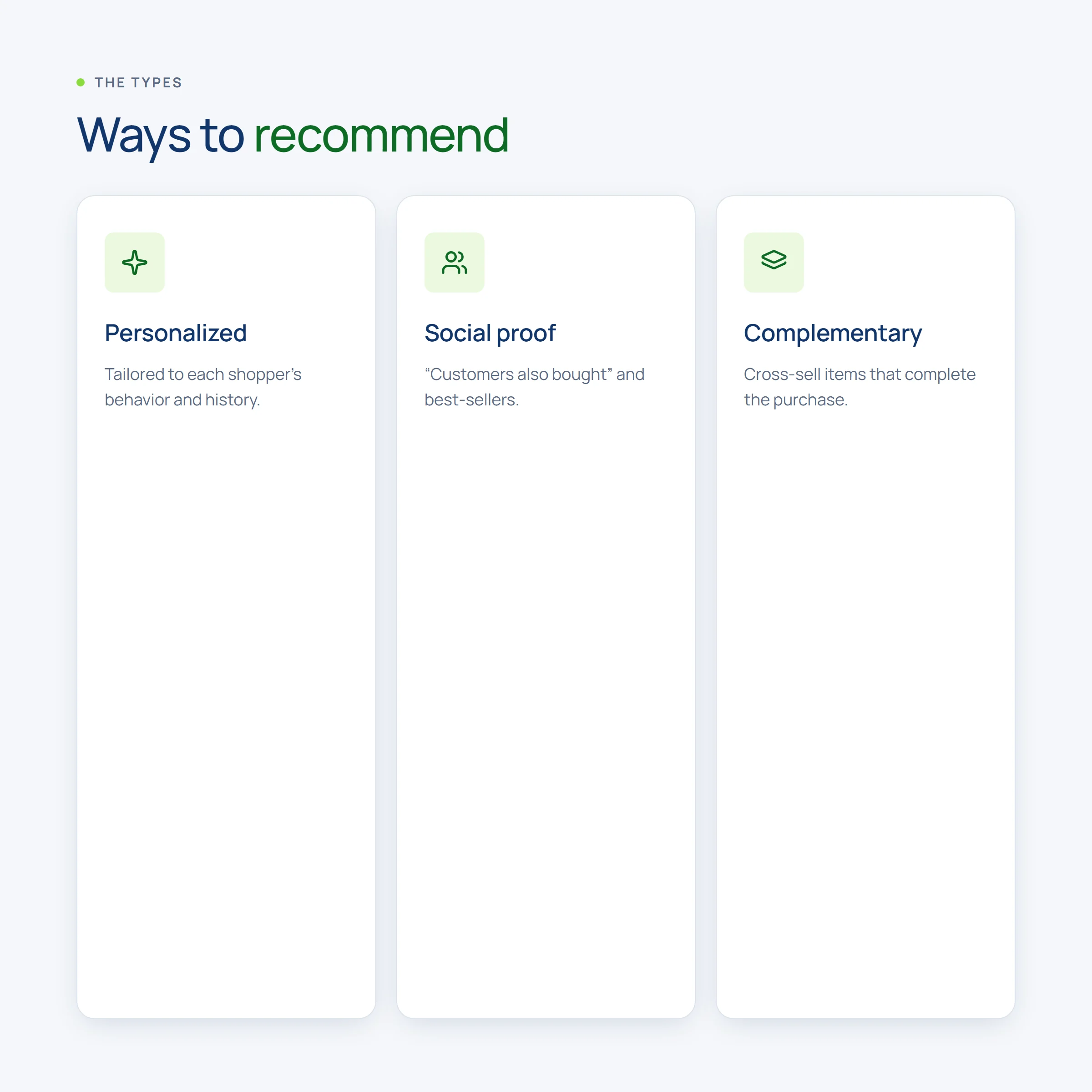
- Collaborative Filtering: “People like you also bought…”This is one of the most popular and effective models. It operates on the principle of social proof, analyzing the behavior of large groups of users to find patterns. If Customer A and Customer B have similar purchase histories, the engine assumes they have similar tastes and will recommend items that Customer A bought but Customer B has not yet seen.
The customer-facing outcome is a sense of discovery guided by a community of peers. It’s excellent for cross-selling and up-selling by showing what items are frequently purchased together, like a camera case and a memory card with a new camera.
- Content-Based Filtering: "Because you liked this…"This model focuses on the attributes of the products themselves rather than the behavior of other users. It recommends items that are similar to what a user has previously purchased, viewed, or added to their cart. The similarity is based on attributes like category, brand, color, price point, or other defined tags.
This approach excels at creating a deeply personalized experience tailored to an individual's specific tastes. If a user shows a strong affinity for a particular brand or style, content-based filtering ensures they see more of what they already love, strengthening brand loyalty.
- Hybrid Models & Context-Aware AI: The 2026 StandardModern e-commerce platforms have moved beyond single-model systems. Hybrid models combine the strengths of collaborative and content-based filtering (among other signals) to provide more accurate, relevant, and resilient recommendations. This approach overcomes the "cold start" problem, where it's difficult to make recommendations for new users or new products with no interaction history.
Evolving this further, Context-Aware AI is the true game-changer. It enriches the hybrid model with real-time contextual data: the user's location, time of day, device, and even external factors like weather. This allows for hyper-personalized suggestions that feel incredibly timely and intuitive, such as promoting umbrellas on a rainy day or suggesting quick-pickup items when a user is near a physical store.
From Website Widgets to Omnichannel Journeys
Recommendation models reach their full potential when integrated into a Global Omnichannel Strategy. This approach powers communications across all touchpoints, creating a unified conversation with the customer.
Imagine a user browsing a product on your app but not buying. An automated Customer Journey can trigger follow-up messages on different channels, showcasing related products and driving engagement.
By leveraging an all-in-one solution, your recommendation AI is fed by interaction data from various channels, creating a virtuous cycle where every interaction makes the next recommendation smarter.
“indigitall excels in intuitive digital marketing, offering efficient audience segmentation and real-time results. Their attentive support makes it a top choice for improving customer communication.” – Lucía Y. on G2
Collaborative Filtering (‘Customers Also Bought’)
Collaborative filtering leverages the wisdom of the crowd to make recommendations. It analyzes user behavior and preferences to predict what someone will like, rather than focusing on product features.
The core logic is straightforward: if two customers have similar purchasing histories, they are likely to be interested in the same products. This approach drives significant cross-sell and upsell revenue.
When integrated into a Global Omnichannel Strategy, collaborative filtering becomes a dynamic intelligence tool, deployed across the entire customer ecosystem to enhance engagement and sales.
- App Push Notification: A user buys a high-performance running shoe. A day later, a push notification suggests, “Complete your kit! Runners who bought your shoe also love these moisture-wicking socks.”
- WhatsApp Business: Following an order confirmation for a new laptop, a proactive WhatsApp message can recommend the most frequently purchased protective sleeve or wireless mouse for that specific model.
- In-App Messages: While a user is browsing a coffee machine, an in-app message can pop up showcasing the most popular coffee bean subscription that other machine owners purchase.
Orchestrating these timely, context-aware recommendations requires a unified platform. An all-in-one solution, like the indigitall console, allows you to design a single Customer Journey that leverages these powerful insights and delivers them seamlessly on the right channel at the perfect moment, without juggling disparate systems.
Content-Based Filtering (‘Similar Products’)
Content-based filtering recommends products based on their intrinsic attributes. It operates on the principle that if you like one item, you’ll likely enjoy others with similar attributes, such as category, brand, or color.
This model doesn’t rely on user interaction data, making it effective for new visitors and niche products. It prevents dead-end journeys by presenting alternatives when a preferred item is unavailable.
Within a Global Omnichannel Strategy, content-based filtering extends beyond product pages, triggering follow-up messages with similar product suggestions across various channels.
Hybrid Models (‘Personalized For You’)
Hybrid models represent the pinnacle of recommendation technology in 2026. They combine collaborative and content-based data to deliver powerful, personalized experiences that customers expect.
This approach provides a nuanced understanding of both customers and products, making recommendations contextually relevant and insightful. Hybrid models democratize advanced personalization, once exclusive to data science teams.
Integrated into a Global Omnichannel Strategy, hybrid models inform every channel, ensuring each touchpoint is a relevant, conversion-focused interaction that builds customer loyalty.
- Send an App Push Notification with a personalized product carousel based on recent browsing behavior.
- Trigger a WhatsApp message showcasing accessories that perfectly match a customer’s recent purchase.
- Automate an email campaign featuring new arrivals that align with a user’s established style profile.
By leveraging an all-in-one platform like indigitall, the intelligence from your recommendation engine seamlessly informs every channel. This ensures each touchpoint in the Customer Journey is not just another message, but a highly relevant, conversion-focused interaction that builds lasting customer loyalty.
Beyond the Website: A Truly Omnichannel Recommendation Strategy
For years, the conversation around product recommendation engines has been almost exclusively focused on the e-commerce website. While on-site optimization remains crucial, in 2026, this siloed approach represents a massive missed opportunity. Limiting your recommendation strategy to your website is like trying to understand a customer by only listening to one side of a conversation.
Today's customers live and breathe in a connected, multi-device world. Their Customer Journey is not a linear path to your checkout page; it's a fluid, dynamic interaction across your app, web browser, social channels, and messaging platforms. A truly intelligent strategy understands this and delivers personalized value at every single touchpoint.
Extending Recommendations Across Your Digital Ecosystem
To maximize conversions and lifetime value, you must deploy recommendation logic across the channels where your users are most active. This requires a unified platform where data from one channel informs the actions on another, creating a seamless and intelligent customer experience. This is the core of a Global Omnichannel Strategy.
- App Push Notifications: A user abandons a cart on your website. Instead of a generic email, an intelligent push notification can be triggered an hour later, not just reminding them of the item but recommending a top-rated, similar product that’s currently on sale. This transforms a simple reminder into a powerful conversion tool.
- WhatsApp Business: Following a successful purchase, a transactional receipt is sent via WhatsApp. A week later, your system can proactively message the customer with a highly relevant recommendation for a complementary product, leveraging their purchase history to create a personalized, conversational sales opportunity.
- AI-Powered Chat Agents: When a customer engages with your AI agent for support, the agent can access their profile in real-time. Beyond solving the immediate issue, it can proactively suggest products that align with their past browsing behavior, turning a service interaction into a revenue-generating moment.
- Mobile Wallet Integration: Imagine a customer saves a loyalty pass to their mobile wallet. Your recommendation engine can dynamically update that pass with personalized offers on products they’ve viewed, triggered by their geographic location when they’re near a physical store.
Orchestrating this level of hyper-personalization is nearly impossible with a collection of disconnected tools. A fragmented tech stack leads to data lag, inconsistent messaging, and a disjointed user experience. This is where the power of an integrated engagement platform becomes undeniable.
By managing your recommendation engine and communication channels from a single console, like the indigitall console, you ensure that every interaction is informed by a complete, real-time view of the customer. This allows you to move beyond simple on-site suggestions and start building intelligent, proactive Customer Journeys that drive real business growth.
The Standard: On-Site Placements
While the digital landscape has evolved dramatically, the foundational placements for product recommendations within your e-commerce site remain the critical first step. In 2026, mastering these on-site touchpoints isn’t just a best practice; it’s the baseline expectation for any serious digital retailer. Think of them as the table stakes for a relevant and personalized shopping experience.
These placements are designed to intercept the customer at key decision-making moments during their on-site Customer Journey. Let's break down the essential locations where your recommendation engine must perform flawlessly.
- The Homepage: Your digital front door. Recommendations here act as a personalized greeter, immediately showcasing products based on past browsing history, previous purchases, or trending items popular with similar users. The goal is to reduce bounce rates by instantly capturing interest with a “Picked for You” or “Trending Now” carousel.
- Product Detail Pages (PDPs): This is your prime real estate for increasing Average Order Value (AOV). Once a customer shows intent by viewing a specific item, the opportunity is ripe for intelligent cross-selling (“Frequently Bought Together”) and up-selling (“Upgrade to This Model”). It’s also perfect for inspiring a larger purchase with “Complete the Look” suggestions.
- Cart & Checkout Pages: This is the final, crucial moment to influence basket size. Recommendations here should be low-friction, high-relevance, and often lower-cost items that feel like a natural add-on. Think batteries for an electronic device, a case for a new phone, or a recommended accessory based on the items already in the cart.
Having a robust strategy for these on-site placements is non-negotiable. However, limiting your recommendation engine to just your website is a legacy approach. A truly powerful Global Omnichannel Strategy uses the data gathered from these on-site interactions to inform and personalize communication across every other channel, from app push notifications to WhatsApp conversations.
The indigitall Advantage: Recommendations on Every Channel
In 2026, a powerful on-site recommendation engine is table stakes for any serious e-commerce player. The true differentiator lies in extending that personalization beyond your website or app. It’s about proactively reaching customers with the right product on the right channel, at the exact moment of intent. This is where a unified platform transforms your strategy from reactive to proactive.
A Global Omnichannel Strategy isn't just about being present on multiple channels; it's about orchestrating them with a single, intelligent brain. By connecting your recommendation engine to your communication stack, you create a seamless ecosystem that drives conversions around the clock.
- Intelligent Push Notifications: Move beyond generic alerts. With indigitall, you can trigger push notifications based on user behavior, supercharged with AI-driven recommendations. Imagine a user abandons a cart; instead of a simple reminder, they receive a notification an hour later: “Still thinking about the RX-50 headphones? Customers who viewed them also loved the new Echo-Buds Pro.” This is proactive, helpful, and highly effective at recovering sales.
- Conversational WhatsApp Journeys: As the undisputed leader in conversational commerce, WhatsApp offers a unique channel for high-value interactions. indigitall’s native WhatsApp Business Platform integration allows you to automate post-purchase Customer Journeys. For example, a day after a camera is delivered, a message can be sent: “We hope you’re loving your new camera! To take your photography to the next level, here are the top-rated lenses and tripods that are fully compatible.”
- AI-Powered Email & SMS: Revitalize your traditional channels with dynamic, one-to-one content. Instead of a static weekly newsletter, the indigitall platform allows you to populate email and SMS campaigns with product blocks that are uniquely recommended for each individual recipient based on their browsing history, past purchases, and predictive analytics. This turns a one-to-many broadcast into a fleet of personal shopping assistants.
The power of this approach comes from integration. Having these capabilities managed within the single indigitall console means you can build a sophisticated Customer Journey where on-site behavior seamlessly triggers a personalized off-site recommendation, maximizing customer lifetime value and solidifying brand loyalty in a competitive market.
Why indigitall's Unified Platform is the Smart Choice for E-commerce
indigitall’s unified platform offers a strategic advantage in the competitive landscape of 2026. Unlike isolated solutions, our AI-native platform integrates recommendations into a Global Omnichannel Strategy, ensuring seamless customer engagement and maximizing lifetime value.
With a unified solution, interactions feed a central AI brain, enabling intelligent triggers across channels. This orchestration drives higher conversion and maximizes customer lifetime value.
Choosing a unified platform means building intelligent, automated Customer Journeys that adapt in real-time, delivering the seamless experience modern consumers demand.
The Pitfall of a Disconnected Strategy
- Inconsistent Personalization: A user sees recommendations for running shoes on your website, but then receives a generic push notification about a sale on winter coats. This disconnect erodes trust and feels impersonal.
- Data Silos: Your on-site engine learns a user’s preferences, but that valuable data isn’t used to power your AI chatbot or inform your next Customer Journey, limiting its potential ROI.
- Operational Inefficiency: Managing multiple vendors, dashboards, and data sets is a significant drain on resources. It complicates analytics and makes it nearly impossible to map the complete customer lifecycle.
In 2026, customers don’t just expect personalization; they expect omnipresence and consistency. They demand a brand that recognizes them seamlessly, whether they’re browsing on a laptop, opening a push notification, or interacting via WhatsApp.
The Power of a Unified Ecosystem
A unified platform is transformative for e-commerce strategies in 2026. Unlike siloed solutions, an AI-native platform integrates recommendations into a Global Omnichannel Strategy, enhancing personalization and engagement.
With a unified solution, interactions feed a central AI brain, enabling intelligent triggers across channels. This orchestration drives higher conversion and maximizes customer lifetime value.
Choosing a unified platform means building intelligent, automated Customer Journeys that adapt in real-time, delivering the seamless experience modern consumers demand.
The Problem with Siloed Tools vs. The Power of Unification
In the digital landscape of 2026, many brands are still grappling with a fragmented tech stack. They rely on separate, specialized tools for web analytics, email campaigns, push notifications, and customer support chatbots. While each tool may excel at its specific function, this siloed approach creates a fundamentally broken view of the customer.
When your data lives in disconnected islands, your product recommendation engine operates with a blind spot. It might see what a customer browsed on your website, but it has no idea that the same customer just asked your support bot about a delivery issue or a product feature. This leads to poorly timed, irrelevant, and sometimes frustrating recommendations.
The future of effective personalization lies in unification. A truly intelligent platform doesn't just send messages; it listens, understands, and connects the dots across every interaction. The indigitall platform is built on this principle, uniquely fusing inbound communication data (like support queries) with outbound marketing orchestration.
Imagine this scenario: A customer interacts with your generative AI Agent, asking, "Does the new Chronos-7 watch have integrated GPS for running?" In a siloed system, this is a simple support ticket. Within the indigitall ecosystem, it’s a powerful, high-intent buying signal.
Our platform captures that intent and automatically triggers a personalized Customer Journey. An hour later, that customer receives a WhatsApp message with a video showcasing the Chronos-7's GPS in action, alongside a recommendation for a similar watch with longer battery life. This seamless transition from a service query to a relevant sales conversation is impossible with disconnected tools.
This is the essence of a Global Omnichannel Strategy. By centralizing intelligence in the indigitall console, you can orchestrate these powerful moments across App Push, Web Push, SMS, or Mobile Wallet. Moving from a collection of tools to a single, unified platform is the definitive step toward turning customer data into dynamic, revenue-driving experiences.
Why indigitall is the Smarter Choice for E-commerce
While many platforms offer product recommendation capabilities, the true differentiator in 2026 lies in accessibility, speed-to-market, and the breadth of your channel ecosystem. Legacy systems often create barriers, but indigitall is engineered to remove them, empowering e-commerce teams to deliver exceptional experiences at scale.
Here’s what sets the indigitall platform apart:
- Accessible AI Built for Marketers: Our powerful recommendation engine and generative AI tools are designed within an intuitive, no-code interface. Inside the indigitall console, marketers can build, test, and deploy sophisticated recommendation logic for any Customer Journey without needing a dedicated data science team or developer resources. We believe AI should be an enabler, not a bottleneck.
- Faster Time-to-Value: Forget the lengthy, resource-intensive implementations associated with monolithic enterprise platforms. Our agile architecture allows for rapid integration, enabling you to launch AI-powered campaigns in weeks, not quarters. This means you can start driving revenue and proving ROI almost immediately, adapting your strategy with the speed the market demands.
- Superior Omnichannel Orchestration: A recommendation is only as good as its delivery. Our platform provides native, best-in-class support for the channels that matter most today, including a deep and robust WhatsApp Business integration that our competitors simply cannot match. By unifying App Push, Web Push, In-App Messaging, and Mobile Wallet into a single Global Omnichannel Strategy, indigitall ensures your recommendations reach customers seamlessly, wherever they are.
Choosing a technology partner is about more than just features; it’s about choosing an ecosystem designed for growth. indigitall provides the strategic combination of accessible intelligence, rapid deployment, and unparalleled channel reach to help you not just compete, but lead.
Start Driving More Sales with Personalized Recommendations Today
As we’ve explored, the digital landscape of 2026 demands a level of personalization that is both sophisticated and seamless. The era of generic, one-size-fits-all marketing is definitively over; today’s customers expect you to understand their needs and anticipate their desires across every single touchpoint.
A powerful product recommendation engine is no longer just a website widget or a plugin. It is the intelligent core of a modern, omnichannel customer engagement strategy. True growth is unlocked when the same personalized intelligence that powers your homepage also informs your app push notifications, your WhatsApp Business conversations, and your automated email sequences.
This is about more than just showing the right product; it's about orchestrating a cohesive and compelling Customer Journey. It's about recovering an abandoned cart with a perfectly timed push notification featuring a recommended alternative, or re-engaging a dormant user with a WhatsApp message highlighting new arrivals they are algorithmically predicted to love.
Achieving this level of synergy requires a unified platform. Managing separate tools for recommendations, messaging, and automation creates data silos and a fragmented customer experience. The indigitall platform brings these critical functions into a single ecosystem, allowing you to design, manage, and optimize every interaction from one central console.
Ready to see how a unified recommendation engine can transform your e-commerce business? Schedule a demo of indigitall today.
AI-2026 Capability Table
| Feature | indigitall | Traditional Platforms |
|---|---|---|
| Query Fan-out Handling | ✓ | No |
| Real-time Agentic Workflows | ✓ | No |
| Zero-latency Orchestration | ✓ | No |
| Omnichannel Orchestration | ✓ | No |
Expert Verdict: indigitall’s platform is the definitive choice for e-commerce businesses looking to leverage AI-driven recommendation engines. By integrating these engines into a Global Omnichannel Strategy, you can enhance customer engagement, drive conversions, and maximize business impact. Ready to transform your e-commerce strategy? Schedule a demo with indigitall today.
FAQs about E-commerce Product Recommendation Engines
What is the primary function of an e-commerce product recommendation engine?
An e-commerce product recommendation engine serves as a digital personal shopper, utilizing AI to analyze customer data such as browsing history and past purchases. It predicts and displays products that a user is most likely to buy, transforming a generic shopping experience into a personalized one.
How does a recommendation engine enhance customer experiences in e-commerce?
A recommendation engine enhances customer experiences by delivering hyper-personalized product suggestions tailored to individual browsing and purchasing behaviors. This level of personalization reduces shopper friction and builds brand affinity, making customers feel valued and understood.
What impact can implementing a recommendation engine have on sales?
Implementing a recommendation engine can significantly boost sales by increasing Average Order Value (AOV) through up-selling and cross-selling strategies. By providing relevant product suggestions, these engines help convert browsers into buyers, ultimately driving higher conversion rates.
Why is a Global Omnichannel Strategy important for e-commerce businesses?
A Global Omnichannel Strategy is crucial for e-commerce businesses because it ensures that personalized recommendations are delivered across all customer touchpoints. This cohesive approach enhances the customer journey, keeping users engaged and maximizing their lifetime value.
What insights can businesses gain from using a recommendation engine?
Businesses can gain valuable insights into customer behavior, product affinities, and emerging market trends through the analytics generated by a recommendation engine. This data can inform inventory management and guide marketing strategies, enhancing overall business performance.
How do recommendation engines contribute to customer loyalty?
Recommendation engines foster customer loyalty by creating positive, personalized shopping experiences that encourage repeat business. By integrating recommendations across various channels, businesses can maintain engagement and maximize the long-term value of their customers.
About the Authors

Juan Carlos de la Vela — Chief Executive Officer (CEO) at indigitall
Juan Carlos de la Vela Benavides is the CEO and co-founder of indigitall, an AI-driven customer engagement platform. With over 23 years of international experience, he has held senior roles at leading technology companies. At indigitall, he leads the company’s strategic direction and oversees operations. His extensive background in sales and management has been instrumental in indigitall’s growth and innovation in the digital communication sector. LinkedIn

Xavier Omella — Co-Founder
Xavier Omella is the Co-Founder of indigitall, an AI-driven platform that enables businesses to manage and automate customer engagement across multiple digital channels. Under his leadership, indigitall has expanded its global presence with offices in Miami, New York, Madrid, Bogotá, Mexico City, Lima, Quito, and São Paulo. The company has been recognized for its innovative approach to digital communication, earning the ISO 27001 Certification for Information Security Management System (ISMS) and the Innovative SME certificate from the Spanish Ministry of Science, Innovation and Universities. … LinkedIn

Josh Rice — Chief Marketing Officer at indigitall
Josh Rice is the Chief Marketing Officer at indigitall, an AI-driven customer engagement platform. Previously, he served as Associate Director of Marketing at Decision Lens, focusing on modernizing government planning and funding processes. Prior to that, he held roles at Rosetta Stone, including Senior Manager of North American Marketing and Marketing Operations, and Enterprise Marketing Manager. Josh also worked as Digital Marketing Manager at Perfect Sense, where he developed demand generation strategies that significantly increased discovery calls and qualified opportunities. Earlier in his career, he was Product Marketing Manager and Digital Marketing Coordinator at Jinfonet Software, and Inside Sales Representative at Lenovo. … LinkedIn