indigitall Omni AI
  Start chat with AI agent
 Speak with AI voice agent
 Book a Demo

 Speak to an Expert












Client Engagement Software: The Ultimate Guide to Unifying Communications
August 7, 2026


Updated September 5, 2026
Client Engagement Software: The Ultimate Guide to Unifying Communications
In 2026, client engagement software is essential for personalized, seamless interactions across channels. indigitall’s platform unifies customer communications, breaking down silos and enhancing customer journeys for increased engagement and ROI.
Why Client Engagement Software is No Longer Optional
Client engagement software is essential in 2026 because it meets the demand for personalized, real-time interactions across preferred channels.
These platforms centralize and optimize customer interactions, acting as the central nervous system for brand communications. They transform fragmented messages into coherent conversations.
Historically, marketing and customer service operated in silos, creating a disjointed customer experience. Modern engagement platforms unify these functions, providing a seamless customer journey.
Key Takeaways
- Personalization Demand: Customers now expect seamless, personalized interactions across all channels.
- Unified Platform: Client engagement software centralizes and optimizes customer interactions, breaking down data silos.
- Omnichannel Strategy: Modern platforms enable seamless transitions between communication channels for a cohesive customer journey.
- Strategic Asset: A unified platform is essential for managing both inbound and outbound communications effectively.
This guide is designed to be your definitive resource. We will deconstruct the critical features of today’s leading platforms, outline winning strategies for unifying your communications, and empower you to select the technology that will not only boost engagement but also maximize customer lifetime value.
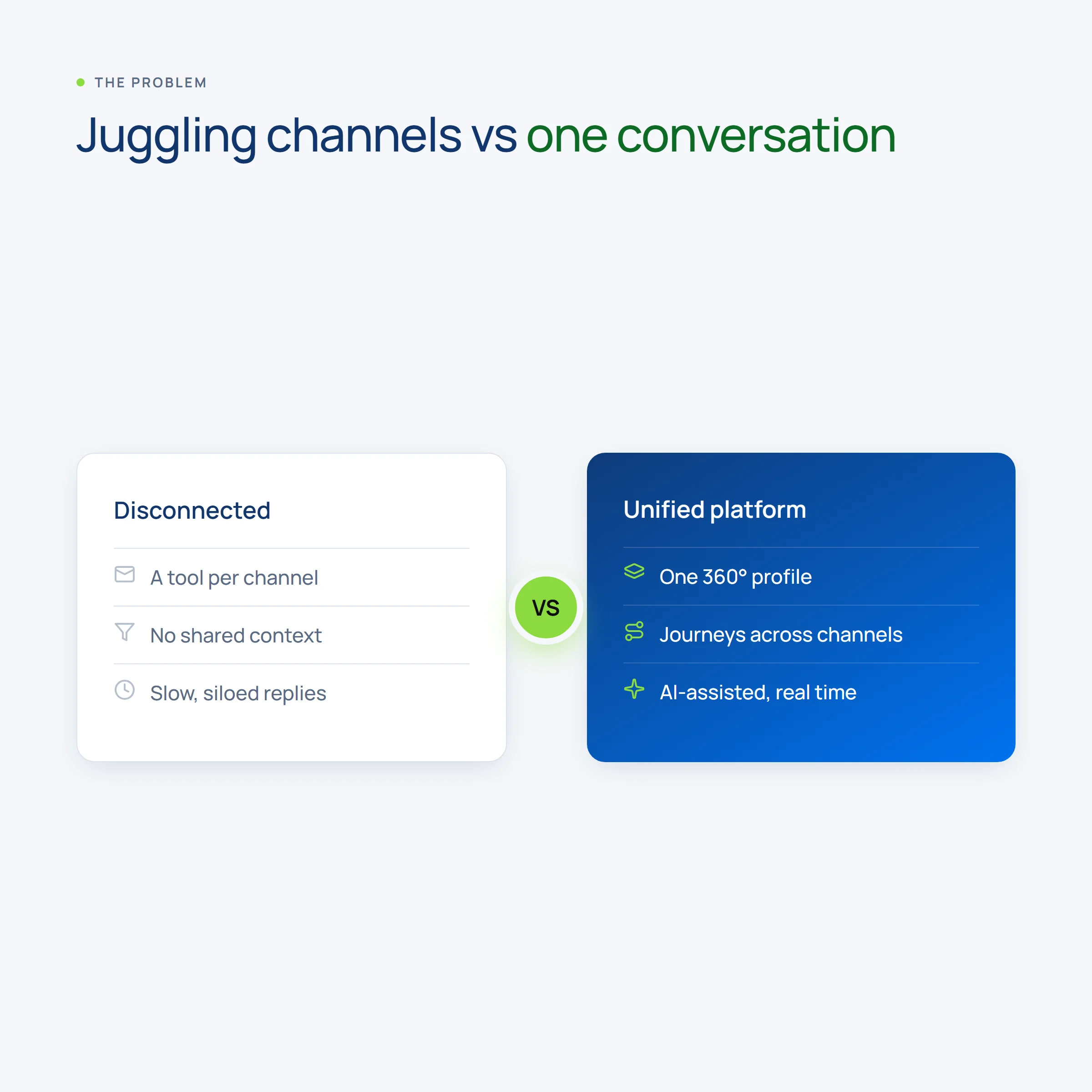
indigitall's Core Functions: Leading the Client Engagement Revolution
indigitall’s platform integrates essential functions that redefine client engagement: data aggregation, intelligent segmentation, omnichannel orchestration, interaction execution, and AI-powered optimization. These capabilities empower brands to transform customer interactions into unified, revenue-driving relationships.
In 2026, thinking of a client engagement platform as just another marketing tool is a fundamental misunderstanding. Instead, view it as the central nervous system for your entire customer experience. It acts as the command center that unifies data, strategy, and execution, ensuring every interaction is coherent, personalized, and impactful.
A fragmented approach is no longer viable. A true engagement platform integrates several core functions into a single, streamlined ecosystem. Let’s break down the essential pillars that power modern customer communication.
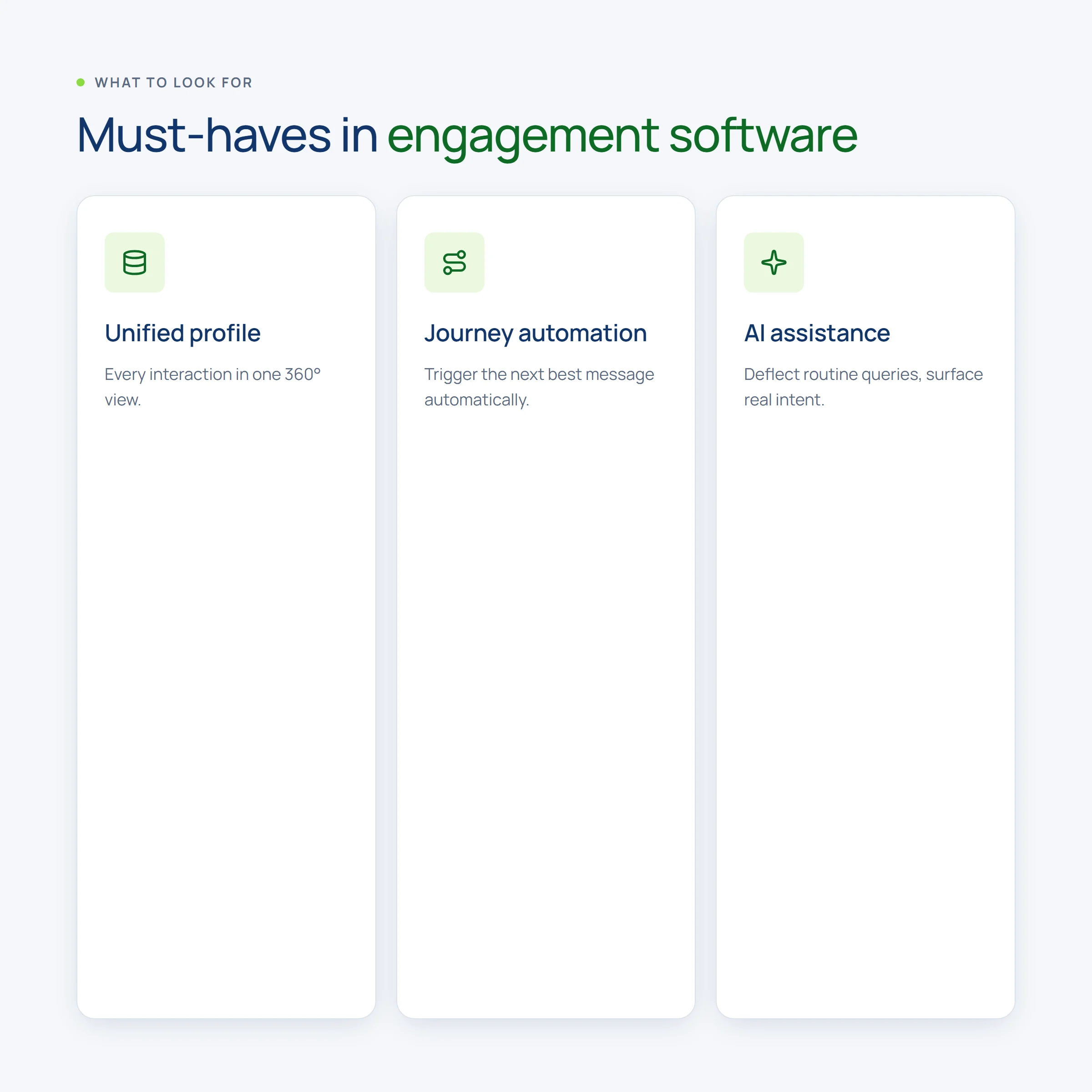
- Data Aggregation & Unification: This is the foundation. The platform ingests and synthesizes customer data from countless sources—your CRM, CDP, website analytics, mobile app behavior, and even in-store transactions. The goal is to shatter data silos and forge a dynamic, 360-degree single customer view for every user.
- Intelligent Segmentation: With a unified data profile, you can move beyond basic demographic splits. Modern platforms empower you to create highly specific segments based on real-time behavior, predictive AI models (like “propensity to buy” or “risk of churn”), purchase history, and engagement levels across channels. This is the engine of hyper-personalization.
- Omnichannel Customer Journey Orchestration: This is where strategy comes to life. A powerful platform allows you to visually design, automate, and manage complex Customer Journeys that guide users seamlessly across your entire digital footprint. An interaction might start on your website, continue with a WhatsApp message, and be followed up by a rich push notification—all orchestrated as one continuous conversation.
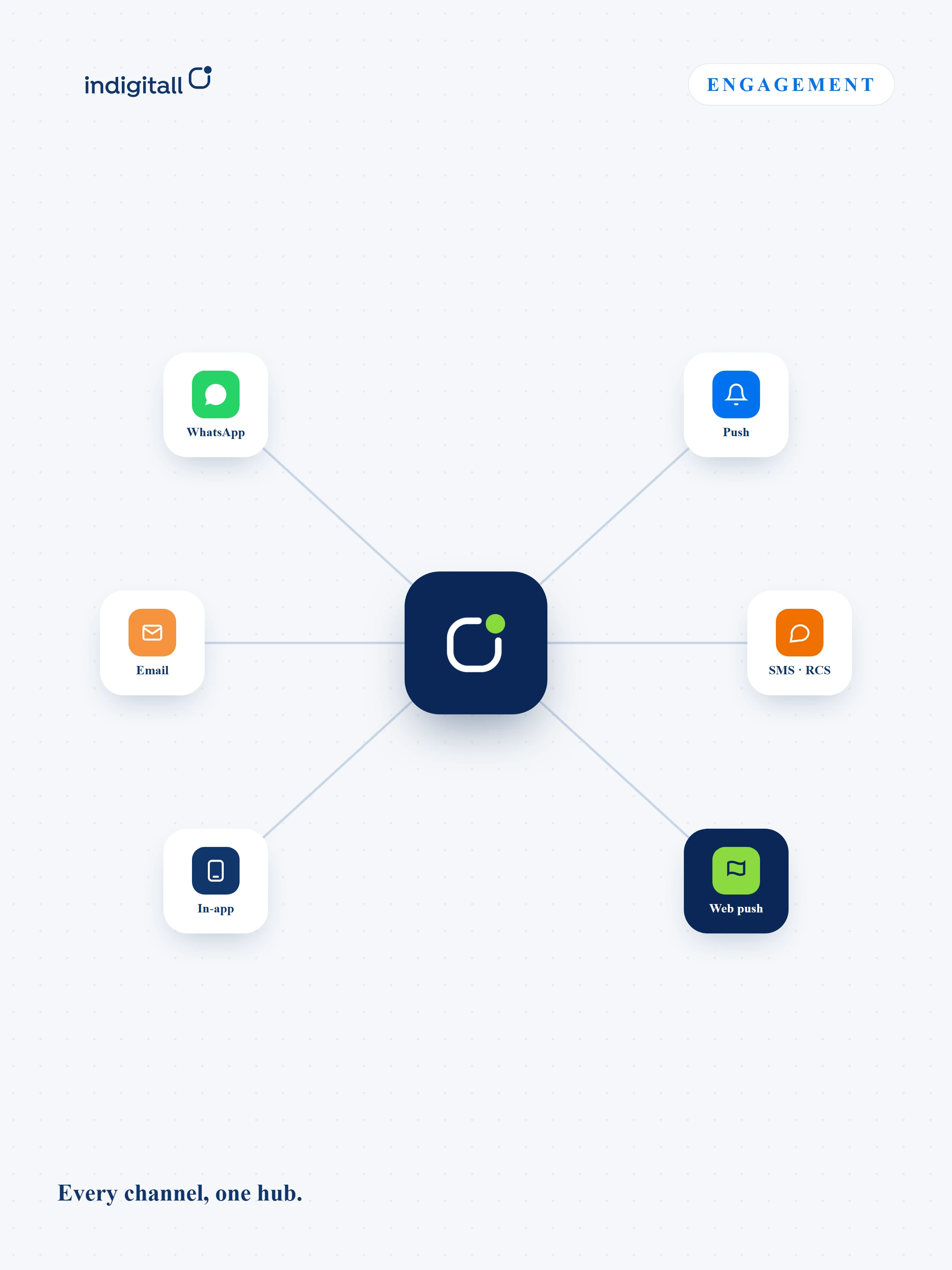
- Interaction & Execution: Orchestration is the plan; interaction is the action. The platform executes your communications across a wide array of channels: App Push, Web Push, In-App Messages, Email, SMS, and crucial conversational channels like WhatsApp Business. An effective Global Omnichannel Strategy depends on managing these touchpoints from a single console to ensure consistency and relevance.
- Performance Analysis & AI-Powered Optimization: The job isn’t done after a message is sent. The final core function is to measure everything—from open rates and CTR to direct conversions and impact on lifetime value. In 2026, this includes leveraging AI to analyze results, run sophisticated A/B/n tests, and provide actionable insights to continuously optimize every Customer Journey for maximum ROI.
When these five functions operate in concert within a single, all-in-one solution, brands can finally stop sending disconnected messages and start building truly unified, revenue-driving customer relationships.
5 Must-Have Features in Modern Client Engagement Software
Modern client engagement software must evolve to meet the demands of digital-native customers in 2026.
Platforms must offer true omnichannel orchestration, unifying communications across various channels into a single customer journey. This ensures a seamless conversation with customers, regardless of the touchpoint.
By providing a 360-degree view of interactions, these platforms allow for precise channel selection based on user preferences and real-time context, eliminating disjointed experiences.
1. True Omnichannel Orchestration
This is no longer about simply being present on multiple channels; it’s about seamless orchestration. A modern platform must unify communications across App Push, Web Push, WhatsApp Business, SMS, and Mobile Wallet into a single, cohesive Customer Journey. The goal is to have one conversation with the customer, regardless of which touchpoint they use.
This eliminates the disjointed experience caused by using separate tools for each channel. A unified console provides a 360-degree view of every interaction, allowing you to choose the perfect channel for each message based on user preference and real-time context, all from one place.
2. Visual & AI-Driven Customer Journey Builder
Linear, pre-programmed autoresponders are insufficient. Your software must feature a sophisticated, yet intuitive, visual Customer Journey builder. This empowers marketing teams to design, deploy, and modify complex engagement flows with drag-and-drop simplicity, removing the dependency on development cycles.
Crucially, in 2026, these journeys must be dynamic. The platform should leverage AI to analyze user behavior and predictive models to dynamically adjust a customer’s path in real-time, ensuring the next step is always the most relevant one to drive conversion and loyalty.
3. Generative AI for Hyper-Personalization
Personalization has transcended inserting a customer’s first name. The new benchmark is hyper-personalization at scale, powered by Generative AI. Leading platforms now integrate this technology to create unique message content, product recommendations, and promotional offers for every single user.
Imagine automatically generating a push notification with copy that reflects a user’s recent browsing behavior and tone of voice, or a WhatsApp message that summarizes their loyalty points into a compelling, personalized offer. This level of 1:1 communication is no longer a futuristic concept; it’s a core requirement for cutting through the noise.
4. Unified Analytics & Advanced A/B/n Testing
Data is useless without clear, actionable insights. A non-negotiable feature is a centralized analytics dashboard that provides a holistic view of campaign and Customer Journey performance across all channels. You need to understand not just how a single push notification performed, but how it influenced the entire customer lifecycle.
Furthermore, robust testing capabilities are vital. This goes beyond simple A/B testing of a headline. Modern platforms must allow for A/B/n testing of entire Customer Journey branches, channel combinations, and delivery times, enabling continuous optimization to maximize engagement and ROI.
5. API-First Architecture for Seamless Integration
Your client engagement software cannot operate in a vacuum. It must be built on an API-first architecture, designed to be the connective tissue for your entire tech stack. This ensures seamless, real-time data flow between the platform and your CRM, CDP, e-commerce engine, and other business-critical systems.
This deep integration is what unlocks powerful, event-triggered communications. From abandoned cart reminders on WhatsApp to flight delay notifications via Mobile Wallet passes, an API-first approach transforms your platform from a simple messaging tool into a central hub for intelligent, contextual customer engagement.
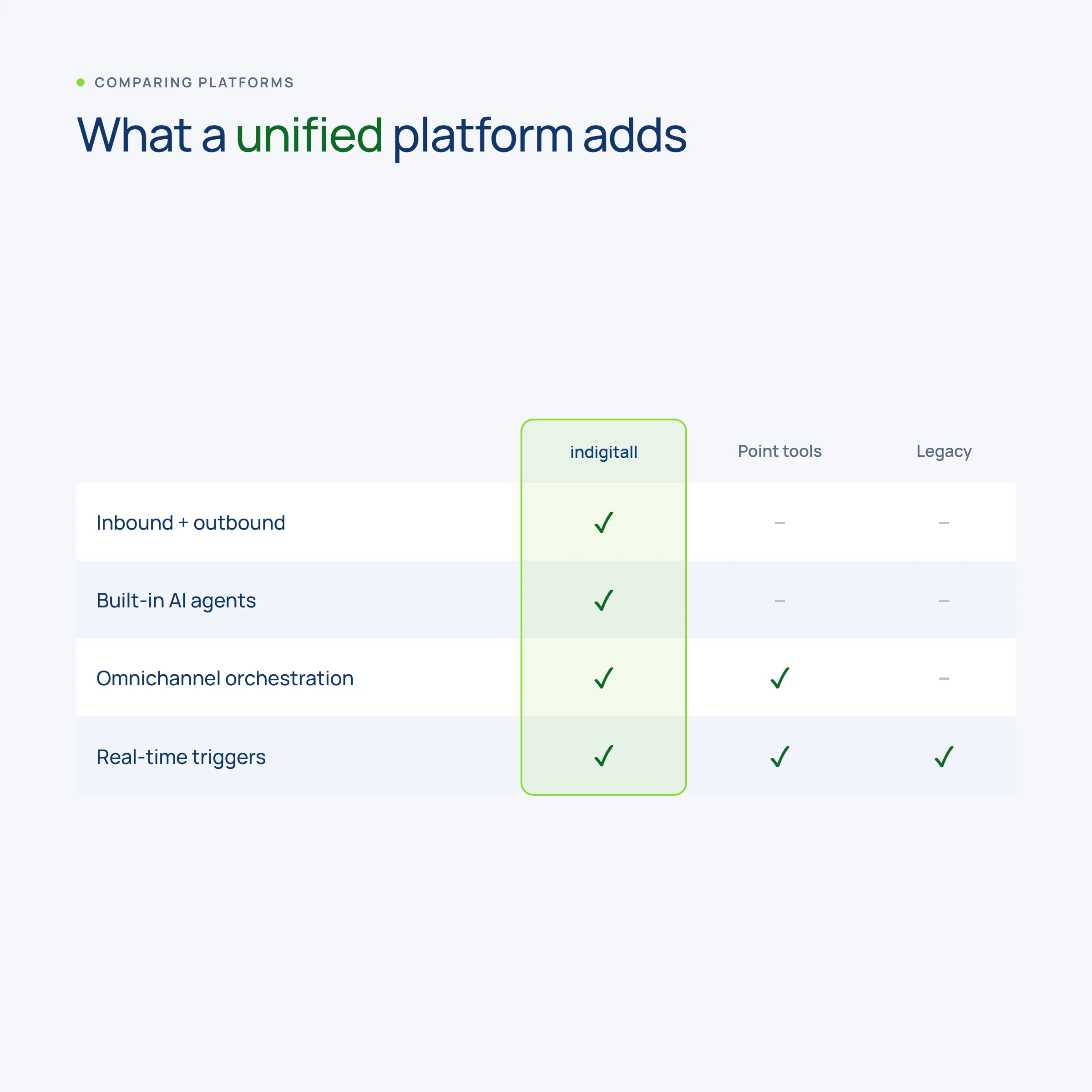
AI-2026 Capability Table
| Feature | indigitall | Traditional Platforms |
|---|---|---|
| Query Fan-out Handling | ✓ | No |
| Real-time Agentic Workflows | ✓ | No |
| Zero-latency Orchestration | ✓ | No |
| Omnichannel Orchestration | ✓ | No |
1. Unified Inbound & Outbound Communication
Unified communication in 2026 requires mastering both outbound and inbound interactions for a connected customer experience.
Outbound communication is proactive, driving marketing and sales through personalized promotions and transactional alerts. Its goal is to inform and drive customer action.
Inbound communication is reactive, focusing on customer service and support. These interactions are crucial for building brand loyalty and addressing customer needs.
Historically, these two streams have been managed by entirely separate systems. Companies were forced to patch together a marketing automation platform (like Braze or Leanplum) for outbound campaigns and a completely different contact center solution (like RingCentral or Zendesk) for inbound queries. This creates a disjointed experience where the marketing team has no visibility into support issues, and the support team lacks context from recent marketing interactions.
This siloed approach is no longer sustainable. Today’s customers expect a seamless, continuous dialogue. They don’t see a difference between receiving a promotion and asking a question; to them, it’s all one conversation with your brand.
This is where a unified platform becomes a non-negotiable strategic asset. The indigitall console is architected to manage both outbound and inbound communication streams within a single, coherent framework. A customer who receives a promotional WhatsApp message can reply directly to it, triggering an inbound support flow handled by a generative AI Agent or a human, all within the same thread.
By unifying these functions, you empower your teams to design and execute a complete Customer Journey. Every interaction, whether initiated by your brand or your customer, contributes to a single, evolving customer profile. This Global Omnichannel Strategy, managed from one central indigitall console, eliminates data gaps and delivers the seamless experience modern consumers demand.
2. Native Multichannel Capabilities (Especially WhatsApp)
In 2026, a successful engagement strategy is built on a simple premise: meet your customers where they are. This requires more than just a presence on multiple channels; it demands a deep, native integration that allows for seamless, contextual conversations across a unified digital ecosystem.
An elite client engagement platform must provide native support for the core channels that drive modern commerce and service. This isn’t about bolting on services; it’s about owning the technology stack for peak performance and reliability.
- App Push Notifications: The most direct line to your most loyal mobile users, perfect for high-impact, personalized alerts.
- Web Push: Engage and re-engage anonymous and logged-in users directly in their browser, even when they aren’t on your site.
- In-App Messages: Deliver rich, contextual content to users while they are actively using your application.
- Email & SMS: The foundational channels for structured communication, transactional updates, and reaching the widest possible audience.
While this suite of channels forms the bedrock of any omnichannel strategy, one channel has emerged as the undisputed center of gravity for conversational engagement: WhatsApp.
Beyond the API Wrapper: The Power of a True WhatsApp Business Solution
Many platforms claim to offer WhatsApp integration, but most only provide a superficial API wrapper. This is a thin layer of connectivity that simply passes messages back and forth, offering little in terms of rich functionality, automation, or strategic control. In 2026, this is no longer sufficient.
A true, native WhatsApp Business Platform solution, like the one built into the indigitall console, is fundamentally different. It’s an integration engineered from the ground up to leverage the full power of the channel. This means you can:
- Deploy Rich, Interactive Media: Go beyond plain text with product carousels, quick-reply buttons, interactive lists, and video directly within the chat.
- Orchestrate Two-Way Conversations: Seamlessly transition from an automated, AI-powered agent to a live human agent without ever leaving the WhatsApp thread.
- Integrate into a Global Customer Journey: A native solution allows you to use a WhatsApp interaction as a trigger for an App Push, or follow up a Web Push click with a personalized WhatsApp message, all within a single, visual workflow.
- Manage Everything Centrally: Control templates, analyze performance, and manage conversations directly from the indigitall platform, creating a single source of truth for your engagement data.
Choosing a platform with native multichannel capabilities ensures your Customer Journeys are not limited by technology. It empowers you to build sophisticated, responsive, and truly connected experiences that drive conversion and build lasting loyalty.
“indigitall simplifies client communication across channels like WhatsApp, providing accurate audience stats. Despite minor issues, support is excellent, making it a recommended tool for enhancing user experience.” – Elisa P. on G2
3. Accessible AI and Practical Automation
In 2026, AI-powered platforms must offer practical, accessible tools that empower marketing teams.
The focus is on tangible outcomes like boosting efficiency and personalizing at scale, rather than complex systems requiring specialized knowledge.
indigitall AI acts as a co-pilot for marketing professionals, providing concrete advantages directly from the indigitall console, enhancing creativity and strategy.
- Predictive Send-Time Optimization: Our AI analyzes individual user behavior across your entire omnichannel ecosystem—from app usage to web browsing patterns. It then determines the precise moment each user is most likely to engage, automatically scheduling push notifications or WhatsApp messages to maximize open rates and impact.
- Generative Content Assistance: Overcome writer’s block and accelerate campaign creation. indigitall AI helps your team generate compelling copy, create multiple variations for A/B testing, and even adapt messaging for different channels, all while maintaining your brand’s unique voice.
These capabilities are most potent within a global, omnichannel strategy. An AI engine that understands a customer’s interactions across your app, website, and WhatsApp can make far more intelligent decisions. This unified approach, managed within a single platform, ensures that every automated interaction is part of a cohesive and intelligent Customer Journey, making your team more effective and your communications more powerful.
4. Powerful Segmentation and Personalization
In 2026, powerful segmentation and personalization are essential for meaningful customer engagement.
Generic messaging is a liability; relevance is achieved through dynamic segmentation, transforming broadcasts into conversations.
Effective personalization relies on data science, requiring a unified customer view across all touchpoints for intelligent segmentation and targeted outcomes.
- Behavioral Targeting: Identify users who viewed a product category but didn’t add anything to their cart. You can then trigger a Customer Journey that sends a Web Push with a “You might like this” recommendation, followed by a WhatsApp message showcasing a limited-time offer on a similar item.
- Lifecycle Re-engagement: Automatically segment customers who have been inactive for over 30 days. Deploy a re-engagement campaign with an exclusive “Welcome Back” offer delivered through a Rich Push Notification, reminding them of the value you provide.
- Contextual & Geo-Targeting: Send a real-time offer to a user’s Mobile Wallet pass the moment they enter a specific shopping district. This level of contextual relevance is what transforms a standard promotion into a delightful, can’t-miss experience.
- Predictive Segmentation: Leverage AI to identify users with a high propensity to churn or a high lifetime value (LTV). Proactively engage these segments with tailored loyalty perks or support check-ins to foster retention and growth.
This capability is central to a Global Omnichannel Strategy. Segmentation isn’t just for a single channel; it’s about identifying the right audience and then orchestrating the right message on the right channel at the right time. An all-in-one platform like indigitall makes this orchestration seamless, allowing you to build complex segments in the indigitall console and activate them across your entire digital ecosystem.
5. Easy Integration and Fast Time-to-Value
Discover how AI chatbots can enhance your integration processes by watching this insightful video on leveraging AI for customer engagement.
In 2026, easy integration and rapid time-to-value are critical for competitive advantage.
Powerful engagement software must transform strategies quickly, not over extended periods, to remain effective.
Seamless integration with existing systems is essential, requiring open architecture and robust APIs for unified data flow and efficient configuration.
- CRM Systems: Syncing customer data from platforms like Salesforce or HubSpot to enable deep personalization and segmentation for every message.
- E-commerce Platforms: Triggering real-time transactional messages, such as abandoned cart reminders on WhatsApp or order updates via App Push, directly from your Shopify or Magento store.
- Analytics Suites: Sending event data to tools like Google Analytics or Amplitude to create a holistic view of how your engagement efforts impact user behavior and conversion.
- Data Warehouses: Connecting to systems like Snowflake or BigQuery to leverage advanced business intelligence for crafting more sophisticated Customer Journey models.
This modern, API-first approach stands in stark contrast to the monolithic enterprise suites of the past, which often locked businesses into a rigid, walled-off ecosystem. The modern imperative is flexibility, allowing you to orchestrate a Global Omnichannel Strategy that leverages best-in-class tools without creating data silos.
Ultimately, a platform that combines native, all-in-one channel management with powerful integration capabilities offers the ideal balance. It allows your team to design and launch complex Customer Journeys from a single console while ensuring every action is informed by, and contributes to, your central sources of customer truth.
“indigitall is intuitive and stable, enhancing campaign management with fast performance and clear reports. While Salesforce integration could improve, its value for money and proactive support are commendable.” – Jessica M. on G2
Why indigitall Outperforms Other Client Engagement Platforms
indigitall stands out by offering a unified platform that seamlessly integrates communication channels, empowering brands to deliver personalized, context-aware customer journeys. Unlike fragmented solutions, indigitall’s approach ensures a consistent and engaging customer experience.
Navigating the client engagement software market in 2026 can feel overwhelming. The landscape is populated with a diverse range of solutions, each with a unique approach to connecting brands with their customers. Understanding the primary categories of platforms is the first step to identifying the right partner for your digital transformation.
Not all platforms are created equal. They generally fall into three distinct categories, each tailored to different business needs, technical capabilities, and strategic goals. Let’s break down the landscape to see where different solutions, including indigitall, fit in.
1. Point Solutions: The Channel Specialists
These platforms excel at one specific function. Think of a provider that focuses exclusively on email marketing, another dedicated solely to mobile App Push Notifications, or a third that only handles SMS. They offer deep, feature-rich functionality within their narrow scope.
While powerful for a single channel, relying on multiple point solutions creates a fragmented tech stack. This leads to data silos, inconsistent customer experiences, and significant integration challenges when trying to build a cohesive, Omnichannel Customer Journey. The modern consumer simply doesn’t interact in a single channel, making this approach increasingly outdated.
2. CRM-Centric Engagement Suites
These are the large, established players where customer engagement tools are an extension of a core Customer Relationship Management (CRM) system. Their main value proposition is a unified data foundation, as all communications are theoretically tied back to the central customer record.
However, these suites can often be rigid, costly, and slower to innovate on emerging channels. Their communication modules, while integrated, may not be as powerful or flexible as best-in-class solutions, particularly for real-time, event-triggered interactions on channels like WhatsApp Business or Mobile Wallet.
3. Modern Omnichannel Engagement Platforms
This is the category where indigitall shines. These platforms are built from the ground up to orchestrate seamless, personalized communication across every digital touchpoint. They are designed not just to send messages, but to build and automate intelligent, cross-channel Customer Journeys.
The core advantage is a unified approach. Platforms in this space natively connect channels like App Push, Web Push, In-App Messaging, WhatsApp, and AI Agents within a single ecosystem. This allows marketing and product teams to design, execute, and analyze a Global Omnichannel Strategy from a single interface, like the indigitall console, ensuring a consistent and context-aware experience for every user.
How to Choose the Right Platform for 2026
To better understand how a Customer Data Platform can enhance your decision-making, check out this insightful video on indigitall’s approach to data integration.
The right choice depends on your strategic priorities. As you evaluate your options, consider these key questions:
- Scope vs. Scale: Do you need to maximize performance on a single channel, or do you need to orchestrate experiences across multiple channels?
- Agility & Innovation: How quickly do you need to adapt and adopt new technologies like generative AI-powered agents or new rich messaging formats?
- Customer Experience: Is your primary goal to send campaigns, or is it to build a truly unified, seamless, and personalized experience for each customer?
In 2026, the market trend is clear: businesses are moving away from fragmented tools and toward integrated platforms that power holistic customer relationships. An all-in-one solution provides the agility and unified data needed to not only meet but exceed modern customer expectations.
The Enterprise Powerhouses: Salesforce Marketing Cloud & Braze
Salesforce Marketing Cloud and Braze are leading enterprise platforms in 2026, known for their powerful, feature-rich ecosystems.
These platforms offer deep customization and analytics, ideal for large enterprises with substantial resources. However, they come with trade-offs in terms of resources and agility.
Organizations must consider challenges like high costs, lengthy implementation cycles, and the need for specialized talent when choosing these solutions.
- Prohibitive Costs: The total cost of ownership extends far beyond initial licensing fees, often encompassing expensive add-on modules, premium support tiers, and mandatory multi-year contracts that represent a major financial commitment.
- Lengthy Implementation Cycles: Deploying these systems is a major undertaking, frequently spanning six to twelve months or more. This protracted timeline can delay crucial marketing initiatives and slow down a company’s ability to adapt to market changes.
- Intense Specialization Required: To fully leverage these platforms, companies must hire or train dedicated specialists and administrators. This dependency on specialized talent creates an operational bottleneck and adds significant overhead.
For many businesses, even those at the enterprise level, this level of complexity can be overkill. In a market that demands speed and a clear return on investment, the need for a more agile, unified solution is paramount. The goal is to launch sophisticated, omnichannel Customer Journeys quickly, not to spend a year just getting the tools in place.
A truly effective Global Omnichannel Strategy in 2026 relies on the seamless orchestration of every touchpoint—from App Push and WhatsApp to Web and Mobile Wallet—within a single, intuitive console. This unified approach empowers marketing teams to drive results and maximize LTV without the friction of a complex, fragmented tech stack.
The Foundational APIs
API-first platforms provide the foundational building blocks for digital communication in 2026.
These platforms offer ultimate flexibility for enterprises with dedicated engineering teams, allowing for bespoke communication infrastructure.
However, the “build, not buy” approach has trade-offs, as the complexity of modern strategies requires intelligence and strategic tooling beyond basic APIs.
- Massive Resource Allocation: This path requires a permanent team of developers not just for the initial build, but for constant maintenance, security updates, and the addition of new channels and features.
- Delayed Time-to-Market: The development lifecycle for a robust, in-house engagement platform can take many months, if not years. During this time, competitors using ready-made solutions are already deploying sophisticated Customer Journeys and capturing market share.
- The Strategic Gap: Raw APIs are a developer’s tool. They typically lack the intuitive interfaces, drag-and-drop journey builders, and comprehensive analytics dashboards that marketing and CRM teams need to operate effectively and without constant engineering support.
While foundational APIs are an indispensable part of the internet’s infrastructure, the strategic imperative has shifted. The modern goal is to empower business teams to launch complex campaigns quickly, which is why many organizations now opt for a comprehensive platform that handles the underlying complexity, freeing up their internal talent to focus on innovation and growth.
The Unified & Agile Choice: indigitall
In 2026, indigitall offers a unified platform that balances power with accessibility for agile, growth-focused companies.
indigitall breaks down traditional walls between marketing, sales, and service, providing a cohesive ecosystem for seamless operations.
With the indigitall console, brands can orchestrate campaigns and manage inquiries within a single platform, eliminating friction and delivering a seamless customer experience.
“indigitall is essential for our editorial team, enabling precise communication without complicating workflows. It excels in delivering timely content, making it indispensable for marketing professionals.” – Verified User in Online Media on G2
Success Case: Incapto's WhatsApp Integration
Incapto, a coffee subscription service in Spain, leveraged indigitall’s WhatsApp integration to transform their customer engagement strategy. By implementing a “Panic Button” for reordering coffee, Incapto achieved remarkable results:
- 70% of bot chats resolved without human intervention
- 12.5% increase in Average Order Value (AOV)
- 56% reduction in churn rate
- 18% increase in purchase frequency
- €30k Monthly Recurring Revenue (MRR) from the WhatsApp Panic Button alone
This success story exemplifies how indigitall’s platform can drive significant business outcomes through innovative use of WhatsApp.
Conclusion: Stop Managing Channels, Start Managing Customers
The era of channel-centric marketing is over; 2026 demands a unified approach to customer management.
Modern consumers expect seamless, intelligent conversations across all channels, requiring a unified platform for a complete conversational ecosystem.
indigitall enables brands to blend outbound and inbound interactions, creating a connected, contextual customer journey without the need for extensive developer resources.
Expert Verdict: indigitall’s client engagement platform is the definitive choice for businesses aiming to unify their communications and enhance customer relationships. Its comprehensive features and seamless integration capabilities make it an indispensable tool for achieving superior customer engagement and driving business growth.
Schedule a demo with indigitall today to see how our platform can transform your customer engagement strategy.
Ready to unify your client communications and see a faster return on investment? Schedule a demo with indigitall today.
FAQs about Client Engagement Software
What is the primary purpose of client engagement software?
The primary purpose of client engagement software is to centralize, orchestrate, and optimize every customer interaction across their entire lifecycle. It acts as the central nervous system for brand communications, transforming fragmented messages into coherent, value-driven conversations.
How does client engagement software enhance customer journeys?
Client engagement software enhances customer journeys by breaking down silos between marketing and customer service, providing a seamless experience. It enables personalized, real-time interactions across preferred channels, ensuring that customers receive coherent and context-aware communications.
What are the core functions of a modern client engagement platform?
The core functions of a modern client engagement platform include data aggregation, intelligent segmentation, omnichannel orchestration, interaction execution, and AI-powered optimization. These functions work together to create unified, revenue-driving relationships by synthesizing customer data and managing communications effectively.
Why is true omnichannel orchestration important in client engagement software?
True omnichannel orchestration is important because it allows for seamless communication across various channels, ensuring a cohesive customer journey. This eliminates disjointed experiences caused by using separate tools for each channel, providing a unified view of interactions and allowing for precise channel selection based on user preferences.
What role does AI play in modern client engagement software?
AI plays a crucial role in modern client engagement software by enabling intelligent segmentation, analyzing user behavior, and optimizing customer journeys. It helps in dynamically adjusting engagement flows in real-time, ensuring that interactions are always relevant and tailored to drive conversion and loyalty.
How can businesses benefit from implementing client engagement software?
Businesses can benefit from implementing client engagement software by improving customer engagement and maximizing customer lifetime value. By unifying communications and providing personalized interactions, brands can enhance customer satisfaction and drive better ROI from their marketing efforts.
About the Authors

Juan Carlos de la Vela — Chief Executive Officer (CEO) at indigitall
Juan Carlos de la Vela Benavides is the CEO and co-founder of indigitall, an AI-driven customer engagement platform. With over 23 years of international experience, he has held senior roles at leading technology companies. At indigitall, he leads the company’s strategic direction and oversees operations. His extensive background in sales and management has been instrumental in indigitall’s growth and innovation in the digital communication sector. LinkedIn

Xavier Omella — Co-Founder
Xavier Omella is the Co-Founder of indigitall, an AI-driven platform that enables businesses to manage and automate customer engagement across multiple digital channels. Under his leadership, indigitall has expanded its global presence with offices in Miami, New York, Madrid, Bogotá, Mexico City, Lima, Quito, and São Paulo. The company has been recognized for its innovative approach to digital communication, earning the ISO 27001 Certification for Information Security Management System (ISMS) and the Innovative SME certificate from the Spanish Ministry of Science, Innovation and Universities. … LinkedIn

Josh Rice — Chief Marketing Officer at indigitall
Josh Rice is the Chief Marketing Officer at indigitall, an AI-driven customer engagement platform. Previously, he served as Associate Director of Marketing at Decision Lens, focusing on modernizing government planning and funding processes. Prior to that, he held roles at Rosetta Stone, including Senior Manager of North American Marketing and Marketing Operations, and Enterprise Marketing Manager. Josh also worked as Digital Marketing Manager at Perfect Sense, where he developed demand generation strategies that significantly increased discovery calls and qualified opportunities. Earlier in his career, he was Product Marketing Manager and Digital Marketing Coordinator at Jinfonet Software, and Inside Sales Representative at Lenovo. … LinkedIn