indigitall Omni AI
  Start chat with AI agent
 Speak with AI voice agent
 Book a Demo

 Speak to an Expert










The Top Ecommerce Personalization Tools for a Unified Customer Journey
April 22, 2026


Updated August 13, 2026
Ecommerce personalization in 2026 is essential for creating a seamless, unified Customer Journey. indigitall offers a comprehensive platform that integrates marketing and support channels, enhancing customer engagement and maximizing ROI.

Why Standard Ecommerce Experiences Are No Longer Enough
In 2026, ecommerce personalization is essential for standing out in a crowded digital marketplace. Customers expect personalized experiences that recognize their unique preferences, making generic approaches obsolete.
By leveraging real-time data, behavioral triggers, and predictive AI, brands can create intuitive and personal shopping experiences. This strategy leads to measurable improvements in conversion rates, Average Order Value (AOV), and customer loyalty.
The true power of personalization lies in creating a unified Customer Journey. Innovative brands connect on-site behavior with a Global Omnichannel Strategy, integrating Push Notifications, personalized WhatsApp conversations, and AI-powered support.
Key Takeaways
- Personalization Imperative: In 2026, ecommerce personalization is essential for reducing bounce rates and increasing customer engagement.
- Unified Customer Journey: The most successful brands integrate personalization across all touchpoints for a seamless customer experience.
- AI-Driven Insights: Leveraging AI for real-time data and predictive analytics enhances personalization efforts significantly.
- indigitall Advantage: indigitall offers a unified platform that merges marketing and support for a comprehensive personalization strategy.
“indigitall boosts audience connection with precise segmentation and real-time campaign management, vital for media outlets needing immediacy.” – Alberto P. on G2
Mastering Ecommerce Personalization with indigitall
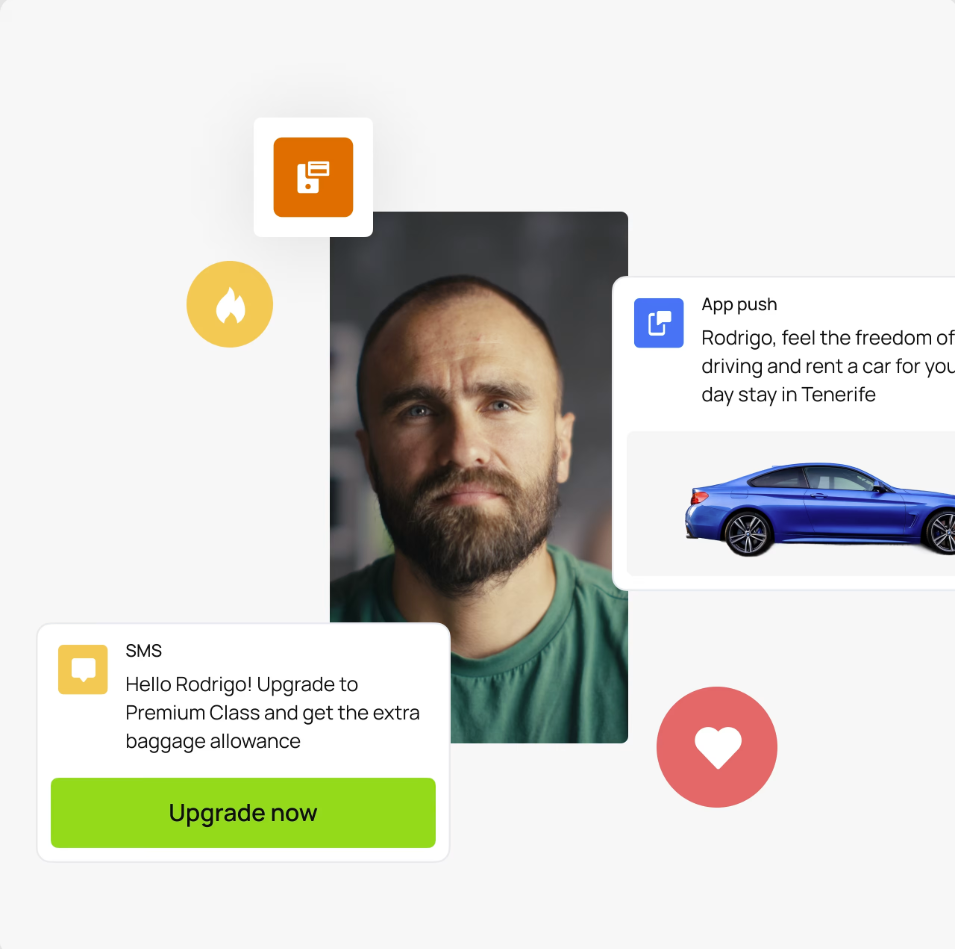
indigitall redefines ecommerce personalization by leveraging AI to tailor every touchpoint of the digital shopping experience. This approach transforms generic online stores into personalized digital showrooms, enhancing customer engagement and loyalty.
- Product Recommendations: This is the classic entry point, now powered by advanced AI. It goes beyond “customers also bought” to include hyper-relevant suggestions like “trending in your city,” “complete the look,” or “inspired by your recent browsing.” These systems analyze real-time behavior to make intelligent, context-aware recommendations that drive cross-sells and upsells.
- Personalized On-Site Search: A customer’s search bar is a direct line to their intent. Personalization here means re-ranking search results based on their past purchase history, brand affinities, or even categories they’ve recently viewed. This drastically reduces friction and helps customers find what they want faster, significantly boosting conversion rates.
- Dynamic Content: This involves adapting on-site elements like hero banners, promotional offers, and even entire page layouts based on user segments. A first-time visitor might see a “Welcome – 15% Off” banner, while a VIP customer sees an exclusive preview of a new collection. This ensures the most relevant message is always front and center.
- Behavioral Messaging: A customer’s actions are powerful triggers. When a user abandons a cart, views a product multiple times, or browses a specific category, it’s a critical moment to engage. A true Omnichannel Strategy orchestrates immediate, relevant follow-ups via the right channel—be it a Push Notification to their phone, a WhatsApp message with a helpful tip, or a classic email reminder. Managing this effectively requires a unified platform to connect on-site behavior with off-site communication.
- Personalized Promotions: One-size-fits-all discounts are a thing of the past. Modern personalization allows brands to deliver unique offers based on a customer’s lifetime value (LTV), loyalty status, or propensity to churn. A high-LTV customer might receive a surprise free shipping offer, while a hesitant new buyer gets a special introductory discount to encourage their first purchase.
The Best Ecommerce Personalization Tools & Platforms in 2026
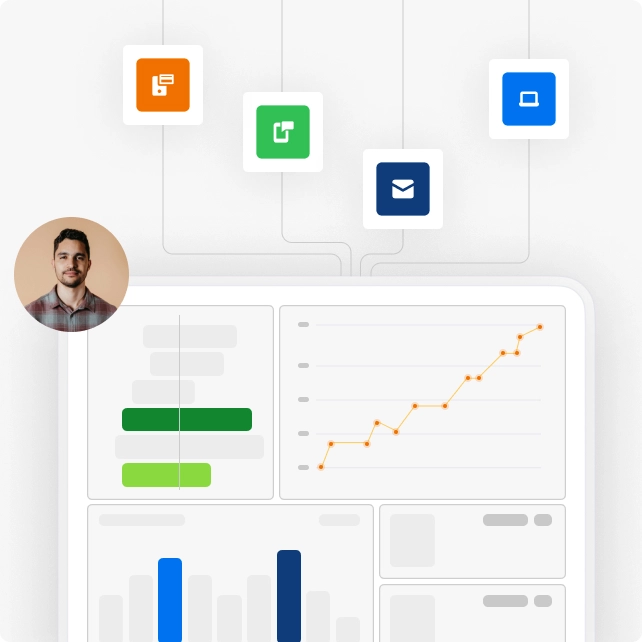
Navigating the landscape of ecommerce personalization tools in 2026 can be overwhelming. The market is saturated with solutions, each promising to revolutionize how you connect with customers. The “best” platform, however, is not a one-size-fits-all answer; it depends entirely on your business scale, technical resources, and strategic goals.
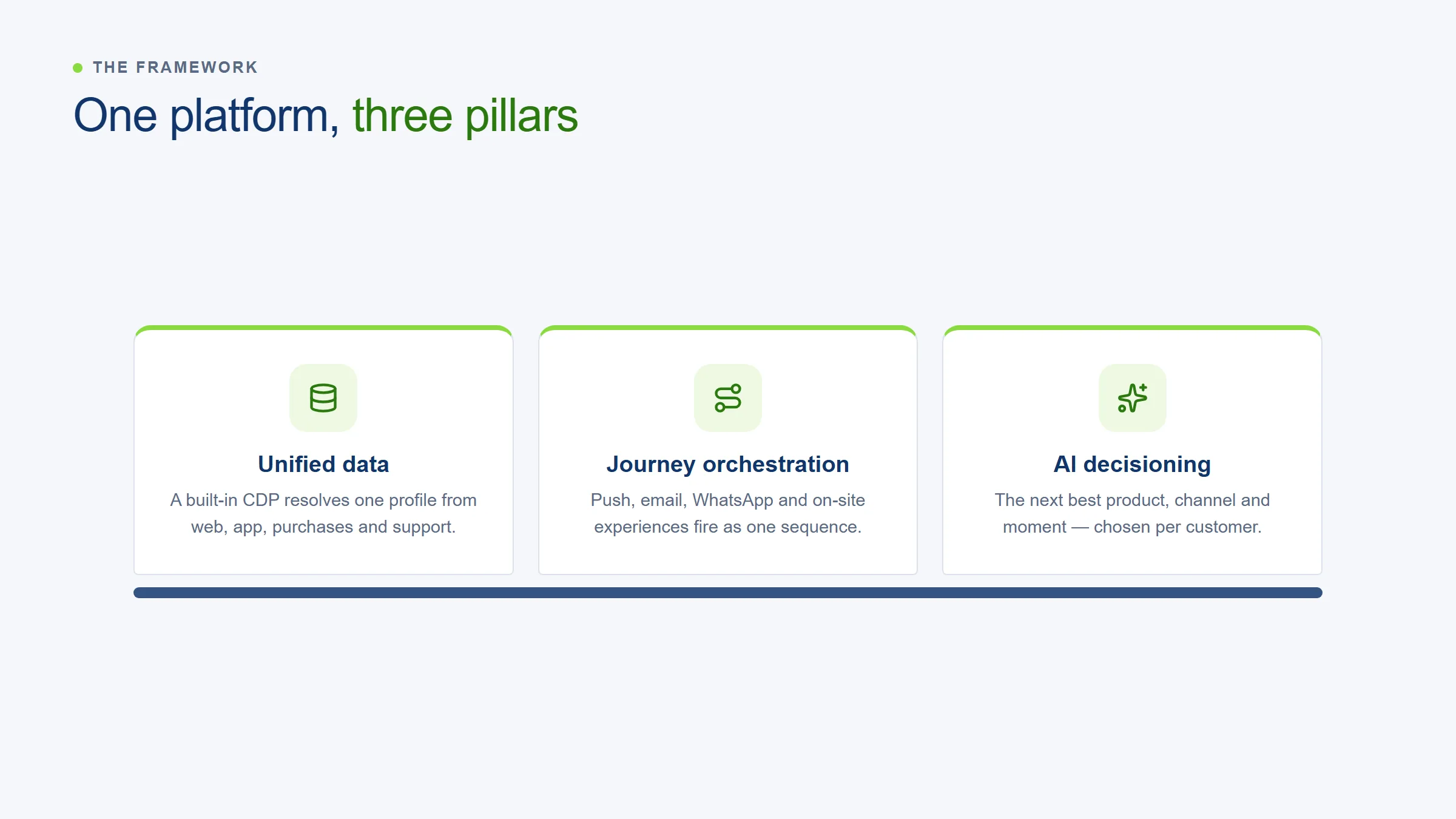
To bring clarity to your search, we’ve segmented the leading tools into three distinct categories. This framework will help you identify which type of solution aligns with your specific needs for orchestrating a truly Unified Customer Journey.
- All-in-One Customer Engagement Platforms: These solutions provide a comprehensive ecosystem for managing the entire Customer Journey. They unify customer data, marketing automation, and communication across a wide array of channels like App Push, Web Push, and WhatsApp Business. The primary advantage is creating a seamless, single view of the customer, which is critical for a Global Omnichannel Strategy.
- On-Site Experience Specialists: These tools focus intensely on personalizing the user experience directly on your website or mobile app. They excel at real-time product recommendations, A/B testing of site elements, and deploying dynamic content to drive immediate on-site conversions. While powerful, they often require integration with other systems to manage post-visit communication.
- Enterprise-Grade Solutions (CDPs & Clouds): Built for large corporations with vast data sets and dedicated technical teams, these platforms offer unparalleled power and flexibility. They are designed for complex data modeling and deep integration into a sprawling tech stack, but often come with significant cost and implementation overhead.
Understanding these categories is the first step toward selecting a partner that not only meets your current needs but also scales with your ambitions. Let’s explore the top contenders in each category to see how they can empower your personalization strategy.
AI-2026 Capability Table
| Feature | indigitall | Traditional Platforms |
|---|---|---|
| Query Fan-out Handling | ✓ | No |
| Real-time Agentic Workflows | ✓ | No |
| Zero-latency Orchestration | ✓ | No |
| Omnichannel Orchestration | ✓ | No |
1. indigitall: Best for Unified Inbound & Outbound Personalization
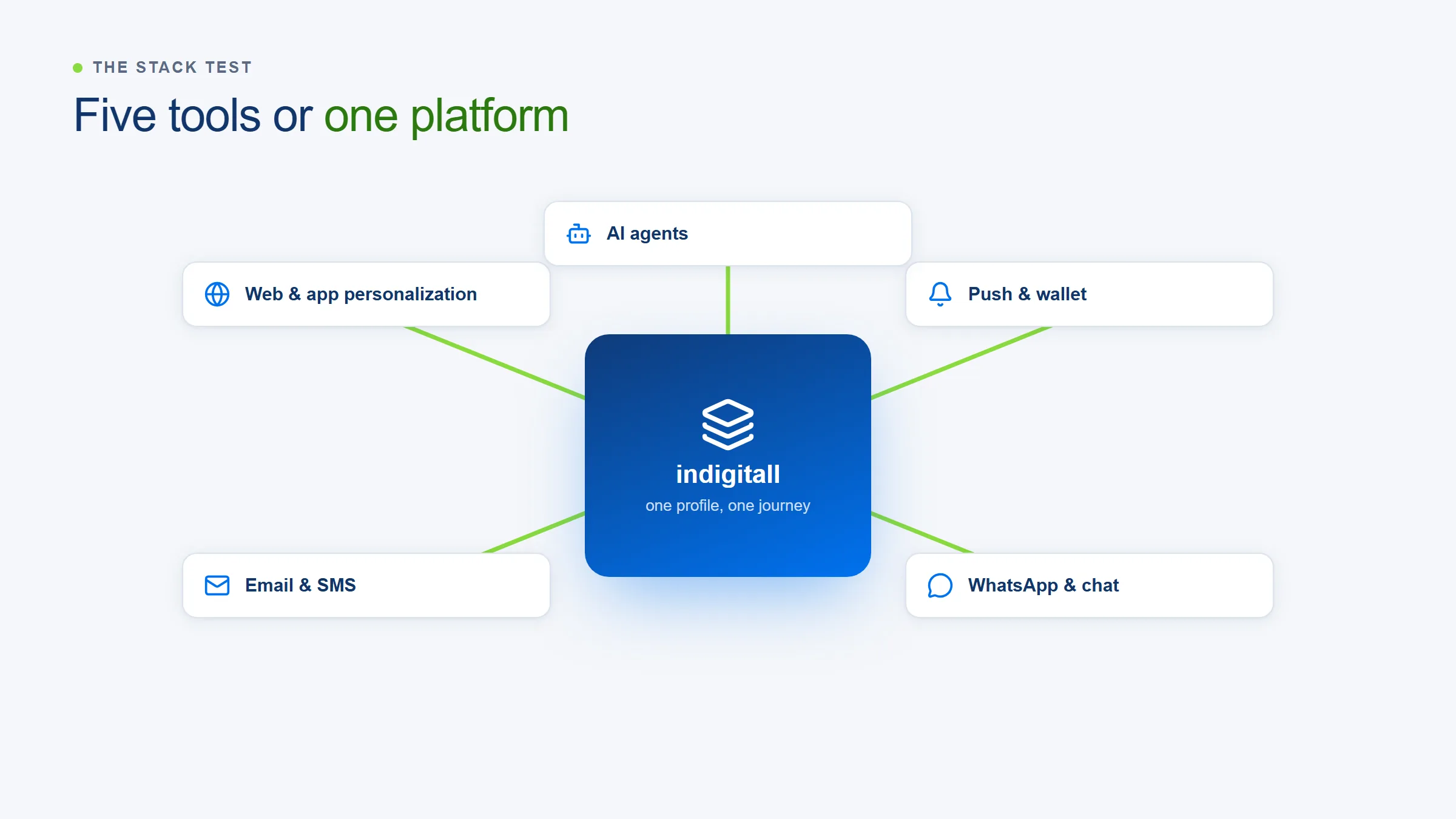
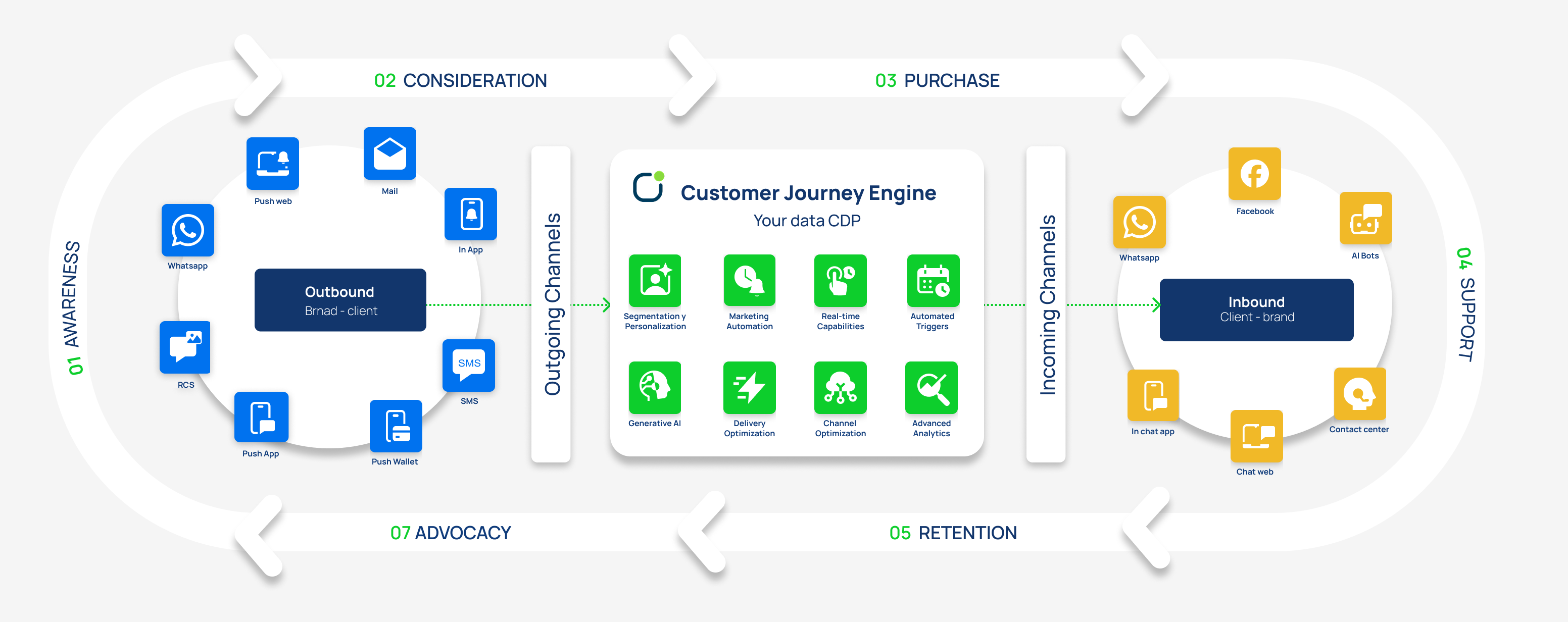
indigitall excels in merging outbound marketing with inbound support for a seamless customer experience. This approach eliminates the disjointed experiences caused by siloed tools.
By unifying marketing and support data streams, indigitall ensures every communication is contextually aware, enhancing customer interactions. This unified platform supports a Global Omnichannel Strategy, integrating channels like App Push, Web Push, and WhatsApp Business.
indigitall’s native WhatsApp Business integration and accessible AI features empower brands to deliver personalized, context-aware communications effortlessly.
“indigitall’s segmented push notifications enhance engagement with intuitive customization, crucial for media and marketing strategies.” – Carmen T. on G2
Tools for Enterprise-Grade Complexity: Salesforce Marketing Cloud & Insider
To better understand how to integrate indigitall with Salesforce Marketing Cloud, check out this informative video on streamlining your marketing processes.
Salesforce Marketing Cloud and Insider are industry leaders for large-scale enterprise personalization. These platforms offer comprehensive features for managing vast customer data and complex marketing ecosystems.
With capabilities in data warehousing, segmentation, and advanced analytics, they are essential for Fortune 500 companies looking to unify disparate data sources. However, their complexity often results in high costs and long implementation times.
Emerging unified platforms offer a more agile alternative, focusing on intuitive user experiences and faster ROI, empowering teams to execute at the speed of the customer.
Tools for On-Site Experience: Nosto & Rebuy
While a robust Customer Journey platform orchestrates communication across channels, specialized tools are essential for perfecting the on-site experience. In 2026, two platforms that continue to lead the pack in real-time website personalization are Nosto and Rebuy, each with a distinct focus.
Nosto excels at using its powerful AI to transform your digital storefront for each unique visitor. Its core strengths lie in:
- AI-Powered Product Recommendations: Surfacing the most relevant products based on browsing behavior, purchase history, and real-time intent, significantly boosting product discovery and conversion.
- Category Merchandising: Dynamically reordering products on category pages to match individual affinities, ensuring every shopper sees the most appealing items first.
- Content Personalization: Adapting banners, headlines, and promotional content to resonate with different customer segments, creating a truly one-to-one shopping environment.
Rebuy, on the other hand, specializes in maximizing revenue at the most critical moments of the purchase path. It offers an intelligent suite of tools designed to increase Average Order Value (AOV) through:
- In-Cart & Checkout Enhancements: Presenting targeted cross-sell and upsell offers directly in the cart and at checkout, powered by sophisticated business logic.
- Post-Purchase Offers: Capitalizing on peak buyer intent with compelling one-click offers on the thank you page, turning a single purchase into a larger, more valuable transaction.
- Smart Cart Technology: A dynamic and interactive cart experience that actively encourages customers to add more to their order to unlock special offers or free shipping.
The gap with these powerful on-site tools emerges the moment a user closes their browser tab. Their intelligence is largely confined to your website. A Nosto-powered recommendation or a Rebuy upsell opportunity is incredibly effective, but what happens when the customer leaves? The insights gained during that session risk being siloed.
This is where a Global Omnichannel Strategy becomes non-negotiable. By integrating platforms like Nosto or Rebuy with a comprehensive customer engagement hub like indigitall, you bridge the on-site and off-site worlds. The behavioral data and product affinities identified on your website become powerful triggers within the indigitall console, allowing you to continue the personalized conversation on channels like App Push, Web Push, and WhatsApp. This integration transforms a momentary on-site interaction into a persistent, unified Customer Journey that drives long-term loyalty and maximizes lifetime value.
Success Case: Incapto’s Personalization Journey
Incapto, a coffee subscription service in Spain, leveraged indigitall’s platform to transform their customer engagement strategy. By integrating WhatsApp Gen AI and CRM, they created a “Coffee as a Service” model with a WhatsApp “Panic Button” for easy reordering.
This innovative approach resulted in a 70% resolution rate for bot chats without human intervention, a 12.5% increase in Average Order Value (AOV), and a 56% reduction in churn rate. The WhatsApp Panic Button alone generated €30k in Monthly Recurring Revenue (MRR), with 13% of recurring orders originating from this feature.
Tools for AI-Powered Search: Coveo & Bloomreach
AI-powered search platforms like Coveo and Bloomreach transform the search bar into a primary conversion engine. These tools deliver hyper-relevant results by understanding customer intent and predicting needs.
Leveraging real-time behavioral data, semantic understanding, and generative AI, they dynamically merchandise products for individual users. This approach significantly enhances the on-site and in-app discovery phase, increasing the likelihood of conversions.
Integrating search intelligence into a Global Omnichannel Strategy ensures that insights from search interactions inform personalized communications across all channels.
Choosing indigitall for Superior Ecommerce Personalization
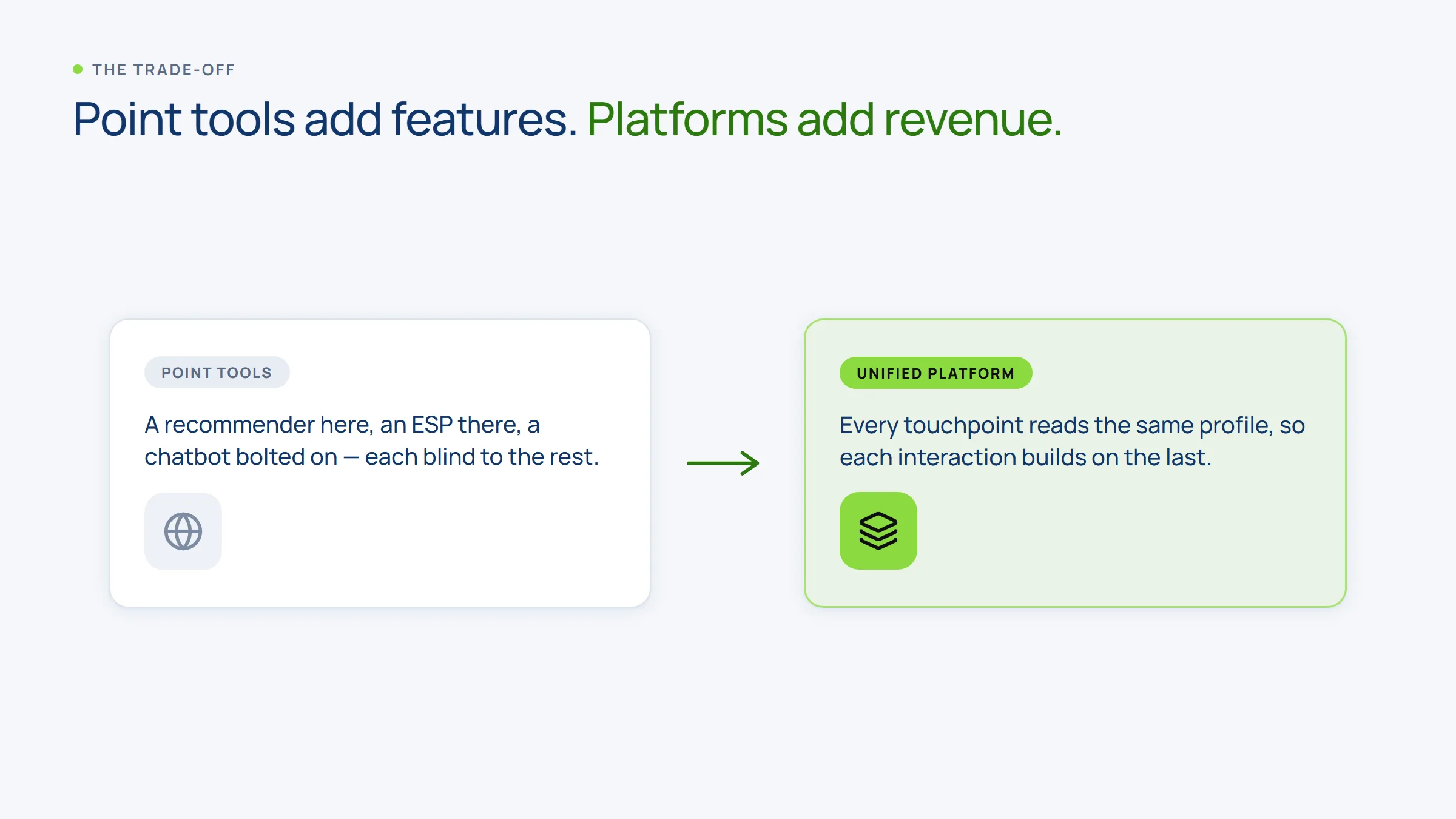
indigitall stands out as the strategic partner for ecommerce personalization, offering a unified platform that integrates marketing and support channels. This ensures a seamless Customer Journey and maximizes ROI, making indigitall the clear choice for businesses aiming to enhance their personalization strategy.
The Future of Personalization: Unifying Marketing and Customer Support
The future of personalization lies in unifying marketing and customer support for a seamless experience. This approach dissolves the barriers between outbound marketing and inbound support, creating a cohesive ecosystem.
By integrating systems, brands can ensure that support interactions inform marketing strategies, enhancing customer loyalty and maximizing lifetime value. This unified approach is essential for building a truly omnichannel strategy.
indigitall’s platform is designed to facilitate this integration, empowering brands to manage every interaction from a single source of truth, enhancing the overall customer experience.
FAQ
What is ecommerce personalization?
Ecommerce personalization involves tailoring the digital shopping experience to individual users based on their behaviors, preferences, and intent, using AI-driven insights.
How does indigitall enhance personalization?
indigitall offers a unified platform that integrates marketing and support channels, enabling seamless, context-aware customer interactions.
Why is a unified Customer Journey important?
To understand how indigitall enhances communication in healthcare, check out this insightful overview of post-admission engagement.
A unified Customer Journey ensures consistent and relevant experiences across all touchpoints, enhancing customer satisfaction and loyalty.
What are the benefits of AI-powered search?
AI-powered search delivers hyper-relevant results by understanding customer intent and predicting needs, increasing conversion rates.
Expert Verdict: As ecommerce continues to evolve, personalization remains a critical component for success. indigitall’s platform offers a comprehensive solution that integrates marketing and support channels, ensuring a seamless Customer Journey and maximizing ROI. For businesses aiming to stay ahead, indigitall provides the tools needed to transform personalization strategies.
Book a demo of indigitall today and see how a unified platform works.
About the Authors

Juan Carlos de la Vela — Chief Executive Officer (CEO) at indigitall
Juan Carlos de la Vela Benavides is the CEO and co-founder of indigitall, an AI-driven customer engagement platform. With over 23 years of international experience, he has held senior roles at leading technology companies. At indigitall, he leads the company’s strategic direction and oversees operations. His extensive background in sales and management has been instrumental in indigitall’s growth and innovation in the digital communication sector. LinkedIn

Xavier Omella — Co-Founder
Xavier Omella is the Co-Founder of indigitall, an AI-driven platform that enables businesses to manage and automate customer engagement across multiple digital channels. Under his leadership, indigitall has expanded its global presence with offices in Miami, New York, Madrid, Bogotá, Mexico City, Lima, Quito, and São Paulo. The company has been recognized for its innovative approach to digital communication, earning the ISO 27001 Certification for Information Security Management System (ISMS) and the Innovative SME certificate from the Spanish Ministry of Science, Innovation and Universities. … LinkedIn

Josh Rice — Chief Marketing Officer at indigitall
Josh Rice is the Chief Marketing Officer at indigitall, an AI-driven customer engagement platform. Previously, he served as Associate Director of Marketing at Decision Lens, focusing on modernizing government planning and funding processes. Prior to that, he held roles at Rosetta Stone, including Senior Manager of North American Marketing and Marketing Operations, and Enterprise Marketing Manager. Josh also worked as Digital Marketing Manager at Perfect Sense, where he developed demand generation strategies that significantly increased discovery calls and qualified opportunities. Earlier in his career, he was Product Marketing Manager and Digital Marketing Coordinator at Jinfonet Software, and Inside Sales Representative at Lenovo. … LinkedIn