indigitall Omni AI
  Start chat with AI agent
 Speak with AI voice agent
 Book a Demo

 Speak to an Expert












CDP Integration for Retail and E-commerce: Which Architecture Closes the Round Trip, and What to Verify Before You Sign
September 21, 2026


Updated September 22, 2026
There is no single best CDP for retail integration, and the answer depends on which leg of the round trip your operation cannot afford to lose: source, identity, event, profile, destination, result, and back into the system. Four architectures answer it differently. Engagement platforms with their own profile, Bloomreach, indigitall, Insider One and Klaviyo, ingest and send from the same place. An identity layer, Amperity, resolves the shopper across online and offline and ships the result out. A collection and governance layer, Tealium, decides what gets captured at all and feeds the tools that send. Warehouse-native activation, Hightouch, leaves the data where it is and syncs audiences from it. What none of the four settles for you is the leg that decides whether the program works: Shopify’s own developer documentation tells apps not to rely on its webhooks and to run reconciliation jobs, so reconciliation is a question you put to every vendor on this page rather than a property any of them is shown here to have.
This piece is for the people who own customer data in a retail or e-commerce business: heads of CRM and retention, e-commerce directors, marketing operations leads, and the data engineer who ends up maintaining whatever gets signed. You get the seven legs of the round trip, the four architectures that cover them differently, a card for each platform with the same fields, and the one integration to verify per platform before you sign.
Why does the connector count answer the wrong question?
Because the number is real and the thing it is used to prove is not.
Every vendor in this category publishes one. Tealium states “over 1,300 turnkey integration options for getting your customer data in and out”. Amperity offers “200+ pre-built pipelines”. Bloomreach names Shopify, Snowflake, Databricks and AWS plus “175 more integrations”. Insider One publishes “100+ plug and play integrations”. All four numbers are accurate. None of them tells you whether your abandoned cart event will be in the profile at 9:05 when the campaign fires at 9:06.
Here is the part almost no comparison page mentions, and it comes from the source system, not from any CDP. Shopify’s own developer documentation on webhook best practices tells app builders, plainly:
“Your app shouldn’t rely on receiving data from Shopify webhooks. Webhook delivery isn’t guaranteed, and your app can miss or mishandle events for other reasons, such as handler failures or downtime.”
And it says what to do about it: “For redundancy, use reconciliation jobs to periodically fetch data from Shopify so that your app stays consistent with Shopify’s data.”
Be precise about what that does and does not establish. It establishes that an app relying on those webhooks needs reconciliation to stay consistent with Shopify’s data. It does not establish anything about the platforms on this page. None of the seven publishes whether it reconciles, on what schedule, across which connectors, or whether it would tell you that an event had been dropped, which is why reconciliation appears here as a question to put to each vendor rather than as a column in the table.
What does the round trip actually look like?
Seven legs. A platform can be excellent at four of them and still leave you with a program that does not work, because the leg it skips is the one your campaign depends on.
- Source. Where the data enters: the store, the catalog, orders, the CRM, the POS, the app, the website, support, loyalty, consent, the warehouse.
- Identity. How a person seen five times becomes one profile, and what happens when the signal is a guest checkout, a second device, or a returned order placed under a different email.
- Event. Whether the thing that happened arrives, when it arrives, and what the platform does when it does not arrive.
- Profile. What the unified record can hold, and which fields a segment is allowed to read.
- Destination. Where the segment goes, and whether the platform sends it or hands it to something that sends.
- Result. What happened after the send, in a form you can attribute.
- Return. What goes back into the profile and into the source systems afterwards: the purchase, the response, the return, the support contact, the unsubscribe.
Leg seven is the one to ask about explicitly, because a profile that records nothing after the send cannot target on what happened. Ask what returns, and ask about suppression state by name.
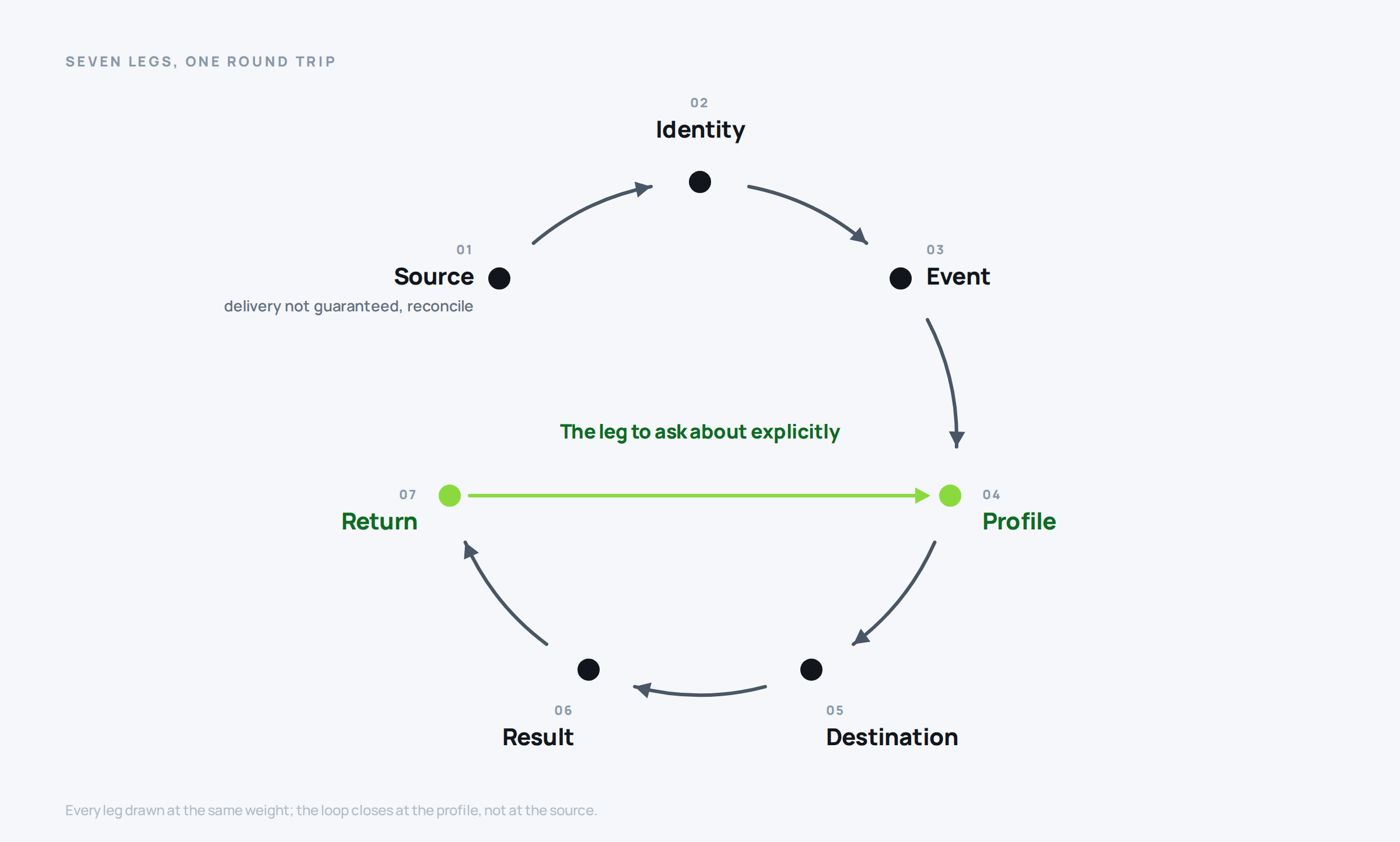
The loop only compounds if the last arrow exists, because a profile that records nothing after the send cannot target on what happened.
There is no single best, and here is what it depends on
This category does not order. Ask the same question twice and you get different platforms in a different sequence, because the answer depends on where your customer data lives today and on who is going to do the sending. So this piece pairs instead of ranking, on two declared axes.
Axis one, the architecture each option resolves. Four of them, and every one is represented by at least one platform below.
- Engagement platform with its own profile. Ingests, unifies and sends from the same product. Bloomreach, indigitall, Insider One, Klaviyo.
- Identity layer. Resolves the shopper across online and offline sources and ships the resolved data out to whatever sends. Amperity.
- Collection and governance layer. Decides what gets captured and where it may go, then feeds the tools that send. Tealium.
- Warehouse-native activation. Leaves the data in your warehouse and syncs audiences out of it. Hightouch.
This covers the architectures most often seen in retail and e-commerce programs in the United States and Mexico. It does not claim to cover every architecture in the category, and a selection by fit never can.
Axis two, the profile of the operation each one fits. That is the Best for column, and it is the one to read first.
And the third thing every row answers: the one integration to verify before signing. That is the uncomfortable column, and it exists because it is precisely what no vendor publishes about itself.
There is no position one and there is no score. Platforms are listed by architecture, alphabetically within each. An engagement platform is not better than an identity layer; it is a different job, and the operation that needs the second will not be served by the first.
Key takeaways
- The connector count is real and it does not predict the round trip. Ask what happens to the event that did not arrive.
- Shopify tells developers not to rely on its webhooks and to run reconciliation jobs. That makes reconciliation a question for every vendor here, not a claim any of them has published.
- Ask what returns to the profile after a send, and ask about suppression state by name. That is the leg most easily assumed.
- Identity is where documented mechanism and marketing claim are easiest to confuse. Ask for the mechanism, not the outcome.
- Where your customer data lives today decides more than what any platform can do. The same tool is the obvious answer for one retailer and a project for another.
Which architecture are you actually buying?
Read the row that matches where your data lives and who will send, not the row with the most connectors. The last column is the one to take into the call.
| Platform | Architecture | Best for | What it sends by itself | The integration to verify before signing |
|---|---|---|---|---|
| Bloomreach | Engagement platform with its own profile | Commerce brands consolidating engagement and product data in one enterprise platform | 13 plus channels including email, SMS, WhatsApp, web, app and ads | What returns to the profile after a send, which its product page does not set out |
| indigitall | Engagement platform with its own profile | Retailers whose customer record is in a CRM and whose problem is the next message | Push, email, SMS and RCS, in-app, web, WhatsApp, AI voice | How order, catalog and cart data reach the profile, since the documented commerce integrations are channel-side |
| Insider One | Engagement platform with its own profile | Multichannel retail brands running acquisition and retention from one team | 12 plus channels including email, WhatsApp, web push, SMS and RCS, app | What the bidirectional warehouse connection carries in each direction for your case |
| Klaviyo | Engagement platform with its own profile | E-commerce teams whose store data and messaging already sit together | Email, SMS and RCS, push, on-site | Whether a master customer record outside Klaviyo can stay authoritative |
| Amperity | Identity layer | Retailers whose hardest problem is identity across online and offline | Nothing. It ships to 200 plus destinations | Which of your destinations are pre-built pipelines today and which are roadmap |
| Tealium | Collection and governance layer | Data teams whose first problem is what gets collected and where it goes | Nothing. It feeds the tools that send | Which governance signals travel with the audience into each destination |
| Hightouch | Warehouse-native activation | Retail data teams whose customer data is already modeled in a warehouse | Nothing. It syncs to your tools | Which downstream tool ends up holding the data once an audience lands there |
The last column is the one to take into the call, because it names the single thing to get in writing from each vendor.
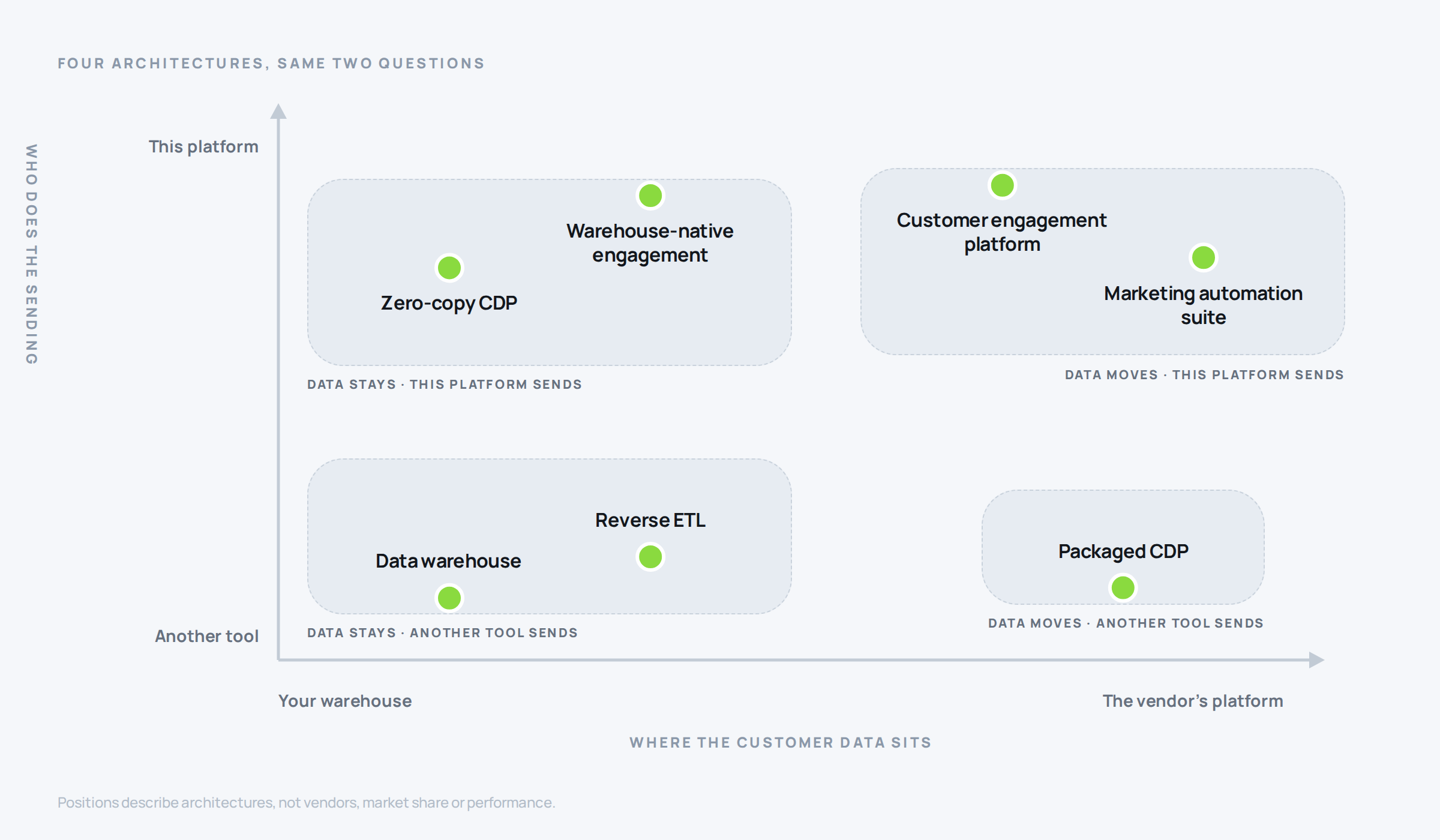
The platforms spread across the map instead of clustering, which is why a single ordered list of integration capability cannot answer this for every retailer.
Bloomreach
The commerce platform that treats customer data and product data as one problem.
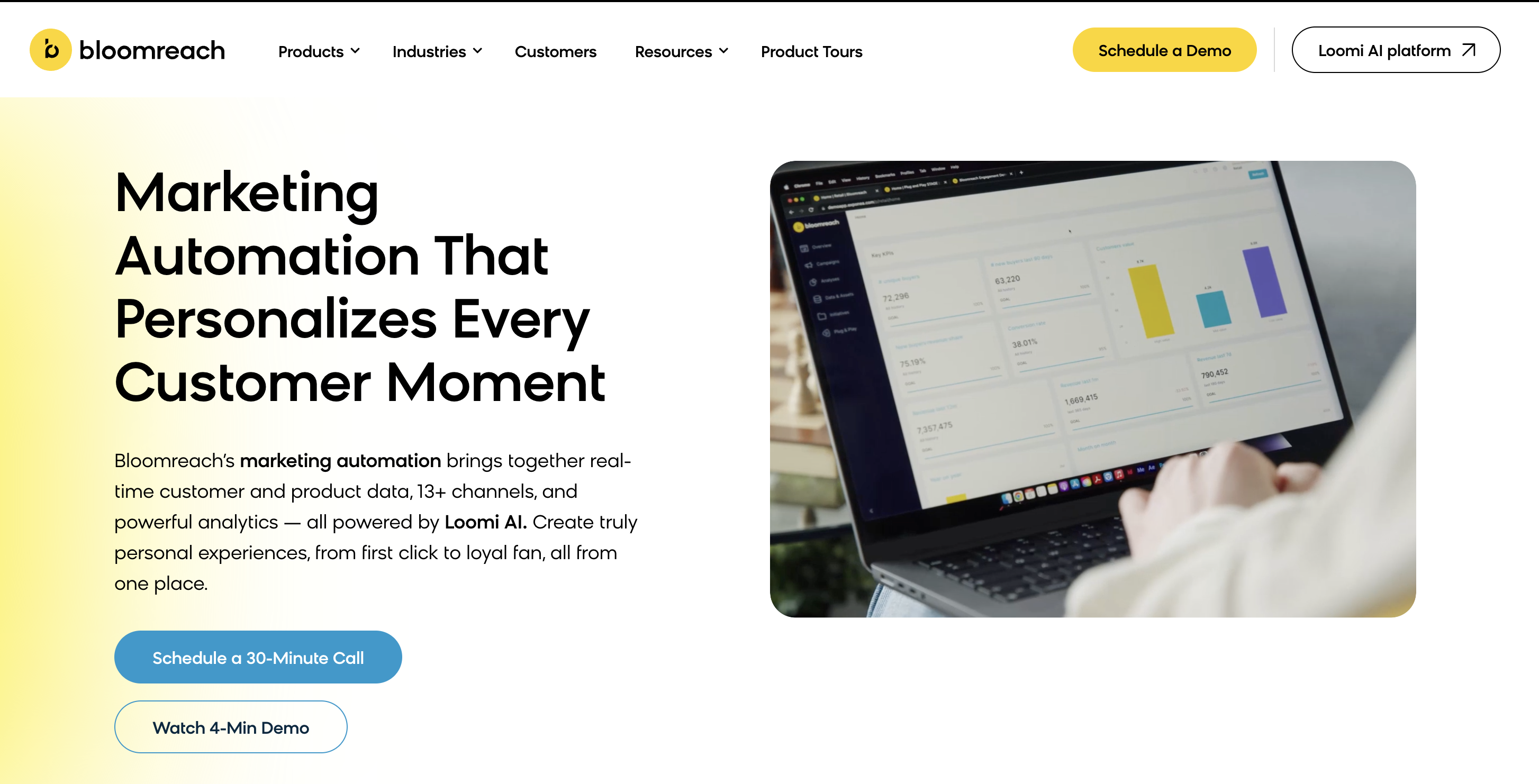
Product data sits next to customer data on the page, which is the distinction that makes this one a commerce platform and not a general CDP.
Best for: commerce brands willing to consolidate engagement into one enterprise platform, where the product catalog matters as much as the customer profile.
What it does well: it treats catalog and behavior as the same data problem, which in retail they are. Its own page describes connecting “real-time customer and product data from all sources” into “a single customer view”, naming website, CRM, data warehouse and offline sources, and it lists Shopify, Snowflake, Databricks and AWS among its connectors. Activation runs across 13 plus channels including email, SMS, WhatsApp, web personalization, app and retargeting, so destination and result sit in the same product as the profile. What returns to the profile after a send is not set out on that page, which is the leg to ask about.
Key features: unified customer and product data, real-time profile, Shopify and warehouse connectors, 13 plus activation channels, analytics and segmentation over the same data, retargeting and ads as destinations.
Worth knowing: the value assumes consolidation, so a brand that keeps its email in one tool, its SMS in another and its personalization in a third will be paying for breadth it does not use. Its documentation covers connecting sources and a warehouse; what it does not set out is what comes back into the profile after a send, so ask for that in writing.
Pricing: not published. Enterprise agreement.
Not a fit if: you are looking for a data layer to sit underneath the tools you already run. This is built to be the tool you run.
indigitall
The option for retailers whose real problem is the next message, and who do not want a data project in front of it.
Best for: retail and e-commerce operations that want a unified customer profile whose purpose is the next outbound message, without standing up a warehouse first.
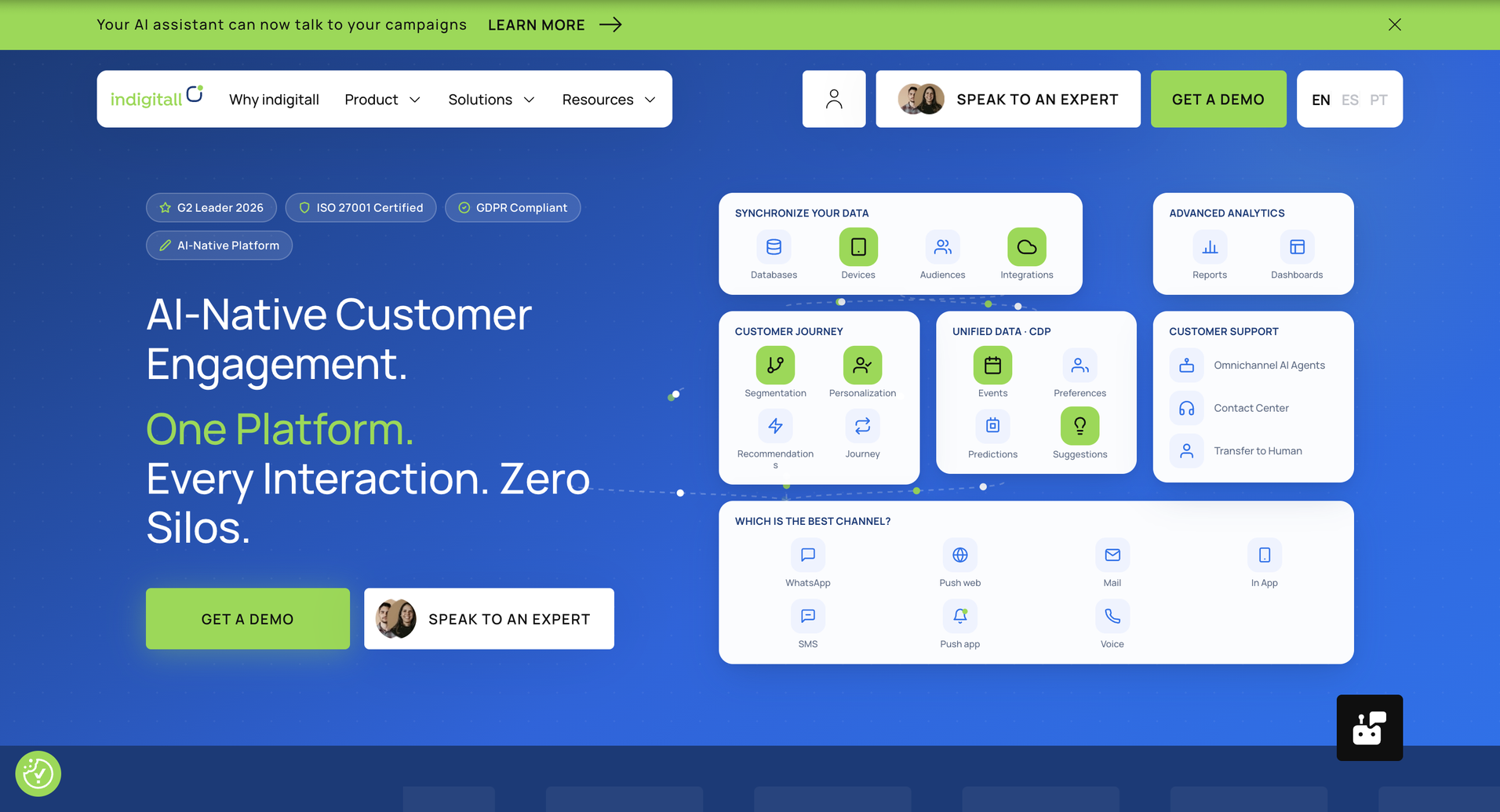
The page leads with the journey, not with a connector directory, which is an accurate summary of which legs of the round trip this one is built for. Captured 18 September 2026.
What it does well: the profile, the journey builder and the channels are documented as parts of the same product, so a segment does not have to be exported into a second tool before it can be sent. Its journey documentation describes entering people by event, an abandoned cart or a purchase being the examples it gives, and branching on whether the person interacted with the previous message. That is the building block. The cost ladder a retail program usually wants, starting on the cheapest channel that can carry the message and letting the expensive step fire only down the branch of people who did not respond, is something you design with those components. The platform does not decide it for you.
On the way in, its documentation is specific about the starting point in a way most of this category is not: “Data is loaded first through a CSV file upload, and from then on synchronisation is automatic: the profile updates whenever a new user or a data change appears in your CRM.” It also documents a customer identification method that assigns your own customer id to a device or a session, which is the mechanism that ties an anonymous visitor to a known record.
Key features: unified customer profile with documented customer identification, automatic CRM synchronization after an initial CSV load, event management, SMS and RCS, encrypted push, email, WhatsApp, in-app and web messaging, AI voice calls, AI agents that answer inside the thread, consent stored per channel, and documented technology partners including Salesforce, HubSpot, Shopify, VTEX IO and WordPress.
There is one thing here that does not fit any column in the table, and it is worth separating out instead of forcing it into a comparison. DataTalk answers audience and campaign questions in plain language instead of through a report, and its MCP integration exposes that same data to an AI assistant. Neither is an integration in the sense this piece measures, and neither counts anywhere above. Both change who in a retail team can get an answer without asking the analyst, which is a different kind of dependency from the ones in the table.
Worth knowing: its documented commerce integrations are channel-side rather than data-side. The Shopify app is documented for push and retargeting on the storefront, and that page currently states that “Retargeting functionality is currently not supported”, pointing to Google Tag Manager or support instead. The VTEX IO integration is documented as an SDK installation for web push. So order, catalog and cart data reach the profile through the API or through the CRM synchronization, not through a named commerce-data connector. Ask for that ingestion path in writing before you plan a timeline. A second detail worth knowing early: fields have to be created in the platform to match your CRM structure, and filters and segments can only use fields that exist there, so the field mapping is a deliverable and not a setting.
Pricing: not published. Demo and contract, no self-service sign-up.
Not a fit if: what you need is a warehouse, a modeling layer or somewhere to run analytics. This is built so the profile can send, and if the sending is already handled elsewhere, a data platform costs less and does the job. It is also not the tool if you want the customer record to live in one place and the CRM to be replaced: its own CDP page states that it complements the CRM and does not replace it.
Insider One
The multichannel option for retail brands that behave like consumer brands.
Best for: mid-sized to large multichannel retail brands running acquisition and retention from one team.
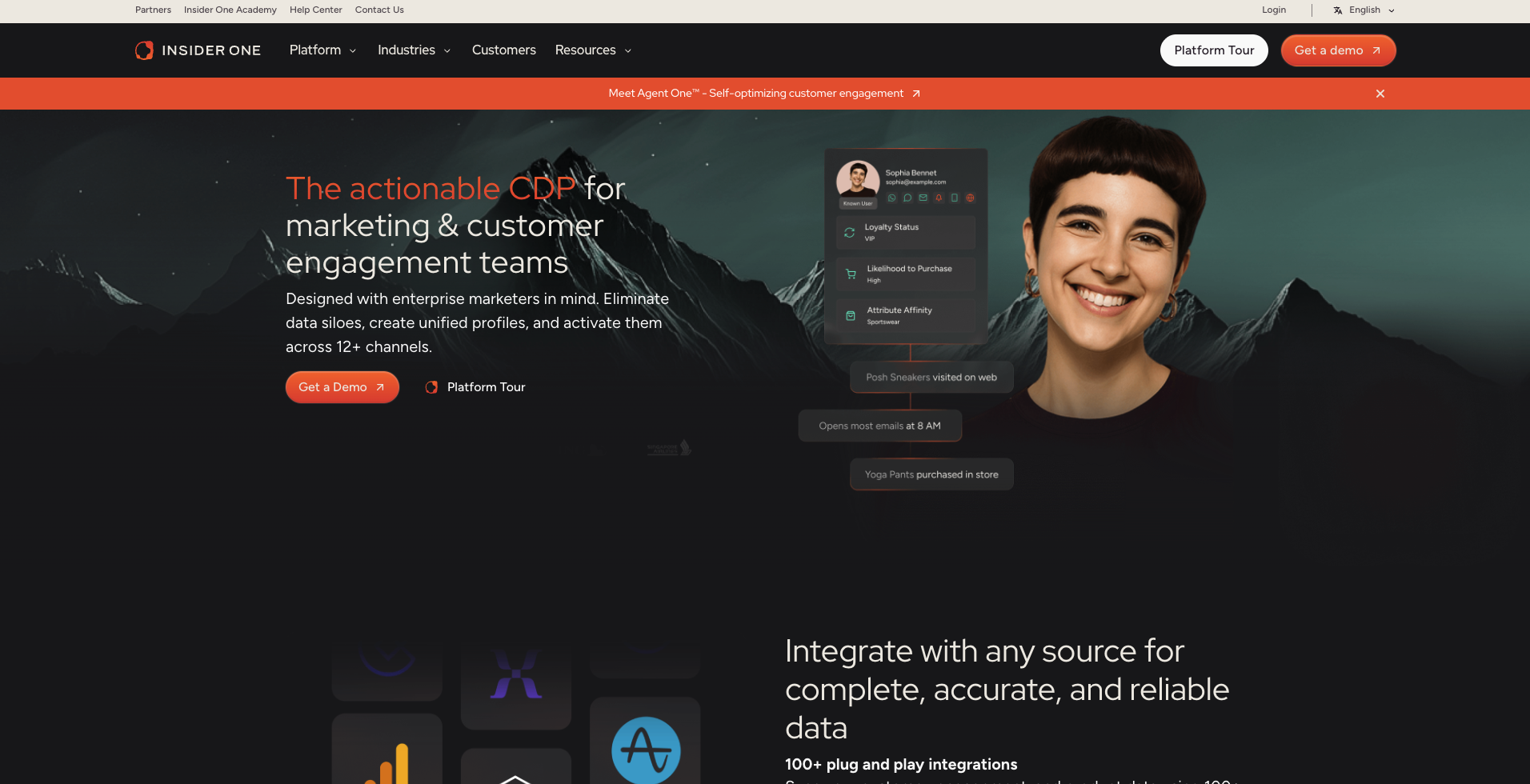
The page pairs the integration count with channel activation, which places it among the platforms that close the round trip themselves.
What it does well: it publishes both an ingestion surface and a sending surface, which is what a single-vendor round trip requires. Its page describes “100+ plug and play integrations” across “CRM, analytics, paid ads, social media, and more”, a “bidirectional connection” to data warehouses, “Flexible Identity Resolution Management” for handling personally identifiable information, and activation “across 12+ channels” including email, WhatsApp, web push, SMS and RCS, app and conversational surfaces.
The bidirectional warehouse connection is the detail worth noting for leg seven, because it describes a path back rather than only a path in. What it carries in each direction for your data is a question for the vendor, not something the page settles.
Key features: 100 plus integrations, bidirectional warehouse connection, identity resolution management, unified profiles, 12 plus activation channels, web and app personalization alongside messaging.
Worth knowing: the breadth is real and it takes setup. The personalization capabilities are the ones most often bought and least often switched on, and they are also the ones that justify the price, so the implementation plan matters more here than the feature comparison.
Pricing: not published. Quote based.
Not a fit if: your retail relationship happens mostly offline and the website is a brochure. The model assumes digital behavior to segment on.
Klaviyo
The e-commerce platform where the store data and the messaging already live together.
Best for: e-commerce teams whose store, customer data, email and texts already sit in the same system and who want the round trip to stay there.
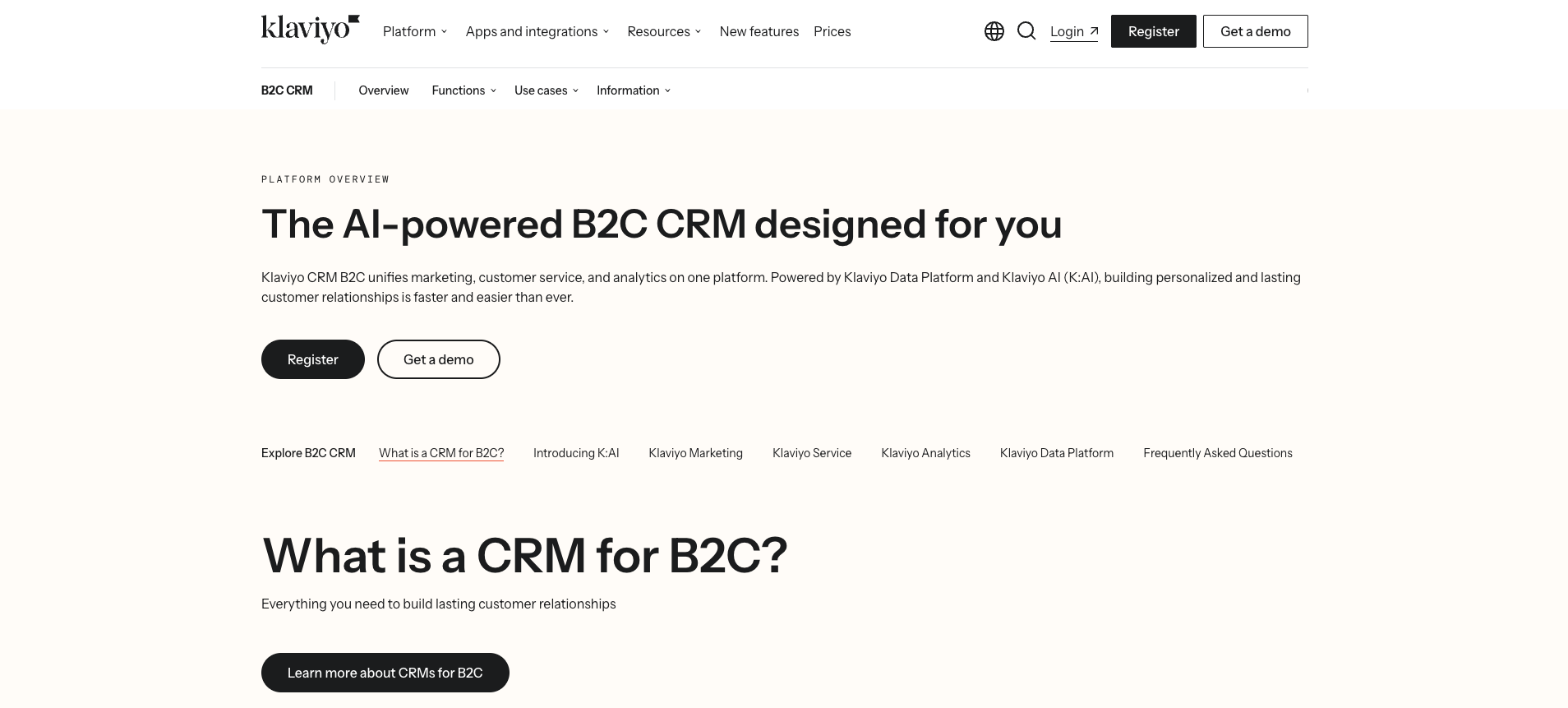
Data and channels are presented as one product and not as two, which is the arrangement the rest of this entry describes.
What it does well: it publishes an itemized account of leg seven, which is worth reading before you evaluate anything else in this category. Its help documentation sets out what flows back from Klaviyo into Shopify: first name, last name, email, phone and locale sync back only where the field was previously empty on the Shopify customer; email and SMS subscription status update fields that already exist; and custom profile properties are created in Shopify as metafield definitions, alongside email and SMS engagement events.
It also documents the boundaries of that return path, which is the part buyers discover late. Deleting a profile on one side does not delete it on the other. Suppression status in Klaviyo does not sync to Shopify and does not affect consent status there. Custom properties are capped by a metafield definition limit that Klaviyo documents as 250 per object, and a property sent with a different data type from the one that created the metafield will silently fail to update. Shopify publishes its own metafield definition limits separately, so confirm the number that applies to your store instead of taking either figure on trust.
Read that list as the shape of the problem, not as a criticism of one vendor. Ask every platform on this page for that level of detail.
Key features: native commerce integration, customer profiles with commerce events, email, SMS and RCS, push and on-site messaging, flows built on store events, documented write-back to the store with its limits stated.
Worth knowing: the model assumes the commerce data lives here. A brand whose master customer record is somewhere else ends up maintaining two records and reconciling them, which is the cost the integration was supposed to remove.
Pricing: published tiers for the platform, with messaging billed separately.
Not a fit if: you run several stores on different commerce platforms, or your master customer record is in a CRM or a warehouse that has to stay authoritative.
Amperity
The identity specialist, for retailers whose hardest problem is that the same shopper arrives five different ways.
Best for: retailers with a large offline footprint, where store transactions, loyalty and e-commerce all describe the same shopper and none of them agree on who that is.
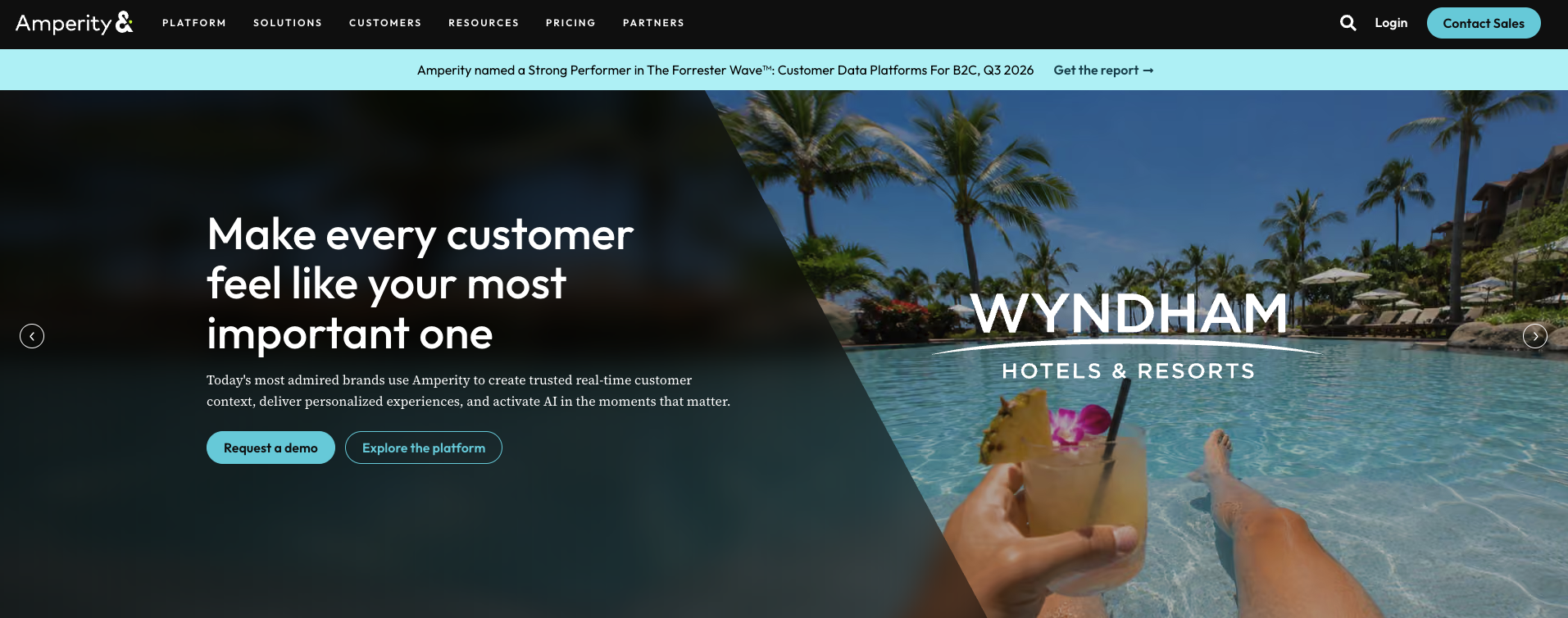
Identity leads the page and activation is described as pipelines out, which is exactly the division of labor a retailer with an offline estate is buying.
What it does well: it treats identity as the product rather than as a feature. Its own page, read on 18 September 2026, describes finding “hidden connections in online and offline PII data with AI” and creating “an identity keychain that links customer profiles without losing context”. Note the wording: linking without losing context is a different thing from collapsing records into a single row, and which of the two your operation needs is worth settling before you compare anything else. On the way out it publishes “200+ pre-built pipelines”, and on storage it offers direct data sharing “between Amperity and Lakehouses like Databricks and Snowflake in just minutes”, or “bring your own storage to keep data on your infrastructure”.
That distinction matters most if you sell in store as well as online, because the context a merge discards is usually the context that would have told you this shopper bought last week at a till.
Key features: AI identity resolution across online and offline data, identity keychain that preserves context, 200 plus outbound pipelines, direct sharing with Databricks and Snowflake, bring your own storage option.
Worth knowing: it resolves and ships the result out. Within the definition used across this table, the system that executes the send is something else, so budget for the tool at the other end and confirm which of your destinations are pre-built pipelines today and which are roadmap.
Pricing: not published. Enterprise agreement.
Not a fit if: your customer data is online only and already sits in one system. The engineering that makes this valuable is the engineering you will not need.
Tealium
The collection and governance layer, where the question is what gets captured before anyone builds an audience.
Best for: retail data and analytics teams whose first problem is controlling what gets collected and where it goes.
Collection and stitching lead the page and activation is described as feeding other systems, which is the honest summary of where this one sits in the round trip.
What it does well: it sits at the earliest leg, which is where rules about what leaves your properties can still be enforced. On identity its page describes a mechanism rather than only an outcome: “As IDs between profiles match, Tealium’s patented visitor stitching technology (configured according to your unique needs) automatically ties them together and re-builds them in real-time”. It publishes “over 1,300 turnkey integration options for getting your customer data in and out” and supports both client-side and server-side collection, which matters when browser-side collection keeps getting narrower.
Key features: client-side and server-side data collection, tag management, real-time profiles and audiences, patented visitor stitching, consent and governance controls, 1,300 plus connectors, audiences deployed into integrated systems and into analytics.
Worth knowing: audiences are deployed into other systems, so the quality of your program still depends on the tool that sends. Ask which governance signals travel with the audience into each destination and which stay behind, because once the data lands the destination is the system holding it.
Pricing: not published.
Not a fit if: what you need is the outbound retail journey. This feeds the tools that send; it is not the tool that sends.
Hightouch
The warehouse-native option, for teams whose data already sits where it should.
Best for: retail data teams with customer data already modeled and governed in a cloud warehouse, who want activation without copying that data into another vendor.
The data stays in the warehouse and only the audience travels, which is the operating model in one picture.
What it does well: there is no second copy of the customer data to keep in step, because there is no second copy. Hightouch states that it “never stores any of your data” and “operates directly in your data warehouse”. Audiences are built on the models your team already maintains, and syncs push them to the tools that send, with data contracts to keep approved fields standardized across teams.
Key features: warehouse-native audiences, reverse ETL syncs to downstream tools, data contracts for approved and standardized fields, governance of access and usage rules across teams, published security documentation.
Worth knowing: the compliance and quality question does not disappear, it moves. Once an audience syncs into a downstream tool, that tool now holds the data. Map the destinations before you map the sources.
Pricing: not published.
Not a fit if: you do not have a warehouse, or you have one and no team to model retail customer data in it. The model assumes both, and without them the warehouse and the modeling are the project before the platform is of any use.
Which questions separate integration from connection?
Ask every vendor these seven, one per leg, and ask for the answer in writing.
- Source. Which of my systems do you read on day one, as a named connector, rather than through an API my team implements? Name them.
- Identity. What is the mechanism, not the outcome? What happens to a guest checkout, a second device, and a return placed under a different email?
- Event. Shopify documents that webhook delivery is not guaranteed and recommends reconciliation jobs. Do you reconcile, on what schedule, and how would I know that an event had been missed?
- Profile. Which fields can a segment read, and what has to happen before a new field is usable?
- Destination. What do you send yourself, and what do you hand to something else?
- Result. Can I attribute revenue per send without exporting to another tool?
- Return. What goes back into the profile after a purchase, a response, a return or an unsubscribe, and what does not? Ask about suppression state by name.
Question three is the one almost nobody prepares for, and the answer separates the category faster than any feature list.
| The question | What a usable answer contains |
|---|---|
| Source. Which of my systems do you read on day one, as a named connector? | A list of named systems, not an API reference and not a date on a roadmap. |
| Identity. What happens to a guest checkout, a second device and a return placed under another email? | The rule the platform applies, written out, not the word resolution. |
| Event. Do you reconcile missed events, on what schedule, and how would I know one was missed? | A reconciliation schedule and an alert, not an assurance. |
| Profile. Which fields can a segment read, and what has to happen before a new field is usable? | The step, who performs it and how long it takes. |
| Destination. What do you send yourself, and what do you hand to something else? | Two lists, what it sends and what it hands over, not a single word. |
| Result. Can I attribute revenue per send without exporting to another tool? | A yes or a no, and the screen where that number is read. |
| Return. What goes back into the profile after a purchase, a response, a return or an unsubscribe? | The fields that are written back, and how long the write-back takes. |
Every row turns a yes or no question into one that produces a checkable commitment, which is the difference between a demo and a contract.
What actually breaks after go-live?
Four things, and none of them appear in a feature comparison.
The event that never fired. A checkout started or an order placed that the downstream platform never received, usually because delivery is best effort and nothing was reconciling. The campaign looks fine. The revenue is missing and nobody can say how much.
The segment that was fresh yesterday. Some platforms sync audiences into the sending tool on a schedule, which means a real-time campaign is real time only up to the last sync. Ask what the interval is and what runs on it. Then split your own data by what it needs: price, availability and order status are the fields where staleness shows up in the message a shopper reads, while master data is usually tolerant of a schedule. Settle that split before peak season, not during it.
The field nobody mapped. A segment that cannot be built because the field exists in the CRM and not in the platform, or exists in both under different names. indigitall’s documentation is explicit that filters and segments can only use fields that have been created in the platform, which makes the mapping a deliverable with an owner, not a setting somebody flips.
The unsubscribe that did not travel. Consent and suppression are the parts of leg seven with a regulatory cost when they stay put, and at least one vendor documents that they do: Klaviyo states that suppression status does not sync to Shopify and does not affect consent status there. Confirm in writing which consent signals move, in which direction, and whether they move per channel.
Which one fits which retail operation?
- A single-store e-commerce brand already running on one commerce platform. Klaviyo, because the store data is already there and there is no second system to keep in step with it.
- A commerce brand consolidating engagement and product data. Bloomreach.
- A retailer whose customer data is in a CRM and whose problem is the next message. indigitall, with the commerce data ingestion path confirmed in writing.
- A multichannel retail brand running acquisition and retention together. Insider One, with the personalization scope agreed before the implementation.
- A retailer with stores, loyalty and e-commerce that disagree about who the shopper is. Amperity, and budget for the tool that sends.
- A data team whose first problem is what gets collected at all. Tealium.
- A retailer with a modeled warehouse and a data team. Hightouch, and spend the saved effort on mapping the destinations.
- A retailer whose real problem is that orders and the CRM disagree. None of these yet. Settle which system is the master record first, because a CDP will unify the disagreement rather than resolve it.
So which one should you shortlist?
Answer three questions in this order and the list collapses on its own.
What is your master customer record today? The store, the CRM, or the warehouse. Read that answer against the Best for column of the table, because each architecture assumes a different home for it.
Who is going to send? If the answer is “this platform”, you are looking at the four engagement platforms. If the answer is “the tools we already run”, you are looking at the identity layer, the collection layer and the warehouse-native option.
What has to come back? Write down the three signals that must reach the profile after a send: the purchase, the unsubscribe, and one more that is specific to your operation. Then ask each vendor to confirm all three in writing.
And ask for the security documentation while you are at it. SOC 2 Type II and ISO 27001 are the two that come up in this category, and they are worth asking for by name; indigitall publishes its security policy publicly.
If you have not yet settled what a CDP is or whether you need one, those are earlier questions than this page: the types of CDP and how they differ and the benefits and mechanics of a CDP answer them. And if the gap you are really trying to close is the outbound program rather than the data architecture, start from omnichannel e-commerce and work backwards.
FAQs: CDP integration for retail and e-commerce
Which CDP has the best integration capabilities for retail and e-commerce?
There is not one, and the connector count that usually answers this question predicts very little. The category splits into four architectures: engagement platforms with their own profile that ingest and send from the same place, an identity layer that resolves the shopper and ships the result out, a collection and governance layer that decides what gets captured at all, and warehouse-native activation that leaves the data where it is. Decide which of those your operation needs before you compare integration counts, because the answer changes with where your customer data lives and who is going to send.
Does a bigger connector count mean better integration?
No, and it is the most repeated assumption in this category. A connector establishes that two systems can exchange data. It says nothing about whether an event that failed to arrive is detected, reconciled or reported. Shopify’s own developer documentation tells apps not to rely on webhook delivery and recommends running reconciliation jobs to stay consistent, which makes reconciliation and observability worth asking about by name. None of the platforms compared here publishes an answer to it, so the answer has to come from the vendor in writing.
What does not sync back from a CDP to my store?
The specifics differ per vendor, and most do not publish them. Klaviyo, which does, states that profile fields sync back to Shopify only where they were previously empty, that deleting a profile on one side does not delete it on the other, and that suppression status does not sync to Shopify or affect consent status there. Ask every vendor the same three questions: what returns, what does not, and what happens to consent and suppression specifically.
How fresh is a segment at the moment the campaign sends?
That depends on whether the platform sends from the profile or syncs the audience into a separate tool on a schedule. If there is a sync, the segment is as fresh as the last one, which is why a campaign described as real time may not be. Ask for the interval, then split your own data by what it needs: price, availability and order status are where staleness reaches the shopper, while master data is usually tolerant of a schedule.
Can a CDP fix bad data in my store or CRM?
No. It will unify bad records faster and more consistently, which makes the problem more visible, not smaller. It is worth noticing which vendors name this at all: indigitall’s own CDP page lists unresolved customer identities and poor CRM data quality among the problems the product exists to solve, which is at least an admission that the work is real. Settle which system is the master record and fix the source, or accept that the cleaning work is the project.
Do I need a warehouse to run a CDP for retail?
No, and whether you should want one is a separate question. Warehouse-native activation assumes a modeled warehouse and the people to maintain it; where both exist, nothing is duplicated, and where neither does, building them is the project before the platform is of any use. If there is no warehouse today, an engagement platform that ingests from your CRM and sends on its own channels reaches a running program without one.
Who should own the integration after go-live?
Whoever can answer where a segment came from without asking somebody else. Retail programs stall in month four when the marketing team owns the campaigns, an agency owns the platform and nobody owns the field mapping. Name three people before signing: who administers the platform, who approves a new field, and who is called when an event does not arrive.
About the Authors