indigitall Omni AI
 Start chat with AI agent
 Speak with AI voice agent
 Book a Demo

 Speak to an Expert












10 Key Benefits of a Customer Data Platform (CDP) for Driving Growth


Introduction: Why Your Customer Data is Your Biggest Untapped Asset
In the competitive landscape of 2026, businesses are not short on data. You have a wealth of information flowing in from every conceivable touchpoint: app usage analytics, website browsing behavior, CRM entries, support tickets, and in-store purchase histories. Yet, for many organizations, this data remains a fragmented puzzle, locked away in isolated silos.
This disconnection is more than an IT headache; it directly undermines your growth potential. It leads to disjointed Customer Journeys where a loyal app user receives a generic welcome email, or a high-value client has to repeat their issue to three different support channels. These fragmented experiences erode trust, suppress conversion rates, and leave significant revenue on the table.
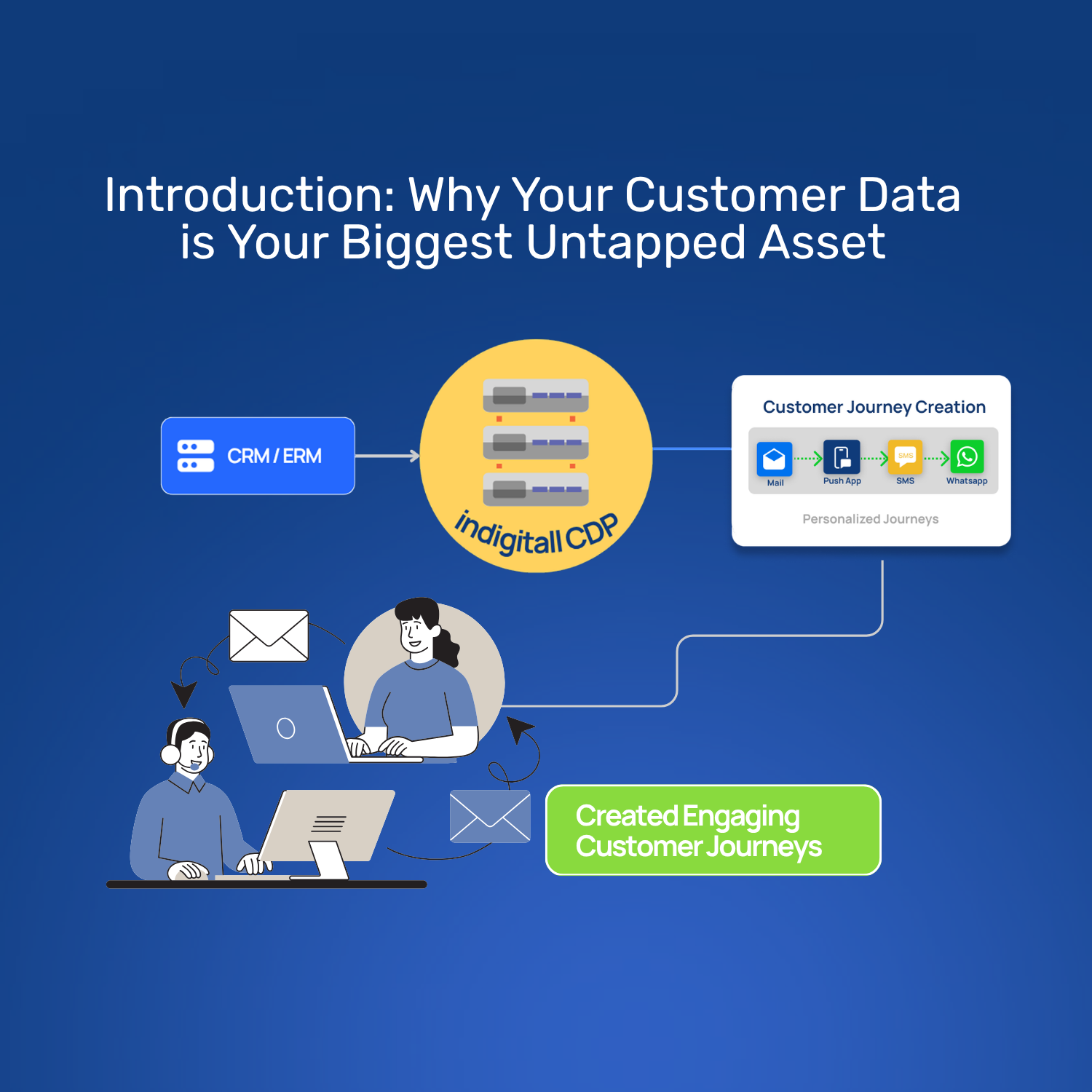
Enter the Customer Data Platform (CDP). A CDP is the central nervous system for your customer engagement strategy, engineered specifically to solve the challenge of data fragmentation. It ingests data from all your disparate sources and stitches it together to create a persistent, unified profile for every single customer.
But a CDP isn’t just a sophisticated database. Its true power lies in activation—turning that unified insight into intelligent, personalized, and timely actions across your entire omnichannel ecosystem. Imagine orchestrating seamless campaigns that move fluidly between App Push, WhatsApp Business, and email, all based on a single, reliable source of truth. This is the foundation of modern marketing automation.
Over the next ten sections, we will unpack the key benefits of integrating a CDP into your tech stack. We’ll explore how this single platform can help you not only understand your customers on a deeper level but also transform that understanding into smarter engagement, higher lifetime value, and sustainable business growth.
What is a Customer Data Platform (CDP)? A Clear, Simple Definition
In the digital ecosystem of 2026, a Customer Data Platform (CDP) is the central nervous system of your customer engagement strategy. Think of it as a smart, unified hub that systematically collects every piece of customer data from all your disparate sources—your website, mobile app, CRM, point-of-sale systems, and support channels.
The CDP then cleans, de-duplicates, and stitches this information together to create a single, persistent, and comprehensive profile for each individual customer. This “golden record” or 360-degree view evolves in real-time, providing a reliable source of truth for who your customers are and how they interact with your brand.
But a CDP doesn’t just store data; its primary purpose is to make that data actionable. It pushes these unified profiles to other systems in your tech stack, powering everything from personalized marketing campaigns to intelligent customer service. Platforms with an integrated CDP, like the one offered by indigitall, streamline this process, allowing you to move from data insight to omnichannel activation seamlessly within a single console.
To fully grasp its unique value, it’s crucial to understand how a CDP differs from other familiar data management tools.
- CDP vs. CRM: Beyond Transactional Data
A Customer Relationship Management (CRM) system is primarily a tool for managing direct interactions with known customers. It excels at tracking sales pipelines, logging support tickets, and managing contact information entered by your teams. A CRM answers, “What has our relationship with this customer been?”A CDP goes much deeper. It ingests data from anonymous sources, tracking a user’s behavior long before they ever fill out a form or make a purchase. It combines this behavioral data (pages viewed, products clicked) with the transactional data a CRM holds. This creates a far richer profile that answers, “Who is this person, what do they want, and what will they do next?” - CDP vs. DMP: First-Party Power in a Cookieless World
A Data Management Platform (DMP) was traditionally built for advertising, relying heavily on anonymous, third-party cookies to create audience segments for ad targeting. In 2026, with third-party cookies fully deprecated, the classic DMP’s role has been fundamentally reshaped. Its reliance on short-lived, anonymous data makes it less effective for building lasting customer relationships.A CDP, in contrast, is architected around persistent, first-party data—information your customers have explicitly and consensually shared with you. It uses stable identifiers like email addresses or user IDs to build accurate, long-term profiles. This makes the CDP the essential engine for a modern Global Omnichannel Strategy, enabling personalized Customer Journeys across your owned channels like App Push, Web Push, and WhatsApp Business.
Top 10 Business-Critical Benefits of a Customer Data Platform
In the competitive landscape of 2026, understanding your customer is no longer a strategic advantage—it’s the price of entry. A robust Customer Data Platform (CDP) is the engine that powers this understanding, transforming fragmented data points into actionable intelligence. By centralizing customer information, a CDP unlocks a new level of strategic capability.
Let’s explore the ten most critical benefits a CDP delivers to modern enterprises, enabling them to not just compete, but lead.
1. Creating a True 360-Degree Customer View
The core promise of a CDP is the creation of a persistent, unified customer profile. It ingests data from every touchpoint—website interactions, mobile app usage, in-store purchases, support tickets, and social media engagement—and stitches them together into a single, coherent identity.
This “golden record” eliminates data silos, providing a single source of truth for your marketing, sales, and service teams. Instead of seeing a fragmented user, you see a complete individual, empowering every department to act with full context and insight.
2. Enabling Hyper-Personalization at Scale
Generic marketing is a relic of the past. In 2026, customers expect brands to understand their unique needs, preferences, and context. A CDP provides the rich, real-time data needed to power hyper-personalization across every channel.
This goes beyond using a first name. It means dynamically changing website content based on past browsing, sending a push notification with a relevant offer as a user passes a store, or triggering a WhatsApp message with a cart recovery sequence that acknowledges their specific journey.
3. Seamless Omnichannel Customer Journey Orchestration
Your customers don’t live in a single channel, and neither should your engagement strategy. A CDP is the central nervous system for a true Omnichannel approach, ensuring a consistent and fluid experience as users move between your app, website, email, and physical locations.
By unifying data, you can design sophisticated Customer Journeys that adapt in real-time. A user who abandons a cart on your website can receive a follow-up App Push notification an hour later, seamlessly continuing the conversation and driving conversion without missing a beat.
4. Boosting Customer Lifetime Value (LTV) and Retention
Acquiring a new customer is far more expensive than retaining an existing one. A CDP provides the deep behavioral insights needed to identify at-risk customers, predict churn, and deploy proactive retention campaigns.
By understanding product usage patterns and engagement levels, you can trigger automated journeys to re-engage lapsing users or present loyal customers with exclusive offers and upsell opportunities. This focus on the entire lifecycle maximizes the value of every single customer relationship.
5. Future-Proofing Your Strategy in a Cookieless World
With the final deprecation of third-party cookies, the reliance on first-party data has become absolute. A CDP is your foundational tool for collecting, managing, and activating this invaluable asset in a privacy-compliant manner.
It allows you to build direct relationships with your audience, capturing explicit consent and preferences. This ensures your marketing and personalization efforts are built on a sustainable and transparent data foundation, insulating your business from future platform changes.
6. Powering Advanced AI and Predictive Analytics
Artificial intelligence and machine learning models are only as good as the data they are fed. A CDP provides the clean, structured, and comprehensive dataset necessary for AI to deliver on its promise.
From predictive segmentation (e.g., “users likely to purchase in the next 7 days”) to generative AI-powered message copywriting, a CDP is the fuel. Platforms with integrated AI capabilities can leverage this unified data to optimize send times, recommend the next best action, and automate complex decisions.
7. Democratizing Data for Agile Decision-Making
Historically, accessing and interpreting customer data required significant support from IT or data science teams. A modern CDP, especially one with an intuitive interface like the indigitall console, puts this power directly into the hands of marketers and product owners.
This agility allows teams to build segments, analyze campaign performance, and launch new initiatives in hours, not weeks. It fosters a culture of experimentation and data-driven optimization across the entire organization.
8. Enhancing Data Governance and Compliance
Navigating the complex web of global privacy regulations (like GDPR and its successors) is a major challenge. A CDP simplifies compliance by centralizing customer data and consent management.
It provides a clear audit trail of how data is collected, stored, and used, making it easier to manage data subject requests (DSRs) and ensure that all marketing communications adhere to the user’s explicit permissions. This builds trust and protects your brand from significant regulatory risk.
9. Streamlining the MarTech Stack and Maximizing ROI
Many organizations suffer from a bloated and disconnected MarTech stack. A CDP acts as a central hub, integrating with your existing tools and, in many cases, replacing redundant point solutions. This creates a more efficient and cost-effective ecosystem.
By choosing a solution that combines CDP capabilities with execution channels (like push, web, and WhatsApp), you can further reduce complexity and cost. This all-in-one approach ensures data flows seamlessly from insight to action, maximizing the ROI of your technology investments.
10. Unlocking Deeper and More Powerful Audience Segmentation
A CDP enables segmentation that is leagues beyond basic demographics. You can create highly specific audiences based on a near-infinite combination of attributes and behaviors.
This includes real-time behavioral triggers (e.g., “users who viewed three ‘running shoe’ pages but did not add to cart”), predictive scores (“high LTV prospects”), and cross-channel activity (“customers who clicked a web ad and then made an in-app purchase”). This precision targeting ensures your message is always relevant, dramatically improving engagement and conversion rates.
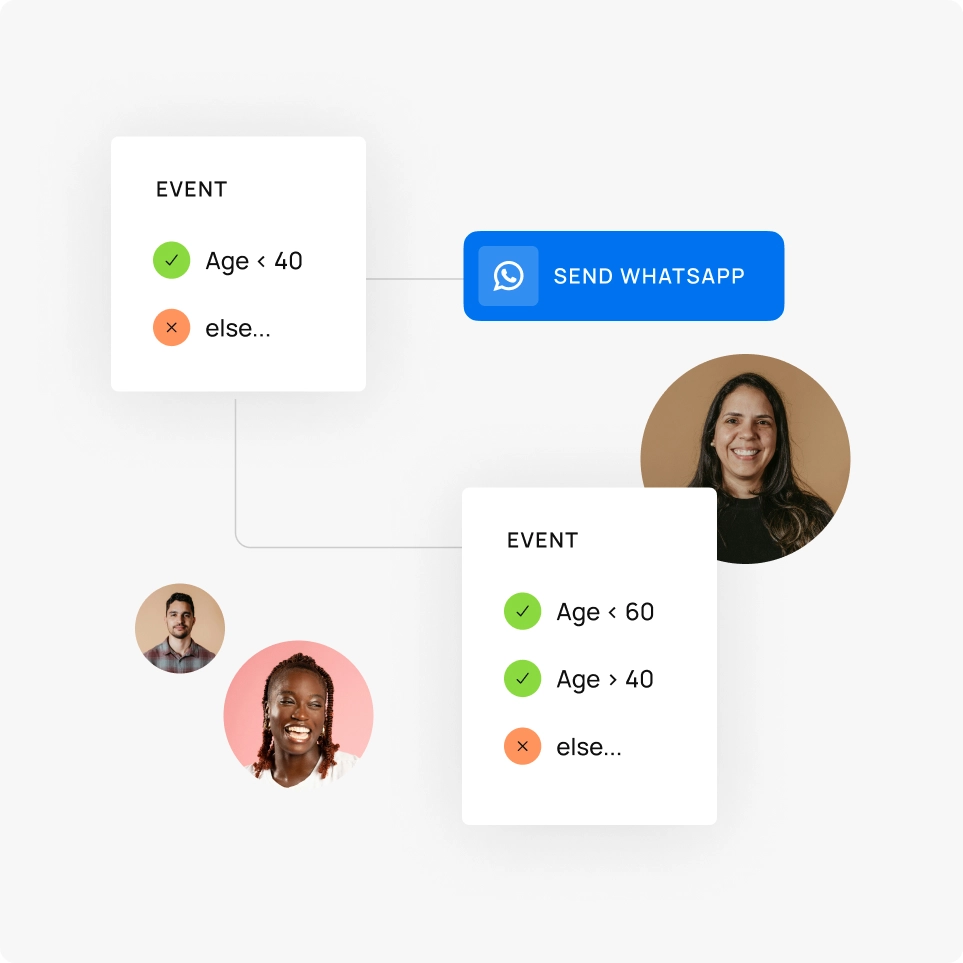
1. Achieve a True 360-Degree Customer View
In the hyper-competitive landscape of 2026, a fragmented understanding of your customer is a critical business liability. The foundational benefit of a Customer Data Platform (CDP) is its ability to dismantle data silos and construct a single, coherent, and persistent profile for every individual user.
For too long, valuable customer data has been trapped in isolated systems. Your marketing team has web analytics, your sales team has CRM data, and your support team has ticket histories. This fragmentation leads to disjointed experiences—like retargeting a customer with an ad for a product they already purchased and contacted support about.
A CDP acts as the central nervous system for your customer data. It ingests information from every touchpoint and uses sophisticated identity resolution to stitch it all together. This process links anonymous website visits to known app users, connects in-store purchases to online browsing history, and unifies interactions across your entire digital ecosystem.
This unified profile is the bedrock of a successful Global Omnichannel Strategy. When you know a customer browsed a product on your website, added it to their cart in your app, and then asked a question via a WhatsApp AI Agent, you can orchestrate a truly relevant Customer Journey. This single source of truth empowers platforms like indigitall to deliver the right message on the right channel at precisely the right moment.
The result is more than just a database; it’s a living, breathing 360-degree view of the customer. Every team, from marketing to product development, can now operate from the same source of truth, ensuring every decision and interaction is informed, personalized, and impactful.
2. Power Hyper-Personalization at Scale
In the competitive landscape of 2026, generic, one-size-fits-all marketing is no longer just ineffective—it’s a liability. Today’s customers expect every interaction to be relevant and tailored to their individual needs. A Customer Data Platform (CDP) is the engine that moves your strategy from broad segmentation to true 1:1 hyper-personalization.
By consolidating data into a unified customer profile, a CDP provides a real-time, 360-degree view of each individual. This isn’t just a static record; it’s a living, breathing profile that updates with every click, purchase, and interaction. This allows you to orchestrate highly relevant experiences across your entire ecosystem, at a scale that was once impossible.
Imagine the possibilities when your data is instantly actionable. Platforms that natively integrate a CDP with engagement channels create a seamless flow from insight to action, powering a truly Global Omnichannel Strategy. Here’s how it works in practice:
- Predictive Product Recommendations: Go beyond simple “customers who bought this also bought…” logic. A CDP allows you to use behavioral data, browsing history, and AI models to recommend products via email, in-app messages, or dynamic web content that the customer is statistically most likely to purchase next.
- Geofenced Push Notifications: Trigger an automated App Push notification with a personalized offer for a customer’s favorite product the moment they walk past one of your physical stores. This real-time relevance dramatically increases foot traffic and conversion.
- Real-Time Website Customization: As a known user lands on your website, the CDP instantly identifies their segment and value. This allows you to dynamically alter the homepage banner, surface relevant articles, or display exclusive offers, creating a unique experience for every single visitor.
- Automated WhatsApp Journeys: If a high-value customer abandons their cart, you can automatically trigger a Customer Journey that starts with a helpful WhatsApp message, perhaps including a link back to their cart and a time-sensitive shipping offer to encourage completion.
Ultimately, a CDP transforms your customer data from a passive database into the active fuel for creating memorable, personalized interactions. It’s the foundational technology for building the meaningful relationships that drive loyalty and maximize lifetime value.
3. Enhance the End-to-End Customer Experience (CX)
In the hyper-competitive landscape of 2026, Customer Experience (CX) is no longer a feature—it’s the primary differentiator. Modern consumers expect and demand seamless, contextual interactions at every touchpoint. A fragmented experience, where a brand doesn’t remember them from one channel to the next, is a direct path to churn.
A CDP serves as the central nervous system for your entire CX strategy. By unifying data from every source into a single, persistent customer profile, it ensures every interaction is consistent, relevant, and informed by the user’s complete history.
Consider this powerful, end-to-end Customer Journey, orchestrated by a CDP:
- Initial Interaction: A user browses a specific product category on your mobile app but abandons their session. The CDP immediately captures this high-intent behavior.
- Omnichannel Nurturing: Instead of a generic follow-up, an automated workflow triggers a Rich Push Notification showcasing the viewed items. Later, an email provides valuable content related to that product, solidifying your brand’s expertise.
- Seamless Support: The user has a question and initiates a conversation via WhatsApp. The support agent—or an advanced AI Agent—has immediate access to the full customer profile. They can see the app browsing history, the push notification sent, and the email they opened, eliminating the frustrating “Can you tell me what you were looking at?” question.
This level of cohesion transforms the customer’s perception of your brand. It demonstrates that you understand their needs in real-time, regardless of the channel they choose. Platforms that natively integrate this powerful data layer with built-in activation channels (like App, Web, Email, and WhatsApp) offer an unparalleled advantage, enabling teams to design and execute these sophisticated, Global Omnichannel Strategies from a single console.
4. Boost Marketing ROI and Campaign Efficiency
In the highly competitive digital landscape of 2026, every marketing dollar must be accountable. A Customer Data Platform is no longer a luxury but a fundamental tool for maximizing return on investment (ROI) by eliminating wasted ad spend and sharpening campaign focus with unparalleled precision.
The core of this efficiency lies in intelligent audience suppression. Imagine a customer completes a purchase through your app. A robust CDP instantly captures this event and syncs it with your advertising platforms, automatically removing that user from campaigns promoting the very item they just bought. This real-time data flow prevents budget waste and avoids the poor user experience of irrelevant advertising.
Beyond suppression, a CDP is your engine for smarter customer acquisition. By unifying data to identify your most valuable customers—those with the highest lifetime value (LTV)—you can build powerful lookalike audiences. Exporting these high-value segments to platforms like Google or Meta allows you to target new prospects who share the same characteristics as your best customers, dramatically improving conversion rates for your acquisition campaigns.
This level of data orchestration ensures your paid media and owned channels work in perfect harmony. The same unified profile that refines your ad targeting also powers personalized Customer Journeys across your App Push, Web Push, and WhatsApp channels. When your CDP and engagement tools operate within a single, integrated ecosystem like the indigitall platform, you achieve a truly Global Omnichannel Strategy where every interaction is data-driven, timely, and efficient.
5. Enable Advanced Customer Segmentation
In the digital landscape of 2026, static, demographic-based segmentation (like age or location) is fundamentally insufficient for driving meaningful engagement. Modern customers expect hyper-personalization, and a CDP is the engine that powers this by enabling dynamic, behavior-based segmentation in real time.
By unifying data from every touchpoint, a CDP moves beyond who your customers are to understand what they do, what they intend to do, and what they need next. This allows marketing and product teams to create fluid audience segments that constantly update based on the latest customer actions, or inactions.
Imagine effortlessly building and activating segments like these directly from your central data hub:
- High-Intent Users: Customers who have viewed a specific product three times in the last 48 hours but have not added it to their cart.
- Potential Churn Risks: Subscribers who were previously highly active but have not opened your app or engaged with a notification in the last 30 days.
- Onboarding Opportunities: New users who completed registration but have not yet used a key feature, such as setting up their mobile wallet pass.
- Cross-Sell Candidates: Banking clients who hold a checking account and have recently used the mortgage calculator tool on your website.
The true power is realized when your CDP is integrated within an all-in-one solution like indigitall. This allows you not only to identify these valuable segments but to instantly activate them within a Global Omnichannel Strategy. You can trigger a personalized Customer Journey via WhatsApp for the churn-risk segment or send a compelling App Push notification with a special offer to the high-intent user, orchestrating the perfect message on the perfect channel at the perfect moment.
6. Streamline Data Compliance and Governance
In the data privacy landscape of 2026, navigating the complex web of regulations like GDPR, CCPA, and newer, more stringent global laws is no longer a peripheral task—it’s a core business function. Managing user consent and preferences across a dozen disconnected tools is a significant operational and legal risk.
A CDP acts as your centralized command center for data governance. By unifying customer data, it also unifies consent status, communication preferences, and privacy choices into a single, reliable profile. This creates a single source of truth that governs how and when you can engage with each customer.
This centralized model makes it dramatically simpler to honor Data Subject Requests (DSRs). When a customer exercises their “right to be forgotten” or requests a copy of their data, the CDP can orchestrate the process across your entire tech stack, ensuring compliance without a frantic, manual scramble that introduces human error.
Key governance benefits powered by a CDP include:
- Unified Consent Management: A single, definitive record of a user’s opt-in and opt-out status for every channel, from email and SMS to App Push and WhatsApp.
- Efficient Request Processing: Seamlessly manage data access, portability, and deletion requests, ensuring timely and complete fulfillment across all integrated systems.
- Auditable Data Lineage: Maintain a clear, transparent trail of where customer data was collected and the specific consent granted, which is invaluable during compliance audits.
For a truly effective Global Omnichannel Strategy, this governance is non-negotiable. An integrated communications platform like indigitall leverages this centralized consent data to ensure every single interaction respects the user’s latest preferences. This means the right message is always sent on the right channel, and more importantly, no message is sent when a user has opted out, protecting both your brand reputation and your bottom line.
7. Unify Inbound and Outbound Engagement
For years, a deep chasm existed between marketing and customer service technology. Outbound platforms were designed for sending campaigns, while inbound tools were built for handling support tickets. In 2026, this siloed approach is no longer sustainable; it creates disjointed experiences that erode customer trust.
A truly advanced CDP must bridge this gap by serving as the single source of truth for every single customer interaction, regardless of whether it’s initiated by the brand or the user. This is a core differentiator of the indigitall ecosystem. We believe that the data used to orchestrate a marketing Customer Journey should be the exact same data empowering a real-time support conversation.
Imagine this common scenario:
- Outbound (Marketing): Your team uses the indigitall console to launch an Omnichannel campaign promoting a new subscription service. A segment of users receives a personalized Push Notification with a special introductory offer.
- Inbound (Service): A user receives the push, is interested, but has a question. They open WhatsApp and start a conversation with your brand’s AI Agent or a human support specialist.
With a disconnected system, the support agent has no context. They don’t know which campaign the user is referencing or what offer they received. But with indigitall’s unified platform, the agent instantly sees the user’s complete profile—including the fact they just received that specific push notification. This allows them to provide a seamless, informed response that resolves the query and drives the conversion.
This powerful fusion transforms customer service from a cost center into a strategic revenue driver. It’s the foundation of a Global Omnichannel Strategy where the conversation with your customer is continuous and intelligent, flowing effortlessly between your app, website, WhatsApp, and Mobile Wallet.
8. Improve Customer Retention and Loyalty
In the hyper-competitive landscape of 2026, the axiom holds truer than ever: acquiring a new customer is exponentially more expensive than retaining an existing one. A CDP transforms customer retention from a reactive guessing game into a proactive, data-driven science, directly boosting Customer Lifetime Value (LTV).
By unifying data from every touchpoint, a CDP creates a dynamic, 360-degree view of each user. This allows you to monitor behavioral signals in real-time—such as declining app usage, reduced purchase frequency, or unresponsiveness to campaigns—which are the critical early warning signs of potential churn.
This is where predictive power becomes your greatest asset. Instead of waiting for a customer to abandon their cart for the last time, you can automatically trigger pre-emptive retention campaigns orchestrated from a central platform like the indigitall console.
- Identify At-Risk Segments: Use CDP data to flag a high-value customer whose engagement score has dropped, or who hasn’t made a purchase within their typical buying cycle.
- Trigger a Personalized Customer Journey: Automatically launch a retention-focused Customer Journey. This could begin with a rich push notification containing a personalized “We Miss You” offer or early access to a new product line.
- Orchestrate an Omnichannel Follow-Up: If there’s no response, the journey can intelligently escalate to their next-preferred channel, like a direct WhatsApp message with a curated recommendation, ensuring your message connects with maximum impact.
Executing this type of Global Omnichannel Strategy is the key to modern loyalty. By engaging customers proactively on the right channel at the right moment, you demonstrate a deep understanding of their needs. An all-in-one solution that connects deep data insights with powerful activation tools, like those within the indigitall ecosystem, is essential for orchestrating these sophisticated retention workflows seamlessly.
9. Democratize Data for Non-Technical Teams
In the digital landscape of 2026, speed and agility are non-negotiable. The old model of marketing teams filing tickets with IT or data science for every simple data pull or audience segment is a relic of the past. A modern CDP shatters these data silos by democratizing access for the teams on the front lines of customer engagement.
The core of this revolution is a user-friendly, visual interface. A powerful CDP provides an intuitive console where marketers and CRM managers can build complex audience segments with a drag-and-drop builder, visualize customer behavior patterns, and gain insights without writing a single line of code. This empowers them to act on their strategic instincts instantly, turning an idea into a targeted audience in minutes, not weeks.
This self-service capability dramatically reduces dependency on technical teams, freeing up valuable data science and engineering resources to focus on more complex challenges like predictive modeling and infrastructure optimization. Marketers are no longer bottlenecked; they are enabled to test, learn, and iterate on campaigns at the pace of the market.
The true value is amplified in an all-in-one platform where the CDP is natively integrated with engagement channels. With a solution like indigitall, a marketer can define a high-value segment and immediately activate an omnichannel Customer Journey across App Push, WhatsApp Business, and Web Push directly from the same console. This seamless orchestration of data and action is what transforms a data repository into a dynamic growth engine, placing the power to engage directly in the hands of the marketing team.
10. Future-Proof Your Technology Stack
The marketing technology landscape of 2026 is a testament to relentless innovation. New channels, generative AI tools, and analytics platforms emerge constantly, making technological agility a non-negotiable for competitive brands.
A Customer Data Platform acts as the foundational layer of your MarTech ecosystem, creating a stable, central hub for all customer data. This architectural shift decouples your precious data from the specific execution tools that use it, effectively insulating your core asset from the churn of the market.
Think of it as a universal adapter for your marketing stack. When you decide to migrate to a new email provider, adopt a cutting-edge personalization engine, or experiment with a new ad network, the process is radically simplified. Instead of building complex, point-to-point integrations from scratch, you simply connect the new tool to your CDP.
This approach provides two critical advantages for long-term growth:
- Reduced Vendor Lock-In: Your unified customer profiles are no longer held captive by a single software vendor. This gives you the freedom to choose best-in-class tools for specific tasks without facing a massive and costly data migration project.
- Accelerated Innovation: Onboarding new technologies becomes faster and less resource-intensive for your development teams. Your marketers can focus on leveraging new capabilities rather than getting bogged down in complex data plumbing.
This flexibility is essential for orchestrating a sophisticated Global Omnichannel Strategy. As you integrate powerful channels like WhatsApp Business, App Push, and AI Agents into your Customer Journeys, the CDP ensures a consistent and reliable stream of data powers every interaction, regardless of the front-end tool.
While a standalone CDP offers this flexibility, platforms like indigitall that combine a robust data foundation with a suite of built-in engagement channels provide an even more seamless experience. This integrated approach simplifies your stack and reduces data latency, while still allowing you to connect to the wider MarTech ecosystem when needed, giving you the best of both worlds.
Beyond Data: The Power of a CDP with a Unified Engagement Platform
By now, the strategic importance of a Customer Data Platform is clear. In 2026, a CDP is no longer a luxury; it’s the foundational data layer for any brand serious about personalization. It acts as the central nervous system, collecting and unifying customer signals from every touchpoint into a single, coherent profile.
But a powerful brain is only effective when it can direct action. This is the critical juncture where many data strategies fall short. Possessing a rich, real-time customer profile is one thing; activating that intelligence instantly across your communication channels is where the true value and ROI are unlocked.
The “missing link” for many organizations is the disconnect between their data repository and their engagement tools. They might have a best-in-class CDP, but it’s bolted onto a fragmented ecosystem of separate tools for push notifications, email, SMS, and WhatsApp Business. This introduces latency, data silos, and operational complexity, ultimately neutralizing the “real-time” advantage of the CDP itself.
This is where the paradigm shifts from a simple CDP to a CDP integrated with a unified engagement platform. This powerful combination connects the “what” (the customer data) with the “how” (the communication), allowing you to orchestrate and execute actions based on data triggers without delay.
Imagine a customer browsing a specific product category in your app. A unified system doesn’t just record this event. It instantly triggers a multi-step Customer Journey:
- Immediately: A rich push notification is sent with dynamic content related to their browsing.
- 24 Hours Later: If no purchase is made, a WhatsApp message arrives with a limited-time offer on that category.
- Next Website Visit: A web push reminds them of their interest, creating a seamless, persistent conversation.
This level of real-time, Global Omnichannel Strategy is only possible when your data and engagement layers are intrinsically linked. An all-in-one solution, where the CDP capabilities and the omnichannel messaging tools exist within a single console, removes the friction. It empowers your marketing team to move from analyzing data to building revenue-driving experiences, all within one cohesive ecosystem.
Why Indigitall is Your All-in-One Solution
Understanding the power of a Customer Data Platform is the first step. The next, and most critical step for growth in 2026, is activating that data instantly. A standalone CDP can centralize your data, but indigitall goes further by combining a robust CDP foundation with a world-class, omnichannel engagement engine in a single, unified platform.
This all-in-one architecture eliminates the data silos and latency issues that often plague fragmented marketing stacks. With indigitall, the moment data is collected and unified, it’s immediately available for action, allowing you to orchestrate truly responsive and personalized Customer Journeys without complex integrations.
- Native WhatsApp Leadership in Action: A unified customer profile is only as good as your ability to act on it. Imagine a high-value customer abandons their shopping cart. Within the indigitall ecosystem, this event instantly triggers a personalized, conversational message via our native WhatsApp Business integration, complete with a direct link back to their cart. This seamless flow from data insight to real-time conversation is how you turn a potential loss into recovered revenue.
- Accessible AI for Smarter Engagement: We believe the power of artificial intelligence should be in the hands of marketers, not just data scientists. ‘indigitall AI’ is built directly into our platform, leveraging your unified CDP data to drive performance. It automatically predicts the optimal time to send a push notification to each individual user for maximum impact and uses generative AI within the indigitall console to help you craft compelling message copy in seconds, dramatically accelerating your campaign workflow.
Choosing indigitall means you aren’t just investing in a data repository; you are investing in a complete growth engine. It’s the intelligent, all-in-one solution designed to help you build a Global Omnichannel Strategy that not only understands your customers but also engages them effectively at every single touchpoint.
Conclusion: Turn Customer Data into Your Competitive Advantage
In the competitive landscape of 2026, the conversation has shifted. It’s no longer about whether you need customer data; it’s about how effectively you can activate it. A Customer Data Platform (CDP) is the engine that powers this activation, transforming fragmented information into your most valuable strategic asset.
Throughout this guide, we’ve seen how a CDP systematically breaks down data silos, creating a single, persistent customer view. This unified profile is the bedrock for delivering the hyper-personalized, real-time experiences that today’s consumers demand. The result is not just improved engagement, but a direct and measurable impact on marketing ROI, conversion rates, and long-term customer value.
However, the ultimate goal is not data collection—it’s intelligent action. The true power of a CDP is unleashed when its insights are seamlessly connected to your engagement channels. This is where a Global Omnichannel Strategy comes to life, allowing you to orchestrate cohesive Customer Journeys across App Push, Web, WhatsApp Business, and Mobile Wallet with precision and context.
This is the indigitall difference. Instead of stitching together a separate CDP and multiple communication tools, our platform provides a unified ecosystem where data and engagement coexist. This integrated approach simplifies your tech stack, empowers your marketing teams, and accelerates your time-to-value, turning insights into impactful conversations without friction.
Ready to unlock the true power of your customer data? Discover how the indigitall unified engagement platform can turn your insights into action. Request a demo today.