indigitall Omni AI
 Start chat with AI agent
 Speak with AI voice agent
 Book a Demo

 Speak to an Expert











What is a Push Message? A Complete Guide to Engaging Users


Introduction: The Power of Instant Connection
In the hyper-saturated digital landscape of 2026, capturing and retaining customer attention has become the ultimate challenge. Consumers are inundated with emails, social media ads, and endless content streams, forcing brands to fight harder than ever to cut through the noise and deliver a message that truly resonates.
Amidst this cacophony, one communication channel stands out for its directness, immediacy, and personal impact: the push message. It is your brand’s direct line to the user, delivered right to the screen they engage with most, bypassing cluttered inboxes and noisy feeds for a moment of one-on-one connection.
So, what exactly is a push message? In simple terms, it is a short, clickable pop-up notification sent from a mobile app or a website directly to a user’s device, whether it’s a smartphone, tablet, or desktop computer. When used correctly, it’s not an interruption; it’s a valuable and timely piece of information.
But a push message is rarely a standalone action. It’s a critical touchpoint within a broader, sophisticated Customer Journey. A truly effective strategy orchestrates these notifications as part of a Global Omnichannel Strategy, ensuring they work in harmony with other channels like WhatsApp Business, In-App Messages, and SMS to create a seamless and context-aware user experience.
This guide is designed to be your definitive resource for mastering this powerful tool. We will explore what push messages are, how the technology works, why they are essential for boosting engagement and conversion, and how you can implement a world-class strategy using an integrated marketing automation platform.
What Exactly is a Push Message?
At its core, a Push Message is a short, clickable notification sent from a server to a user’s device. Think of it as a direct and immediate digital tap on the shoulder, designed to deliver timely information, alerts, or offers right to a user’s screen.
The magic lies in the “push” mechanism. Unlike channels where a user must “pull” information by opening an app or checking an inbox, these messages are proactively sent to the device. This happens even if the user isn’t actively browsing your website or using your mobile app at that moment, making it an incredibly powerful tool for re-engagement.
In a sophisticated Global Omnichannel Strategy for 2026, every channel plays a distinct role. Understanding how push notifications differ from other legacy channels is key to orchestrating an effective Customer Journey.
- Push vs. SMS: While both are direct, push notifications don’t require a user’s personal phone number—only their explicit opt-in via an app or browser. This lowers the barrier for communication and respects user privacy, a critical factor in today’s market.
- Push vs. Email: Emails can easily get buried in a crowded inbox, fighting for attention. Push messages appear prominently on a device’s lock screen or notification center, resulting in far higher visibility and immediate interaction rates that are essential for cutting through digital noise.
- Push vs. In-App Messages: In-app messages are perfect for communicating with a user who is already active within your application. Push notifications are the bridge that brings them back in the first place, turning a passive user into an active one.
Push notifications are primarily deployed across two major platforms, each serving a unique strategic purpose in your engagement ecosystem.
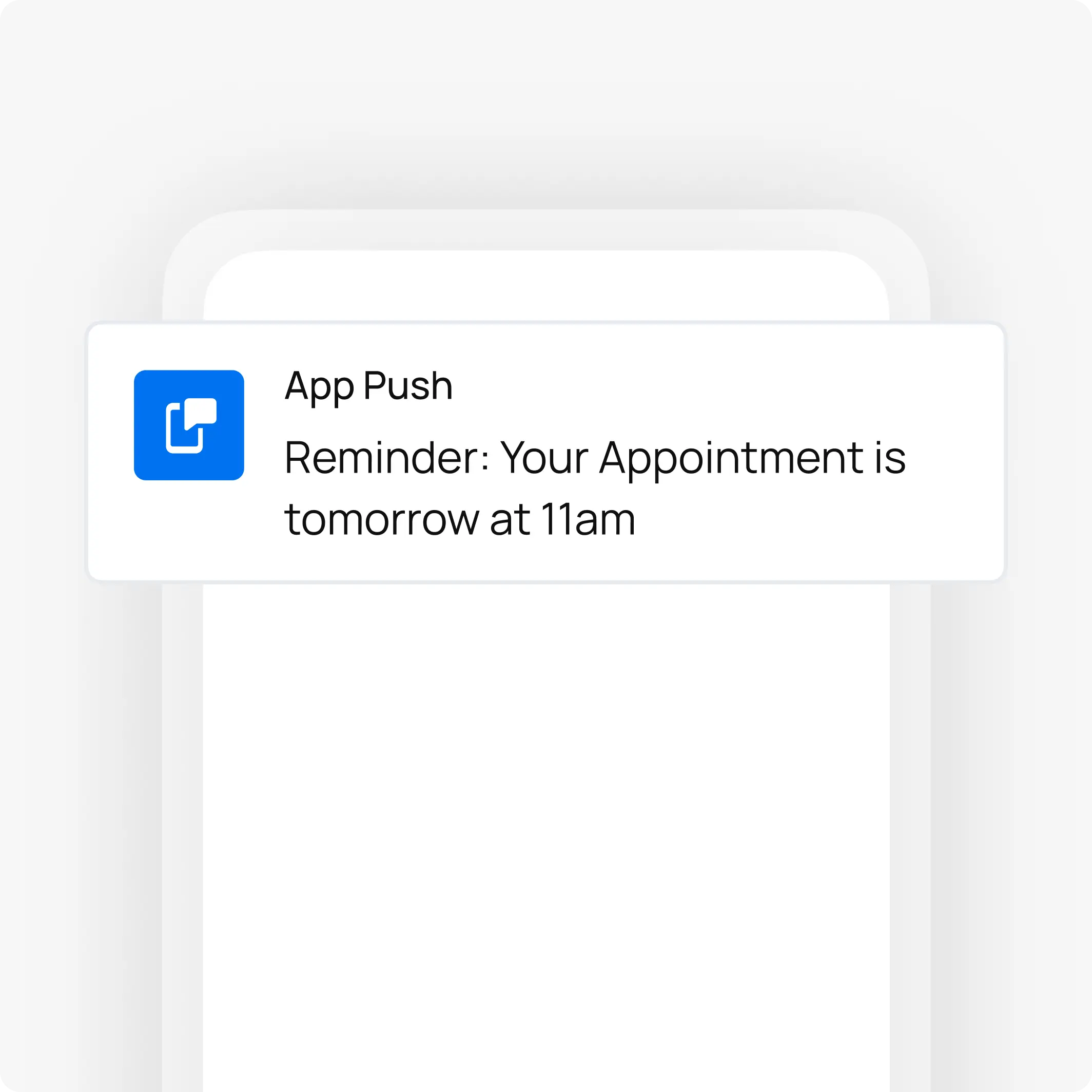
Mobile App Push Notifications are the classic form, delivered directly to a user’s smartphone or tablet through a native app they have installed. They are ideal for nurturing your most loyal customers with rich, interactive content and building a deep, ongoing brand relationship.
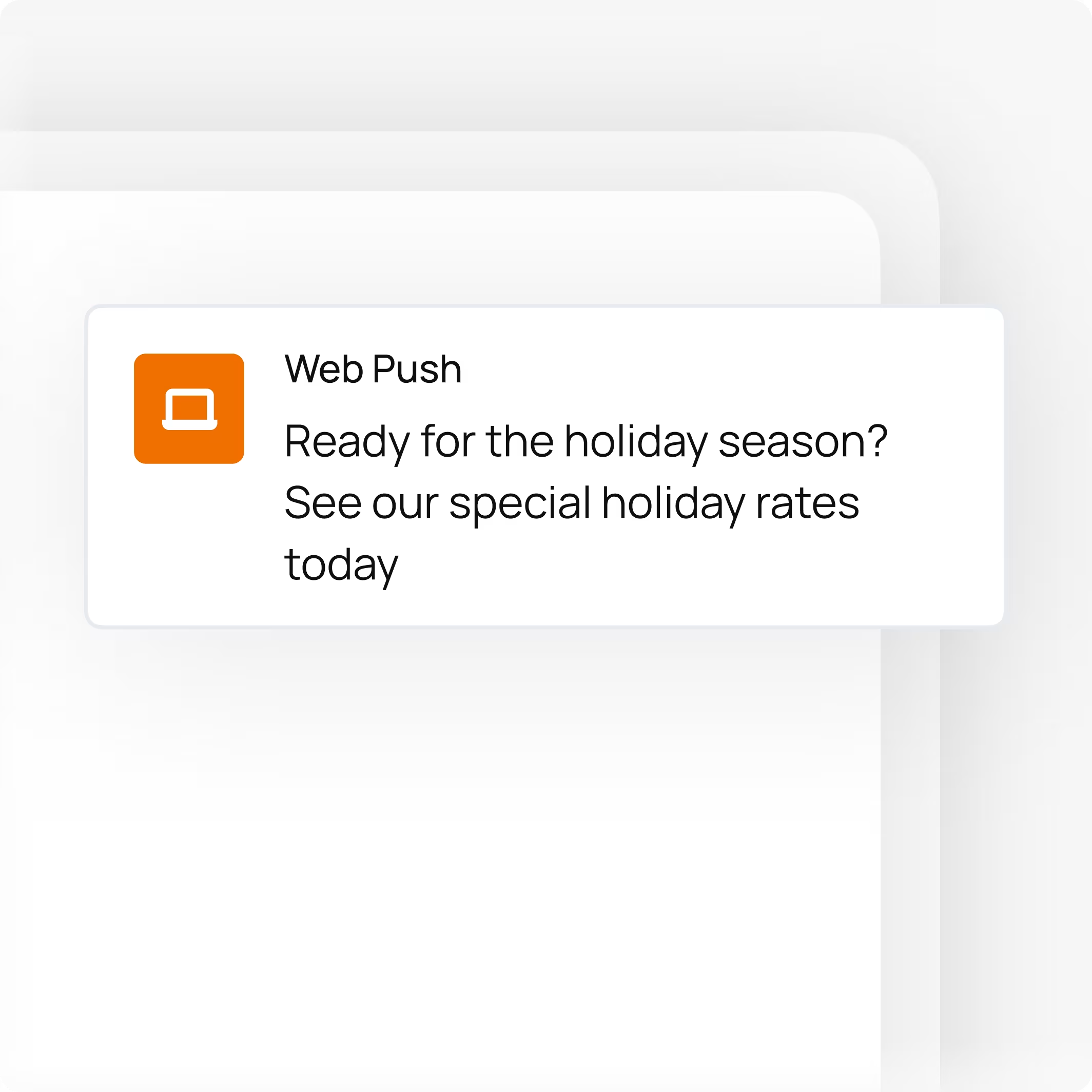
Web Push Notifications are sent via a web browser on desktop or mobile. Their immense value lies in their ability to engage users without requiring an app download, making them perfect for broader audience reach, driving initial conversions, and recovering abandoned carts.
The most advanced strategies in 2026 don’t treat these as separate tools. Instead, they are orchestrated through a unified platform, allowing you to create a seamless Customer Journey where the right message is delivered on the right channel—be it App Push, Web Push, or even WhatsApp—based on real-time user behavior and preferences.
How Do Push Messages Work? A Simple Breakdown
While they appear on your screen in an instant, push messages are the result of a sophisticated and lightning-fast communication process. Understanding this flow is key to troubleshooting and optimizing your campaigns. Let’s demystify the technology that powers every single push.
Think of the process as a secure relay race between three core players, all working in perfect sync to deliver your message.
- The Client (Your App or Website): This is your digital storefront—the user-facing application on a smartphone or the website in a browser. Its job is to request permission from the user and, once granted, receive a unique “address” for that specific device and browser combination.
- The Platform Server (e.g., indigitall): This is your mission control. The indigitall platform securely stores the unique addresses (called push tokens) for all your opted-in users. Here in the indigitall console, you segment audiences, craft your message with rich content, and define the logic for your Customer Journey.
- The Push Notification Service (PNS): This is the dedicated postal service run by the device’s operating system. For Apple devices, it’s the Apple Push Notification Service (APNS), and for Android, Chrome, Firefox, and other browsers, it’s typically Firebase Cloud Messaging (FCM) from Google. Their sole job is to receive instructions from a platform like indigitall and deliver the message to the correct device.
With these players in mind, the journey of a single push notification unfolds in four simple steps:
- Permission and Registration: A user visits your site or opens your app and accepts the prompt to receive notifications. The client then requests a unique push token from the relevant PNS. This token is sent to the indigitall server and linked to that user’s profile.
- Campaign Composition: You log into the indigitall console, create a compelling message, and select your target audience (e.g., “users who abandoned a cart in the last hour”).
- Intelligent Dispatch: When you launch the campaign, the indigitall server sends the message payload and the list of corresponding push tokens to the correct PNS (APNS for iOS, FCM for Android/Web). Our system handles all the complex routing automatically.
- Final Delivery: The PNS takes over, locating each individual device on its network—whether it’s on Wi-Fi or a mobile network—and delivers the push message to the user’s screen. This entire process happens in a matter of seconds.
The Secret to Web Push: The Service Worker
A common question is, “How does a web push work if the user doesn’t have my website open?” The magic behind this is a piece of code called a Service Worker. Think of it as a digital receptionist for your website that runs in the background of the browser.
Even after a user closes your tab, the Service Worker remains active, listening for incoming messages from the PNS. When it receives a notification intended for your site, it wakes up and displays it to the user, creating an app-like engagement experience directly from the browser.
Beyond a Single Message: An Omnichannel Ecosystem
Understanding this technical flow is the foundation. However, in 2026, elite marketing is not about a single channel but about seamless orchestration. A push message is rarely the end of the conversation; it’s a single, powerful touchpoint within a larger Customer Journey.
That push notification about a new product might lead a user to a conversation with an AI Agent on your website or follow up with a detailed offer via WhatsApp. A platform like indigitall provides the unified infrastructure to manage this entire Omnichannel strategy, ensuring every message, on every channel, feels connected and intelligent.
Types of Push Messages Your Business Can Leverage
In 2026, the term “push message” encompasses a vast and dynamic ecosystem of communication formats. Gone are the days of simple text alerts. Today’s push messages are rich, interactive, and intelligent, forming a critical component of any successful Global Omnichannel Strategy. Understanding the different types available is the first step to unlocking their true potential.
A robust platform like indigitall allows you to orchestrate all of these formats from a single console, ensuring your Customer Journey is seamless, personalized, and impactful across every touchpoint.
Rich Push Notifications
The modern standard for engagement, Rich Push Notifications go far beyond text. They allow you to embed compelling media directly into the message, including high-resolution images, videos, GIFs, and even audio clips. This visual appeal dramatically increases click-through rates and brand recall.
Imagine a retailer sending a push with a short video showcasing a new product, or a bank delivering a fraud alert with an embedded infographic on how to secure an account. This level of engagement is now table stakes for cutting through the digital noise.
Interactive & Actionable Push Notifications
These notifications are designed to drive immediate action by reducing friction. By including interactive buttons, you empower users to respond without ever needing to open the app. Common actions include “Add to Cart,” “Track My Order,” “Remind Me Later,” or “RSVP Now.”
Within the indigitall console, these actions can serve as powerful triggers. A user tapping “Remind Me Later” can automatically be entered into a new Customer Journey, ensuring timely and relevant follow-up communication on their preferred channel, be it App Push, WhatsApp, or email.
Transactional & Triggered Push Notifications
Transactional notifications are sent in response to a specific user action or event and are highly anticipated. These include order confirmations, shipping updates, appointment reminders, and password resets. Their value lies in their utility, which builds trust and keeps users informed.
Leveraging marketing automation, you can expand this concept to triggered messages based on behavior, such as abandoned cart reminders or re-engagement prompts for inactive users. This ensures you are communicating with users at the moments that matter most, all automated through a powerful rules engine.
Location-Based Push Notifications (Geofencing & Beacons)
Context is everything, and nothing provides more context than a user’s physical location. Geofencing allows you to trigger messages when a user enters or leaves a predefined geographic area, like a shopping district or a competitor’s store. Beacons offer even greater precision, enabling communication within a store itself.
A telco could welcome a customer to an airport with a special roaming offer, or a retailer could send a “click and collect” notification precisely when the user walks into the store. This hyper-contextual messaging creates a truly personalized and helpful brand experience.
AI-Powered & Predictive Push Notifications
This is the cutting edge of customer engagement in 2026. By integrating generative AI and predictive analytics, your push strategy becomes proactive rather than reactive. The indigitall platform leverages AI to optimize send times, personalize content at scale, and even generate message copy that resonates with specific user segments.
Furthermore, predictive models can identify users at risk of churn or those most likely to convert, automatically triggering a tailored push notification with the perfect offer to maximize Customer Lifetime Value (LTV). This is how leading brands are transforming communication into conversion.
Transactional & Informational Push
Moving beyond promotion, transactional and informational pushes are the backbone of a modern customer service strategy. These messages are not sales-driven; instead, they are direct, automated responses triggered by a specific user action or a critical event within their Customer Journey.
Think of them as a proactive, digital concierge service. By delivering essential information at the precise moment a user needs it, you transform the mobile experience from a simple interface into a truly helpful and responsive ecosystem. This builds immense trust and reduces friction for your customers.
In 2026, users expect this level of service as standard. Here are some high-value examples:
- E-commerce: Instant order confirmations, real-time shipping status updates, and delivery notifications sent via App Push or WhatsApp.
- Banking & Fintech: Secure account alerts for password resets, large withdrawal notifications, or two-factor authentication prompts.
- Travel & Hospitality: Flight status changes, gate information, digital boarding pass delivery, or hotel check-in reminders.
- Services & Appointments: Confirmation of a booked appointment, reminders with links to a virtual session, and follow-up summaries.
The primary benefit here is the profound impact on customer experience (CX) and loyalty. These communications have exceptionally high engagement rates because they provide immediate, contextual value. They answer the user’s question before they even have to ask, demonstrating that your brand is reliable and has their best interests in mind.
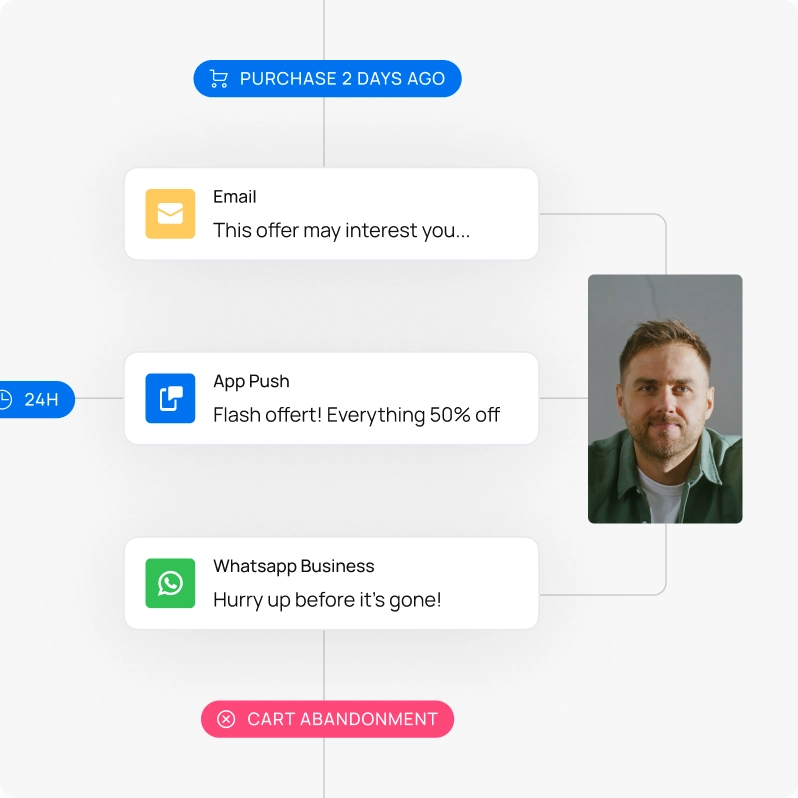
An effective Global Omnichannel Strategy orchestrates these triggers across the most relevant channels. A single purchase event might trigger an email receipt, an App Push to track the order, and a WhatsApp message upon delivery. Managing this complex orchestration is simplified immensely within a unified platform, where you can design and deploy these event-triggered journeys from the indigitall console without writing a single line of code.
Promotional & Marketing Push
Promotional push notifications are the high-impact messages at the core of your mobile marketing strategy. Their primary objective is to directly stimulate user action, whether that means driving immediate sales, boosting app engagement, or directing traffic to new content or product pages.
In the competitive landscape of 2026, these messages are precision-engineered to capture attention and inspire conversion. They are the digital equivalent of a prime retail display, placed directly in the hands of your most valuable customers.
Common and highly effective examples include:
- Flash Sales & Limited-Time Offers: Creating a sense of urgency to accelerate purchase decisions. For example, “⚡ 4-Hour Flash Sale: 30% off our new AI-curated collection starts now!”
- New Product or Feature Launches: Announcing exciting updates to generate buzz and drive early adoption. Imagine sending: “It’s here! Design your custom sneakers with our new generative AI tool. Be the first.”
- Abandoned Cart Reminders: Recovering potentially lost revenue with a timely nudge. A powerful example is a rich push showing the item left behind: “Did you forget something? Your items are waiting.”
- Personalized Content Updates: Nurturing users with relevant content to build brand loyalty, such as “Your weekly market insights report is ready, Alex.”
However, the era of generic message “blasts” is long over. The success of any promotional push in 2026 hinges on one critical element: hyper-personalization. Sending an irrelevant offer is the fastest way to trigger an opt-out. Users now expect and demand communication that understands their behavior, preferences, and purchase history.
This is where the power of a unified platform becomes indispensable. Within the indigitall console, you can orchestrate sophisticated promotional campaigns by leveraging deep segmentation. By connecting data from across your digital ecosystem—app activity, web browsing, and even WhatsApp interactions—you can craft messages that feel uniquely one-to-one, maximizing relevance and ROI for every single send.
Rich Push Notifications
While text-only notifications serve a purpose, the digital landscape of 2026 demands a more immersive and visually compelling approach. This is where Rich Push Notifications excel. They are an evolution of the standard push message, enhanced with media elements like high-resolution images, GIFs, videos, and even interactive components like carousels and customizable Call-to-Action (CTA) buttons.
The impact on user engagement is undeniable. By transforming a simple alert into a rich micro-experience, brands consistently see significantly higher click-through rates (CTR) and conversion events. A visually appealing message that showcases a product or offer is far more likely to capture attention and inspire action than a line of plain text.
Consider the difference in a retail scenario:
- Standard Push: “Flash Sale: 30% off all sneakers today only.”
- Rich Push: A notification featuring a vibrant image of the season’s hottest sneaker, a bold headline like “Step Up Your Style,” and two direct CTA buttons: “Shop Men’s” and “Shop Women’s.”
The second example doesn’t just inform; it entices. It reduces friction by taking users to a more relevant category, directly impacting the path to purchase. With the indigitall console, marketing teams can design and deploy these powerful rich notifications in minutes without requiring any developer support, previewing them across devices to ensure a perfect delivery every time.
Furthermore, a Rich Push Notification is a powerful entry point into a larger Omnichannel Customer Journey. A tap on that notification can trigger a follow-up WhatsApp message with a unique discount code, add a time-sensitive offer to the user’s mobile wallet, or personalize their in-app experience. Orchestrating these sophisticated, multi-channel interactions from a single, unified platform is how leading brands maximize lifetime value in 2026.
Best Practices for a Winning Push Message Strategy
In the hyper-competitive digital landscape of 2026, the difference between a push message that delights and one that disappoints is razor-thin. Users have zero tolerance for irrelevant, generic broadcasts. A sophisticated strategy is no longer a “nice-to-have”—it’s the fundamental key to driving engagement, preventing churn, and maximizing the ROI of your mobile and web channels.
Moving beyond simple batch-and-blast tactics is essential. By adopting the following best practices, you can transform your push notifications from intrusive noise into a valuable, revenue-generating communication channel.
1. Master Hyper-Personalization at Scale
What it is: Going far beyond using a user’s first name. True hyper-personalization in 2026 leverages real-time behavioral data, purchase history, location, and declared preferences to craft messages that feel uniquely individual and contextually aware.
Why it matters: Today’s consumers expect brands to understand their needs and journey. A personalized push, like a notification about a price drop on a previously viewed item, converts dramatically better than a generic “sale” announcement.
How indigitall empowers this: Our platform allows you to seamlessly integrate with your existing data sources (CDPs, CRMs) and use dynamic content placeholders within your messages. This lets you reference specific products, loyalty point balances, or recent activities to create a true one-to-one conversation, all managed from the indigitall console.
2. Leverage AI-Powered Predictive Segmentation
What it is: Using artificial intelligence and machine learning to group users based on their predicted future behavior, not just their past actions. This means creating segments of users who are “likely to churn,” “at risk of cart abandonment,” or “high-potential VIPs.”
Why it matters: Predictive segmentation allows you to be proactive. You can engage a user at risk of churning with a special offer before they become inactive, or target a likely high-spender with an exclusive preview, boosting Customer Lifetime Value (LTV).
How indigitall empowers this: indigitall provides advanced segmentation tools that combine demographic, behavioral, and transactional data. Our AI models help you identify these valuable predictive audiences automatically, ensuring your most critical messages reach the users who need to see them most.
3. Orchestrate True Omnichannel Customer Journeys
What it is: Viewing a push notification as a single step in a larger, cohesive conversation that spans multiple channels. For example, a web push about an abandoned cart could trigger a follow-up WhatsApp message with a discount code 24 hours later if the purchase isn’t completed.
Why it matters: A siloed channel strategy is obsolete. An omnichannel approach provides a seamless, persistent experience for the user, reinforcing your message and guiding them smoothly down the conversion funnel. It acknowledges that your customer exists across your app, website, and other platforms.
How indigitall empowers this: Our visual Customer Journey builder is the core of our platform. It enables you to design and automate sophisticated workflows that connect Push Notifications with In-App Messages, WhatsApp Business, Mobile Wallet, and more, all from a single interface. This is the key to delivering a truly integrated brand experience.
4. Embrace Rich, Interactive Content
What it is: Moving beyond text-only alerts to include high-impact images, GIFs, short videos, and interactive buttons. These buttons can perform actions like “Add to Wallet,” “Shop Now,” or “Remind Me Later” directly from the notification.
Why it matters: The human brain processes visuals exponentially faster than text. Rich content captures attention in a crowded notification tray, communicates your message more effectively, and reduces friction by allowing users to take immediate action.
How indigitall empowers this: The indigitall console features a user-friendly editor for creating compelling rich push notifications for both app and web. You can easily add media and configure custom action buttons to drive higher click-through rates and deeper engagement.
5. Continuously Test, Learn, and Iterate
What it is: Systematically using A/B/n testing to optimize every element of your push notifications. This includes testing different headlines, message copy, emojis, images, calls-to-action, and even send times.
Why it matters: Assumptions are the enemy of growth. Data-driven optimization is the only reliable way to improve performance over time. What works for one audience segment may not work for another, and continuous testing uncovers these crucial insights.
How indigitall empowers this: Our platform includes robust, easy-to-use A/B testing functionality. You can quickly set up experiments, send variations to different control groups, and analyze the results in our clear, actionable dashboards to make smarter decisions for your next campaign.
1. Earn Permission, Don’t Demand It
In the digital landscape of 2026, the “ask on first launch” strategy for push notifications is a relic of the past. Today’s users are savvier and more protective of their digital space than ever. Gaining permission to send a message is the first, and most critical, handshake in building a lasting customer relationship; it must be earned through trust and a clear value proposition.
The key is to preface the native OS permission dialog (the one from Apple or Google) with a custom “pre-permission” screen. This screen is your opportunity to explain why a user should opt-in. Instead of a generic “Allow notifications?” you can communicate the direct benefit: “Get real-time shipping updates” or “Be the first to know about exclusive drops.” This transforms the request from an interruption into an invitation.
Timing and context are everything. Triggering the permission prompt based on a user’s actions demonstrates that you understand their intent and are offering relevant value. Consider these powerful moments:
- After a user favorites a product: Prompt them to receive alerts on price drops or back-in-stock notifications.
- Following a successful purchase: Ask for permission to send order confirmations and delivery tracking updates.
- When a user engages with specific content: Offer to notify them when similar articles or videos are published.
This thoughtful approach isn’t limited to just app push. It’s a core component of a Global Omnichannel Strategy. Earning permission on one channel, like web push, can be the start of a broader conversation that extends to WhatsApp, SMS, or Mobile Wallet passes, creating a truly connected Customer Journey.
Orchestrating these contextual triggers across multiple channels and user segments can be complex. An integrated platform allows you to design, test, and deploy these permission strategies from the indigitall console, ensuring every user receives the right request at the perfect moment, maximizing your opt-in rates and setting the stage for meaningful engagement.
2. Master Segmentation and Personalization
In 2026, the era of the generic, one-size-fits-all broadcast message is definitively over. Today’s consumers expect and demand communication that understands their individual needs, context, and history with your brand. Sending the same push notification to your entire user base is the fastest way to increase opt-outs and be perceived as noise.
The key to breakthrough engagement is deep segmentation. This means dividing your audience into smaller, more specific groups based on shared characteristics. By doing so, you can craft hyper-relevant messages that resonate on a personal level, driving action and building loyalty.
Effective segmentation goes far beyond basic demographics. With a powerful platform, you can orchestrate campaigns based on a rich tapestry of user data:
- Behavioral Data: Target users based on actions they have (or haven’t) taken. This includes abandoned carts, products viewed, features used, last login date, or engagement with past campaigns.
- Purchase History: Create segments for high-value customers, first-time buyers, or users who have purchased from a specific category. This allows for powerful cross-sell and upsell opportunities.
- Location & Geofencing: Send timely offers to users when they enter a specific geographical area, like a retail store or a competitor’s location, turning physical presence into a digital opportunity.
- User Preferences & Attributes: Honor the explicit preferences users have shared. Segment based on language, communication frequency choices, or interests they have declared within your app or website.
The indigitall console is engineered to make this sophisticated segmentation seamless. Our tools empower you to build dynamic segments that automatically update as user behavior changes, ensuring your message is always delivered to the right person at the precisely the right moment. This is the core of a successful Global Omnichannel Strategy, allowing you to apply these same intelligent segments across App Push, WhatsApp, Web Push, and SMS for a truly consistent and personalized Customer Journey.
3. Perfect Your Timing and Frequency
In the digital landscape of 2026, attention is the most valuable currency. Sending a push notification is an interruption by nature, and the line between a welcome alert and a digital nuisance is incredibly thin. Getting the timing and frequency wrong is the single fastest way to trigger an app uninstall or a web notification block.
Bombarding users with constant messages creates notification fatigue, while sending a promotion at 3 AM shows a fundamental lack of respect for their time. This is no longer just a best practice; it’s a baseline expectation for any brand that wants to build a lasting relationship with its audience.
The solution is to move beyond manual segmentation and generic scheduling. Modern customer engagement demands intelligent, individualized delivery. The goal is to deliver your message not when it’s convenient for your team, but at the exact moment each individual user is most likely to be receptive and engage.
This is where the power of AI becomes a marketer’s greatest asset. The indigitall platform leverages Indigitall AI to analyze billions of engagement data points across our network. Our predictive engine learns the unique behavioral patterns of each user—when they open your app, when they browse your site, and when they interact with past messages—to determine their personal optimal delivery time.
Best of all, this sophisticated technology is made simple. Within the indigitall console, activating intelligent delivery is as easy as flipping a switch during campaign creation. This empowers non-technical teams to achieve a level of personalization that was once the exclusive domain of data science departments. This precision is a core part of a successful Global Omnichannel Strategy, ensuring that whether you’re sending an App Push, a WhatsApp message, or a Web Push, it always arrives at the perfect moment.
By optimizing send times on a 1-to-1 basis, you not only drastically reduce the risk of uninstalls but also significantly boost open rates, click-throughs, and conversions. It’s about working smarter, showing respect for your customer’s digital space, and ensuring every message you send has the maximum possible impact.
4. Write Compelling, Action-Oriented Copy
In the digital ecosystem of 2026, a user’s screen is a battleground for attention. The most sophisticated delivery system means nothing if the message itself doesn’t resonate. Your copy is the core of your push notification; it’s the hook that transforms a simple alert into a meaningful engagement.
Effective push copy is an art and a science, built on a few core principles that drive action. Let’s break down how to master it.
- Keep It Short & Scannable: Mobile attention spans are measured in milliseconds. Your message must be instantly understandable. Aim for a concise headline that grabs attention and a sub-text that provides essential context without overwhelming the user.
- Create Urgency and Relevance: Why should the user act now? Use time-sensitive language like “24-hour flash sale,” “Offer ends tonight,” or “Your cart expires soon” to encourage immediate action. Personalization is key here; a message that feels relevant to the user’s recent activity will always outperform a generic blast.
- Use Emojis Strategically: Emojis are no longer just a gimmick; they are a powerful visual language. A well-placed emoji can convey emotion, draw the eye, and increase open rates. 💡🚀⚡️ Use them to add personality and visual punctuation to your message, but ensure they align with your brand’s voice.
- Have a Clear Call-to-Action (CTA): Don’t leave your users guessing. Tell them exactly what you want them to do with a strong, action-oriented verb. Instead of “New offers available,” use “Shop Now,” “Claim Your Discount,” or “Read the Full Story.” The CTA is the bridge from the notification to the conversion.
Guesswork has no place in a high-performance marketing strategy. The single most effective way to refine your messaging is through continuous testing. This is where a unified platform becomes a powerful asset for your team.
Within the indigitall console, you can effortlessly set up A/B/n tests for any element of your push notification. Test different headlines, body copy, emojis, and CTAs to see what truly resonates with your audience segments. This data-driven approach allows you to optimize for higher click-through rates and conversions, turning each send into a valuable learning opportunity that informs your global Omnichannel strategy.
Common Challenges (and How a Unified Platform Solves Them)
Even in 2026, many marketing teams find themselves troubleshooting the same frustrating push notification issues: messages that fail to send, unexplained delays, and inconsistent delivery. While it’s easy to blame these on technical glitches, they are often symptoms of a much deeper problem: a fragmented and disconnected technology stack.
Let’s explore the most common challenges and see how a unified, omnichannel platform like indigitall proactively solves them from the ground up.
- Challenge 1: Delivery Failures and LatencyYour team designs the perfect flash sale notification, but it arrives two hours late for half your audience, long after the offer has expired. This isn’t just a bug; it’s a critical failure in infrastructure and orchestration, often caused by using separate, bolted-on tools for different channels.
The Unified Solution: A platform built for enterprise-scale delivery ensures reliability is core to the system, not an afterthought. With indigitall, all channels—from App and Web Push to WhatsApp and SMS—are managed through a single, robust infrastructure. This eliminates points of failure and ensures your time-sensitive messages are delivered with precision and speed, every time.
- Challenge 2: The Fragmented Customer JourneyA user gets an abandoned cart reminder via app push. Later, they visit your website and see a generic pop-up that doesn’t acknowledge their previous interaction. This siloed approach creates a disjointed and confusing experience, actively working against your conversion goals.
The Unified Solution: True engagement requires a Global Omnichannel Strategy where every channel is in constant communication. The indigitall platform serves as the central brain for your Customer Journey orchestration. It knows a user received an app push, so it can intelligently adapt the web experience or follow up with a personalized message on WhatsApp, creating one seamless, intelligent conversation.
- Challenge 3: The Data Black HoleYour campaign data is scattered. Click-through rates are in one system, in-app conversion data is in another, and customer support interactions live somewhere else entirely. You can see *what* happened, but you can’t easily understand *why* or how to optimize for the future.
The Unified Solution: An all-in-one platform provides a single source of truth. Within the indigitall console, you can track a user’s entire journey across every touchpoint. This holistic view transforms data from a confusing puzzle into actionable insights, allowing you to build smarter segments, personalize more effectively, and maximize customer lifetime value.
Ultimately, the challenges of modern customer engagement are not solved by adding more standalone tools. They are solved by unifying your strategy and technology into a cohesive ecosystem designed for orchestrating powerful, reliable, and intelligent experiences.
Why Indigitall is the Smarter Choice for Push Messaging
In the crowded 2026 customer engagement market, you have choices. Enterprise solutions like Salesforce Marketing Cloud or Braze offer powerful, complex toolkits. However, modern marketing teams need more than just features; they need agility, efficiency, and a clear path to ROI.
This is where indigitall provides a distinct and strategic advantage. We designed our platform from the ground up to empower marketers and developers to achieve results faster, without the prohibitive costs and lengthy implementation cycles associated with legacy platforms.
While Push Notifications are a critical channel, their true power is unlocked when they function as part of a seamless, Global Omnichannel Strategy. At indigitall, Push isn’t an isolated tool—it’s a core component of a unified ecosystem that connects every customer touchpoint.
Here’s what sets the indigitall approach apart:
- True Omnichannel Orchestration: Unlike platforms where channels feel bolted on, the indigitall console provides a single view to orchestrate Customer Journeys across App Push, Web Push, WhatsApp Business, AI Agents, and Mobile Wallet. This native integration means you can seamlessly move conversations between channels to maximize engagement and conversion.
- Drastically Faster Time-to-Value: The market in 2026 moves too fast for six-month implementation projects. Our intuitive interface and streamlined SDKs empower your team to go live in weeks, not quarters. You can start driving revenue and boosting LTV almost immediately, leaving competitors stuck in setup meetings.
- Superior Total Cost of Ownership (TCO): We deliver enterprise-grade power without the enterprise-grade complexity or hidden fees. Our transparent model avoids the ballooning costs for professional services, specialized administrators, and third-party integrations that often plague other solutions. indigitall empowers your existing team to achieve more.
- A Focus on Partnership: We succeed when you do. Our clients consistently praise our expert support and strategic guidance. We act as an extension of your team, helping you navigate the complexities of digital transformation and build customer engagement strategies that deliver measurable results.
Choosing a platform is about more than features; it’s about choosing a partner and a philosophy. If you value speed, efficiency, and a truly unified view of your customer, indigitall is the smarter choice for your push messaging and broader engagement strategy.
Unify Inbound & Outbound Engagement
In today’s digital landscape, the line between marketing and customer support has blurred. Yet, most platforms still operate in silos, forcing brands to use separate tools for outbound campaigns (like push notifications) and inbound service (like support chats). This fragmentation creates a disjointed and frustrating experience for the modern customer.
indigitall bridges this critical gap by orchestrating both outbound and inbound communication within a single, unified ecosystem. Our platform is engineered to manage the complete customer lifecycle, not just isolated interactions. This ensures every conversation is contextual and seamless.
Consider this powerful Customer Journey, easily built within the indigitall console:
- Outbound Promotion: A retail customer receives a personalized app push message about a limited-time offer on a product they recently viewed.
- Inbound Inquiry: The user has a question about product specifications. Instead of searching a website, they tap a “Ask a Question” button directly in the notification, which opens a conversation in WhatsApp.
- Seamless Transition: The AI Agent or human support specialist who receives the message instantly sees the user’s profile and the exact promotional push they are responding to. There’s no need for the customer to repeat themselves.
This is the power of a Global Omnichannel Strategy in action. The initial touchpoint (outbound) flows naturally into a support conversation (inbound), creating a single, continuous dialogue. By managing both streams, indigitall provides a complete view of every user, empowering your teams to drive conversions and build lasting loyalty.
Go Beyond Push with Native WhatsApp Integration
While push notifications are a cornerstone of modern digital strategy, the most successful brands in 2026 understand they are one powerful instrument in a much larger orchestra. True customer loyalty is built on a seamless, omnichannel dialogue that meets users where they are, on the channels they prefer.
This is where conversational messaging takes center stage. To elevate your strategy from broadcasting to genuine conversation, you need a channel that supports rich media, interactive elements, and two-way communication. Enter WhatsApp, the world’s most popular messaging app.
The indigitall platform features a deep, native WhatsApp Business API integration, allowing you to manage and automate rich, conversational experiences directly from the same console you use to design your push campaigns. This isn’t a third-party add-on; it’s a core component of our omnichannel ecosystem, designed for perfect orchestration.
By integrating WhatsApp into your Customer Journeys, you unlock a new dimension of engagement:
- Transactional Excellence: Send rich order confirmations, shipping updates with real-time tracking buttons, and boarding passes directly to your customer’s most-used app.
- Conversational Commerce: Guide users through product discovery with carousels, answer questions with AI-powered agents, and drive conversions with quick-reply buttons.
- Proactive Support: Automate responses to common inquiries, provide instant support, and seamlessly escalate complex issues to live agents within the same chat thread.
- Smarter Re-engagement: Follow up on an abandoned cart push notification with an interactive WhatsApp message offering a discount or suggesting alternative products.
Unifying push notifications and WhatsApp within a single platform like indigitall allows you to create sophisticated, trigger-based Customer Journeys. You can orchestrate a flow where a push is the first touchpoint, and a WhatsApp message is the powerful follow-up, maximizing your reach and impact for a truly connected customer experience.
Conclusion: Make Every Message Matter
Throughout this guide, we’ve seen how push messages have evolved into a cornerstone of direct user engagement. In 2026, they are far more than simple alerts; they are a vital, real-time channel for building relationships, driving action, and delivering value in an increasingly competitive digital ecosystem.
However, their effectiveness is not guaranteed. Success hinges on a sophisticated and strategic approach. The line between a welcome interaction and an unwelcome interruption is defined by your ability to master hyper-personalization, predictive timing, and the consistent delivery of content that genuinely benefits your user.
Executing this at scale is where a powerful, unified platform becomes a non-negotiable asset. A solution like indigitall empowers you to elevate your strategy from isolated notifications to fully orchestrated, Omnichannel Customer Journeys. It’s the key to transforming push messages from a single touchpoint into the start of a meaningful conversation that drives business growth.
By connecting App Push, Web Push, WhatsApp Business, and other channels within a single console, you can create the seamless experiences that modern consumers expect. This is how you ensure every message you send doesn’t just get delivered, but truly matters.
Ready to see how a unified push message strategy can transform your customer engagement? Request a demo of indigitall today.