indigitall Omni AI
  Start chat with AI agent
 Speak with AI voice agent
 Book a Demo

 Speak to an Expert












The Anatomy of a High-Growth CJ: Mapping touchpoints from discovery to repeat purchase
May 8, 2026


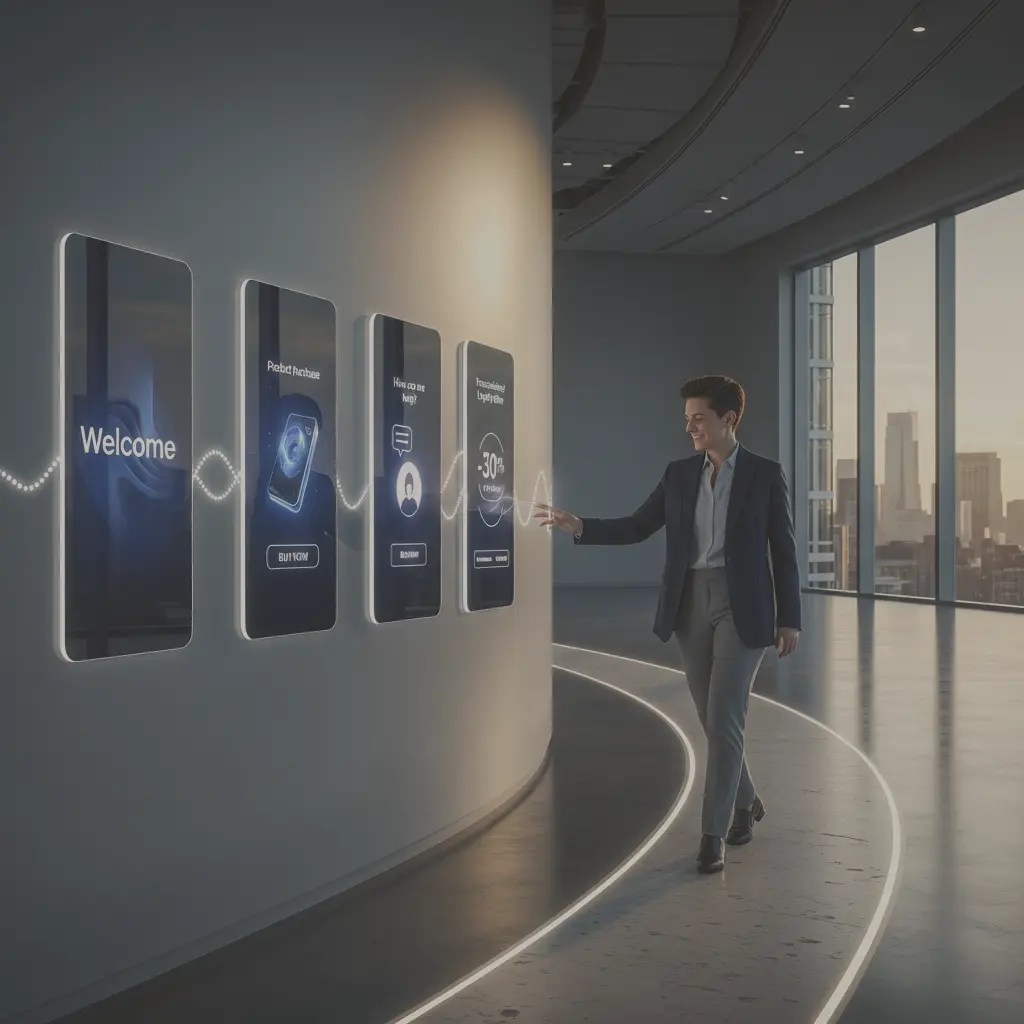
The Anatomy of a High-Growth CJ: Mapping touchpoints from discovery to repeat purchase
In today’s enterprise, the customer journey (CJ) is dangerously fragmented. Customers interact with brands across an average of six touchpoints, but these worlds—marketing’s outbound messages versus support’s inbound queries—rarely connect. The result is a disjointed experience that leaks revenue, erodes loyalty, and inflates operational costs. Mapping a high-growth customer journey isn’t about creating more touchpoints; it’s about orchestrating them into one continuous, intelligent conversation.
Legacy platforms treat the journey like a series of disconnected handoffs. A prospect clicks an ad, a customer asks for help, a loyal user gets a promotion. To the customer, it’s one brand. To the business, it’s three different departments using three different systems. At indigitall, we see this not as a plumbing problem, but a strategy problem. True growth comes from unifying these moments into a single, chronological experience powered by AI.
Why Most Customer Journeys Fail to Drive Growth
The primary failure of modern customer journeys is fragmentation. When your marketing automation platform (like Braze or Salesforce) doesn’t talk to your support system, you create frustrating knowledge gaps. A high-value client seeking help with a transaction shouldn’t receive a generic marketing offer moments later. This disconnect stems from two core issues:
- Siloed Technology: Different platforms manage different stages of the funnel, creating a broken view of the customer. You have ‘Titans’ for outbound campaigns and ‘Specialists’ for chatbots, but no one is managing the entire conversation.
- Disconnected Data: Without a unified Customer Data Platform (CDP) at the core, personalization is impossible. You can’t nurture a long-term relationship if you only have a snapshot of a single interaction.
The solution is to architect a journey where every interaction informs the next, seamlessly blending proactive marketing with responsive, AI-driven support.
The Anatomy of a High-Growth Customer Journey: Mapping Key Touchpoints
A successful journey anticipates customer needs and guides them from initial curiosity to long-term advocacy. Here’s how indigitall orchestrates each stage by mapping the right channel to the right moment.
Stage 1: From Anonymous Visitor to Known Lead
The journey begins before you even know a user’s name. The goal here is to capture attention and earn the right to communicate directly.
- The Touchpoint: A first-time visit to your website.
- The Traditional Way: Hope they fill out a form or accept cookies.
- The indigitall Way: Engage them instantly with Web Push Notifications. You can reach anonymous visitors on both desktop and mobile (including iOS 16.4+), driving traffic back to your site without needing any personal data. Our clients see a +30% increase in website traffic using this strategy. On-site, an AI Lead Generation Agent can engage visitors, answer initial questions, and capture key information to convert them into a high-quality lead.
Stage 2: From Lead to First Purchase
This is the critical conversion moment where friction can kill a sale. The focus is on seamless onboarding and recovering lost opportunities.
- The Touchpoint: Account registration, form submission, or an abandoned cart.
- The Traditional Way: A generic ‘Forgot something?’ email sent hours later.
- The indigitall Way: Orchestrate a real-time recovery sequence. A user abandons a complex bank registration? Trigger a secure Encrypted Push Notification to help them complete it. A shopper leaves a full cart? Send an interactive RCS or WhatsApp message with product images and a direct link to checkout. This level of retargeting achieves a CTR of up to 50% and is proven to increase Customer Lifetime Value (LTV) by up to 80%.
Stage 3: From First Purchase to Active User
The relationship has just begun. Post-purchase is where you build trust by unifying proactive updates with instant, 24/7 support.
- The Touchpoint: Order confirmations, shipping updates, and ‘How-to’ questions.
- The Traditional Way: Siloed email notifications and a separate, overwhelmed contact center.
- The indigitall Way: Deliver proactive utility messages via the customer’s preferred channel, like WhatsApp. When they have a question (‘Where is my order?’), our AI Agents provide an instant answer. This automated, self-service approach resolves up to 75% of inquiries without human intervention, leading to a 40-60% reduction in customer support costs. The conversation history is stored in our built-in CDP, ensuring a human agent has full context if an escalation is needed.
Stage 4: From Active User to Brand Advocate
The final stage is about transforming satisfied customers into repeat buyers and loyal fans. This requires deep personalization based on a complete behavioral history.
- The Touchpoint: Repeat purchase opportunities, loyalty programs, and in-store visits.
- The Traditional Way: Mass-market discounts that devalue the brand.
- The indigitall Way: Leverage the 360-degree customer view in our CDP to deliver truly personal offers. Use Mobile Wallet to issue a digital loyalty card that lives on their phone’s lock screen. Use geofencing to trigger a timely push notification with a relevant coupon when they walk by a physical store. This strategy is proven to drive a 35% increase in repurchase rates and turn customers into lifelong advocates.
Beyond Mapping: Orchestrating One Continuous Experience 🚀
Mapping touchpoints is just the first step. The world’s leading brands don’t just map the journey—they orchestrate it. A high-growth strategy requires a platform built not just to send messages, but to manage the entire inbound and outbound conversation intelligently.
By unifying AI-powered support with marketing automation in a single platform, indigitall eliminates the fragmentation that holds businesses back. We provide the intelligence layer, not just the ‘plumbing’, to ensure every interaction matters.
Ready to transform your fragmented touchpoints into a unified, high-growth engine? It’s time to build one continuous experience.