indigitall Omni AI
 Start chat with AI agent
 Speak with AI voice agent
 Free demo

 Contact Sales












Enterprise Marketing Automation: A 2026 Guide to Unified Platforms



What is Enterprise Marketing Automation (And Why the Old Definition is Obsolete)
At its core, enterprise marketing automation is a sophisticated software ecosystem designed to help large organizations manage, automate, and measure marketing workflows at immense scale. It’s the engine that powers complex campaigns, personalized communication, and data-driven decisions across a global customer base.
By 2026, a certain set of features are considered absolute table stakes for any platform in this category. These are the non-negotiables that enable enterprises to operate effectively in a competitive digital landscape:
- Massive Scalability: The ability to process billions of data points and engage millions of users without compromising performance or speed.
- Advanced Segmentation: Moving beyond simple demographics to create dynamic, behavior-based audiences for hyper-personalized messaging.
- Robust Analytics & Reporting: Providing a clear, real-time view of campaign performance, customer behavior, and ROI from a single source of truth.
- Global Omnichannel Orchestration: Seamlessly managing campaigns across a diverse mix of channels, including App Push, Web Push, WhatsApp, Mobile Wallet, and SMS.
- Enterprise-Grade Security & Compliance: Adhering to strict global data privacy regulations like GDPR and CCPA, with robust security protocols to protect sensitive customer data.
However, this traditional definition contains a critical, outdated flaw. For years, it created an artificial wall between “marketing” (outbound, promotional communication) and “customer support” (inbound, reactive communication). This siloed approach results in a disjointed and frustrating customer experience where the left hand doesn’t know what the right hand is doing.
The paradigm has shifted. Today’s customers don’t see a difference between a marketing message and a support ticket—they just see one brand and expect one continuous conversation. The true goal is no longer just marketing automation; it’s unified customer engagement.
This modern approach dissolves the silos, integrating promotional campaigns, transactional alerts, and AI-powered customer service into a single, cohesive Customer Journey. It’s about creating a fluid, two-way dialogue on the channels customers prefer, which is precisely what a truly unified platform is built to deliver.
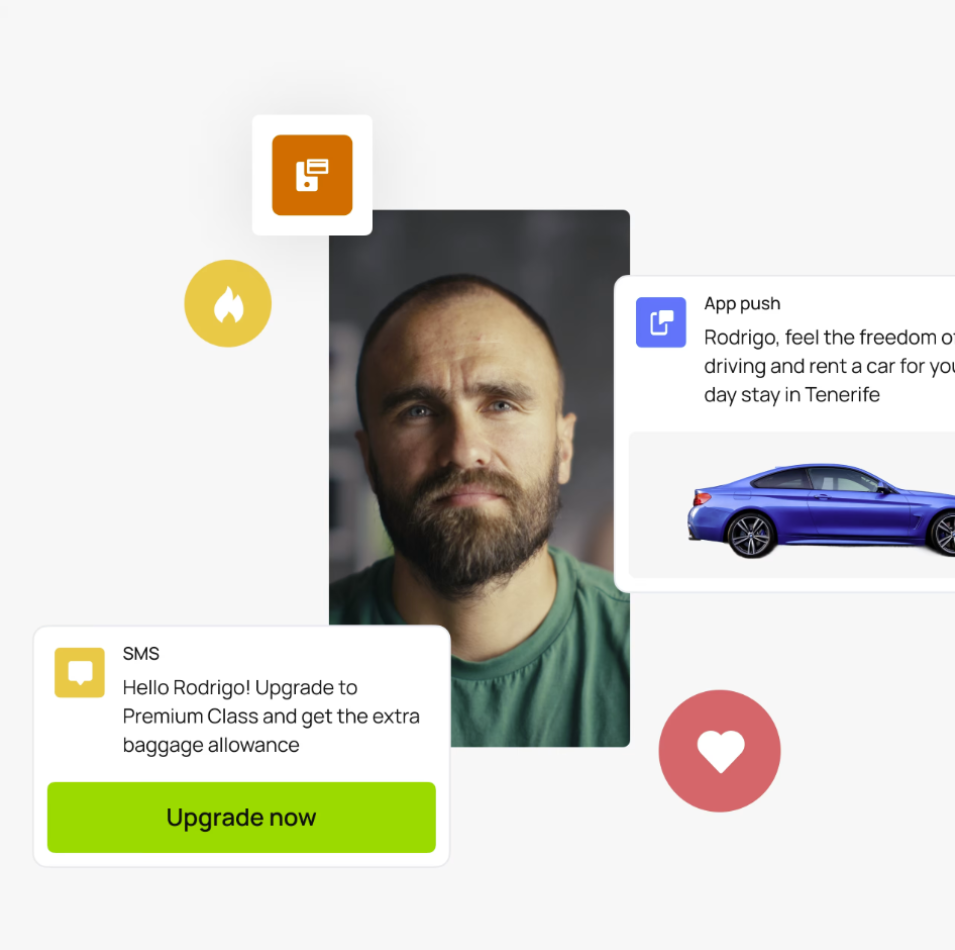
Key Pillars of a Modern Enterprise Engagement Platform
As we navigate the hyper-competitive landscape of 2026, the definition of an effective marketing automation platform has fundamentally evolved. Moving beyond fragmented tools is no longer a strategic advantage—it’s a baseline requirement. Selecting the right partner requires a modern checklist focused on true unification and intelligent orchestration.
Evaluating any potential solution against these five core pillars will ensure your technology stack is not just current, but a powerful engine for future growth. Consider this your essential framework for making an informed, future-proof decision.
- True Omnichannel OrchestrationThis is the absolute cornerstone. In 2026, omnichannel means more than just using multiple channels; it’s about creating a single, continuous conversation with the customer. A leading platform must seamlessly manage interactions across every digital touchpoint, including App Push, Web Push, WhatsApp Business, RCS, Email, and In-App Messaging, all from a unified console.The goal is to empower you to design a Customer Journey where a user can start on your website, receive a follow-up via WhatsApp, and get a personalized offer through a push notification—all based on their real-time behavior and preferences. This is the foundation of a modern global engagement strategy.
- AI-Powered Personalization at ScaleGeneric segmentation is a relic of the past. Today’s platforms must leverage advanced AI to deliver true one-to-one personalization for millions of users simultaneously. This includes using generative AI to craft hyper-relevant message variations and predictive analytics to anticipate customer needs before they arise.An intelligent platform doesn’t just send messages; it predicts the optimal channel, timing, and content for each individual user to maximize engagement and lifetime value. This is how enterprises drive meaningful conversion without overwhelming their audience.
- A Unified Customer Data FoundationSiloed data is the enemy of effective engagement. A modern enterprise platform must act as a central nervous system, ingesting data from every touchpoint to build a comprehensive, 360-degree view of each customer. This single source of truth is what fuels intelligent segmentation and real-time journey orchestration.Without a unified data model, true personalization is impossible. An all-in-one solution inherently solves this by ensuring that data from a web interaction is immediately available to inform a mobile app or WhatsApp communication.
- Developer-Friendly API & ExtensibilityYour engagement platform cannot be a walled garden. To create a truly cohesive customer experience ecosystem, it must integrate seamlessly with your existing technology stack. This requires a robust, well-documented, and flexible API.Look for a platform that allows your development teams to easily connect to your CRM, e-commerce engine, BI tools, and internal systems. This extensibility ensures that your marketing and product teams can innovate quickly and build custom experiences on a solid foundation.
- Enterprise-Grade Security & ScalabilityFor any enterprise, trust is non-negotiable. A modern platform must be built to handle billions of events and messages with flawless reliability while adhering to the most stringent global security and data privacy standards like GDPR. This includes end-to-end encryption, robust access controls, and transparent data processing policies.Scalability ensures that as your business grows, your engagement capabilities grow with you, maintaining peak performance during high-traffic events like major sales or product launches.
1. Scalability, Security, and Compliance
In the enterprise ecosystem of 2026, these three pillars are not features; they are the fundamental price of entry. For any marketing automation platform to be considered truly enterprise-grade, it must demonstrate uncompromising excellence in its ability to scale operations, secure data, and navigate a complex global regulatory landscape.
Scalability is about more than just handling a large database. It’s the proven capacity to orchestrate millions of real-time interactions and process billions of data points without latency. A truly scalable platform seamlessly executes high-volume messaging campaigns across a Global Omnichannel Strategy—from App Push and Web Push to WhatsApp Business—even during peak demand like seasonal sales or flash promotions.
Alongside this immense scale comes the critical need for robust security. As digital threats become more sophisticated, your customer data platform cannot be a vulnerability. This means end-to-end encryption, secure API integrations, and granular access controls are non-negotiable. An integrated platform like indigitall provides a significant advantage by centralizing security protocols, reducing the attack surface often created by a fragmented martech stack.
Finally, compliance is the bedrock of customer trust. Navigating the intricate web of international data privacy laws, from GDPR to evolving regional mandates, requires a platform built with compliance at its core. An enterprise solution must provide the tools for transparent consent management, data residency, and effortless fulfillment of data subject rights, ensuring your Customer Journey strategies are not only effective but also fully compliant.
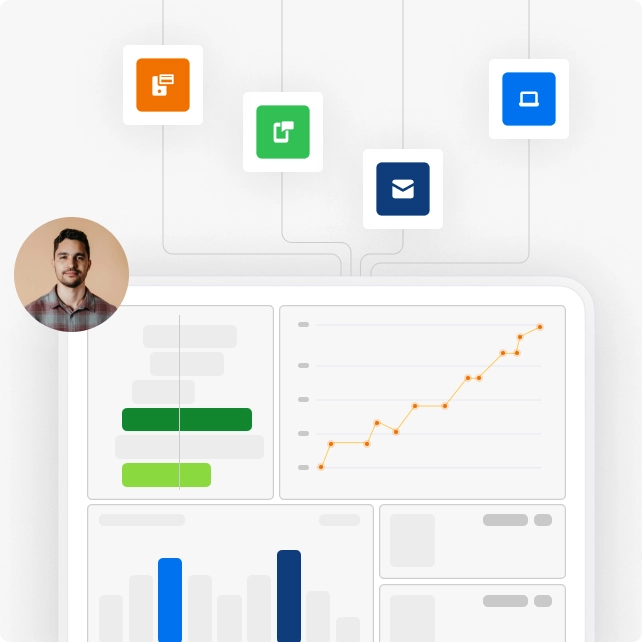
2. True Omnichannel Orchestration
In 2026, the distinction between “multi-channel” and “omnichannel” is more critical than ever. A multi-channel approach simply means using various platforms to talk at your customers—an email here, an SMS there. True omnichannel orchestration, however, is about creating a single, unified conversation that flows seamlessly with the customer across every touchpoint.
This strategy transforms disparate interactions into a cohesive and persistent Customer Journey. It’s the difference between shouting messages from different rooms and having one intelligent, continuous dialogue that adapts to the customer’s context and preferences.
The Core Channels vs. The Conversational Frontier
Any modern enterprise platform provides the foundational channels: Email, SMS, App Push Notifications, and Web Push. These are the table stakes. However, a truly unified platform must go beyond these one-way broadcasts and deeply integrate the channels where customers actually want to have a conversation.
This is where WhatsApp Business emerges as a non-negotiable pillar of a global omnichannel strategy. For too long, marketing automation platforms have treated WhatsApp as an afterthought—a third-party “add-on” connected via a clunky API. This approach creates data silos and prevents genuine orchestration, leading to disjointed customer experiences.
At indigitall, we build for the future of engagement by treating conversational channels like WhatsApp as native, first-class citizens within our ecosystem. This means you can design a Customer Journey in the indigitall console that starts with a targeted push notification, transitions to an interactive WhatsApp conversation powered by an AI Agent, and concludes with a summary email, all orchestrated from a single, unified interface.
This native integration ensures every interaction, regardless of the channel, enriches the customer profile, providing a single source of truth and enabling truly personalized, context-aware communication that drives retention and maximizes lifetime value.
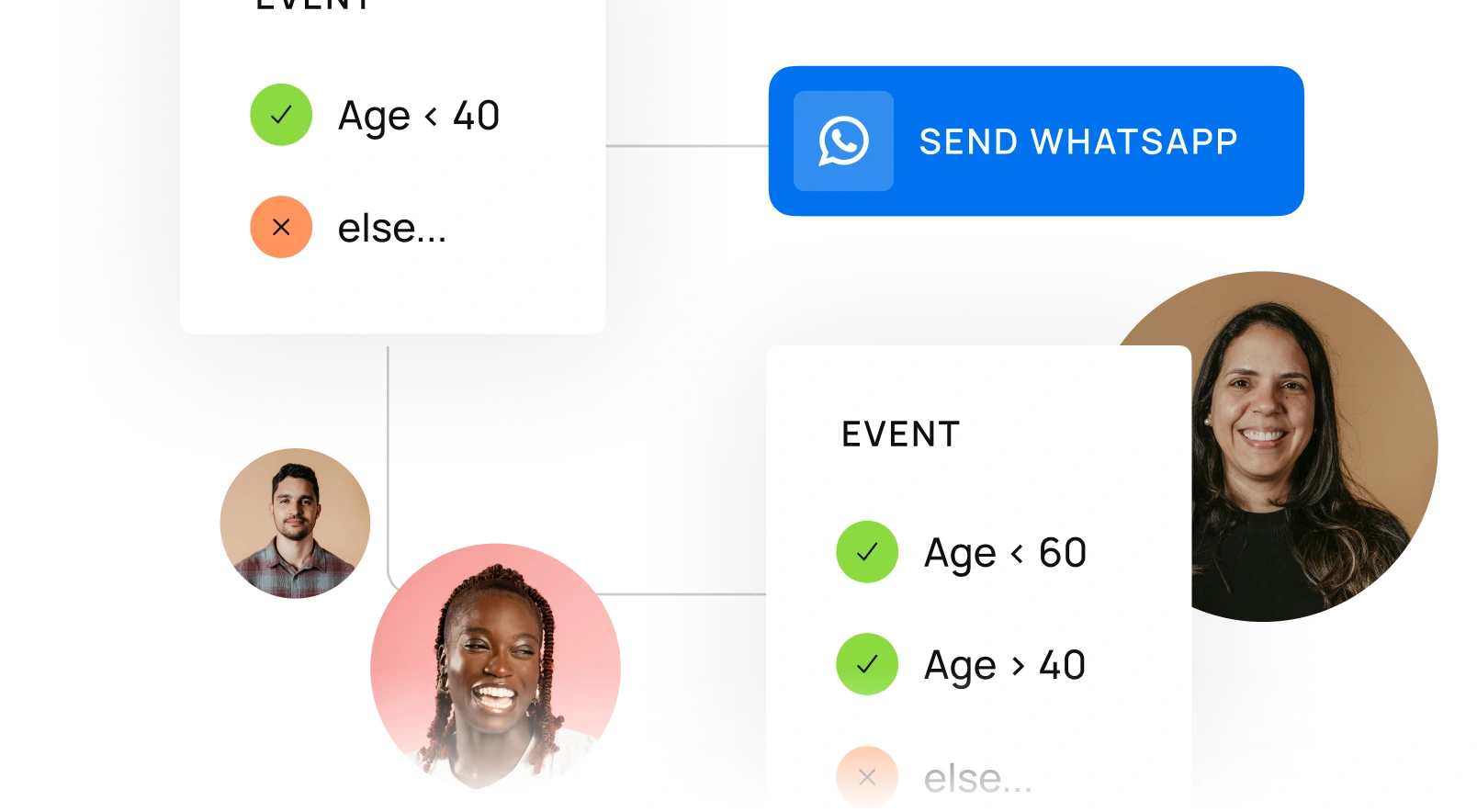
3. AI-Powered Personalization and Journeys
In 2026, the era of basic personalization is definitively over. Simply inserting a user’s first name into a generic email template no longer qualifies as a meaningful connection. Today’s consumers expect brands to understand their context, anticipate their needs, and communicate with them on a truly 1:1 level across every touchpoint.
This is where Artificial Intelligence moves from a buzzword to a fundamental pillar of enterprise marketing. AI is the engine that processes vast amounts of behavioral data in real-time, enabling a level of hyper-personalization that was once purely theoretical. It transforms your strategy from reactive to predictive.
Modern marketing automation platforms leverage AI to go far beyond simple segmentation. Key capabilities now include:
- Predictive Orchestration: AI algorithms analyze individual user habits to determine not only the optimal time to send a message but also the optimal channel. It might learn that a user engages with App Push notifications in the morning but prefers WhatsApp for service updates in the afternoon, creating a truly dynamic Omnichannel experience.
- Generative Content Personalization: Moving beyond recommending existing products, generative AI can now dynamically create or tailor message copy, subject lines, and even promotional offers. This ensures every communication is uniquely relevant to the recipient’s immediate context and past behavior.
- Dynamic Customer Journey Optimization: Instead of a static, pre-defined path, AI can alter a Customer Journey in real-time. If a user fails to engage with a message on one channel, the system can autonomously pivot to another or adjust the next step based on predictive churn scores or purchase propensity.
Crucially, the most significant trend is the rise of ‘Accessible AI.’ For years, leveraging predictive analytics required a dedicated team of data scientists. This created a major barrier for marketing departments, slowing down campaign execution and innovation.
Unified platforms are democratizing this power. By embedding AI tools directly into a central marketing hub like the indigitall console, teams can deploy sophisticated models without writing a single line of code. This empowers marketers to launch predictive campaigns, optimize journeys, and analyze results with agility, turning complex data into actionable strategy.
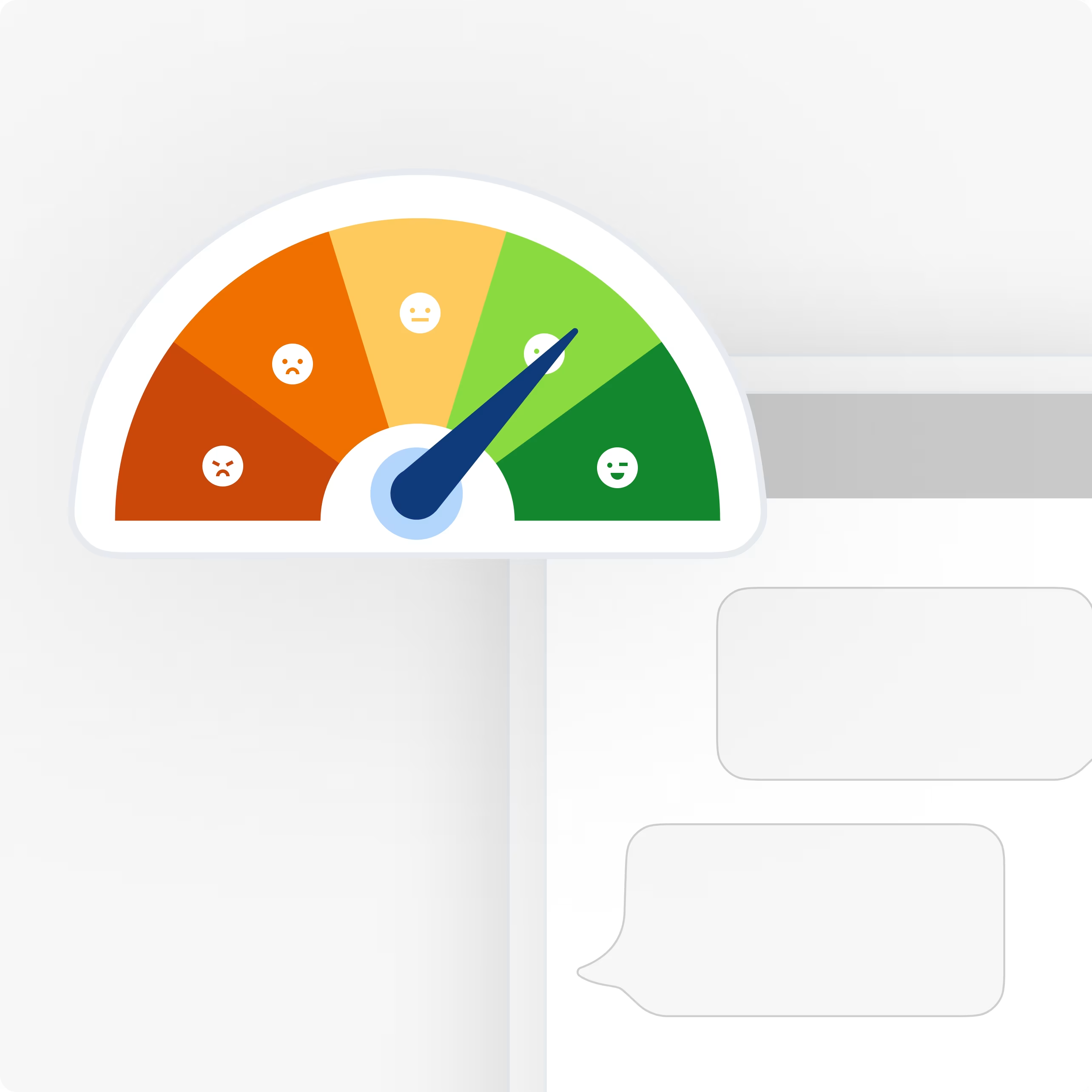
4. Unified Customer Data & Analytics
In today’s hyper-connected 2026 landscape, customer data is generated at an unprecedented velocity across a vast array of digital touchpoints. The greatest challenge for enterprise marketers is not a lack of data, but its fragmentation across siloed systems. A disjointed view of the customer leads directly to inconsistent experiences and flawed performance analysis.
The solution is a platform that serves as a single source of truth for all customer interactions. This goes beyond a traditional CRM; it means capturing every engagement in real time, whether it’s a click on a web push notification, a conversation with an AI agent on WhatsApp, an in-app message view, or an update to a Mobile Wallet pass. This creates a living, breathing, and holistic customer profile.
A unified data model is the engine of a true Global Omnichannel Strategy. When your analytics layer understands that a customer who abandoned a cart on your website just asked a support question via WhatsApp, you can orchestrate an intelligent, helpful response instead of sending an irrelevant sales message. This is how you transform disconnected actions into a seamless Customer Journey.
Furthermore, this unified approach fundamentally changes how you measure success. The era of judging performance on isolated campaign metrics like open rates is over. The critical metrics for 2026 are Customer Lifetime Value (LTV) and total ROI across the entire customer lifecycle. An integrated platform allows you to connect the dots between your omnichannel marketing efforts and long-term business outcomes.
By centralizing analytics, you empower your teams with a clear, holistic view of performance directly within a single console. This not only simplifies reporting but also fuels advanced capabilities like predictive segmentation and AI-driven journey optimization, ensuring every decision is backed by comprehensive, cross-channel data.
The Competitor Landscape: Powerful but Siloed
The enterprise marketing automation landscape of 2026 is populated by powerful, established platforms. Names like Salesforce Marketing Cloud, Braze, and Twilio have undoubtedly shaped the industry, offering deep feature sets that provide robust tools for large-scale marketing operations.
However, a closer look at their architecture often reveals a fundamental weakness: a persistent divide between inbound and outbound communication. Many platforms excel at one or the other, but rarely both in a truly native, seamless way.
This creates an operational silo. Your marketing team might manage outbound campaigns (Email, SMS, App Push) in one system, while your customer service teams handle inbound conversations (AI Agents, Live Chat, WhatsApp replies) in another. The result is a fragmented customer view and a disjointed Customer Journey.
Stitching these disparate systems together requires significant developer resources, ongoing maintenance, and complex data synchronization. This reality dramatically impacts two critical business metrics for any modern enterprise:
- Time-to-Value: The longer it takes to integrate and master multiple platforms, the longer your team must wait to see a return on investment. Agility is lost in a sea of complexity, delaying campaign launches and revenue generation.
- Ease of Use: When marketers have to jump between interfaces to orchestrate a single campaign, efficiency plummets and the risk of error increases. A unified view from a single console, like the indigitall console, is no longer a luxury; it’s a strategic necessity.
A truly effective Global Omnichannel Strategy requires more than just access to channels like WhatsApp, Mobile Wallet, and Web Push. It demands the intelligent orchestration of these channels within a single, coherent ecosystem where an inbound query can instantly trigger an outbound automated flow, and vice-versa.
The most innovative enterprises in 2026 are shifting from a patchwork of “best-of-breed” tools toward a unified platform model. The goal is to empower teams to design, execute, and analyze complete customer experiences without the friction of technological silos, which is the core philosophy driving the next generation of marketing automation solutions.
Titans of Complexity: Salesforce & Adobe Marketo
No discussion of enterprise marketing automation would be complete without acknowledging the two platforms that have dominated the landscape for over a decade: Salesforce Marketing Cloud and Adobe Marketo. These systems are powerful, feature-rich, and have become deeply embedded in the technology stacks of many of the world’s largest B2B and B2C organizations.
Their strengths are undeniable, particularly in areas like deep B2B lead scoring, complex data modeling, and native integration with their own vast product ecosystems. For a long time, they were the default choice for any enterprise serious about digital marketing. However, by 2026, the very architectural depth that made them titans has become a source of significant friction for the agile, fast-moving marketing teams of today.
The primary challenge with these legacy giants is their inherent complexity, which creates a cascade of operational hurdles. Implementation is rarely a quick process, often spanning multiple quarters and requiring significant investment in certified consultants. This leads to a delayed Time-to-Value, where the initial promise of the platform is locked behind a long and expensive setup phase.
Furthermore, the Total Cost of Ownership (TCO) extends far beyond the initial licensing fees. Operating these platforms effectively demands a dedicated team of specialized administrators and developers, a resource that is both costly and difficult to find. This creates a dependency that can stifle marketing creativity and agility, as even simple campaign adjustments may require technical intervention.
For modern marketing leaders, the critical challenges of these platforms in 2026 often include:
- Extended Time-to-Value: The runway to get campaigns live and see ROI can be excessively long, failing to meet the pace of modern business demands for rapid experimentation and deployment.
- Fragmented Omnichannel Orchestration: While these platforms offer many channels, they often feel like separate products bolted together. Creating a truly seamless Global Omnichannel Strategy that unifies App Push, Web, WhatsApp, and AI Agents can be a complex and costly integration project rather than a native function.
- High Dependency on Specialized Talent: Marketing teams find themselves unable to act autonomously, relying on IT or certified experts to build and modify a Customer Journey, which slows down innovation.
- Steep Learning Curve: The sheer number of features and convoluted interfaces mean that onboarding new team members is a significant time investment, hindering team scalability.
As enterprises prioritize speed, efficiency, and unified customer experiences, the appeal of a more integrated, intuitive, and all-in-one solution becomes clear. The goal has shifted from simply having powerful features to having accessible power that the entire marketing team can leverage to drive immediate business impact.
Modern Engagement Platforms: Braze & Insider
Platforms like Braze and Insider have established themselves as powerful forces in customer engagement. They excel at orchestrating multi-channel marketing campaigns, particularly across channels like email and SMS.
Their architectural strength, however, reveals a strategic focus primarily on outbound communication. These systems are meticulously designed to push targeted messages, promotions, and updates to the user, driving conversion and retention through proactive, data-driven marketing efforts.
The challenge arises when the customer conversation needs to flow in the other direction. When a user replies to a campaign or initiates a support query, these platforms often lack native, integrated solutions for inbound service and support. This forces enterprises to bolt on separate, expensive tools like Zendesk or Intercom to manage customer service conversations.
This multi-platform approach inadvertently recreates the very data and experience silos that a unified strategy aims to eliminate. Your marketing team’s view of the customer in one console becomes disconnected from the support team’s view in another, breaking the seamlessness of the Customer Journey and hindering a true Global Omnichannel Strategy.
A truly unified ecosystem must bridge this gap, allowing a promotional WhatsApp message (outbound) to transition flawlessly into a support conversation with an AI Agent (inbound) on the very same channel, all within one orchestrated platform.
indigitall: The Unified Choice for Enterprise Engagement
Navigating the complex digital landscape of 2026 requires more than a collection of disparate tools. The challenges of data fragmentation, disjointed customer experiences, and the demand for real-time personalization have rendered traditional marketing automation platforms obsolete. This is where indigitall emerges not as another tool, but as a unified engagement ecosystem built for the modern enterprise.
Our platform was designed from the ground up to solve these core challenges. We move beyond simple automation to enable true Customer Journey orchestration. This means you can design, manage, and optimize complex, multi-step interactions across every digital touchpoint from a single, intuitive interface: the indigitall console.
A successful Global Omnichannel Strategy hinges on seamless connectivity. With indigitall, you can natively integrate high-impact channels like App Push, Web Push, WhatsApp Business, and Mobile Wallet into one cohesive strategy. This eliminates data silos and ensures a consistent, contextual conversation with your customers, whether they are on your app, website, or their favorite messaging platform.
In 2026, artificial intelligence is the engine of relevance. indigitall embeds powerful AI capabilities at the core of its platform. From leveraging generative AI to craft personalized message variations to using predictive analytics for optimal send times and audience segmentation, we empower you to deliver hyper-relevant experiences at a scale previously unimaginable.
For enterprise-level organizations in Banking, Retail, and Telco, a unified platform offers more than just efficiency—it provides a strategic advantage. By centralizing your engagement efforts with indigitall, you gain:
- A True 360-Degree Customer View: Consolidate interaction data from all channels into a single, actionable profile to fuel smarter decision-making.
- Seamless Journey Orchestration: Visually build and deploy sophisticated Customer Journeys that adapt in real-time to user behavior, boosting engagement and LTV.
- Unmatched Scalability and Security: Trust in a robust infrastructure built to handle the volume and complexity of global enterprise communications while adhering to the strictest data privacy standards.
- Accelerated Time-to-Value: An all-in-one solution simplifies your tech stack, reduces integration headaches, and allows your team to focus on strategy, not vendor management.
The era of fragmented marketing is over. The future is a unified, intelligent, and customer-centric approach to engagement—the future is powered by indigitall.
Advantage 1: Unify Inbound & Outbound Communication
In 2026, the line between a marketing message and a service inquiry has completely vanished from the customer’s point of view. They expect a single, fluid conversation with your brand, regardless of who initiates it. Legacy marketing platforms were built for a one-way, outbound world, creating a jarring gap when a customer tries to reply.
A truly unified platform must be architected from the ground up to manage both campaign orchestration (outbound) and customer-initiated conversations (inbound). This is the core principle behind the indigitall ecosystem, allowing you to seamlessly transition from promotion to problem-solving within a single interface and a single customer thread.
Consider this powerful, everyday scenario:
- Outbound Marketing: Using the indigitall console, you launch a Customer Journey that sends a personalized WhatsApp Business message to a segmented audience about a new product launch.
- Inbound Inquiry: A customer receives the message and replies directly, asking, “Is this available in your downtown store?”
- Seamless Resolution: Instead of this query getting lost or routed to a separate, disconnected support tool, it instantly appears in the same indigitall platform. An AI Agent, or a live support agent, sees the full context of the original promotion and provides an immediate, accurate answer, potentially even closing the sale right in the chat.
This seamless handoff is impossible when your marketing and support tools are siloed. With separate systems, the customer is forced to abandon the conversation, find a different channel, and start over—a point of friction that directly kills conversion potential and erodes brand loyalty.
By integrating inbound and outbound streams, you transform every touchpoint into an opportunity. This capability is central to a successful Global Omnichannel Strategy, ensuring that whether a conversation starts from an App Push notification, a web campaign, or a WhatsApp message, it remains a single, coherent, and valuable interaction for both the customer and your business.
Advantage 2: Lead the Conversation with Native WhatsApp
In 2026, the line between a marketing platform and a conversational platform has effectively vanished. For any enterprise with a footprint in Europe, LATAM, or APAC, WhatsApp is not just an optional channel—it is a primary ecosystem for commerce, support, and building lasting customer relationships.
However, not all WhatsApp integrations are created equal. The critical differentiator for performance and innovation is a platform’s connection to the source: a Native WhatsApp Business API integration versus a reliance on third-party aggregators or “wrappers.”
A native integration, like the one built directly into the indigitall platform, means we connect directly with Meta’s core infrastructure. This architecture provides three unparalleled advantages for your brand’s communication strategy.
- Unmatched Reliability at Scale: Third-party layers add complexity and potential points of failure. A native connection ensures lower latency and higher message deliverability, a non-negotiable factor when sending millions of time-sensitive notifications for flash sales or critical service alerts.
- First Access to Game-Changing Features: When Meta rolls out new capabilities—such as advanced generative AI agents, new interactive product carousels, or integrated payment flows—our clients get access immediately. Platforms using wrappers are always a step behind, forced to wait for their middleman to update.
- Deeper Orchestration Capabilities: Because WhatsApp is a first-class citizen within our ecosystem, you can orchestrate incredibly rich Customer Journeys. A single workflow in the indigitall console can seamlessly move a user from an App Push to a rich WhatsApp conversation, all based on their real-time behavior.
This native approach is the cornerstone of a true Global Omnichannel Strategy. It transforms WhatsApp from an isolated messaging tool into a powerful, fully integrated component of your entire customer engagement engine, working in concert with your app, website, and mobile wallet channels.
Ultimately, choosing a platform with a native API isn’t just a technical detail—it’s a strategic decision to ensure your brand remains agile, reliable, and ahead of the conversational curve in 2026 and beyond.
Advantage 3: Democratize Power with Accessible AI
In 2026, the conversation around AI in marketing has fundamentally shifted. It’s no longer about whether you use AI, but how accessible and integrated it is for the teams on the front lines. The true competitive advantage lies in democratizing this power, moving it from isolated data science teams directly into the hands of marketers and CRM managers.
This is the core principle behind indigitall AI. Our platform is designed to empower non-technical users to leverage sophisticated AI capabilities directly within the indigitall console. Instead of requiring a developer to build a model, your team can instantly optimize campaigns using predictive tools and generative AI, all within the same interface they use to build a Customer Journey.
Many legacy enterprise platforms still treat AI as a black box, requiring specialized teams and lengthy implementation cycles to even begin utilizing machine learning models. This creates a significant bottleneck, slowing down innovation and hindering your ability to react to market changes. This old approach dramatically increases the total cost of ownership and delays any potential return on investment.
With indigitall, the focus is on superior Time-to-Value and Ease of Use. Our accessible AI tools provide immediate benefits to your Global Omnichannel Strategy:
- Predictive Send-Time Optimization: Let our AI determine the perfect moment to deliver a Push Notification or WhatsApp message to each individual user, maximizing open rates and engagement without manual analysis.
- Generative Content Assistants: Empower your marketing team to craft compelling, on-brand messaging for multiple channels in seconds. Overcome creative blocks and ensure consistency across your entire communications ecosystem.
By embedding these tools within our unified platform, indigitall ensures that AI is not an afterthought but a foundational element of your strategy. This empowers your team to innovate faster, drive better results, and maximize the ROI of every customer interaction.
How to Choose the Right Enterprise Platform for You
Navigating the complex landscape of marketing automation in 2026 can be daunting. The right technology partner doesn’t just offer features; it acts as a catalyst for growth, empowering you to build deeper, more profitable customer relationships. To cut through the noise, focus on your core strategic goals.
As you evaluate your options, gather your team of marketers, developers, and product owners and ask these fundamental questions. Your answers will illuminate the path forward and clarify whether a traditional, siloed solution is sufficient, or if a unified, omnichannel platform is essential for your future.
- Is conversational commerce a core part of your strategy? Do your customers expect to reply to a promotion on WhatsApp and immediately complete a purchase or get support from an AI Agent without leaving the chat?
- How critical are direct-to-consumer mobile channels? Does your growth depend on a Global Omnichannel Strategy that seamlessly connects App Push, Web Push, Mobile Wallet passes, and rich messaging services?
- What is your team’s tolerance for complexity and delay? How vital is it to see tangible ROI within weeks, not quarters? Can you afford a lengthy, resource-intensive implementation that delays your most critical Customer Journey initiatives?
- Does your current tech stack provide a true 360-degree customer view? Or are you spending valuable time trying to stitch together data from separate platforms for email, app notifications, and SMS, making true personalization impossible?
- Are you prepared to fully leverage generative AI? Beyond simple content creation, does your ideal platform use AI to predict churn, optimize send times, and automatically orchestrate the next best action for millions of individual users?
If your team answered a resounding “yes” to these questions, then the choice becomes clear. The era of bolting together disparate, channel-specific tools is over. The demands of the 2026 consumer require a single, intelligent ecosystem built for speed, conversation, and true omnichannel orchestration.
To drive meaningful engagement and maximize customer lifetime value, you need a unified platform. A solution like indigitall is engineered from the ground up to address these modern challenges, helping you move faster, connect more deeply, and unlock new revenue streams in a conversational world.