indigitall Omni AI
 Start chat with AI agent
 Speak with AI voice agent
 Book a Demo

 Speak to an Expert











A Complete Guide to Data-Driven Personalization for Ecommerce


Why Personalization in Ecommerce Isn’t Just a ‘Nice-to-Have’ Anymore
Customers today don’t just appreciate personalization—they expect it. Research from McKinsey shows that 71% of consumers now anticipate personalized interactions from brands. More than a simple courtesy, it’s a powerful engine for growth that can no longer be ignored.
The same study reveals that companies excelling at personalization generate 40% more revenue from these activities than average players. This isn’t a minor uplift; it’s a strategic advantage that separates market leaders from the rest. The message is clear: failing to personalize is actively leaving money on the table.
Despite this, many brands struggle to deliver. The core problem lies in a fragmented technology stack. Using one tool for email, another for push notifications, and a separate platform for WhatsApp creates data silos. This technological disconnect makes it impossible to get a single, unified view of the customer, leading to a disjointed and often frustrating experience.
This article serves as your roadmap. We will move beyond theory and provide a concrete framework for building a unified, data-driven personalization strategy. Our goal is to empower you to orchestrate seamless experiences that cover the entire customer lifecycle, from initial marketing engagement to proactive post-purchase support.
We’ll explore how a Global Omnichannel Strategy—one that intelligently connects channels like your App, Website, and WhatsApp Business—can break down those silos and transform customer data into your most valuable asset. It’s time to build a cohesive ecosystem that drives loyalty and maximizes lifetime value.
What is Data-Driven Personalization?
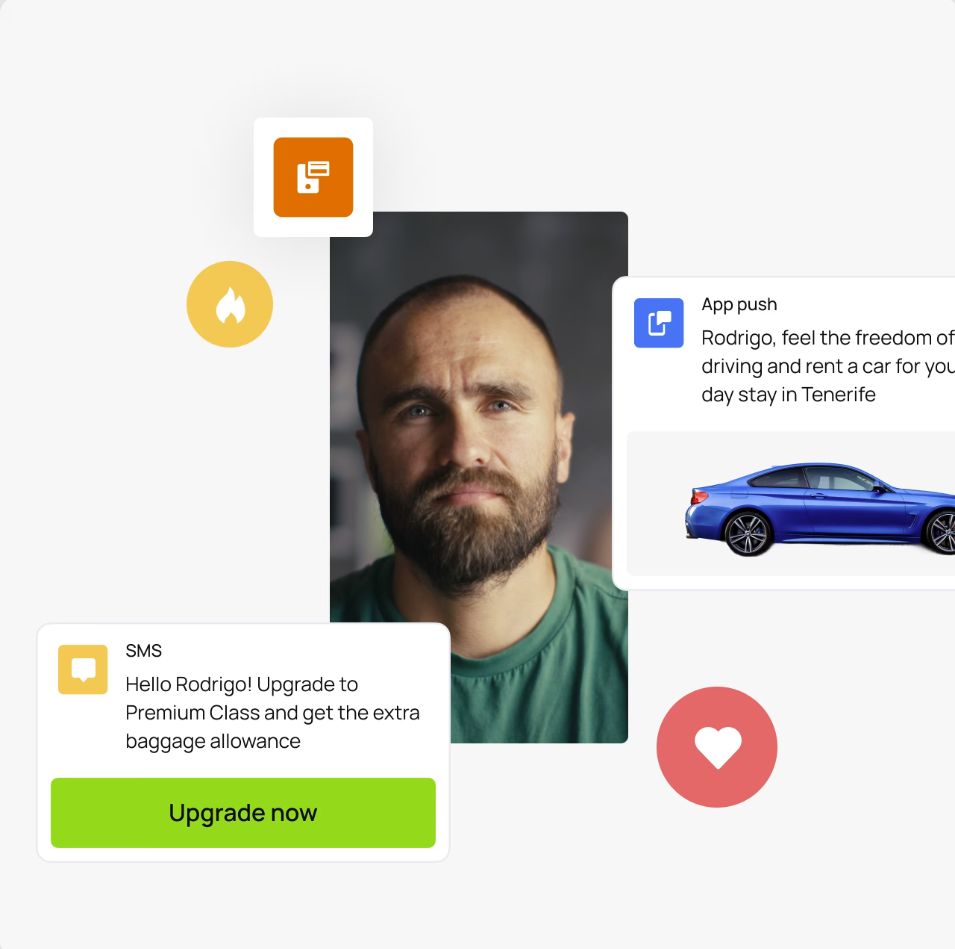
At its core, data-driven personalization is the practice of using customer data to tailor every touchpoint of their experience to their individual needs, behaviors, and preferences. It’s about moving from one-to-many broadcasting to one-to-one conversations, delivered at scale across your entire digital ecosystem.
This goes far beyond simply inserting a customer’s first name into an email subject line. True personalization in 2025 means dynamically changing website content based on browsing history, sending a push notification with a relevant offer moments after a cart is abandoned, or initiating a WhatsApp conversation to help a customer complete a complex purchase.
To power this level of sophistication, you need a constant flow of high-quality data. Effective personalization strategies are built on a foundation of three core data pillars, which work together to create a complete, 360-degree customer view.
- Demographic & Declared Data: This is the foundational “who they are” information. It includes details like name, age, gender, and geographical location, as well as preferences customers have explicitly shared with you, such as their favorite product categories.
- Behavioral & Implicit Data: This is the most dynamic pillar, capturing “what they do” in real-time. It includes every click, page view, product added to a cart, search query, and interaction with your messages across every channel, from your app and website to WhatsApp and mobile wallet. This data is the key to unlocking timely, contextually relevant engagement.
- Transactional & Historical Data: This pillar provides the long-term context of “what they have done.” It covers past purchases, average order value, customer lifetime value (LTV), and frequency of buying. This data helps you segment your most valuable customers and predict future behavior.
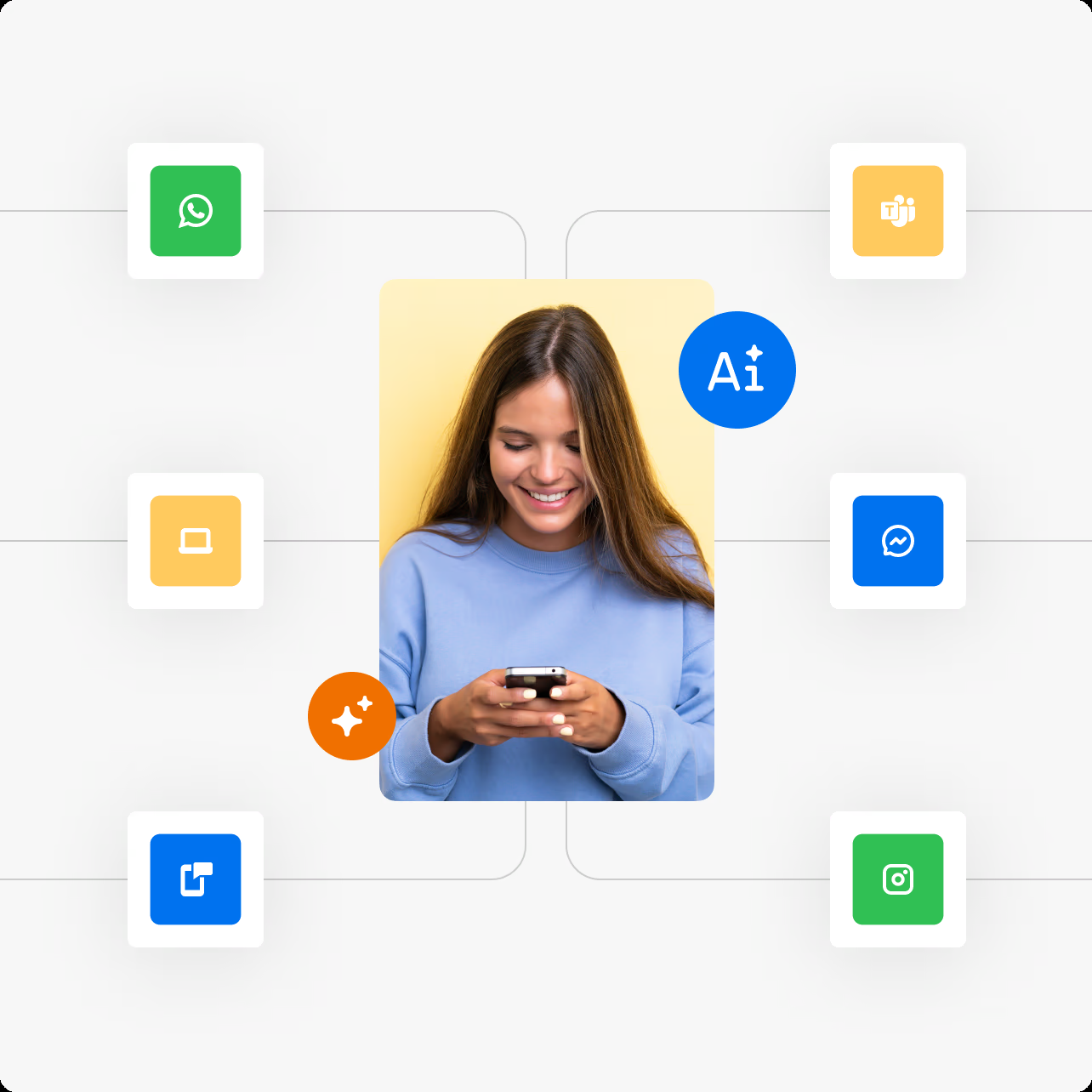
The real power emerges when you orchestrate these data sources within a global omnichannel strategy. Having a unified platform that connects insights from one channel to actions on another is no longer a luxury—it’s a necessity. This is how you create the seamless, intelligent Customer Journeys that drive loyalty and maximize revenue.
The 3 Pillars of Ecommerce Customer Data
Effective personalization isn’t about collecting massive amounts of data; it’s about collecting the right data and understanding how it connects. In 2025, the most successful ecommerce brands build their strategies on a foundation of three distinct yet interconnected pillars of customer information.
To truly orchestrate a powerful Customer Journey, you need a single platform that can seamlessly unify these data streams. Let’s break down each pillar.
- Behavioral Data: The ‘What They Do’
This is the data of action and intent, capturing how users interact with your digital properties in real-time. It includes clicks, pages viewed, time on site, search queries, products added to cart, and cart abandonment events. Behavioral data is your key to unlocking timely, automated communications that drive immediate conversion. For example, a cart abandonment trigger can be part of a Global Omnichannel Strategy, sending a Web Push notification if the user is on their desktop or a rich App Push with product images if they are a known app user. - Demographic & Profile Data: The ‘Who They Are’
This is the foundational data that tells you about the individual behind the screen. It covers explicit information like name, age, gender, and geographic location, as well as contact details and preferences they’ve shared with you. While this data is excellent for broad segmentation (e.g., targeting a promotion to users in a specific city), its true power is realized when combined with other data types to add a layer of personal context to behavior-driven messages. - Transactional Data: The ‘What They Buy’
This pillar provides a complete history of a customer’s purchasing relationship with your brand. It encompasses critical metrics like average order value (AOV), purchase frequency, last purchase date, and the specific products or categories they’ve bought. Transactional data is the engine for maximizing Customer Lifetime Value (LTV), enabling you to identify VIP customers, create lookalike audiences, and send highly relevant post-purchase follow-ups or cross-sell recommendations.
The magic happens when these three pillars no longer live in separate silos. A truly intelligent customer engagement platform, like the one provided by indigitall, ingests and connects all this data. This unified view allows you to build sophisticated segments and orchestrate dynamic Customer Journeys from the indigitall console, ensuring every message is not just personal, but also perfectly timed and contextually relevant.
The High Cost of a Fragmented Personalization Strategy
In the race to personalize, many businesses inadvertently build a “Frankenstack” of marketing technology. It’s a common scenario: one tool powers on-site product recommendations, another platform like Mailchimp handles email campaigns, a separate service like Braze manages push notifications, and a completely different system like Zendesk manages customer support tickets.
While each tool may be effective at its individual task, this siloed approach creates a disjointed and often contradictory experience for the customer. The data from one system rarely informs the actions of another in real-time, leading to a breakdown in the overarching Customer Journey.
The consequences of this fragmentation are severe. A customer might receive a promotional email for a product they just returned. A high-value shopper might abandon their cart, but your support team has no visibility into this event when they initiate a chat. These gaps don’t just create friction; they actively erode trust and devalue the customer relationship.
This disconnected ecosystem results in significant, measurable costs:
- Inconsistent Messaging: Customers see conflicting offers and messages across your app, website, email, and WhatsApp, which creates confusion and undermines campaign effectiveness.
- Incomplete Customer View: With data locked away in separate platforms, you never achieve a true 360-degree understanding of user behavior. You’re making decisions with only a fraction of the available information.
- Operational Inefficiency: Your teams waste valuable time and resources trying to manually sync data between systems instead of focusing on strategy and creating meaningful customer experiences.
- Missed Conversion Opportunities: Without a unified data flow, you can’t trigger an abandoned cart push notification based on web activity or send a follow-up WhatsApp message after a customer service interaction. Every missed signal is a potential lost sale.
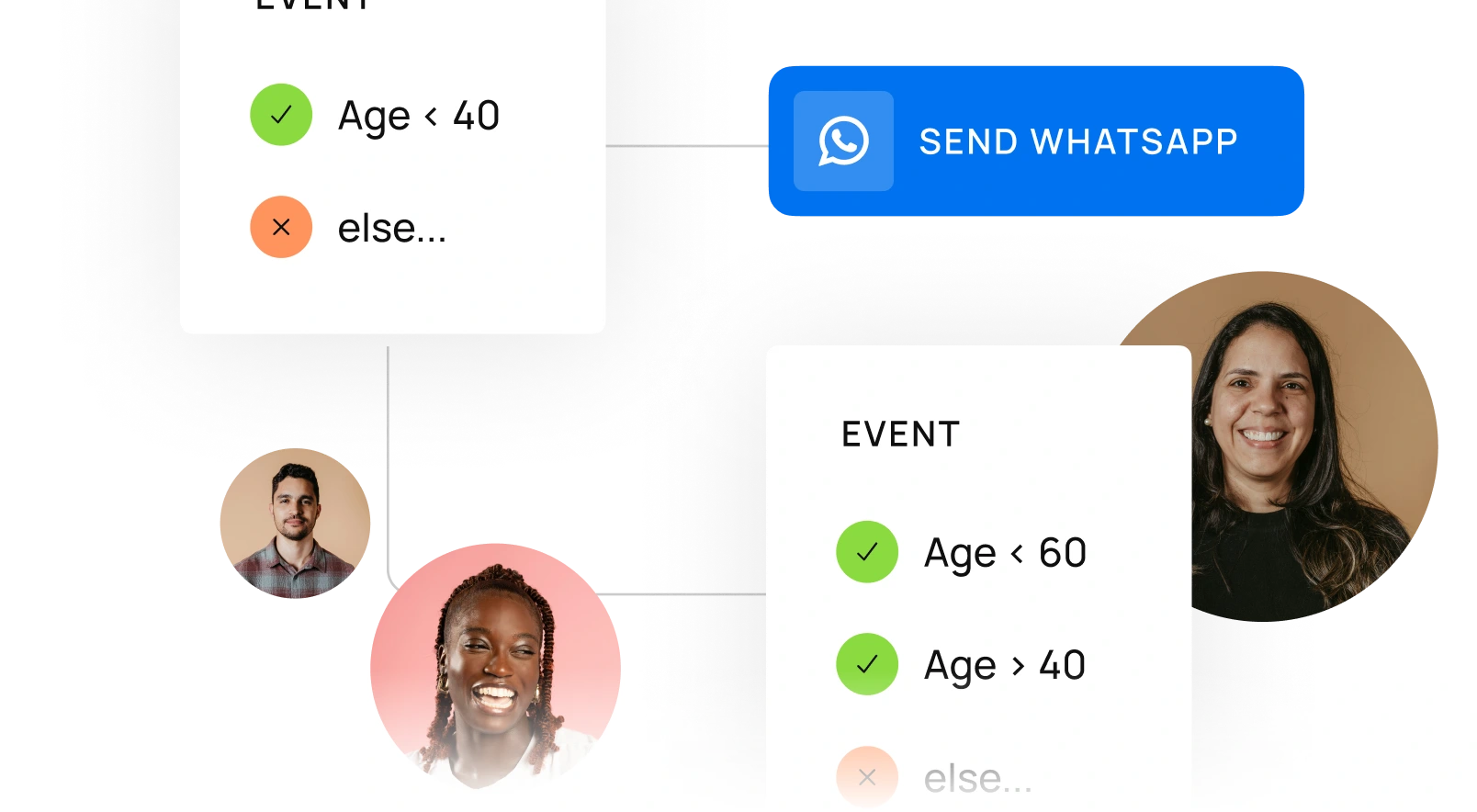
To move beyond basic segmentation and deliver true 1-to-1 personalization, a fundamental shift is required. The only way to orchestrate a seamless, context-aware Customer Journey is to abandon the fragmented model in favor of a unified platform that centralizes data and coordinates every interaction within a Global Omnichannel Strategy.
Building a Unified Personalization Strategy Across the Customer Journey
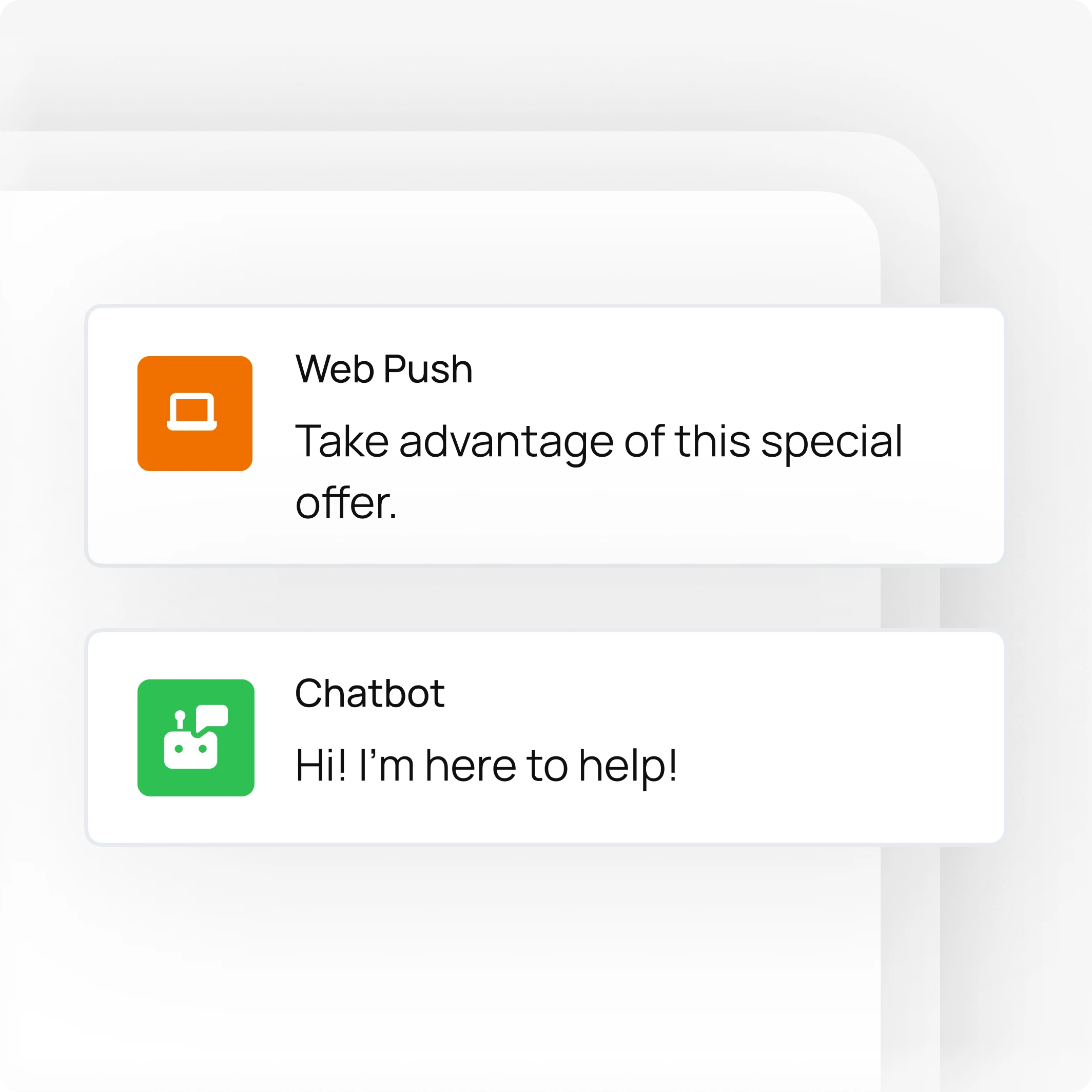
Effective personalization isn’t a single action; it’s a continuous, evolving conversation. A potential customer who just discovered your brand requires a different message than a loyal VIP. To truly drive results, you must tailor your interactions to their specific stage in the lifecycle. This is where orchestrating a unified strategy across the entire Customer Journey becomes a competitive advantage.
Let’s break down the practical applications of personalization at each key stage, creating a seamless experience that guides users from anonymous visitors to passionate brand advocates.
Stage 1: Awareness & Acquisition
At this initial stage, the goal is to make a powerful first impression, capture interest, and convert an unknown browser into a known contact. Your personalization efforts should feel helpful and relevant, not intrusive.
- Intelligent Web Push Opt-ins: Instead of a generic browser prompt, trigger opt-in requests based on user behavior. For example, after a user views three products in the same category, display a tailored prompt like, “Interested in the latest sneaker drops? Get notified first.”
- Dynamic On-site Content: Use on-site personalization to greet visitors with relevant content. A user arriving from a social media ad for a specific sale should see a hero banner reflecting that exact offer, creating a consistent and frictionless experience.
- Contextual Lead Capture: Offer a compelling reason to subscribe, such as a first-purchase discount. Personalize the offer based on their browsing context to maximize conversion rates.
Stage 2: Consideration & Conversion
Once you have a user’s attention, the focus shifts to nurturing their interest and removing friction on the path to purchase. This is where timely, hyper-relevant nudges can make all the difference.
- Omnichannel Abandoned Cart Recovery: Go beyond a single email. Build a true Customer Journey in the indigitall console that starts with an interactive App Push notification an hour after cart abandonment. If there’s no response, follow up with a WhatsApp message featuring the product image a day later. This Global Omnichannel Strategy dramatically increases recovery rates.
- High-Intent Stock & Price Alerts: Allow users to subscribe to instant updates for products they care about. Leveraging real-time channels like Web Push and WhatsApp for back-in-stock or price drop alerts taps into peak purchase intent and drives immediate action.
- Social Proof & Urgency: For popular items, trigger a subtle on-site notification that says, “25 other shoppers are looking at this item right now.” This creates a sense of urgency and builds confidence in the product’s desirability.
Stage 3: Retention & Loyalty
The Customer Journey doesn’t end at checkout. In fact, for long-term profitability, this is where the most important work begins. Your goal is to deliver post-purchase value that encourages repeat business and builds lasting affinity.
- Proactive Post-Purchase Communication: Automate order confirmations, shipping updates, and delivery notifications via the customer’s preferred channel, like WhatsApp Business. Follow up a week later with a request for a review or helpful content about their new product.
- Predictive Product Recommendations: Analyze past purchase data to send highly personalized recommendations. Use an App Push notification to announce, “New arrivals from your favorite brand are here,” or showcase complementary products to their last order.
- Digital Loyalty Programs: Enhance your loyalty program with Mobile Wallet passes. Customers can store their card in Apple or Google Wallet, and you can send updates directly to their lock screen about new rewards, points balances, or exclusive VIP event access.
Orchestrating these diverse touchpoints manually across separate systems is inefficient and leads to fragmented customer experiences. An integrated platform like indigitall allows you to design, automate, and measure these complete Customer Journeys from a single, unified console, ensuring every message is part of a coherent and intelligent strategy.
Awareness & Consideration: Personalized Discovery
The first interaction a potential customer has with your ecommerce brand is a make-or-break moment. A generic, one-size-fits-all homepage is a relic of the past. Data-driven personalization ensures that from the very first click, the user feels understood, creating a frictionless path from discovery to consideration.
This stage is all about demonstrating relevance immediately. By analyzing real-time behavioral data—even from anonymous visitors—you can transform your digital storefront into a personal shopping assistant. This is where a robust marketing automation engine becomes your greatest asset, turning raw data into meaningful experiences.
- On-Site Product Recommendations: Imagine a user browses your “Men’s Running Shoes” category. When they return to your homepage, instead of a generic banner, they see a dynamic section titled “Picked For You” showcasing the latest running shoe models and related gear. The indigitall platform uses powerful segmentation to make this possible, increasing the likelihood of engagement and shortening the path to purchase.
- Contextual Content Delivery: Personalization extends beyond products. If a user has shown interest in professional-grade cameras, your site can dynamically feature blog content like “A Guide to DSLR Lenses for 2025.” This positions your brand as a trusted expert, building value and nurturing the user through their consideration phase without a hard sell.
- Proactive Web Push Engagement: For first-time visitors, a well-timed Web Push Notification can be a powerful welcome. After a user has spent a minute on your site, you can trigger an opt-in prompt. Upon acceptance, an automated welcome push is sent directly to their browser: “Welcome! Get 15% off your first order with us.” This single action captures a new lead and brings them into your Global Omnichannel Strategy, ready to be engaged across other channels like email or mobile wallet in a cohesive Customer Journey.
Orchestrating these initial touchpoints from a single, all-in-one solution is critical. When your on-site personalization and your web push notifications are managed within the same ecosystem, like the indigitall console, you create a seamless and intelligent user experience from the very first second.
Purchase: Reducing Friction and Increasing AOV
The purchase stage is the final, critical step in the customer’s buying process. Even after a customer adds items to their cart, friction, distraction, or second thoughts can lead to lost revenue. Data-driven personalization at this stage is focused on two primary goals: recovering potentially lost sales and strategically increasing the Average Order Value (AOV).
By implementing intelligent, real-time interventions, you can transform the checkout from a simple transaction into a powerful conversion engine. Here are the most effective tactics to deploy.
1. The Omnichannel Abandoned Cart Recovery Flow
Cart abandonment remains one of the biggest challenges in ecommerce. A generic “You left items in your cart” email is no longer enough. A modern recovery strategy is an automated, multi-channel Customer Journey that engages users on their preferred platform with highly specific content.
This is a core component of a Global Omnichannel Strategy. The sequence can be orchestrated seamlessly from the indigitall console:
- Immediate App Push: Within an hour, send a push notification with a deep link directly back to the cart. Crucially, use rich push capabilities to display an image of the exact hero product left behind.
- Follow-up via WhatsApp: If the push is not engaged, trigger a WhatsApp message 24 hours later. This channel’s high open rates make it perfect for a friendly, conversational reminder like, “Hi [FirstName], still thinking about the [ProductName]? It’s waiting for you!”
- Final Email Offer: As a final attempt, an email can be sent 48 hours later, perhaps with a small, time-sensitive incentive like a 10% discount to create urgency.
Having a single, all-in-one platform like indigitall allows you to manage this channel escalation logic effortlessly, ensuring you aren’t messaging users who have already completed their purchase on another device.
2. Smart Upsells and Cross-sells
Increasing AOV doesn’t have to be aggressive. When done right, it enhances the customer’s purchase and builds confidence. Use the data you have about the user’s current cart and browsing history to make highly relevant, automated suggestions.
For example, if a customer adds a digital camera to their cart, you can dynamically display a module at checkout offering a memory card, a camera bag, and an extended warranty. For fashion brands, this is the perfect moment to present “complete the look” items that other shoppers frequently bought together. This transforms a simple sale into a comprehensive solution for the customer.
3. Dynamic, Threshold-Based Offers
Sometimes, all a customer needs is a small nudge to increase their cart value. Instead of offering free shipping to everyone, you can deploy a dynamic offer that only appears when a user is close to meeting the required threshold. This is personalization in real time.
Imagine your free shipping threshold is $75. If a user’s cart total is $68, a subtle banner can appear at the top of the cart page: “You’re only $7 away from unlocking free shipping!” This simple, data-triggered message gamifies the experience and motivates users to add one more small item, directly boosting your AOV and offsetting shipping costs.
Retention & Advocacy: Fostering Long-Term Loyalty
Acquiring a new customer is valuable, but transforming that customer into a loyal advocate is where ecommerce businesses build sustainable growth. The post-purchase phase is not the end of the Customer Journey; it’s a critical opportunity to build trust, encourage repeat business, and maximize lifetime value (LTV).
Data-driven personalization is the key to making this happen. By leveraging customer data, you can move beyond generic follow-ups and create a retention strategy that feels personal, proactive, and genuinely helpful.
Automate Post-Purchase Communication with WhatsApp
The anxiety-fueled question, “Where is my order?” (WISMO), is a major driver of customer service tickets. Erase this friction by using the WhatsApp Business Platform to provide real-time, personalized updates. This is a cornerstone of a modern omnichannel strategy, meeting customers on the channel they use every day.
Imagine a flow orchestrated directly from the indigitall console: an instant order confirmation, a notification when the package ships with a tracking link, and a final message upon delivery. This simple, automated journey builds immense trust and provides a premium experience that sets your brand apart.
Drive Repeat Purchases with Predictive Recommendations
Your customers’ browsing and purchase history is a goldmine of intent data. Use it to send proactive, highly relevant alerts that bring them back to your store. This goes far beyond a simple “we miss you” campaign.
- Back-in-Stock Alerts: When a user views an out-of-stock item, automatically tag them. The moment inventory is replenished, trigger a personalized App Push or Web Push notification to re-engage that high-intent shopper.
- New Arrival Notifications: If a customer frequently purchases from a specific brand or category, alert them via their preferred channel when new, relevant products arrive. This demonstrates you understand their tastes and saves them the effort of searching.
Deepen Engagement with Loyalty Program Nudges
Loyalty programs are powerful retention tools, but they only work if customers are actively engaged. Use automated triggers to send timely reminders that encourage participation and drive the next conversion.
For example, you can set up a Customer Journey that automatically sends an App Push notification when a user is just one purchase or a few points away from their next reward. A simple message like, “You’re only 25 points from your next free gift!” is an incredibly effective catalyst for a repeat purchase.
By orchestrating these retention touchpoints across channels like WhatsApp, App, and Web, you create a cohesive, intelligent communication ecosystem. Managing this from a unified platform like indigitall ensures every message is consistent, timely, and powered by a complete view of the customer, transforming one-time buyers into lifelong fans.
The indigitall Advantage: Unifying the Entire Experience
Understanding the principles of data-driven personalization is the first step. However, executing a sophisticated strategy across multiple touchpoints is where most ecommerce brands face a significant challenge. Fragmented tools, siloed data, and a lack of channel coordination can stop even the best plans from delivering results.
This is where technology becomes the enabler. The indigitall platform was built from the ground up to solve this exact problem, acting as the central nervous system for your entire customer engagement strategy. We break down data silos to create a unified customer profile, empowering you to orchestrate every interaction from a single, powerful console.
True Omnichannel Orchestration
Effective personalization isn’t about blasting messages on every channel; it’s about creating a single, cohesive conversation that moves with the customer. Our platform enables a Global Omnichannel Strategy, seamlessly connecting high-impact channels like App Push, Web Push, Email, SMS, Mobile Wallet, and the WhatsApp Business Platform.
Imagine a user who browses a product on your app but doesn’t buy. With indigitall, you can automatically trigger a web push notification when they next visit your site, followed by a personalized WhatsApp message a day later with a limited-time offer. This is true journey orchestration, not just multi-channel messaging.
Visual and Powerful Customer Journey Builder
We believe marketers should spend their time strategizing, not wrestling with complex code. The indigitall console features an intuitive, drag-and-drop Customer Journey builder that puts you in complete control. You can visually map out intricate workflows based on user behavior, triggers, and segments.
This empowers your team to design, automate, and optimize everything from welcome series and abandoned cart recovery to complex re-engagement campaigns. The result is a highly personalized experience for every user, delivered automatically and at scale to maximize lifetime value (LTV).
AI-Powered Intelligence and Automation
Staying ahead in 2025 and beyond requires leveraging the power of artificial intelligence. The indigitall platform has AI woven into its core, transforming raw data into actionable insights and automated actions. Our systems can predict churn, optimize send times, and segment audiences with unparalleled accuracy.
Furthermore, our generative AI Agents enable next-generation conversational commerce directly within channels like WhatsApp, handling customer queries and guiding purchases 24/7. This frees up your team while delivering the instant, personalized support modern consumers expect, turning every interaction into a potential conversion.
Unify Inbound & Outbound Communication
A significant blind spot in many personalization strategies is the disconnect between marketing outreach and customer support. Platforms like Braze or Insider excel at orchestrating outbound marketing campaigns—scheduling push notifications, emails, and SMS blasts to drive users toward an action.
However, modern customer engagement is a two-way street. A truly data-driven approach requires managing the conversation after the click. The indigitall platform is uniquely designed to unify both outbound marketing automation and inbound customer interactions like chatbots and live chat within a single, cohesive ecosystem.
Consider this powerful, conversion-focused scenario:
- Outbound Trigger: A customer abandons their shopping cart. Through a pre-configured Customer Journey in the indigitall console, an automated push notification is sent to their device an hour later, reminding them of the items.
- Inbound Interaction: The customer taps the notification, returning to their cart. They have a last-minute question about the return policy, so they open your site’s chat widget, powered by indigitall’s AI Agents.
- Unified Context in Action: Instead of a generic “How can I help you?” greeting, the AI Agent instantly recognizes the user. It has the full context of their journey: it knows they just clicked an abandoned cart notification, sees the exact products in their cart, and can access their previous purchase history.
The agent can immediately provide a hyper-personalized response, perhaps even proactively offering a small shipping discount to close the deal. This seamless transition from an outbound marketing message to an inbound, context-aware support conversation is what separates a good experience from a great one.
This is the core of a Global Omnichannel Strategy. By managing channels like App Push, Web, and WhatsApp Business under one roof, you eliminate the data silos that create friction. You ensure that every touchpoint, whether initiated by your brand or your customer, contributes to a single, continuous, and intelligent conversation that maximizes lifetime value.
Leverage Native WhatsApp for Conversational Commerce
As customers increasingly expect to interact with brands on their preferred channels, WhatsApp has emerged as an undisputed leader in conversational commerce. In 2025, simply being present on the platform isn’t enough; the quality and depth of the integration are what separates a basic interaction from a revenue-driving experience.
Many marketing platforms offer a simple ‘wrapper’ for the WhatsApp Business API, which provides only basic messaging capabilities. A deep, native integration, like the one offered by indigitall, goes much further. It connects directly with the API, ensuring higher reliability, faster message delivery, and access to the full suite of advanced features like interactive buttons, product catalogs, and rich media, all orchestrated from the indigitall console.
This robust connection allows you to build sophisticated, personalized conversational flows that feel seamless to the user. Here are a few powerful ecommerce use cases unlocked by a native integration:
- Automated Abandoned Cart Recovery: Go beyond a simple reminder. Send a personalized message with an image of the abandoned product, interactive buttons to “Complete Purchase” or “Ask a Question,” and even a time-sensitive discount to create urgency and drive conversion.
- Proactive Order & Shipping Updates: Transform standard transactional messages into trust-building conversations. Send real-time order confirmations, shipping alerts, and delivery notifications. Because it’s a two-way channel, customers can instantly reply with questions, creating a frictionless support experience.
- Post-Purchase Engagement & Support: The conversation doesn’t end at delivery. Follow up with a message asking for a review, offer tips on using the new product, or initiate a cross-sell or upsell campaign for complementary items directly within the chat.
Crucially, WhatsApp should not operate in a silo. It is a vital touchpoint within your Global Omnichannel Strategy. The data from a user’s app activity or website browsing can trigger a personalized WhatsApp message. A conversation started on WhatsApp can be seamlessly handed off to a live agent or trigger a follow-up email, all orchestrated within a single Customer Journey.
By leveraging a unified platform where WhatsApp, Push Notifications, and AI Agents are part of the same ecosystem, you can create truly connected experiences. This approach eliminates data fragmentation and allows you to build powerful, automated Customer Journeys that boost loyalty and maximize lifetime value.
Make AI Accessible for Your Marketing Team
The terms “Artificial Intelligence” and “Machine Learning” can often feel intimidating, reserved for data science teams with extensive coding knowledge. For many marketers, the promise of AI-driven personalization seems locked behind a wall of technical complexity and resource constraints.
At indigitall, we believe this power should be in the hands of the marketer. Our platform is designed to democratize AI, integrating predictive capabilities directly into your workflow through the indigitall console, no data science degree required.
We make it simple to translate complex data into actionable strategies, giving you a faster time-to-value than cumbersome enterprise solutions. Here’s how indigitall AI empowers your team:
- Predictive Sending: Stop guessing the best time to send your campaigns. Our AI analyzes individual user behavior to determine the precise moment each person is most likely to engage. Whether it’s a Push Notification, an email, or a WhatsApp message, our system ensures your communication lands with maximum impact as part of a cohesive Global Omnichannel Strategy.
- Automated Predictive Segmentation: Move beyond basic segmentation. The indigitall AI engine automatically groups users based on their predicted behavior, such as their likelihood to convert, churn risk, or lifetime value. This allows you to orchestrate hyper-targeted Customer Journeys with unprecedented precision and efficiency.
- Effortless Implementation: Because our AI is native to our all-in-one platform, there are no complex integrations or data syncing processes to manage. You gain access to powerful predictive tools from day one, allowing your team to focus on strategy and creativity instead of technical hurdles.
By embedding AI directly into the engagement tools you use every day, indigitall removes the barriers to entry. This empowers your marketing team to launch smarter, more effective campaigns that drive real business results in 2025 and beyond.
Start Building Your Personalization Engine Today
Throughout this guide, we’ve established a clear reality for the ecommerce landscape in 2025: data-driven personalization is no longer an advantage, it is the expectation. Customers demand seamless, relevant, and timely interactions, and they reward the brands that deliver them with loyalty and revenue.
However, achieving this level of sophistication is nearly impossible with a fragmented tech stack. Juggling separate tools for email, web push, in-app messaging, and WhatsApp creates data silos, disjointed Customer Journeys, and ultimately, a frustrating experience for the very customers you’re trying to engage.
The key to unlocking sustainable growth is a unified platform built to orchestrate a true Global Omnichannel Strategy. This is precisely where indigitall empowers your team. Our platform was designed from the ground up to break down those silos, providing a single ecosystem to manage all your inbound and outbound communications.
From the intuitive indigitall console, you can easily design and deploy hyper-personalized Customer Journeys that intelligently guide users across every channel. Transform raw customer data into automated, impactful interactions that drive conversion, boost engagement, and maximize lifetime value.
Ready to see how a unified personalization strategy can transform your ecommerce business? Request a demo of indigitall today.