indigitall Omni AI
 Start chat with AI agent
 Speak with AI voice agent
 Book a Demo

 Speak to an Expert











WhatsApp vs. SMS: Which Channel Wins for High-Value Financial Conversions?


WhatsApp vs. SMS: Which Channel Wins for High-Value Financial Conversions?
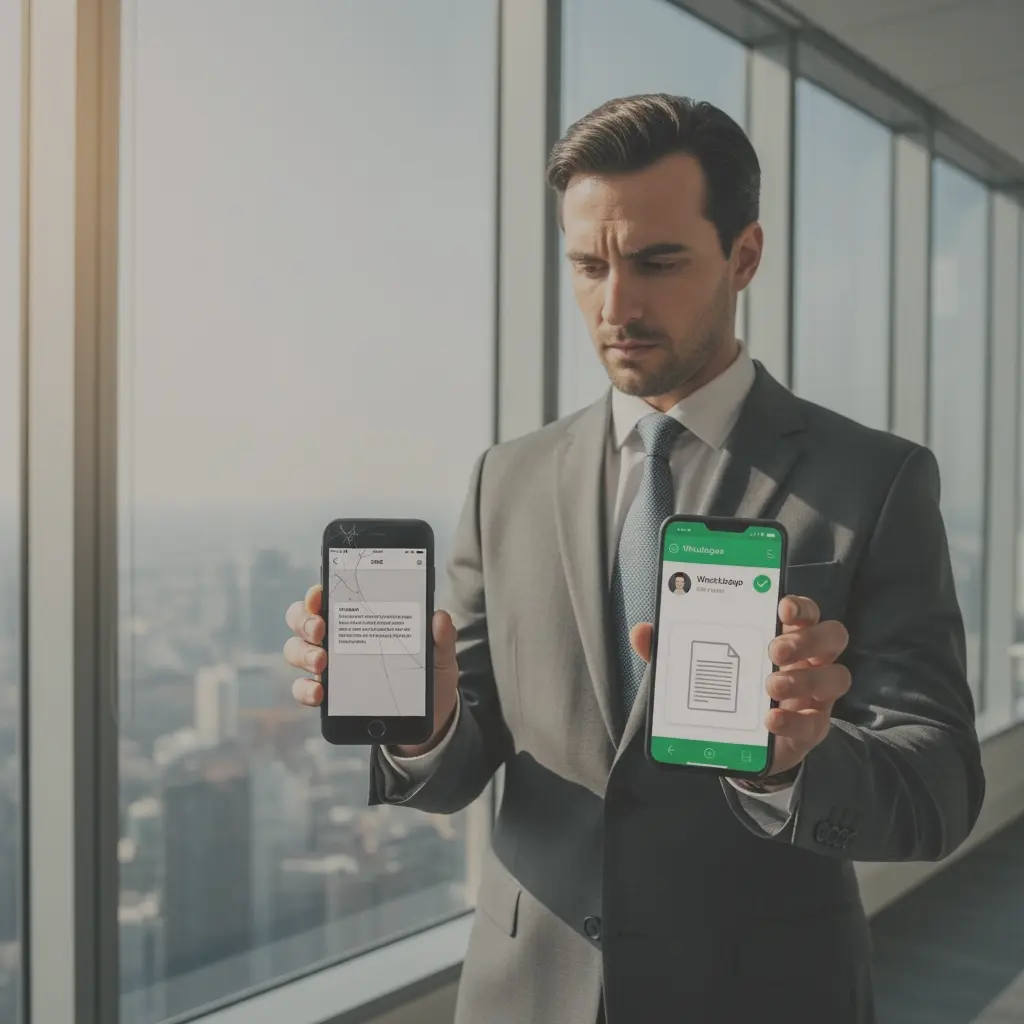
In the high-stakes world of financial services, the choice of communication channel is more than a tactical decision—it’s a strategic one that directly impacts security, customer trust, and revenue. For years, SMS has been the default for everything from transaction alerts to marketing blasts. But as security threats escalate and customer expectations evolve, a critical question emerges for every executive: in the battle of WhatsApp vs. SMS, which channel truly wins for driving high-value financial conversions? 🚀
The answer isn’t just about open rates; it’s about building a secure, interactive, and continuous customer journey. While SMS offers universal reach, its vulnerabilities to phishing and lack of rich features make it a growing liability. WhatsApp, powered by its Business API, presents a secure, engaging, and cost-effective alternative that’s purpose-built for the modern financial landscape.
The Elephant in the Room: Why SMS is a Security Liability
For decades, SMS was the undisputed king of direct communication due to its simplicity and ubiquity. However, its greatest strength has become its most critical weakness. The protocol was never designed for the secure transmission of sensitive information, creating significant risks for banks and their clients.
- Rampant Phishing & Smishing: SMS is the number one channel for phishing attacks (‘smishing’). Fraudsters can easily spoof sender IDs, tricking customers into revealing confidential data. This erodes brand trust and leads to direct financial losses.
- Lack of Encryption: Standard SMS messages are not end-to-end encrypted, meaning they can be intercepted. Sending One-Time Passwords (OTPs) or account details via SMS is like sending a postcard with your PIN on it.
- No Verified Identity: With SMS, customers have no definitive way of knowing if a message is genuinely from their bank. This ambiguity is what cybercriminals exploit.
For executives, relying on SMS is no longer a sustainable strategy. The potential cost of a single security breach—in both financial penalties and reputational damage—far outweighs any perceived savings from the channel.
Enter WhatsApp: The Secure and Interactive Powerhouse for Finance
WhatsApp Business API was engineered to solve the exact problems that plague SMS. It provides a secure and branded ecosystem where banks can engage customers with confidence, transforming a simple notification channel into a powerful conversion tool.
- End-to-End Encryption: Every message, from a simple balance inquiry to a loan document, is secured with signal protocol encryption, making it unreadable to anyone but the intended recipient.
- Verified Business Profiles: The official green checkmark instantly tells customers they are communicating with their legitimate, verified bank. This single feature is a powerful deterrent against phishing and builds immediate trust.
- Rich, Interactive Experiences: Unlike the 160-character limit of plain-text SMS, WhatsApp supports rich media like documents, images, and videos, alongside interactive buttons and lists. This allows for seamless, in-channel experiences like document submission or product exploration.
WhatsApp vs. SMS: A Feature-by-Feature Breakdown for Financial Use Cases
Let’s compare how each channel performs across critical banking interactions to see where the true value lies.
1. Client Onboarding & Registration
SMS: Can only send a link to a web form. This process is fragmented, leading to high drop-off rates. If a potential client abandons the form, the bank has limited options for effective remarketing.
WhatsApp: An AI Agent can guide a user through the entire registration process within the chat. Users can upload identity documents directly and securely in the conversation, dramatically reducing friction and increasing completion rates. indigitall’s platform has been shown to increase the adoption of financial services by over 20% through these streamlined journeys.
2. Transaction Alerts & OTPs
SMS: The traditional channel, but highly insecure. A compromised OTP can lead to complete account takeover.
WhatsApp: Offers a significantly more secure channel due to encryption and verified profiles. However, for the ultimate in security, indigitall’s proprietary Encrypted Push Notifications provide a 100% secure, anti-phishing alternative, proven to increase purchase approval rates from 78% to 90% compared to SMS.
3. Loan Applications & Product Marketing
SMS: A basic text link to a product page. Engagement is low, and personalization is minimal.
WhatsApp: Banks can send interactive product carousels, allowing clients to explore mortgage or credit options within the app. With ‘Click to URL’ buttons and AI-powered assistance, clients can get instant answers and even pre-qualify, leading to a 15% growth in credit and mortgage disbursements for our partners.
4. 24/7 Customer Support
SMS: Clunky, expensive for two-way conversations, and incapable of handling complex queries.
WhatsApp: This is where the channel truly shines. An indigitall AI Agent, trained on your bank’s specific data, can resolve up to 80% of routine inquiries 24/7. This deflects massive volume from call centers, leading to a 40-60% reduction in customer support costs and a 30% increase in NPS.
The True ROI: Why WhatsApp Delivers More Than a Cheaper SMS
While an individual SMS message may seem cheaper on the surface, its total cost of ownership is far higher. The hidden costs of fraud, low conversion rates, and overwhelmed support centers make it an inefficient investment.
WhatsApp, when integrated into an omnichannel strategy, delivers exponential ROI:
- Drastic Cost Savings: By migrating users from SMS to more secure and efficient channels like WhatsApp and Push, indigitall clients achieve an average of 75% savings on their SMS costs.
- Higher Engagement & Conversion: The interactive nature of WhatsApp leads to higher engagement. Retargeting campaigns on rich channels can achieve a CTR of up to 50%, turning abandoned applications into approved loans.
- Increased Customer Lifetime Value (LTV): By providing a secure, seamless, and helpful experience, banks build lasting loyalty. Our platform has been shown to increase customer LTV by up to 80%.
Beyond Channels: Orchestrating One Continuous Financial Journey
The debate of WhatsApp vs. SMS is ultimately a stepping stone to a more important conversation. The goal isn’t to replace one channel with another; it’s to build an intelligent system that uses the right channel for the right purpose at the right time.
This is the indigitall difference. We are not just a ‘plumbing’ provider for APIs. Our AI-powered platform acts as the intelligence layer, unifying your marketing and support communications into ‘One Continuous Experience’. Our built-in CDP creates a 360-degree view of your customer, allowing our Journey Engine to orchestrate communications seamlessly:
- A prospect abandons a loan application on your website.
- An automated Web Push notification reminds them to complete it.
- They click and re-engage, but have a question.
- An AI Agent on WhatsApp answers it instantly and helps them upload the required documents.
- Once approved, the final confirmation is sent via a 100% secure Encrypted Push Notification.
In this journey, every channel works together. The conversation is never broken. That is how high-value financial conversions are won and retained. It’s time to move beyond fragmented channels and embrace a unified, secure, and intelligent engagement strategy. 💪