indigitall Omni AI
 Start chat with AI agent
 Speak with AI voice agent
 Book a Demo

 Speak to an Expert













The Ultimate Email Marketing Audit: A Step-by-Step Guide for 2024



What is an Email Marketing Audit (And Why Is It Crucial?)
Are your open rates flatlining? Do your click-through rates feel stuck in the past? If you have the growing sense that your meticulously crafted email campaigns are shouting into a digital void, you’re not alone. In the hyper-competitive landscape of 2026, audience fatigue is real, and the inbox is more crowded than ever.
An email marketing audit is a comprehensive, deep-dive analysis of your entire email ecosystem. Think of it as a strategic health check that goes far beyond surface-level metrics. It systematically evaluates everything from your list hygiene and deliverability scores to your content strategy, automation flows, and ultimately, your conversion effectiveness.
However, the concept of a standalone email audit is becoming obsolete. Today’s customers don’t live in a single channel; they move seamlessly between your app, website, social platforms, and messaging services. A truly effective audit in 2026 must view email not in isolation, but as a critical component of your Global Omnichannel Strategy.
The most powerful insights from an audit don’t just tell you how to write a better subject line. They reveal where email is excelling and, more importantly, where another channel could deliver a more immediate and impactful experience. It’s about orchestrating the perfect message on the perfect channel at the perfect moment.
For example, your audit might uncover that while email is perfect for a weekly newsletter, a time-sensitive flash sale announcement generates significantly higher conversion when sent as an App Push Notification. Similarly, a delivery confirmation might achieve better engagement and customer satisfaction via WhatsApp Business. Understanding this interplay is the key to unlocking true growth.
Ultimately, conducting a thorough audit is no longer a “nice-to-have” quarterly task. It is a strategic imperative for any brand serious about maximizing customer lifetime value, driving meaningful engagement, and building a resilient Customer Journey that delivers results today and is prepared for the challenges of tomorrow.
The Pre-Audit Checklist: Gather Your Tools and Data
A successful audit begins with solid preparation. Before you dive into analyzing individual campaigns, you need to gather the right data and secure access to your core marketing platforms. This initial step ensures you have a comprehensive, data-driven foundation for all the strategic decisions that will follow.
Think of this as assembling your toolkit. Having everything in one place prevents delays and allows you to see the connections between different data points. For 2026, a truly effective audit looks beyond the email inbox and considers the entire customer lifecycle.
Here’s what you need to have ready:
- Access to Key Platforms: Ensure you have full login credentials and permissions for your Email Service Provider (ESP), Google Analytics 4 (GA4), and your Customer Relationship Management (CRM) platform. Each tool provides a different piece of the puzzle: your ESP shows campaign performance, GA4 reveals post-click behavior, and your CRM offers deep customer context.
- Core Performance Metrics (Last 6-12 Months): Pull a consolidated report covering late 2025 through today. You’ll need a clear view of your baseline performance. Focus on these essential KPIs:
- Open Rate: The percentage of recipients who opened your email.
- Click-Through Rate (CTR): The percentage of recipients who clicked on one or more links.
- Conversion Rate: The percentage of recipients who completed a desired action (e.g., purchase, download).
- Bounce Rate: The percentage of emails that were not successfully delivered.
- Unsubscribe Rate: The percentage of recipients who opted out of your list.
- Audience & Segmentation Data: Identify your most and least engaged audience segments. Gather data on your key personas and any behavioral or demographic filters you use for targeting. This is crucial for evaluating personalization effectiveness.
- Content & Creative Inventory: Compile a list of your top-performing and worst-performing email campaigns from the past year. Include subject lines, creative assets, and call-to-action (CTA) variations that you can analyze for patterns.
Gathering this data from siloed systems can be one of the most time-consuming parts of an audit. This is where the power of a unified customer engagement platform becomes evident. The indigitall console, for example, simplifies this process by consolidating data from multiple channels into a single, coherent dashboard.
Instead of just seeing email metrics, you can seamlessly analyze how your email strategy impacts your wider Omnichannel efforts. This allows you to understand how a specific email campaign might drive engagement on your app via Push Notifications or trigger a follow-up conversation on WhatsApp Business, giving you a true 360-degree view of your Customer Journey orchestration.
The 5-Pillar Email Marketing Audit Framework
Embarking on a full-scale email marketing audit can feel overwhelming. To demystify the process and provide a clear path forward, we’ve developed a structured, five-pillar framework. This approach breaks down your entire email ecosystem into manageable components, ensuring no critical element is overlooked.
Think of this not just as a checklist, but as a strategic lens through which you can evaluate, optimize, and innovate. Each pillar represents a core function of a high-performing email program in 2026, from the foundational data to the sophisticated automation that drives modern customer engagement.
The five essential pillars of a comprehensive email marketing audit are:
- Audience & List Health: This pillar focuses on who you are talking to, examining the quality, segmentation, and growth strategies of your contact database.
- Technical Deliverability: Here, we dive into the technical backbone of your program, including authentication, reputation, and infrastructure, to ensure your messages actually reach the inbox.
- Content & Creative: This section audits the substance of your communications—from subject lines and personalization to design and calls-to-action—to maximize impact and engagement.
- Automation & Journeys: We move beyond single campaigns to analyze the sophistication of your automated workflows, transactional messages, and how email integrates into a broader, omnichannel Customer Journey.
- Performance & ROI: The final pillar ties everything together by evaluating your analytics, attribution models, and the overall financial return your email program delivers to the business.
By systematically working through these five areas, you will build a holistic picture of your program’s strengths and weaknesses. This allows you to create an actionable roadmap for improvement that not only enhances your email performance but also strengthens your entire Global Omnichannel Strategy. After all, in today’s connected landscape, email doesn’t exist in a vacuum; it’s a vital touchpoint in a larger conversation happening across App Push, Web Push, and WhatsApp, all of which can be orchestrated from a unified platform like indigitall.

Pillar 1: Audience & List Health
Your subscriber list is the bedrock of your entire email marketing ecosystem. In 2026, the long-held mantra of “quality over quantity” has never been more critical. A bloated list of unengaged contacts actively harms your sender reputation and wastes resources, while a smaller, highly engaged audience drives tangible ROI.
This pillar of your audit focuses on dissecting the health, acquisition methods, and strategic management of your audience data. Let’s evaluate the core components that define a high-performing list today.
Evaluating Your Opt-In Process
How a subscriber joins your list sets the tone for the entire relationship. A frictionless, transparent opt-in process builds trust from the first interaction. In your audit, ask: Are we using a clear, single opt-in, or the industry-leading double opt-in method?
While single opt-in offers a lower barrier to entry, the double opt-in process—where users confirm their subscription via a link in a follow-up email—is the standard for high-performance marketing in 2026. It verifies intent, reduces bounce rates from typos, and ensures you are building a list of users who genuinely want to hear from you.
The Sophistication of Your Segmentation
Gone are the days of batch-and-blast emails. Hyper-personalization is the expectation, and it begins with intelligent segmentation. A modern audit must go far beyond basic demographics. Your goal is to create dynamic segments that reflect real-time user intent and behavior across your entire digital footprint.
Consider the following segmentation strategies you should have in place:
- Behavioral Segmentation: Grouping users based on website pages visited, app features used, content downloaded, or previous email interactions (opens, clicks).
- Purchase & LTV Segmentation: Differentiating between first-time buyers, repeat customers, high-value clients, and those who have recently churned.
- Lifecycle Stage Segmentation: Tailoring communication for new subscribers, active users, at-risk customers, and loyal brand advocates.
- Omnichannel Engagement: Segmenting users by their preferred channel. Are they more responsive to App Push, WhatsApp, or email? A unified platform like indigitall makes it seamless to track this and orchestrate communication on the right channel at the right time.
List Hygiene & Re-engagement Protocols
A healthy list is a clean list. Regular list hygiene is not a one-time task but an ongoing process essential for maintaining high deliverability and protecting your sender score. How often are you reviewing and cleaning your contact database?
Your audit should identify a clear protocol for managing inactive subscribers. This typically involves a re-engagement Customer Journey. Instead of just sending a single “we miss you” email, orchestrate a multi-step, multi-channel campaign. A sequence could start with a compelling email offer, followed by a targeted Push Notification to users who have your app, reminding them of your value.
If a subscriber remains unresponsive after this journey, it’s time to let them go. Purging these contacts may feel like a loss, but it’s a strategic move that strengthens your overall email program, leading to better metrics and a more accurate understanding of your true audience engagement.
Pillar 2: Technical Deliverability & Sender Reputation
While content and strategy capture the spotlight, technical deliverability is the silent, hardworking foundation of your entire email marketing program. Think of it as the engine room of a ship; without it, even the most beautiful vessel is dead in the water. Getting this right is about ensuring your meticulously crafted messages actually reach the inbox.
In 2026, mailbox providers like Google and Yahoo have doubled down on their requirements, making robust technical validation a non-negotiable prerequisite for success. Failing to meet these standards doesn’t just hurt deliverability; it actively damages your brand’s sending reputation.
Email Authentication: Your Digital Passport
Email authentication protocols are how you prove to Internet Service Providers (ISPs) that your emails are legitimate and not sent by a malicious actor spoofing your domain. They act as a digital passport, verifying your identity and granting you passage to the subscriber’s inbox.
- SPF (Sender Policy Framework): This is a public list of all the IP addresses and servers authorized to send emails on behalf of your domain. It’s the first line of defense, telling receiving servers, “This email came from an approved location.”
- DKIM (DomainKeys Identified Mail): DKIM adds a unique digital signature to every email you send. This signature is verified by the recipient’s server to ensure the message content hasn’t been tampered with in transit, protecting its integrity.
- DMARC (Domain-based Message Authentication, Reporting & Conformance): DMARC is the policy layer that tells mailbox providers what to do if an email fails SPF or DKIM checks—either quarantine it, reject it, or do nothing. It also provides crucial reports, giving you visibility into who is sending emails from your domain.
Implementing all three is the gold standard for 2026. A strong DMARC policy is your ultimate instruction manual to the world, protecting your domain’s reputation and ensuring only legitimate communications reach your audience.
Monitoring Your Sender Reputation
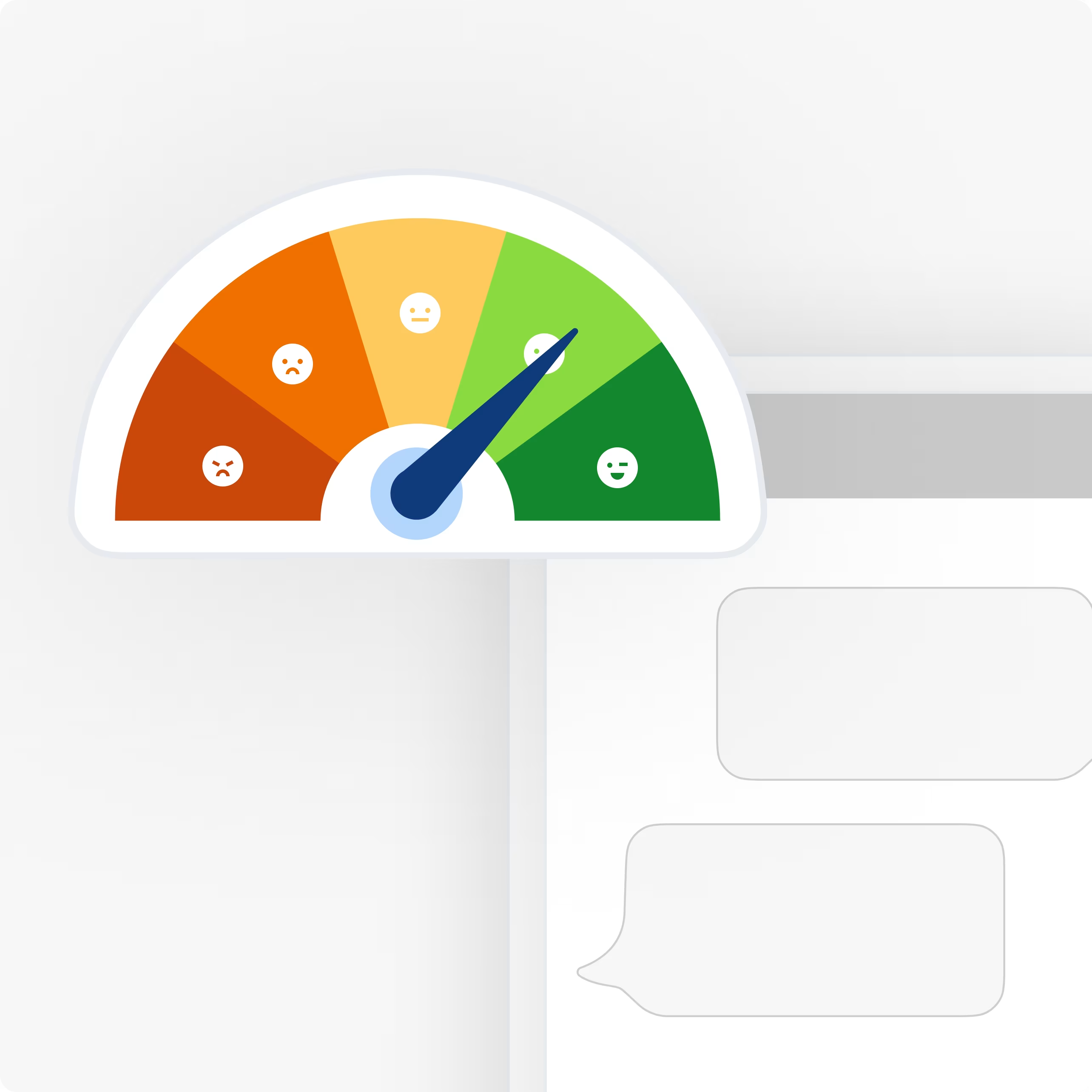
Your sender reputation is a score that ISPs assign to your domain based on your sending history. A high score means you’re a trusted sender, while a low score routes you directly to the spam folder. It’s essential to monitor this proactively.
Utilize tools like Google Postmaster Tools and SenderScore.org to get a holistic view of your sender health, including domain reputation, IP reputation, and feedback loop data. When this data is integrated directly within a unified platform like the indigitall console, you gain powerful, real-time insights without having to juggle multiple dashboards, streamlining your technical oversight.
Analyzing Key Deliverability Metrics
Your bounce rates and spam complaint rates are critical diagnostic signals. They tell a story about the health of your list and the relevance of your content.
- Bounce Rates: A hard bounce indicates a permanent delivery failure (e.g., an invalid email address) and these contacts must be removed immediately. A soft bounce is a temporary issue (e.g., a full inbox). Consistently high bounce rates signal a need for better list hygiene practices.
- Spam Complaint Rates: This is one of the most damaging metrics. A high complaint rate tells ISPs your content is unwanted, even by people who opted in. This is often a sign of a disconnect between what subscribers expected and what they received, or simply sending too frequently without proper segmentation.
A high spam complaint rate on email can be a powerful cue to re-evaluate your Global Omnichannel Strategy. Instead of sending another email, perhaps a less intrusive App Push Notification or a highly personalized WhatsApp message is the better way to engage that segment. Orchestrating these choices from a single platform allows you to protect your email channel while still driving a seamless, effective Customer Journey.

Pillar 3: Content & Creative Performance
Once you’ve refined your audience and delivery infrastructure, it’s time to audit the message itself. In 2026, compelling content is more than just good copy; it’s a data-driven, highly-optimized experience. This pillar examines every creative element that engages your user, from the first glance in the inbox to the final click.
Your audit should meticulously analyze the following creative components to ensure they’re not just aesthetically pleasing, but engineered for maximum impact.
- Subject Lines, Preheaders, and ‘From’ Names: These elements are your digital handshake. Are they clear, compelling, and personalized? A static ‘From’ name might work for newsletters, but a dynamic name (e.g., “Anna from indigitall”) could dramatically lift engagement for a targeted campaign. Traditional A/B testing, while useful, is no longer the peak of optimization in 2026.
- Email Design and Branding: Scrutinize your templates for absolute brand consistency. Does your email’s visual identity perfectly match your app, website, and even your WhatsApp Business profile? Every email must be flawlessly mobile-responsive and designed for accessibility, ensuring a seamless user experience for everyone.
- Calls-to-Action (CTAs): Your CTAs must be impossible to misunderstand. Audit their design, copy, and placement. Are they action-oriented and visually distinct? A weak CTA is a dead end in your Customer Journey, while a strong one is the engine of conversion.
This is where manual guesswork gives way to intelligent automation. Instead of spending weeks A/B testing a handful of subject line ideas, the indigitall AI engine transforms your strategy. Our generative AI doesn’t just test your ideas; it analyzes your campaign goals and historical data to generate dozens of high-potential subject lines and body content variations for you.
Within the indigitall console, our AI predicts the winning creative, automates the testing process, and dynamically shifts traffic to the best-performing version in real-time. This moves you from reactive testing to proactive, AI-powered content optimization, ensuring every email sent is already maximized for engagement and conversion.
Pillar 4: Automation & Customer Journeys
In 2026, the most successful brands have moved far beyond the one-off campaign mindset. The true engine of growth lies in sophisticated, automated Customer Journeys that engage users at critical moments. Your audit must shift from evaluating individual emails to analyzing the performance and orchestration of these always-on workflows.
This requires a fundamental question: are you only auditing outbound marketing emails? If your audit ignores transactional messages like password resets, order confirmations, and shipping notifications, you are missing half the picture. A disjointed experience between marketing and transactional touchpoints can erode trust and disrupt an otherwise seamless journey.
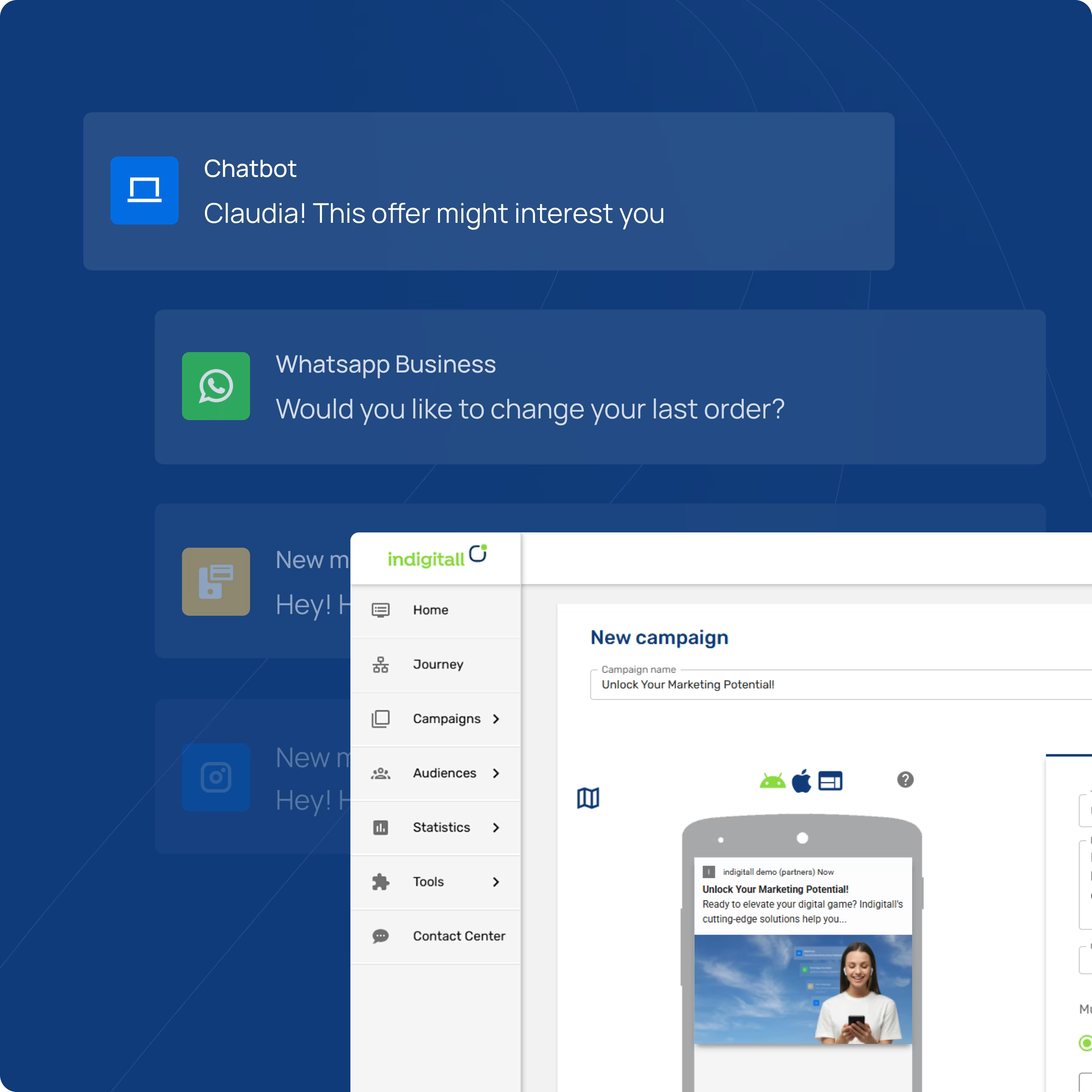
A truly effective audit in 2026 examines the entire communications ecosystem. Platforms like indigitall provide a unified view, allowing you to manage and optimize both promotional campaigns and transactional triggers from a single console. This ensures brand consistency and allows you to see how every message contributes to the overall customer experience.
When auditing your automations, focus on these core Customer Journeys:
- Welcome Series: Does your welcome flow do more than just say hello? Audit its performance for driving initial purchases, encouraging app downloads, or gathering preference data. Is it a single email, or a multi-step, Omnichannel onboarding experience?
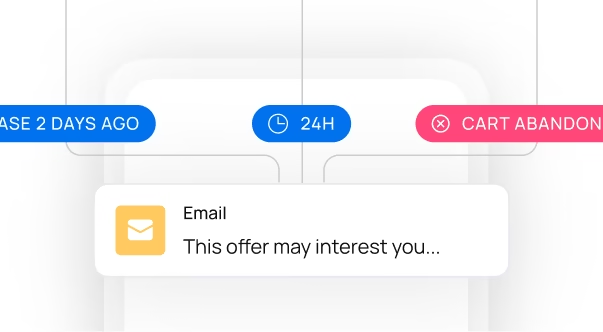
- Abandoned Cart Reminders: This is a crucial revenue driver. Analyze the timing, number of touchpoints, and the content of your reminders. A modern strategy might start with an email, follow up with a rich App Push notification, and finally leverage WhatsApp for a conversational nudge to complete the purchase.
- Post-Purchase Follow-Ups: The journey doesn’t end at checkout. Audit your post-purchase flow for opportunities to provide value, request reviews, and drive repeat business. Are you confirming the order, providing shipping updates, and suggesting complementary products in a cohesive sequence?
- Re-engagement & Win-Back Campaigns: Evaluate how you identify and communicate with at-risk or dormant users. Your audit should check the triggers, the value of the offers presented, and the channels used to bring these valuable customers back into the fold.
Ultimately, this pillar is about assessing the intelligence of your marketing. Strong automation and well-orchestrated Customer Journeys are what separate high-performing programs from the rest, turning individual interactions into lasting customer relationships.
Pillar 5: Performance, ROI, and Goal Alignment
In 2026, vanity metrics are no longer enough to justify marketing spend. While open and click-through rates provide a surface-level pulse check, your C-suite and stakeholders care about one thing: tangible business results. This pillar moves your audit from a tactical review to a strategic assessment of email’s true contribution to the bottom line.
Your analysis must connect every email sent to a measurable outcome. It’s time to move beyond the click and focus on the KPIs that define success in today’s digital ecosystem.
- Conversion Rate: What percentage of email recipients complete the desired action (e.g., make a purchase, fill out a form, download a resource)?
- Revenue Per Email (RPE): Calculate the total revenue generated from a campaign divided by the number of emails delivered. This is a powerful metric for proving direct financial impact.
- Customer Lifetime Value (LTV): How are your email campaigns influencing repeat purchases and increasing the LTV of your subscribers? An integrated platform like the indigitall console allows you to track user behavior across their entire lifecycle, not just a single campaign.
Next, hold your performance accountable to your program’s stated objectives. A successful email strategy is not one-size-fits-all; its performance metrics must mirror its core purpose. Is your email program meeting the specific goals you set for it?
If your goal is lead nurturing, are you tracking the velocity of Marketing Qualified Leads (MQLs) converting to Sales Qualified Leads (SQLs)? If it’s customer retention, are you measuring a decrease in churn or an increase in repeat purchase frequency among targeted segments? Aligning your KPIs with these goals is critical.
Finally, email doesn’t exist in a silo. In 2026, a high-performing email is often just the first step in a sophisticated, Global Omnichannel Strategy. True ROI is revealed when you see how email orchestrates with other channels. Does an abandoned cart email lead to a conversion after a follow-up via WhatsApp Business or an App Push Notification? This holistic view is where true value is unlocked.
Comparing your performance against current 2026 industry benchmarks provides essential context. But look beyond open rates. Benchmark your conversion rates, revenue per subscriber, and list growth against your competitors to understand where you truly stand and where opportunities for optimization lie.
From Audit to Action: Fixing a Broken Email Strategy
You’ve meticulously worked through the audit, identifying gaps, performance issues, and opportunities. This analysis is crucial, but its true value is only unlocked when you translate those findings into a concrete, strategic action plan. An audit that sits in a folder is a wasted effort; an audit that fuels tangible change is a catalyst for growth.
In 2026, fixing a “broken” email strategy rarely means just fixing email. It means reimagining how email functions within your broader, omnichannel communication ecosystem. The goal is to move from isolated campaigns to seamless, interconnected Customer Journeys that meet users on their preferred channel at the perfect moment.
A Framework for Prioritization
Tackling everything at once leads to burnout and minimal impact. We recommend a phased approach that builds momentum and delivers early wins. Focus your resources by prioritizing fixes in this order:
- 1. Secure the Technical Foundation: Start with the non-negotiables. Address any critical issues with deliverability, sender authentication (SPF, DKIM, DMARC), and list hygiene first. If your emails aren’t reliably reaching the inbox, no amount of brilliant content or journey orchestration will matter. This is the bedrock of your entire strategy.
- 2. Optimize High-Impact Journeys: Next, focus on the automated flows that drive the most significant business value. This typically includes your welcome series, abandoned cart sequences, and post-purchase follow-ups. Enhance them by integrating other channels. For example, complement an abandoned cart email with a timely App Push Notification or a helpful WhatsApp message to maximize conversion.
- 3. Refine Content and Personalization: With a solid technical base and optimized core journeys, you can now focus on elevating the message itself. Implement a rigorous A/B testing schedule, leverage dynamic content based on user data, and explore generative AI to scale hyper-personalized recommendations within your emails and other communications.
Orchestrating this level of omnichannel communication—from email to App Push to AI-powered WhatsApp conversations—can be complex with a disjointed tech stack. A unified platform like indigitall simplifies this process, allowing you to design, manage, and analyze every touchpoint from a single console for a truly holistic view of the Customer Journey.
The Limits of an Email-Only Approach
As your 2026 audit reveals performance gaps, it’s crucial to look beyond the inbox. While email remains a cornerstone of digital marketing, relying on it exclusively is a strategy tethered to the past. Platforms that built their empires on email-first methodologies are now struggling to meet the modern consumer’s expectation for immediate, context-aware, and personalized interactions across all touchpoints.
The data from your audit likely highlights this. Are your urgent flash sale announcements getting lost in a crowded inbox? Is your cart abandonment sequence feeling more like a delayed reminder than a timely nudge? For time-sensitive alerts, transactional updates, or conversational support, email’s inherent latency makes it a suboptimal channel, leading to missed opportunities and a fragmented user experience.
This is where a Global Omnichannel Strategy becomes non-negotiable. Today’s customer journey isn’t a linear path down an email funnel; it’s a fluid ecosystem spanning App Push Notifications, Web Push, WhatsApp Business, and even your Mobile Wallet. The goal is not just to be present on these channels, but to orchestrate them intelligently, delivering the right message on the right channel at the perfect moment.
Of course, many brands have recognized this shift, turning to powerful but notoriously complex enterprise solutions. While these platforms offer multi-channel capabilities, they often come with prohibitive costs, steep learning curves, and require significant developer resources to integrate and manage. This can create new data silos and operational bottlenecks, defeating the purpose of a unified strategy.
The true challenge in 2026 isn’t simply adding more channels; it’s about finding a single, cohesive platform that allows you to design, automate, and optimize every Customer Journey seamlessly. The most effective strategies are born from a solution that unifies data and execution, empowering your team to drive engagement without the complexity and cost of a fragmented tech stack.
Unifying Your Engagement with Indigitall: The Smarter Solution
Completing a comprehensive email marketing audit in 2026 is a crucial first step. The next is to implement a solution that not only fixes the gaps you’ve found but also future-proofs your entire engagement strategy. This is where indigitall transforms your insights into action.
Instead of patching together disparate tools for different channels, our platform provides a single, unified ecosystem to orchestrate every interaction. Let’s explore how indigitall directly solves the common challenges uncovered during an audit.
- Native WhatsApp Leadership for Immediate Impact: Did your audit reveal poor open rates for time-sensitive communications like appointment reminders or flash sale alerts? With indigitall, you can seamlessly switch that step in your Customer Journey from email to WhatsApp within the same workflow. Our native integration ensures you leverage the 98% open rates of WhatsApp for messages that simply can’t wait.
- Accessible AI to Eliminate Guesswork: The age-old question of “when is the best time to send?” is definitively answered by our technology. If your audit showed inconsistent engagement based on send times, indigitall AI’s predictive sending feature analyzes individual user behavior to deliver each message at the precise moment it’s most likely to be opened, maximizing your impact without manual effort.
- True Inbound & Outbound Unification: A modern customer experience is seamless. Your audit may highlight a disjointed experience where marketing messages feel disconnected from service interactions. indigitall unifies this by managing both outbound campaigns (like promotions) and inbound conversations (like support via an AI Agent) from a single, consistent brand presence, building trust and coherence.
Ultimately, your Global Omnichannel Strategy requires a platform built for agility and results. While legacy marketing clouds can be cumbersome and slow to implement, indigitall is designed for a superior Time-to-Value.
Our intuitive indigitall console and powerful automation tools mean you spend less time wrestling with technology and more time creating the meaningful, cross-channel experiences that drive loyalty and growth in 2026.
Conclusion: Make Your Next Audit a Launchpad for Growth
Completing a comprehensive email marketing audit is a significant achievement. But in the hyper-connected landscape of 2026, it’s crucial to view this not as a final task, but as a recurring strategic initiative. The insights you’ve uncovered are your new baseline for continuous optimization and innovation.
The ultimate goal has evolved beyond simply ‘fixing email.’ It’s about leveraging those findings to build a more resilient, holistic customer engagement strategy. The performance data from your email campaigns should directly inform how you interact with users on other critical touchpoints, like App Push, Web Push, and WhatsApp Business.
This is where a Global Omnichannel Strategy becomes paramount. Orchestrating a seamless Customer Journey across siloed channels is inefficient and creates a disjointed experience for your audience. A unified platform like indigitall eliminates these friction points by bringing all your communication tools into a single, intelligent ecosystem.
By centralizing your data and automation, you can move from reacting to channel-specific metrics to proactively designing powerful, personalized experiences that drive loyalty and maximize LTV. You’ve done the hard work of auditing; now it’s time to build the future of your customer relationships.
Ready to see how a unified platform can transform your customer communication and turn audit insights into actionable growth? Request a demo of indigitall today.