indigitall Omni AI
 Start chat with AI agent
 Speak with AI voice agent
 Book a Demo

 Speak to an Expert











Beyond the Basics: How to Optimize Marketing Automation Workflows for Total Customer Engagement


Introduction: Why Your Marketing Automation Isn’t Working
Your customer just abandoned their cart. Your marketing automation triggers a discount email. An hour later, a support chatbot helps them complete the purchase via WhatsApp. The next day, your sales automation sends them a “we miss you” message about the very item now sitting in their living room. Sound familiar? This isn’t a failure of automation; it’s a failure of connection.
For too long, marketing, sales, and support systems have operated in isolated silos. The result is a fragmented customer experience that feels jarring and impersonal. The solution isn’t more automation, but smarter, unified orchestration. We call this moving from simple workflows to Unified Engagement Workflows—a single, cohesive strategy that orchestrates the entire Customer Journey from one place.
Let’s be clear: the “set-it-and-forget-it” drip campaigns that defined early marketing automation are no longer enough to compete in 2026. A modern approach must be truly omnichannel, seamlessly connecting touchpoints across App Push, Web, Email, and conversational channels like WhatsApp into a Global Omnichannel Strategy. It must be powered by AI to predict user intent and deliver hyper-personalized interactions in real time.
The challenge lies in centralizing these interactions. Juggling multiple platforms to manage different channels creates data gaps and operational friction. A single, cohesive platform that unifies all these touchpoints is no longer a convenience—it’s a strategic necessity for driving meaningful engagement and maximizing customer lifetime value (LTV).
This article is your blueprint. We will move beyond the basics to provide actionable strategies and practical examples for optimizing your workflows. You’ll learn how to design, implement, and measure unified Customer Journeys that not only delight your audience but also drive tangible business results.
Rethinking the Workflow: Beyond Simple ‘If/Then’ Logic
For many brands in 2026, the term “marketing automation workflow” still brings to mind a simple, linear sequence: if a user does X, then send them Y. This outdated view limits automation to isolated campaigns, missing the bigger picture of the complete customer lifecycle.
A true automation workflow is a dynamic, intelligent system that orchestrates communication across every touchpoint. It’s not just about a welcome series or an abandoned cart reminder; it’s about guiding a customer from initial awareness to loyal advocate and beyond. The fundamental building blocks remain the same, but their application becomes infinitely more sophisticated.
- Triggers: These are the starting guns. A trigger can be a user action (like adding an item to a cart or visiting a specific page), a data change (like entering a new loyalty tier), or even inaction (like not opening your app for 7 days).
- Actions: This is what your system does in response to a trigger. It’s most often a message—an App Push Notification, a WhatsApp message, or an in-app alert—but it can also be an internal action, like updating a user segment in your CRM.
- Logic: This is the intelligence layer. Logic includes delays (wait 24 hours before sending), conditions (only send if the user is in the “premium” segment), and branching paths (if the user opens the email, tag them as engaged; if not, try a Push Notification).
The single biggest mistake we see companies make is building their marketing workflows in a vacuum. Outbound marketing messages are planned in one system, while inbound customer support conversations happen in another. This creates a disconnected and often frustrating customer experience.
Imagine a customer spends 20 minutes on a WhatsApp chat with your AI Agent to resolve a billing issue. Moments later, they receive a cheerful push notification with a 10% discount offer. This disconnect doesn’t just feel robotic; it actively damages brand perception by showing you don’t have a unified view of your customer.
At indigitall, our philosophy is built on breaking down these silos. A truly effective Customer Journey requires a single, unified communications ecosystem where outbound marketing automation and inbound service interactions inform one another. This is the foundation of a Global Omnichannel Strategy.
When your platform knows a customer just had a positive support interaction, your workflow can intelligently trigger a request for a review. Conversely, if it detects frustration, it can pause promotional messages and flag the account for human follow-up. This seamless orchestration is only possible when all your channels—from App and Web to WhatsApp and Mobile Wallet—operate from a single source of truth.

5 Essential Workflows You Can Build Today (The Unified Way)
While competitors are still relying on email-only sequences that feel dated in 2026, you can leapfrog them by orchestrating unified, omnichannel Customer Journeys. These aren’t just workflows; they are seamless, context-aware conversations that happen on the channels your customers actually use.
The key is moving beyond single-channel triggers to a holistic strategy. A platform like indigitall provides the central nervous system to connect App, Web, WhatsApp, and Wallet into one cohesive ecosystem. Here are five high-impact workflows you can build in the indigitall console to drive immediate results.
- 1. The Omnichannel Welcome JourneyThe goal is to guide new users to their first critical action fast. Instead of a simple welcome email, orchestrate a multi-touch experience that drives activation.
Example Flow: A user registers on your app. They immediately receive an In-App message highlighting a key feature. The next day, an App Push reminds them to complete their profile. If they haven’t made a purchase in three days, a WhatsApp message delivers an exclusive “first-time buyer” discount code. This approach dramatically increases user activation and reduces day-7 churn.
- 2. The High-Conversion Abandoned Cart SequenceDon’t let potential revenue slip away. A modern abandoned cart strategy meets customers where they are with timely, relevant nudges that feel helpful, not intrusive.
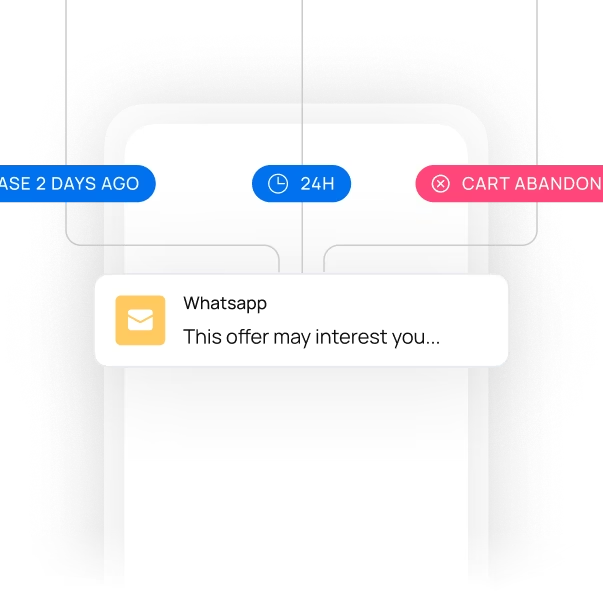
Example Flow: A user abandons their cart on your website. After 30 minutes, a Web Push notification serves as a gentle reminder. Four hours later, an App Push shows the item they left behind, creating powerful visual recall. For high-value carts, a WhatsApp message sent after 24 hours can offer direct assistance or a small incentive to complete the purchase, recovering significantly more revenue than email alone.
- 3. The Proactive Re-engagement & Win-Back FlowWinning back a dormant user is far more cost-effective than acquiring a new one. This workflow uses a cascade of channels to reignite interest and prevent churn before it happens.
Example Flow: A user hasn’t opened your app in 30 days. Trigger an App Push with a compelling message like, “We’ve missed you! See what’s new.” If there’s no response, follow up a week later with an email showcasing personalized product recommendations based on their past behavior. This intelligent, multi-channel approach boosts engagement and maximizes customer lifetime value (LTV).
- 4. The Post-Purchase & Loyalty Nurture LoopThe Customer Journey doesn’t end at checkout. This is your prime opportunity to build loyalty and drive the next purchase. Use automation to create a flawless post-purchase experience.
Example Flow: Immediately after a purchase, send the order confirmation and shipping updates via WhatsApp for maximum visibility. A week later, trigger an App Push asking for a product review. After 21 days, send a follow-up email with smart recommendations for complementary products. This transforms a one-time transaction into a long-term relationship.
- 5. The Real-Time Geofencing TriggerBridge the gap between your digital and physical worlds. Geofencing workflows use a user’s location to deliver hyper-relevant messages that drive immediate, real-world action.
Example Flow: A loyal app user enters a pre-defined geofence around one of your physical stores. The indigitall platform instantly triggers a rich push notification to their device with a time-sensitive offer, like “You’re nearby! Show this message for 15% off your purchase in the next hour.” This is the pinnacle of phygital marketing, turning digital engagement into direct foot traffic and sales.
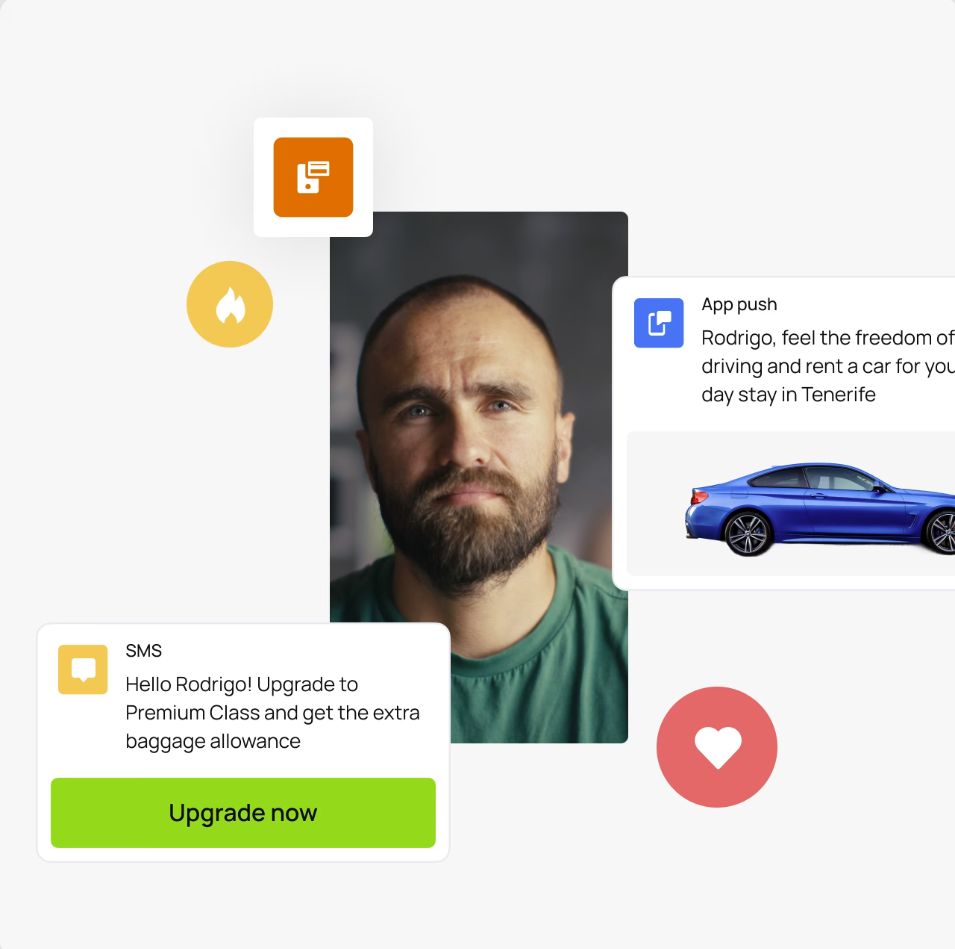
1. The Unified Welcome & Onboarding Sequence
The first impression is everything. In 2026, a single welcome email no longer cuts it. The modern customer expects a cohesive, intelligent greeting that spans across the channels they actually use. This is where an orchestrated, multi-channel welcome sequence becomes the cornerstone of your Customer Journey strategy.
Imagine this seamless flow, managed entirely within the indigitall console: a new user signs up and immediately receives a personalized welcome email. Twenty-four hours later, if they haven’t completed their profile, a rich push notification is triggered, prompting them to add key details for a more tailored experience. This isn’t just a sequence of messages; it’s a guided introduction to your brand’s ecosystem.
When the user taps the notification and opens your app, the journey continues. An in-app message can launch a quick feature tour or highlight the single most valuable action they can take next. This fluid hand-off between email, push, and in-app messaging is critical for driving initial adoption and demonstrating immediate value.
But what happens when a user gets stuck? This is where indigitall’s native WhatsApp Business integration transforms the experience. If the platform detects a user has stalled during a critical onboarding step, you can automatically trigger a proactive WhatsApp message from an AI Agent. A simple, “Hi [Name], we noticed you started setting up your account. Can we help with anything?” can dramatically reduce friction and prevent early churn.
This omnichannel approach does more than just welcome a user; it sets the stage for their entire lifecycle. By integrating these touchpoints, you are:
- Maximizing Activation: Guiding users to key “aha!” moments faster across their preferred channels.
- Gathering Zero-Party Data: Encouraging profile completion and preference setting from day one.
- Demonstrating Value: Proactively offering support via conversational channels like WhatsApp shows you prioritize their success.
- Building a Foundation: This first Customer Journey provides the blueprint for your entire Global Omnichannel Strategy, all orchestrated from a single, powerful platform.

2. The Multi-Channel Abandoned Cart Recovery
For years, the standard abandoned cart workflow has been a simple three-email sequence. In the fast-paced digital landscape of 2026, this approach is no longer enough. Customers are inundated with emails, leading to inbox fatigue and diminishing returns on even the most well-crafted campaigns.
A truly effective recovery strategy meets customers where they are, using the right channel at the right time. This is a classic example of a high-impact Customer Journey that can be orchestrated to drive immediate conversion. Instead of relying on a single, saturated channel, a modern workflow leverages a true omnichannel approach.
Imagine this intelligent, automated workflow built within the indigitall console:
- 1 Hour Post-Abandonment: Web Push Notification. A gentle, low-friction reminder appears directly on the user’s browser. It’s a real-time nudge saying, “Did you forget something?” that can recapture attention while the purchase intent is still high, without requiring them to even open their inbox.
- 6 Hours Post-Abandonment: Personalized Email. If the push notification didn’t lead to a conversion, a follow-up email provides more context. This message can include high-quality images of the abandoned items, social proof like reviews, and links to related products, reminding them of the value they left behind.
- 24 Hours Post-Abandonment: WhatsApp Message. This is the power play. A direct, personal message via WhatsApp has unparalleled open rates. By sending a message with a compelling, limited-time discount code (e.g., “Complete your order in the next 3 hours for 15% off!”), you create powerful urgency that drives immediate action.
This multi-channel sequence is far more than a series of disconnected messages; it’s a cohesive part of your Global Omnichannel Strategy. The system is intelligent enough to halt the sequence the moment a purchase is made, ensuring a seamless and non-intrusive customer experience.
Orchestrating this entire flow from a single platform is critical. An all-in-one solution like indigitall allows you to connect these channels effortlessly, track user progress through the journey, and optimize performance without juggling disparate tools or fragmented data.
3. The Proactive Re–Engagement & Churn Prevention Flow
Customer acquisition is expensive; retaining existing customers is where sustainable growth happens. A reactive “win-back” campaign is better than nothing, but a truly optimized strategy identifies and saves at-risk users before they go silent. This is where predictive automation transforms churn prevention from a last-ditch effort into a proactive, data-driven discipline.
The traditional approach uses a simple behavioral trigger, like “user has not logged in for 30 days.” While useful, this often means you’re already too late. The modern marketer needs to act on the subtle signals that precede inactivity. By the time 2026, relying solely on lagging indicators is a significant competitive disadvantage.
From Reactive Triggers to Predictive Intelligence
This is where the power of an integrated platform with Accessible AI becomes a game-changer. The indigitall platform analyzes a rich stream of user data—session frequency, time in-app, purchase history, and dozens of other signals—to generate a predictive churn score for every single user in real-time. You no longer have to wait for a user to lapse; you can intervene the moment their behavior suggests they are at risk.
Setting up this advanced Customer Journey in the indigitall console is remarkably straightforward. Instead of a simple time-based rule, your trigger becomes much more intelligent: “Start this workflow when a user’s churn risk score exceeds 75%.”
An Example AI-Powered Re-Engagement Journey:
- The Intelligent Trigger: The indigitall AI model flags a user as a high churn risk. The automated Customer Journey begins instantly, without any manual intervention.
- Step 1: The Light-Touch Nudge (App Push): The workflow immediately sends a friendly, non-intrusive push notification. A simple message like, “We’ve missed you! Check out what’s new since your last visit,” can be highly effective at re-sparking interest.
- Step 2: The Value-Driven Follow-Up (Email): If the user doesn’t engage with the push notification within 48 hours, the journey proceeds to the next step. An email is sent, but it’s not a generic blast. It uses dynamic content to populate a personalized selection of products or articles based on their past browsing history, driving them back with relevant content.
- Step 3: The Omnichannel Escalation (WhatsApp): For high-value customers, a third step could be added. If there’s still no engagement, a message via WhatsApp Business could deliver an exclusive retention offer, like “Here’s 15% off your next purchase, just for you.”
Orchestrating this multi-channel, predictive flow is a core strength of an all-in-one solution. The indigitall platform unifies the AI, the user data, and the communication channels (App, Web, Email, WhatsApp) into a single, seamless ecosystem. This allows you to build sophisticated retention strategies that would be nearly impossible to manage with separate, disconnected tools, forming the backbone of your Global Omnichannel Strategy.
4. The Post-Purchase & Loyalty Workflow
The sale is not the end of the Customer Journey; it’s the beginning of the loyalty loop. Top-performing brands in 2026 understand that the post-purchase phase is a critical opportunity to unify service interactions with marketing initiatives, transforming one-time buyers into lifelong advocates.
This is where the true power of a unified omnichannel strategy shines. Instead of treating transactional messages and marketing campaigns as separate functions in different tools, the indigitall platform allows you to orchestrate them into a single, seamless workflow that drives retention and maximizes Lifetime Value (LTV).
Consider this powerful, automated workflow you can build directly in the indigitall console:
- Step 1: Instant Transactional Confirmation. Immediately after a customer completes a purchase, a trigger sends an order confirmation via WhatsApp. This leverages a high-engagement channel for a critical service update, providing instant peace of mind.
- Step 2: Proactive Service Follow-Up. A few days after delivery, the journey continues with another automated WhatsApp message. This time, it asks the customer to rate their experience with a simple CSAT score (e.g., “Rate your purchase from 1-5”). This is a crucial inbound data-gathering step disguised as excellent customer service.
- Step 3: The Intelligent Pivot to Marketing. Based on the customer’s response, the workflow branches. If the customer provides a positive rating (e.g., 4 or 5), it triggers a marketing action: an email is sent showcasing products that are frequently bought together with their original purchase.
This workflow perfectly demonstrates the benefit of merging inbound service interactions with outbound marketing. The customer’s positive feedback becomes the direct trigger for a relevant, timely, and personalized cross-sell offer. You’re not just guessing what they might like; you’re acting on a clear signal of satisfaction.
Orchestrating this level of sophistication is nearly impossible with siloed tools. By managing your Global Omnichannel Strategy from a single platform, indigitall empowers you to create fluid Customer Journeys that build loyalty and drive significant repeat revenue, turning the post-purchase experience into your most effective marketing channel.
5. The Lead Nurturing & Sales Alignment Flow
One of the most persistent challenges in B2B or high-value B2C sales is the gap between Marketing and Sales. Marketing generates leads, but the sales team doesn’t know which ones are genuinely ready for a conversation. This automated workflow is designed specifically to bridge that gap, transforming raw leads into qualified, sales-ready opportunities.
This Customer Journey creates a seamless handoff by using intelligent lead scoring to identify the precise moment a prospect is warm enough to engage with a sales representative. It’s about delivering quality over quantity, directly impacting your conversion pipeline.
The Workflow in Action: From Download to Demo
Imagine a user visits your website and downloads a valuable resource, like a “2026 E-commerce Personalization Trends” whitepaper. This action is the trigger that initiates the automated journey within the indigitall console.
Instead of immediately passing this new contact to sales, the system begins a strategic nurturing process. This is where lead scoring becomes the engine of the workflow. You assign positive or negative points to a lead based on their engagement, creating a dynamic profile of their interest level.
- +5 points: Opens the initial email delivering the whitepaper.
- +15 points: Clicks a link in a follow-up WhatsApp message to a related case study.
- +20 points: Visits your pricing page or a specific product feature page.
- +30 points: Registers for an upcoming product demo webinar via a Web Push notification.
- -10 points: Is inactive for over 30 days.
The Pivot: From Nurturing to Sales Notification
The true power of this flow is what happens when a lead’s score crosses a predefined threshold—let’s say 50 points. At this moment, the lead is considered a Marketing Qualified Lead (MQL). The automation’s next action is not another message to the customer, but a set of critical internal operations.
The indigitall platform automatically and instantly:
- Updates Your CRM: It sends the lead’s new status and score directly to Salesforce, HubSpot, or your CRM of choice, changing their status from “Nurturing” to “MQL – Ready for Sales.”
- Notifies the Sales Team: It triggers a real-time alert via email or a Slack integration to the assigned sales representative, providing them with the lead’s name, contact info, score, and the specific actions they took.
This seamless orchestration ensures that when your sales team makes contact, it’s not a cold call. It’s a timely, context-aware conversation with a prospect who has already demonstrated significant interest. Managing this entire omnichannel process—from the initial web form to the WhatsApp message and the final CRM update—within a single, unified ecosystem is what allows for a truly frictionless and effective sales alignment strategy.
How to Optimize Your Workflows with Accessible AI
Setting up your marketing automation workflows is a foundational first step. However, the true path to maximizing customer lifetime value lies in continuous, intelligent optimization. Moving beyond a “set it and forget it” mindset is what separates good marketers from great ones in 2026.
This means embracing a culture of testing. While A/B testing email subject lines is common practice, a truly effective Global Omnichannel Strategy demands a more sophisticated approach. You need to test the core components of the Customer Journey itself.
- Channel Effectiveness: Is a high-impact App Push Notification more effective than a conversational WhatsApp message for your re-engagement campaign? Test different channels to discover what your audience truly prefers.
- Strategic Timing: Does a notification sent at 9 AM perform better than one sent at 7 PM? Test different time windows to understand user habits and maximize visibility.
- Entire Workflow Branches: Don’t just test a single message. Pit two entirely different Customer Journey paths against each other. For example, test a branch offering a 10% discount against another that offers free shipping to see which drives more conversions.
While manual testing is powerful, it can be time-consuming and complex. This is where accessible AI becomes your most valuable asset, transforming optimization from a manual task into an automated, intelligent process.
Meet indigitall AI: Your Built-In Optimization Engine
Unlike overly complex and expensive AI solutions that require dedicated data science teams, indigitall’s AI is designed for marketers. It’s integrated directly into the indigitall console, providing practical tools that deliver immediate value without a steep learning curve.
Predictive Send Time: Why guess the best time to send a message when you can know? Our AI analyzes the historical engagement patterns of each individual user. It then automatically delivers your message at the precise moment that specific person is most likely to open, click, and convert.
AI Content Generation: Overcome writer’s block and create high-performing copy in seconds. Our generative AI acts as your creative co-pilot, helping you draft compelling, on-brand text for Push Notifications, WhatsApp messages, and more. This accelerates your campaign creation process and ensures your messaging resonates with your audience.
By embedding these AI tools directly within our all-in-one platform, indigitall ensures that your optimization efforts are seamless. The AI learns from every user interaction across every channel in your ecosystem, creating a powerful feedback loop that constantly refines your strategy and drives superior results.
Choosing a Platform: Why a Unified Approach is Non-Negotiable
The modern marketer’s toolkit is often a patchwork of disconnected systems. This “martech stack” might have looked impressive in a 2026 budget meeting, but in practice, it creates data silos, disjointed customer experiences, and operational drag that hinders real growth.
Your team is likely feeling this pain. You might use powerful platforms like Braze or Insider for outbound marketing campaigns, but then rely on a completely separate tool like Intercom for inbound support chats. The result? The context is lost. The journey is broken. Your marketing team can’t see support conversations, and your service agents have no idea what promotion a customer just received.
The indigitall Advantage: A Single Platform for the Entire Lifecycle
A truly effective Global Omnichannel Strategy requires more than just connecting channels; it requires unifying the underlying technology. This is the core philosophy behind the indigitall platform. We provide a single, cohesive ecosystem to manage every touchpoint, from initial acquisition to long-term loyalty and support.
Our unified approach is built on three key differentiators that set us apart from fragmented solutions:
- Inbound & Outbound Unification: We don’t see marketing (outbound) and service (inbound) as separate functions. With indigitall, you can orchestrate a Customer Journey that starts with a targeted App Push and seamlessly transitions into a two-way, AI-powered conversation on WhatsApp, all tracked in a single customer profile within the indigitall console.
- Native WhatsApp Leadership: Many platforms treat WhatsApp as just another channel. We see it as a cornerstone of modern communication. Our deep, native integration with the WhatsApp Business Platform unlocks advanced capabilities for marketing, sales, and support that third-party connectors simply cannot match.
- Accessible AI & Automation: We embed generative AI and intelligent automation across our platform. This isn’t a complex, expensive add-on. It’s a core tool to help you qualify leads, resolve support queries instantly, and personalize communications at a scale that was previously unimaginable.
Compared to enterprise behemoths like Salesforce Marketing Cloud, which often require extensive customization and a team of specialists, the indigitall model delivers tangible business value much faster. By consolidating your stack, you dramatically lower your Total Cost of Ownership (TCO), accelerate implementation times, and boost team efficiency.
Ultimately, a unified platform provides the single source of truth you need to understand your customers and deliver the seamless experiences they now expect. It’s no longer an option—it’s the foundation for sustainable growth.
Conclusion: Start Building Smarter Workflows Today
The landscape of customer engagement in 2026 has evolved far beyond scheduled email blasts. True success lies not in isolated actions, but in the sophisticated orchestration of a unified Customer Journey that meets customers wherever they are, whenever it matters most.
By moving from basic automation to intelligent, omnichannel workflows, you connect every touchpoint—from App Push and Web Push to WhatsApp and SMS—into a single, cohesive conversation. This is the foundation of a modern digital strategy that builds lasting relationships.
Optimizing these workflows isn’t just a technical exercise; it’s a direct path to achieving your most critical business goals. The result is a powerful engine for:
- Increased Engagement: Delivering the right message on the right channel at the perfect moment.
- Enhanced Retention: Building loyalty through personalized, relevant, and timely interactions.
- Accelerated Revenue Growth: Driving conversions and maximizing customer lifetime value (LTV).
Putting these principles into practice requires a platform built for a true omnichannel reality. With a unified solution, you can leave behind the complexity of juggling multiple tools and focus on what matters: designing exceptional customer experiences from the indigitall console.
Ready to unify your customer engagement? Request a demo of indigitall to see how our platform makes it easy to build and optimize powerful automation workflows.