indigitall Omni AI
  Start chat with AI agent
 Speak with AI voice agent
 Book a Demo

 Speak to an Expert










A Strategic Guide to Retail Customer Engagement Technology
February 3, 2026



Updated February 3, 2026
The Modern Retail Challenge: Why Fragmented Engagement Fails
The modern retail customer doesn’t follow a straight line. Their path to purchase is a complex web of interactions spanning your mobile app, website, social media channels, email, and even the physical store. Each touchpoint is an opportunity to build a relationship, but for many brands, it’s a point of failure.
The core problem lies in a disconnected technology stack. Many marketing teams rely on separate, specialized tools for each channel—one for email campaigns, another for SMS alerts, a different one for social media management, and yet another for app push notifications. This approach inevitably creates deep, damaging data silos.
These silos prevent a 360-degree view of the customer, leading to a massive gap between expectation and reality. A 2026 Braze report highlights this disconnect perfectly, revealing that while over 80% of customers expect highly personalized interactions, most brands struggle to deliver experiences that feel consistent and context-aware across channels.
When your data is fragmented, your customer experience becomes fragmented, too. A shopper might receive a promotional email for a product they just purchased in-store, or an abandoned cart notification on the app for an item they already bought on the website. These disjointed interactions don’t just feel impersonal; they actively erode customer trust and loyalty.
The solution isn’t to add more tools to the mix. The real path forward requires a fundamental shift in strategy: moving from a collection of isolated tools to a single, unified platform. This centralized ecosystem breaks down data silos, allowing you to orchestrate every interaction within a single, coherent Customer Journey.
By unifying your communications, you can build a Global Omnichannel Strategy where channels like App Push, WhatsApp, and Mobile Wallet work in concert, not in competition. This is the foundation for delivering the seamless, hyper-personalized experiences that modern consumers don’t just appreciate—they demand.
What is Retail Customer Engagement Technology?
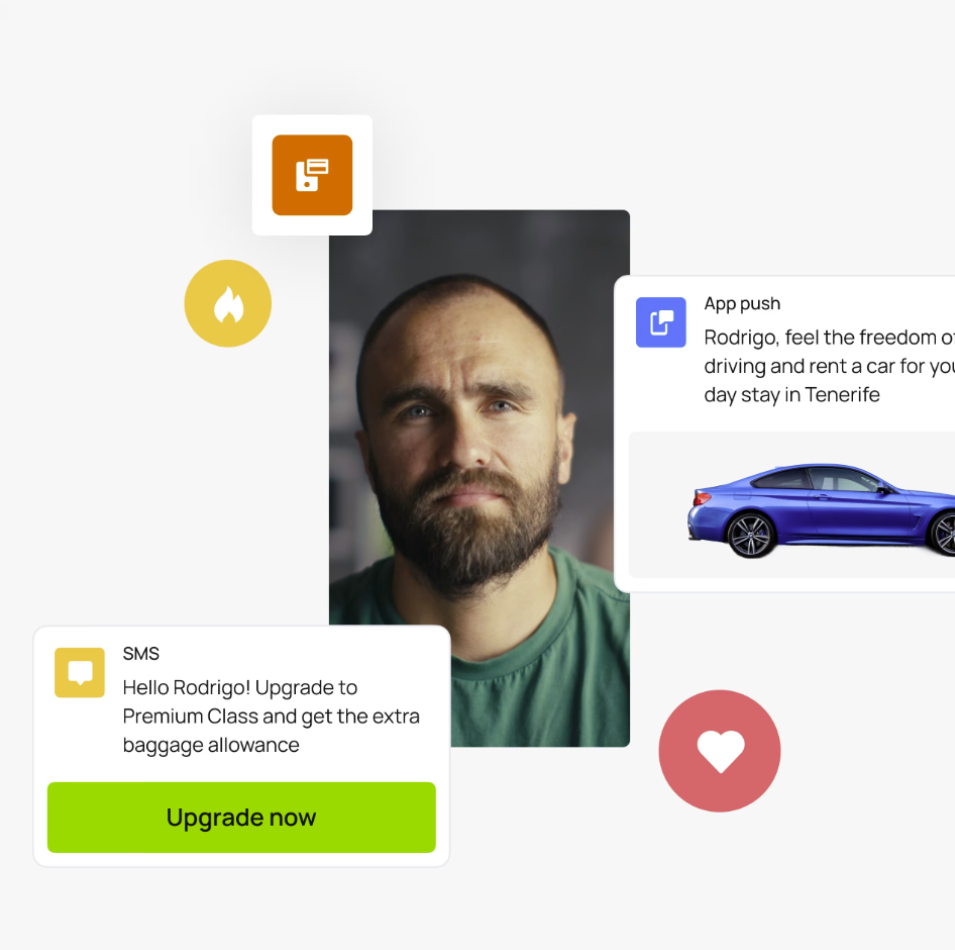
Retail Customer Engagement Technology refers to the complete digital ecosystem of tools, platforms, and software that enables retailers to communicate with, understand, and build lasting relationships with their customers. It’s the engine that powers modern marketing, transforming one-off transactions into a continuous, personalized dialogue across every stage of the Customer Journey.
In 2026, this technology is no longer about sending generic email blasts. It’s a sophisticated orchestration of multiple interconnected systems designed to deliver the right message to the right person on the right channel, precisely when it matters most. To build a winning strategy, it’s crucial to understand the core technological pillars that form this landscape.
- AI and Machine Learning: This is the intelligence layer. AI algorithms analyze customer data to predict future behavior, personalize product recommendations, and identify at-risk customers. Generative AI is now taking this further, helping marketers craft hyper-personalized message copy at scale, ensuring every interaction feels unique.
- Omnichannel Communication Platforms: These are the delivery channels that form your Global Omnichannel Strategy. This includes established channels like App Push Notifications, In-App Messages, and Email, as well as conversational platforms like WhatsApp Business. The goal is to create a seamless flow of communication where a customer can start a conversation on the web and continue it in the app without friction.
- In-Store and Phygital Technology: These solutions bridge the gap between the digital and physical worlds. Think QR codes that launch an augmented reality product view, NFC tags that add items to a digital wallet, or beacons that trigger a personalized welcome offer when a loyal customer enters a store.
- The Internet of Things (IoT): IoT devices provide real-time data that enhances both operations and the customer experience. Smart shelving can signal low stock to prevent disappointment, while connected devices can gather feedback on in-store experiences, feeding valuable data back into the engagement platform.
Viewing these technologies in isolation is a common mistake. A powerful AI engine is useless without effective delivery channels. Innovative in-store tech fails if it isn’t connected to a customer’s digital profile.
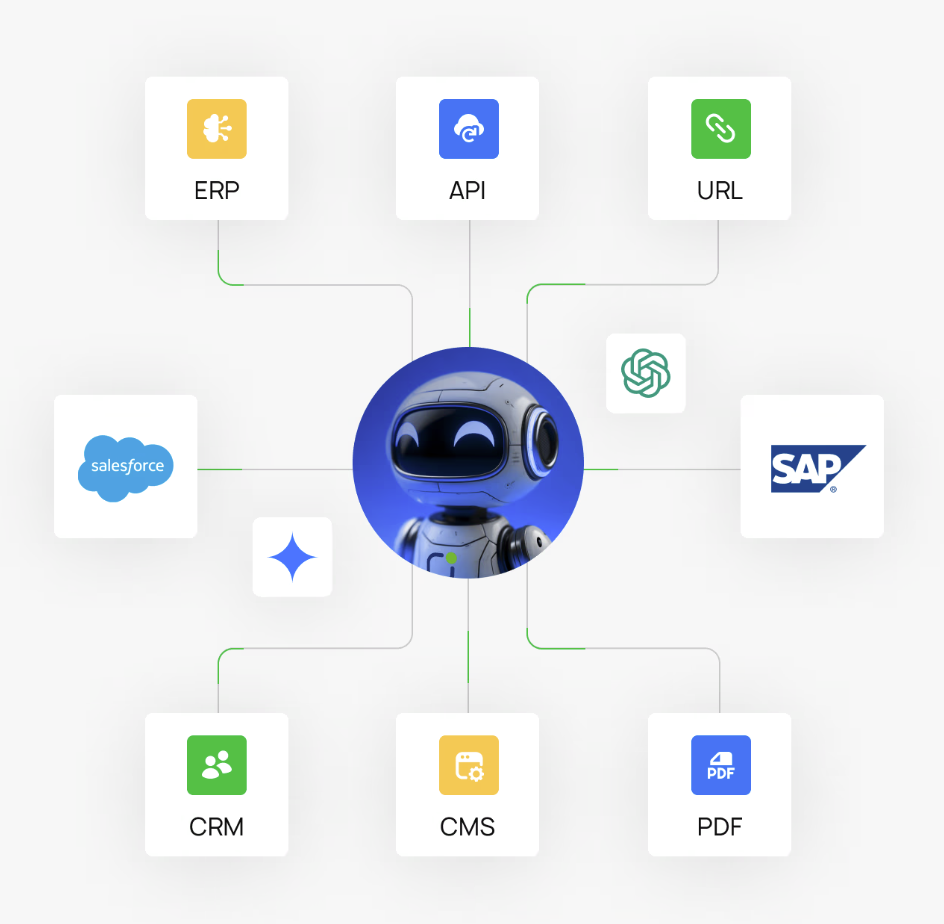
The true power is unleashed when these components are unified within a single, central hub. Such a platform allows you to orchestrate complex, data-driven Customer Journeys, ensuring every touchpoint is consistent, relevant, and contributes to maximizing customer lifetime value.
The Pillars of a Modern Retail Engagement Strategy
Having a powerful technology stack is only half the battle. True digital transformation in retail is achieved when that technology is guided by a clear, customer-centric strategy. As we see in 2026, leading brands are building their engagement ecosystems on four foundational pillars that turn technology into tangible business growth.
Think of these pillars as the blueprint for creating meaningful, profitable customer relationships. They represent a strategic shift from mass marketing to individualized, real-time dialogue.
Pillar 1: Hyper-Personalization at Scale
Personalization today goes far beyond using a customer’s first name in an email. True hyper-personalization leverages real-time behavioral data, purchase history, and predictive AI to deliver content and offers that are uniquely relevant to each individual, at the exact moment they are most receptive.
This means anticipating needs, such as recommending a complementary product based on a recent purchase or sending a reminder when a frequently bought item might be running low. A unified platform is essential to collect these signals from various touchpoints and act on them instantly.
Pillar 2: Seamless Omnichannel Orchestration
Modern customers don’t see channels; they see one brand. A successful Global Omnichannel Strategy ensures a consistent and connected experience whether they are on your app, website, or communicating via WhatsApp. The goal is to make the transition between these channels completely seamless.
Imagine a Customer Journey where a shopper browses on the web, later receives a rich App Push Notification about an abandoned cart, and finally completes the purchase through a direct link in a WhatsApp message. This level of orchestration is impossible with siloed tools but is the core strength of an integrated engagement platform.
Pillar 3: The Shift to Conversational Commerce
The era of one-way brand communication is over. Customers now expect two-way, interactive conversations on the messaging platforms they use every day. This is the essence of conversational commerce—using channels like WhatsApp Business and AI-powered agents to provide support, answer questions, and even facilitate transactions directly within a chat.
By meeting customers where they are, you reduce friction, build trust, and open up a powerful new channel for both service and sales. This pillar is about transforming your brand from a broadcaster into a helpful, always-on conversational partner.
Pillar 4: Proactive and Value-Driven Communication
The most effective engagement strategies are proactive, not reactive. Instead of waiting for a customer to act, you can use automated triggers to send timely, valuable messages that enhance their experience and drive them toward a specific goal.
This includes everything from back-in-stock alerts and price-drop notifications to loyalty status updates and exclusive previews. These automated communications, orchestrated through a platform like the indigitall console, demonstrate that you understand the customer’s intent and are actively helping them achieve their objectives, which in turn maximizes customer lifetime value (LTV).
Pillar 1: Unify the Digital and Physical Customer Journey
The line between the digital shelf and the physical storefront has completely dissolved. Welcome to the era of ‘Phygital’ retail, a hybrid ecosystem where customer interactions flow seamlessly between online and in-person environments. This is no longer a futuristic concept; as of 2026, it’s a fundamental customer expectation.
Modern shoppers demand flexibility. They research products on your app while standing in your competitor’s aisle, add items to a cart online and choose to pick them up in-store (click-and-collect), or browse your physical location only to complete the purchase later on their laptop. A disconnected strategy sees these as separate events; a winning strategy sees them as connected touchpoints in a single, fluid Customer Journey.
Bridging this gap requires intelligent technology orchestration. It’s about using digital channels to enhance the physical experience and using physical presence to drive digital engagement. The goal is to create a cohesive brand universe where the customer is always at the center.
Here’s how leading retailers are building this bridge:
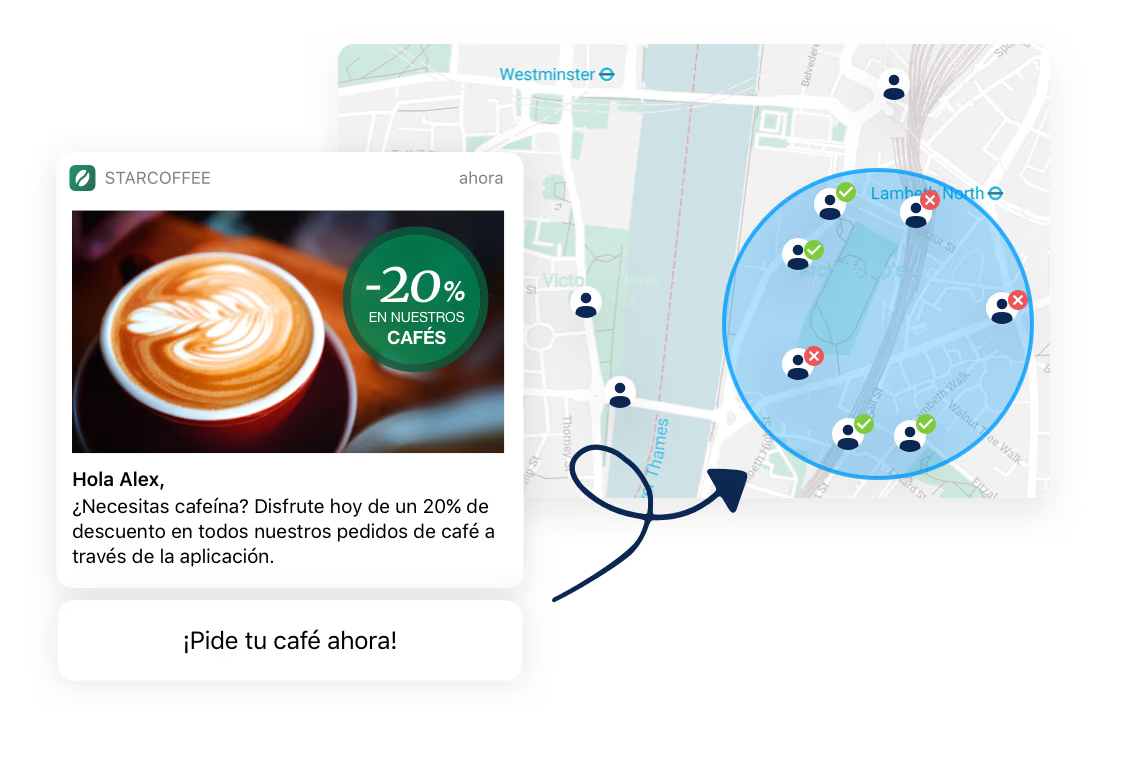
- Location-Based Marketing: Using geofencing technology, you can trigger a personalized App Push Notification with a special offer the moment a loyal customer walks near your physical store. This transforms a passive digital connection into an immediate, context-aware call to action that drives foot traffic.
- In-Store Digital Augmentation: Empower customers with tools like in-app QR code scanners. A quick scan can unlock rich product details, customer reviews, or even a video demonstration, bringing the depth of your e-commerce site directly to the store floor. This enriches the discovery process and aids in the purchase decision.
- Omnichannel Inventory & Service: Connecting your digital and physical inventory systems allows for popular features like ‘buy online, pick up in-store.’ After a purchase, a follow-up via WhatsApp Business can confirm their order is ready, provide store hours, and even ask for feedback post-visit, demonstrating a consistent service level across all channels.
The true power behind a successful phygital strategy is a Single Customer View. To deliver these seamless experiences, your technology stack must recognize that the user browsing your website on Tuesday is the same person who scanned a QR code in your store on Friday. Fragmented data leads to a fragmented and frustrating customer experience.
An integrated platform, where data from your app, website, physical POS, and communication channels like WhatsApp all live within one ecosystem, is essential. This allows you to design, automate, and measure complex Customer Journeys that reflect how your customers *actually* shop—moving effortlessly between the digital and physical worlds.
Pillar 2: Leverage AI for Hyper-Personalization at Scale
In 2026, the term ‘AI’ is everywhere, but for retail marketers, its value lies far beyond the hype. True competitive advantage comes from using AI not as a buzzword, but as a practical engine to power hyper-personalization. This means moving from broad segments to one-to-one conversations, delivered automatically and at a scale that was previously impossible.
Let’s ground this in tangible applications. AI allows you to automatically analyze customer behavior to deliver dynamic product recommendations within a Push Notification or WhatsApp message. It enables predictive churn analysis, flagging at-risk customers so you can proactively engage them with a compelling offer. Most importantly, it optimizes the very delivery of your communications, ensuring each message is sent at the moment an individual user is most likely to engage.
Historically, leveraging this level of data intelligence required a dedicated team of data scientists. We believe in a new paradigm: Accessible AI. This is the principle that powerful artificial intelligence tools should be directly in the hands of marketing and CRM teams, embedded within the platforms they use every day.
This is the core philosophy behind indigitall AI. Integrated directly within the indigitall console, our AI suite empowers your team to:
- Generate Compelling Content: Overcome writer’s block by using generative AI to instantly create engaging and on-brand copy for your push notifications, email subject lines, and WhatsApp messages.
- Leverage Predictive Sending: Let our algorithms determine the optimal send time for each individual user, dramatically increasing open rates and conversions without any manual analysis.
- Automate Segmentation: Uncover valuable new audience segments based on predictive behaviors, allowing you to build more effective and proactive Customer Journeys.
When you fuse AI-driven insights with a Global Omnichannel Strategy, the impact is exponential. A predictive recommendation isn’t just an email; it’s a perfectly timed push notification that links to your app, followed by a WhatsApp reminder if the cart is abandoned. By having these capabilities within a single, unified platform, you eliminate data silos and ensure every AI-powered interaction is a seamless part of a larger, coherent Customer Journey.
Pillar 3: Master Omnichannel Communication (Especially WhatsApp)
In 2026, a true omnichannel strategy is no longer about simply being present on every channel. It’s about orchestrating a single, persistent conversation that seamlessly follows your customer wherever they are, creating a unified experience across your entire digital ecosystem.
A fragmented approach, where your app team doesn’t know what your email team is sending, leads to a disjointed and frustrating customer experience. The goal is fluid orchestration, not just multi-channel blasting.
Foundational channels like Push Notifications remain critical for driving immediate action and in-app engagement, perfect for flash sales or loyalty updates. Email continues to be a workhorse for detailed promotions and content-rich newsletters. But the real transformation in retail communication is happening on conversational platforms.
Enter WhatsApp: The Conversational Commerce Game-Changer
WhatsApp has evolved from a personal messaging app into a primary channel for business-to-consumer interaction. Its high open rates and conversational nature make it uniquely powerful for retail, moving beyond marketing to become an essential service and transactional tool.
A well-integrated WhatsApp strategy allows you to:
- Automate Transactional Updates: Send instant order confirmations, shipping notifications, and delivery alerts directly to a customer’s most-used app. This proactively reduces “Where Is My Order?” (WISMO) support tickets.
- Provide Real-Time Customer Service: Enable two-way conversations for handling returns, answering product questions, and resolving issues with the help of rich media like images and videos.
- Recover Abandoned Carts: Send timely, personalized reminders with interactive buttons that lead customers directly back to their checkout page, driving significant revenue recovery.
- Share Personalized Offers: Leverage customer data to deliver relevant product recommendations and exclusive promotions in a highly personal format.
The indigitall Advantage: A True Native WhatsApp Business API Integration
How you connect to WhatsApp matters profoundly. Many providers use basic “wrappers” or third-party aggregators, which can introduce latency, instability, and feature limitations. This is a critical point of failure, especially during high-volume periods like Black Friday.
The indigitall platform is built on a deep, native integration with the official WhatsApp Business API. This direct connection provides our clients with a powerful competitive edge, delivering:
- Unmatched Reliability and Scalability: Our infrastructure is designed for enterprise-level message volume, ensuring your communications are delivered instantly and reliably when it matters most.
- First-Access to Advanced Features: Our direct partnership means you get faster access to the latest WhatsApp features, like interactive product catalogs, carousels, and advanced button types, keeping you ahead of the curve.
- Seamless Orchestration: Because WhatsApp is a native channel within the indigitall console, you can easily incorporate it into any automated Customer Journey, combining it with App Push, Web Push, SMS, and Mobile Wallet for a truly unified omnichannel strategy.
By mastering channels like WhatsApp within a global strategy, you don’t just send messages; you build relationships, drive loyalty, and create a truly modern retail experience.
Pillar 4: Merge Marketing (Outbound) and Customer Support (Inbound)
For too long, the martech stack has been fractured. Retailers use powerful platforms for outbound marketing automation and separate, disconnected systems for inbound customer support. This siloed approach, common in 2026, creates a disjointed experience for the customer and leaves incredible revenue opportunities on the table.
Your customer doesn’t see two different departments; they see one brand. When their support interaction on WhatsApp has no bearing on the marketing push notification they receive an hour later, it signals a lack of internal communication and erodes trust. True digital transformation requires breaking down this artificial wall.
The indigitall platform was engineered from the ground up to unify these two critical functions. We believe that every support interaction is a marketing opportunity, and every marketing signal provides invaluable context for support. By managing both outbound and inbound communication flows within a single ecosystem, you create a powerful, self-reinforcing loop of engagement.
Consider the synergy this unified approach unlocks:
- From Support to Sales: A customer uses your in-app chat to ask an AI Agent about the warranty on a high-value item. After the query is resolved, the agent can trigger a Customer Journey that sends a follow-up WhatsApp message with a video testimonial and a limited-time offer to drive the purchase.
- From Marketing to Service: A support agent in the indigitall console sees a customer’s complete history. They know the customer recently abandoned their cart and clicked on a specific promotion. Armed with this context, the agent can proactively address potential concerns, turning a simple query into a brand-building, loyalty-enhancing conversation.
This seamless orchestration is the core of a Global Omnichannel Strategy. The conversation flows effortlessly between channels—from a web push prompt, to a WhatsApp support chat, to a follow-up promotional message in their mobile wallet—all managed and tracked from one central platform.
By merging marketing and support, you don’t just solve customer problems; you anticipate their needs and guide them through their entire lifecycle. This integrated view provides unparalleled insights, boosts agent efficiency, and ultimately maximizes Customer Lifetime Value.
Choosing Your Technology Partner: The Unified Platform Advantage
You’ve mapped your strategy and identified key engagement touchpoints. The natural next question is, “What technology do I actually use to execute this vision?” The answer to this question will define your team’s agility and the coherence of your customer experience for years to come.
The common mistake we see many ambitious retail brands make, especially as they scale, is assembling a ‘stitched-together’ stack of specialized tools. One vendor for email, another for push notifications, a third for WhatsApp, and a fourth for in-app messaging. While this seems flexible at first, it quickly creates significant operational friction.
This fragmented approach inevitably leads to:
- Data Silos: Customer data becomes trapped within individual tools, making it impossible to get a 360-degree view of the Customer Journey. You can’t see if a user who ignored an email later converted from a push notification.
- High Integration & Maintenance Costs: The initial purchase price is just the beginning. The real cost lies in the developer hours spent building and maintaining brittle, custom integrations that are prone to breaking.
- A Disjointed Customer Experience: Inconsistent branding, messaging, and timing across channels create a jarring experience for your customers, eroding brand trust and loyalty.
- Team Inefficiency: Your marketing team is forced to become experts in multiple complex interfaces, slowing down campaign execution and stifling creativity.
The Superior Alternative: A Unified Engagement Platform
The strategic choice for forward-thinking retailers in 2026 is a unified, all-in-one customer engagement platform. This approach consolidates your channels, data, and orchestration tools into a single, cohesive ecosystem. It’s the engine for delivering the seamless Global Omnichannel Strategy we’ve been discussing.
While enterprise giants like Salesforce or Braze offer powerful solutions, many modern marketing and product teams find them complex, slow to implement, and cost-prohibitive. This is where indigitall provides a distinct advantage, engineered specifically for agility and impact.
We focus on delivering tangible business outcomes by prioritizing three core pillars:
- Faster Time-to-Value: Our streamlined onboarding and intuitive indigitall console empower you to launch sophisticated campaigns in days, not months. You start driving revenue and seeing ROI significantly faster.
- Superior Ease of Use: The indigitall platform is built for marketers. Our visual, drag-and-drop Customer Journey builder allows your team to orchestrate complex omnichannel sequences (across App, Web, WhatsApp, and more) without writing a single line of code.
- Greater Cost-Effectiveness: By consolidating your tech stack with indigitall, you eliminate the compounding costs of multiple licenses, hidden integration fees, and ongoing developer maintenance. You get a more powerful, unified solution with predictable, transparent pricing.
Choosing your technology partner isn’t just a technical decision; it’s a strategic one. A unified platform like indigitall doesn’t just send messages—it empowers your team to build relationships, drive lifetime value, and win in a competitive retail landscape.
Indigitall: Your All-in-One Retail Engagement Solution
Navigating the complex landscape of customer engagement technology can be daunting. Retailers often find themselves stitching together a patchwork of disconnected tools for analytics, messaging, and support. This leads to data silos, inconsistent customer experiences, and a frustrated team trying to manage it all. The indigitall platform was built to solve this fragmentation.
We provide a single, powerful ecosystem designed to orchestrate every touchpoint of the retail Customer Journey. From initial acquisition to long-term loyalty, our solution empowers your team to deliver seamless, personalized, and impactful interactions across every channel. This isn’t just about sending messages; it’s about building relationships at scale.
Here’s how indigitall delivers a unified solution designed for the demands of modern retail in 2026:
- True Unification in a Single Console: Forget juggling multiple platforms. The indigitall console is your central command center for both outbound campaigns and inbound customer support. Launch a cart recovery flow on WhatsApp and see the subsequent customer service conversation in the same interface, providing a 360-degree view of every interaction.
- WhatsApp Business Leadership: As official Meta partners, we provide a native, robust WhatsApp API integration that goes beyond basic messaging. Deploy sophisticated Customer Journeys for order confirmations, abandoned cart reminders, feedback requests, and seamlessly escalate conversations to AI Agents or live support—all within the world’s most popular messaging app.
- Accessible and Powerful AI: We democratize the power of artificial intelligence. Leverage our predictive models to identify customers at risk of churn or those most likely to convert, all without needing a data science degree. Use generative AI to help your team craft compelling, on-brand messaging variants in seconds, boosting both efficiency and creativity.
- Faster Time-to-Value and ROI: Unlike legacy enterprise platforms that require lengthy and costly implementations, indigitall is built for agility. Our streamlined onboarding and intuitive console mean your team can get up and running faster, driving measurable results and a stronger return on investment in a fraction of the time.
By integrating channels like App Push, Web Push, SMS, and Mobile Wallet into a Global Omnichannel Strategy, indigitall ensures that your brand communicates with one consistent, intelligent voice. This cohesive approach not only improves efficiency but also dramatically enhances the customer experience, turning one-time buyers into lifelong advocates.
Conclusion: The Future of Retail is a Unified Conversation
The journey through the complexities of modern retail technology leads to one clear conclusion: the era of siloed tools and fragmented customer interactions is over. To thrive in the competitive landscape of 2026 and beyond, retailers must move beyond isolated campaigns and embrace a single, unified platform for customer engagement.
This strategic shift is about more than just operational efficiency. It’s about orchestrating a seamless, contextual, and persistent conversation with each customer. When your WhatsApp Business messages, App Push notifications, and In-App messages all work in concert as part of a Global Omnichannel Strategy, you create a truly exceptional Customer Journey that feels personal and intuitive.
An integrated ecosystem doesn’t just delight customers; it delivers powerful business outcomes. By centralizing data and automating communication flows from a single console, brands can directly drive tangible results—boosting conversion rates, maximizing customer lifetime value (LTV), and building the deep-seated loyalty that fuels sustainable growth.
At its core, this is the promise of the indigitall platform. It’s where Marketing Automation, generative AI, and a full suite of communication channels converge to transform your customer engagement from a series of disconnected touchpoints into one intelligent, unified conversation.
Ready to unify your customer engagement and boost your bottom line? Schedule a personalized demo of indigitall today.